
Wood pallets look like a commodity purchase. They aren't. Construction, grade, size, and treatment affect load stability, storage density, damage rates, compliance with shipping rules, and how often you're forced into emergency reorders.
A recent Modern Materials Handling survey found that 92% of logistics professionals still rely on wood pallets in daily operations. This "simple" platform remains central to how goods move.
This guide covers pallet types and construction, sizing and load requirements, condition grading, ISPM 15 treatment rules, and what separates a dependable supplier from one that leaves you scrambling at peak season.
Key Takeaways
- Match construction, dimensions, and load capacity to your product, equipment, and storage system
- Compare new, recycled, repaired, and custom pallets by application, not unit price alone
- Inspect used pallets for broken boards, protruding nails, splits, and contamination before accepting them
- Confirm ISPM-15 heat-treatment and marking requirements for any international shipment
- Choose a supplier with consistent quality, competitive pricing, and reliable inventory
What Is a Wood Pallet?
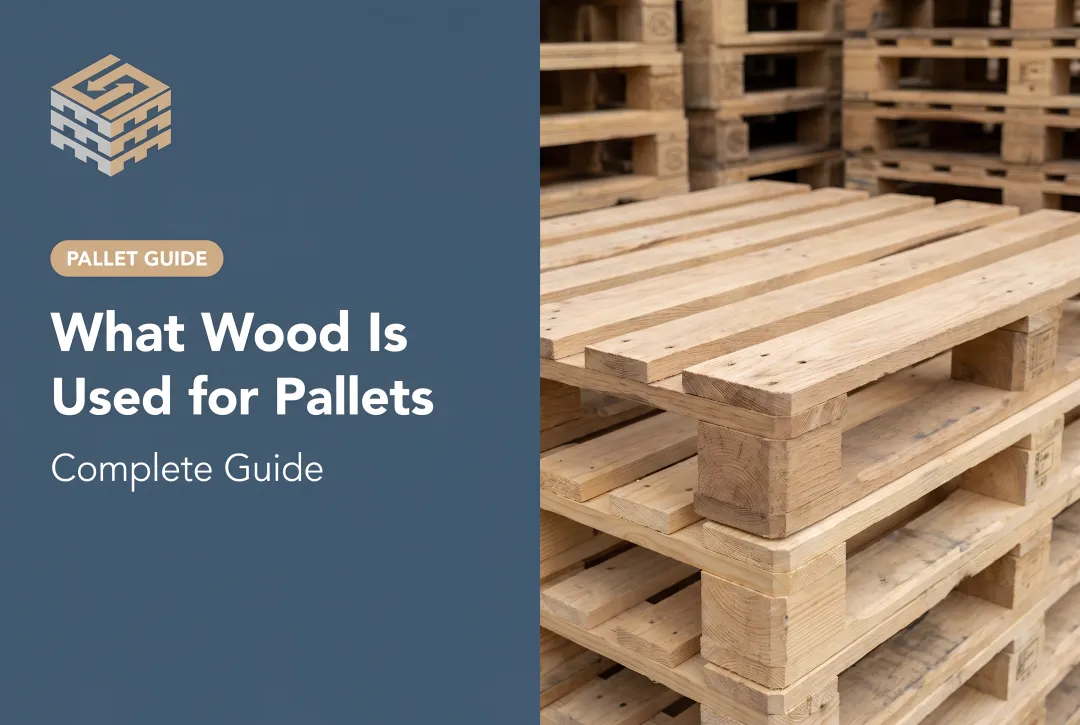
A wood pallet is a load-bearing platform built from deck boards fastened to stringers or blocks, designed to let forklifts, pallet jacks, and racking systems move and store products as a single unit load.
That platform has to work with whatever equipment your warehouse already runs. A pallet with an incompatible entry point or a height that doesn't match your racking depth creates handling delays before it ever reaches a trailer.
The Parts That Do the Work
- Deck boards - the horizontal boards goods rest on; spacing, thickness, and condition determine whether products stay supported or sag toward the floor
- Stringers or blocks - the structural supports underneath; stringers are parallel wooden runners, while blocks (often nine per pallet) allow entry from all four sides
- Bottom boards - add stability and spread weight across the stringers or blocks
- Fasteners and joints - nails, staples, or screws holding the deck together; exposed heads, loose boards, or repair plates often signal where a pallet will fail first
Three Load Ratings, Not One
Every pallet is rated for how it's used, not just how much weight it holds in general:
- Static load capacity - weight supported while the pallet sits still on a flat surface
- Dynamic load capacity - weight supported while a forklift or pallet jack moves it
- Racking load capacity - weight supported while it spans rack beams with nothing underneath
A pallet built for static storage won't necessarily hold the same load under dynamic handling. Confirm all three figures with your supplier before ordering.
Types of Wood Pallets
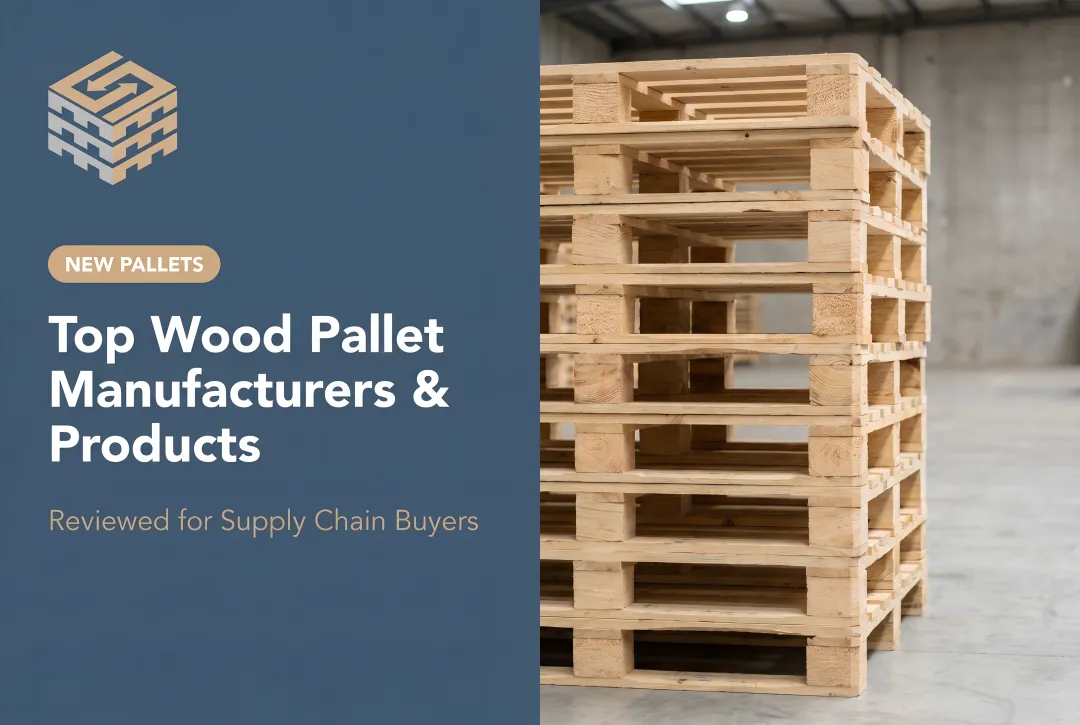
Most businesses choose from four categories: new, recycled, repaired, and custom-built pallets. Each serves a different cost and consistency need. Picking the right one is rarely about the cheapest sticker price.
- New builds meet full specs for export, food-grade, and customer-mandated programs
- Recycled and remanufactured units cut cost for internal transfers and flexible outbound freight
- Repaired pallets restore serviceable units when only boards or stringers need work
- Custom builds handle oversize loads, solid-top decks, and non-standard footprints
The 48x40 GMA Pallet Is the Default Size
The 48 x 40-inch GMA pallet (named for the Grocery Manufacturers Association) is the most widely used pallet footprint in the United States, built to fit standard warehouse racking, trailers, and grocery distribution systems.
Common alternatives include:
- 48x48 - fits four 55-gallon drums in a 2x2 layout; common in chemical and industrial handling
- 42x42 - better suited to telecom cabinets and equipment that doesn't fit a GMA footprint well
- 44x44, 36x36, 40x40 - used across retail, food service, and specialty manufacturing
- Euro-size (1200x800mm equivalents) - needed for international or Europe-linked supply chains
When none of these fit, custom dimensions or reinforced construction solve problems standard sizes can't: oversize machinery, irregular SKUs, or cold-chain and cleanroom requirements.
Stringer vs. Block Construction
| Feature | Stringer pallets | Block pallets |
|---|---|---|
| Structure | Parallel wooden runners support the deck | Individual wood blocks support the deck |
| Forklift entry | Two-way standard; notched stringers allow partial four-way | True four-way entry |
| Pallet jack access | Typically two sides | All four sides |
| Common use | General warehousing, food and beverage, automotive | Heavy loads, automated systems, retail replenishment |
Neither design is universally better. A pallet used for routine warehouse transfers doesn't need the four-way access an automated conveyor line requires.
Why Wood Still Wins on Cost and Circularity
Wood remains the default packaging material because the economics work at every stage of its life:
- Lower upfront cost - recycled and remanufactured pallets typically run 40-60% less than new builds, often adequate for internal transfers and non-spec-strict shipments
- Repairability - a cracked board or loose stringer rarely means scrapping the whole unit
- Recyclability - damaged pallets beyond repair get chipped into mulch, biomass fuel, or board stock instead of landfill space
That circularity shows up in the data. NWPCA's research estimates wood pallet recycling at roughly 95% recovery, based on 2016 production and landfill figures. It reflects historical data rather than a current annual rate, but it still shows how rarely wood pallets end up in landfill.
Choosing the Right Wood Pallet for Your Business
The right wood pallet matches your product, equipment, and shipping lanes without surprises, not the lowest quote alone. Before requesting quotes, document:
- Product dimensions, weight, and stacking pattern
- Shipment volume and frequency
- Handling equipment (forklift type, pallet jack, conveyor, AS/RS)
- Storage method (floor stacking, racking, cold storage)
- Shipping destinations, including any international legs
Size, Fit, and Equipment Compatibility
Pallet dimensions need to match your product's footprint, not just a shipping container's interior. Carton overhang past the pallet edge invites crushing. Too much empty deck wastes trailer and rack space.
Fit problems compound once pallets enter conveyors or automated storage. A pallet a quarter-inch off tolerance can jam a conveyor line or misalign on a rack beam. Confirm exact dimensions and tolerances with your supplier before the first truckload arrives, not after.
Load Capacity Isn't One Number
Buyers often ask "how much weight can this pallet hold?" as if there's a single answer. There isn't. Three separate ratings apply, as covered above: static, dynamic, and racking.
Construction choices (deck-board spacing, stringer count, wood species, fastener type) all affect which rating applies. A standard 48x48 pallet typically supports 2,500-3,000 lb dynamic, with heavy-duty builds rated 3,000 lb and up. Don't rely on a generic capacity claim if your load is heavy, unevenly distributed, or stored in racking. Get the actual rating confirmed in writing.

New, Recycled, or Repaired: Matching Condition to Use Case
| Factor | New pallets | Recycled / repaired pallets |
|---|---|---|
| Consistency | Dimension-controlled, uniform | Varies by grade and repair history |
| Best for | FDA-regulated goods, ISPM-15 export, first-time automated racking | Internal transfers, intra-DC moves, non-spec-strict shipments |
| Cost | Higher upfront | Typically 40-60% less than new |
| Inspection need | Minimal | Required before every load |
Grading language differs by supplier, so confirm definitions before ordering:
- Grade A - all deck boards intact, no broken stringers, minimal repair history
- Grade B - one or two minor board repairs, full structural integrity, general warehouse use
- Utility / #2 - lowest cost, intended for internal-flow applications only
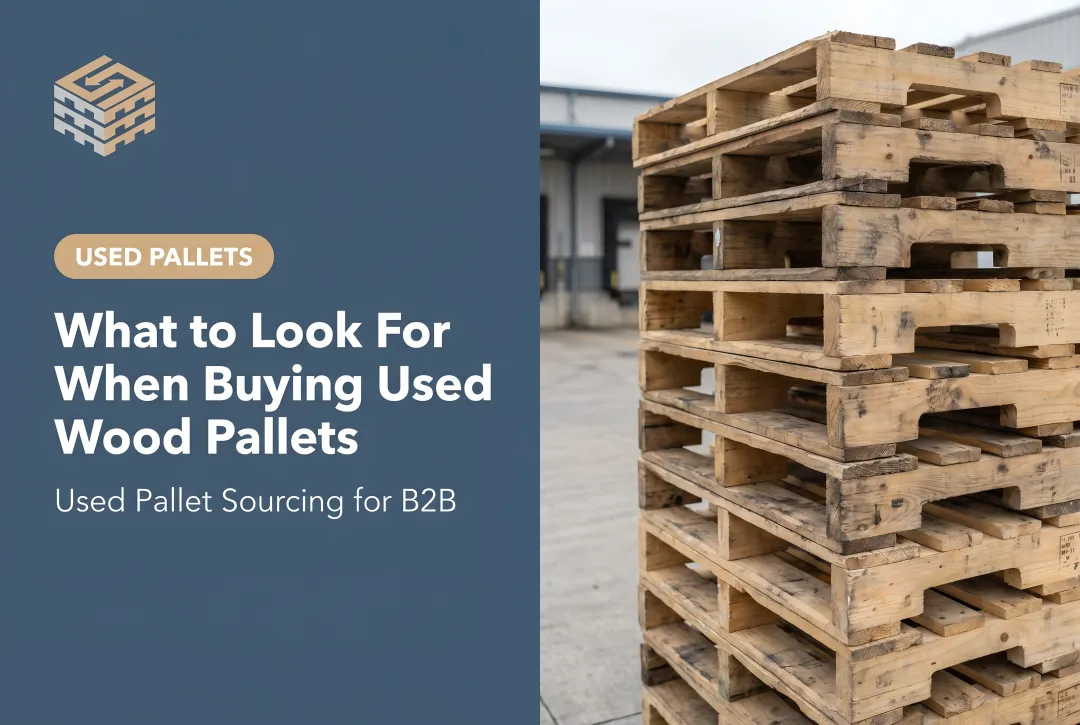
Before accepting any used pallet, check for:
- Broken or missing deck boards, stringers, or blocks
- Protruding or exposed nail points
- Severe splits, especially at stringer notches
- Contamination from spills, debris, or pests
- Excessive warping or unstable repair plates
Some suppliers' "Grade A" pallets still carry companion stringers, so confirm how each grade is defined and inspected before you compare prices.
Heat Treatment and Shipping Compliance
Wood packaging crossing international borders is regulated. Most countries require compliance with ISPM 15, a global standard aimed at stopping the spread of wood-boring pests through pallets and crates.
What Compliance Actually Requires
Per USDA APHIS, approved wood packaging must meet three requirements:
- Debarked before treatment
- Heat-treated to a minimum core temperature of 132.8°F (56°C) for at least 30 minutes
- Stamped with an official mark from an accredited treatment provider
The compliance stamp includes four elements:
| Mark component | What it shows |
|---|---|
| IPPC symbol | Confirms the international compliance standard |
| Country code | Two-letter ISO code for country of treatment |
| Provider code | Unique ID for the treatment facility |
| Treatment code | "HT" for heat treatment |
Once a pallet is treated and marked, it doesn't need retreatment for the rest of its service life, as long as it isn't repaired, remanufactured, or otherwise altered.
Heat Treatment Isn't a Quality Guarantee
A valid ISPM 15 stamp confirms the wood met pest-control requirements. It says nothing about whether stringers are cracked, boards are warped, or the pallet can handle your actual load. Treat compliance and condition as two separate checks, not one.
Requirements can shift by destination country and change over time. Confirm current rules, accepted markings, and documentation with your supplier and the relevant customs or phytosanitary authority before shipping, especially through a new export corridor.

Supplier Reliability, Delivery, and Total Cost
Per-pallet price is the easiest number to compare and the least useful one on its own. A cheaper pallet that arrives late, fails inspection, or gets rejected at a customer's dock costs more than the quote implied.
What to Compare on Every Quote
- Pallet type, dimensions, and grade
- Quantity and lead time
- Treatment (heat-treated, kiln-dried, fire-retardant)
- Freight and minimum order requirements
- Return or replacement policy
- Any inspection or customization charges
The Real Cost Includes What Happens After Delivery
Total cost adds up well past the invoice:
- Storage space the pallets occupy
- Damage from poor handling or weather exposure
- Rejected pallets sent back to the supplier
- Emergency purchases when stock runs short
- Disposal costs for pallets beyond repair
Ask prospective suppliers how they handle recurring orders, seasonal demand spikes, shortages, quality disputes, and mid-contract spec changes. Their answers tell you more than their price sheet does.
Keep Inventory Ahead of Demand
Running out of pallets mid-shipment stalls production and delays outbound trucks. A few practices reduce that risk:
- Store pallets on a stable, dry surface away from standing water, and avoid unsafe stacking
- Track incoming deliveries, outbound usage, and damaged units weekly
- Set reorder points based on usage patterns, lead time, and seasonal demand, not a flat percentage
A supplier with a wide sourcing network (rather than relying on a single mill or yard) is far more likely to absorb a regional lumber shortage without leaving your dock empty.
How Skid Management Services Can Help
Skid Management Services supplies wood pallets and packaging products to businesses across the country, combining its own inventory with an expansive network of pallet and packaging suppliers. That combination matters when a single supplier's shortage would otherwise become your shortage.
The catalog spans new, used, remanufactured, and custom-engineered pallets: GMA 48x40, 48x48, 42x42, and other standard sizes, plus stringer, block, and wing construction built to your load and entry requirements. ISPM-15 heat-treated export pallets, including stamp verification, are also available for businesses shipping internationally.
What to Have Ready When You Request a Quote
- Pallet type and dimensions
- Grade or condition requirements
- Treatment needs (heat-treated, kiln-dried, and similar)
- Load requirements and handling equipment
- Order quantity and delivery timeline
- Whether you need a recurring or one-time order
Skid Management Services built its position as a national supplier on two things customers mention most: competitive pricing and a track record of delivering on what was promised. That combination of firm-owned inventory plus a broad supplier network keeps orders moving even when lumber markets tighten.

Need help comparing pallet options or setting up a dependable supply schedule? Call 717-202-0304 or email Info@SkidManagementServices.com for a quote.
Conclusion
The best wood pallet for your business fits your product, survives your handling equipment, meets your compliance requirements, and shows up on schedule. The cheapest option on the quote sheet rarely does all four.
Judge each decision by total operating impact, not unit price alone:
- Damage rates
- Storage space
- Delivery reliability
- Replacement frequency
Product lines change. Shipment volumes grow. Equipment gets upgraded. Revisit your pallet specifications and supplier performance periodically, not just when something breaks.
Frequently Asked Questions
What is the most common wood pallet size?
The 48 x 40-inch GMA pallet is the most widely used size in the United States, built for standard warehouse racking and grocery distribution. The right size for your business still depends on your product, equipment, and shipping system.
Should I buy new or recycled wood pallets?
It depends on required consistency, load demands, and inspection standards. New pallets suit FDA-regulated goods, ISPM 15 export, and automated racking; recycled pallets work well for internal transfers at 40-60% lower cost.
How do I choose the right pallet for my product?
Start with product dimensions, weight, and stacking pattern, then match those to your handling equipment, storage method, and shipping destination. Custom construction or heat treatment may be needed for unusual products.
Do wood pallets need to be heat-treated for international shipping?
Many international shipments require ISPM 15-compliant wood packaging, including heat treatment and an official stamp. Requirements vary by destination, so confirm current rules and markings with your supplier and customs authority.
How can I tell whether a used wood pallet is safe to use?
Check for intact deck boards, secure fasteners with no protruding nails, no severe splits or contamination, and confirm the pallet matches your load and handling equipment before accepting it.
How many pallets should my business keep in reserve?
Reserve inventory should reflect your usage rate, supplier lead time, seasonal demand, storage capacity, and the operational cost of running short, not a fixed percentage that applies to every business.