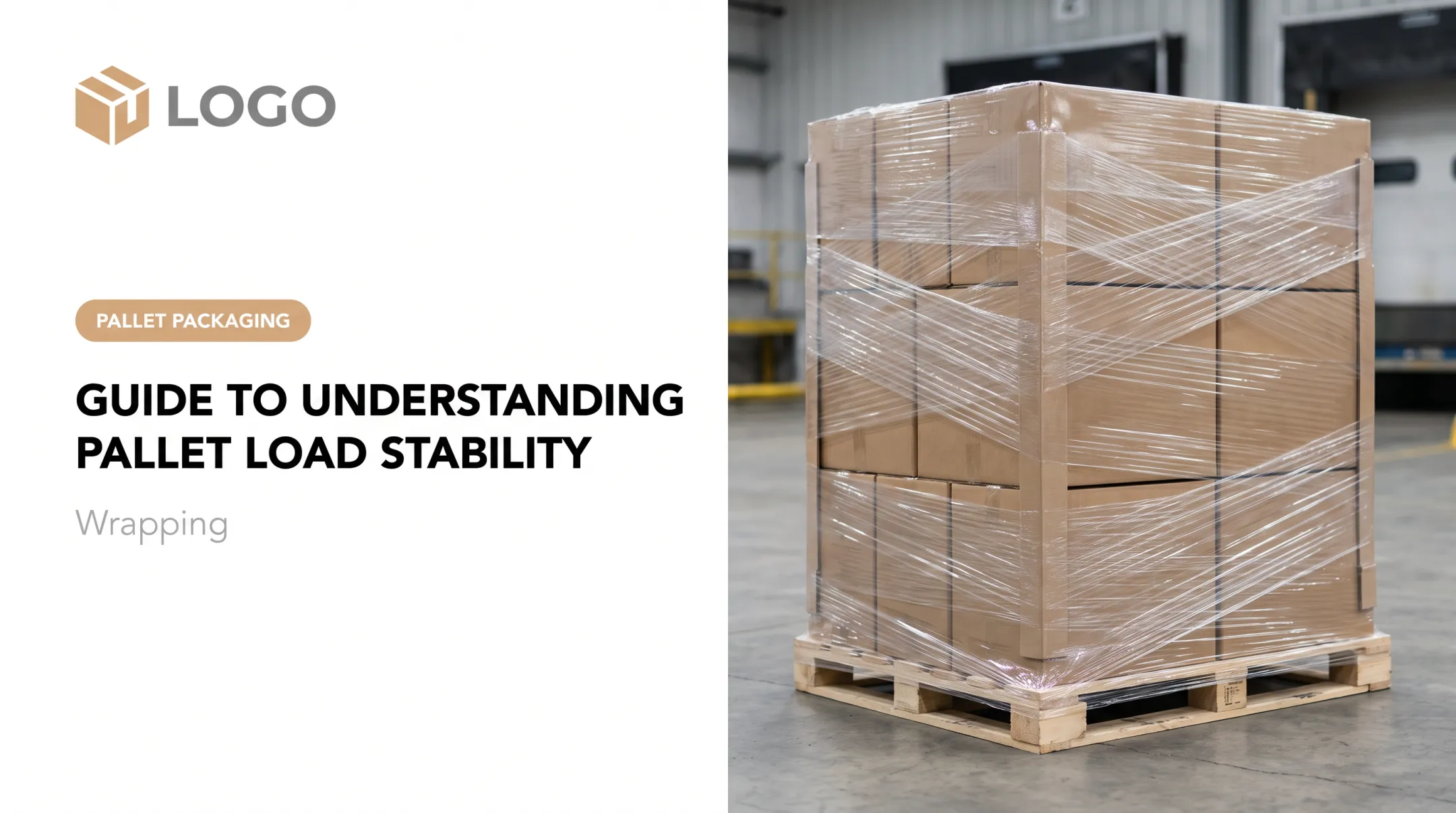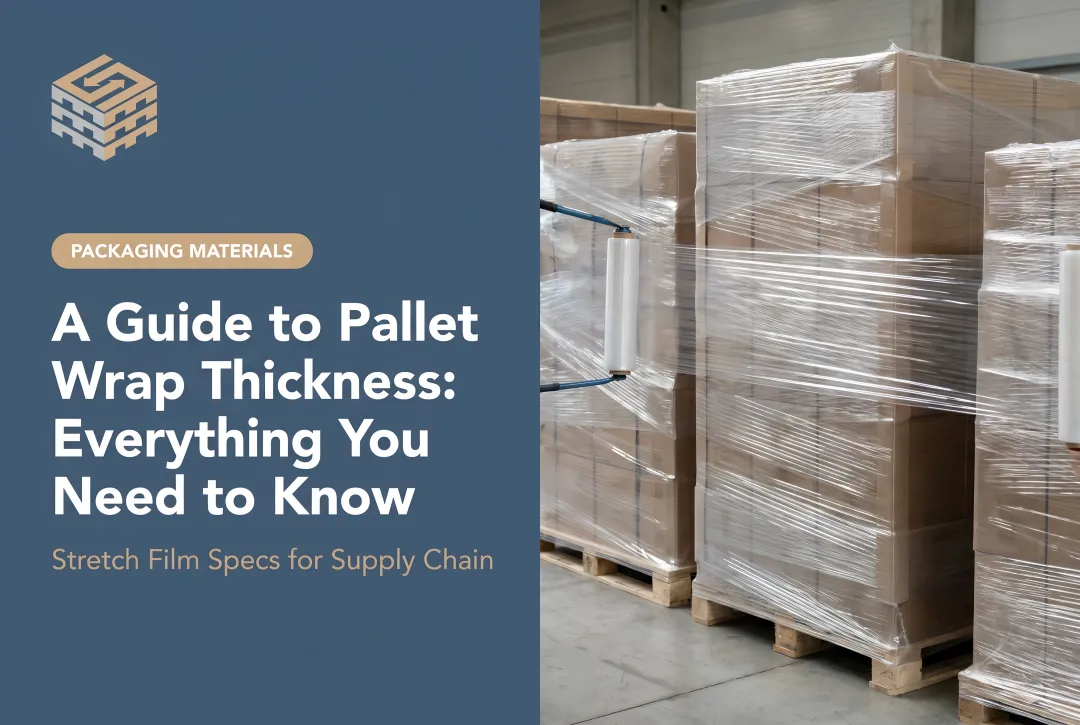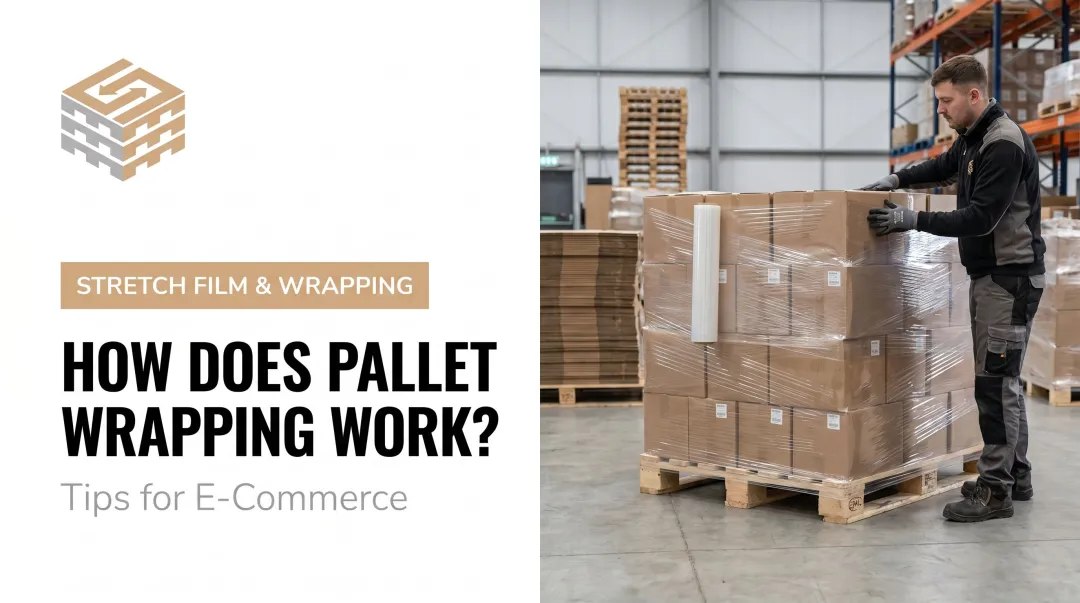

The real answer depends on pallet size, film gauge, stretch rate, and whether you're wrapping by hand or with a machine. Get the numbers wrong, and you're either overspending on film or under-securing loads that arrive damaged.
This guide breaks down the calculation so you can budget accurately. And once your wrap is dialed in, pairing it with sturdy pallets (the kind Skid Management Services supplies) rounds out a shipment that actually holds up in transit.
Key Takeaways
- A 1,500 ft. hand roll typically covers 8–15 pallets
- A 5,000 ft. machine roll typically covers 90–119+ pallets
- Stretch rate drives coverage most: hand wrap ~10–70%, machines up to 250–300%
- Film per pallet rises with larger perimeter, more revolutions, and higher overlap
- Matching film gauge to load weight and uniformity prevents waste and load failure
Factors That Determine How Many Pallets a Roll of Stretch Wrap Covers
Pallet Dimensions Set the Baseline
Every calculation starts with the pallet's footprint. A standard 48"x40" GMA pallet has a perimeter of 176 inches. Taller, heavier loads need more revolutions of film, which consumes the roll faster than a compact load.
Load Type Changes Revolution Count
Not all pallets wrap the same way:
- A-loads: Uniform boxes, flush edges, easiest to wrap with fewer revolutions
- B-loads: Irregular edges or mixed box sizes, often need extra film to prevent punctures
- C-loads: Unstable, mixed-size, or protruding items; highest tear risk and highest film use
Revolution counts are application-specific. Plan for extra film on anything beyond a clean A-load.
Roll Length: Hand vs. Machine
- Hand rolls: Commonly 12", 15", or 18" wide, running 1,000-2,000 ft.
- Machine rolls: Typically 20"-30" wide, running 4,000-9,000 ft.
More length means more pallets covered, but only if the stretch rate keeps pace.
Stretch Rate Is the Real Multiplier
This is where the biggest differences show up. Manual wrapping typically achieves 10-70% stretch, according to Orion Packaging. Machines routinely hit 150-300%, with many wrappers presetting to 250%, per Lantech.
A higher stretch rate means every foot of film off the roll covers more load surface. Stretch rate is the biggest lever for increasing pallets per roll.
Film Gauge Affects Coverage and Protection
| Gauge | Approx. Load Capacity |
|---|---|
| 47-60 | Up to 1,600-1,800 lb. |
| 70-80 | 2,000-2,500 lb. |
| 90-120 | 3,000-4,000 lb. |
| 150 | 4,000+ lb.; heavy-duty, irregular, or metal loads |

Thicker gauge means better containment force but uses more material per wrap. Match gauge to load weight, not habit.
How to Calculate the Number of Pallets Per Roll: Step-by-Step
Here's the formula warehouse teams actually use:
- Find film used per revolution. Take the pallet perimeter (inches) and divide by 12 to get feet. A 48"x40" pallet: (48+40) × 2 = 176 in ÷ 12 = 14.7 ft.
- Multiply by total revolutions. If your load needs 10 revolutions (bottom and top combined): 14.7 × 10 = 147 ft. per pallet.
- Calculate stretched roll length. Convert stretch percent to a decimal, then use (Stretch Rate + 1) × Roll Length. A 5,000 ft. roll at 250% stretch = (2.5 + 1) × 5,000 = 17,500 ft.
- Divide stretched length by footage per pallet. 17,500 ÷ 147 = 119 pallets.

Worked Example
Using that same 48"x40" pallet with 10 revolutions:
| Roll Type | Stretch Rate | Effective Length | Pallets Covered |
|---|---|---|---|
| 18" x 1,500 ft. hand roll | 50% | 2,250 ft. | ~15 |
| 20" x 5,000 ft. machine roll | 200% | 15,000 ft. | ~102 |
| 20" x 5,000 ft. machine roll | 250% | 17,500 ft. | ~119 |
These figures exclude overlap waste, film breaks, and tail ends, so treat them as planning estimates, not guarantees.
Hand Wrapping vs. Machine Wrapping: Which Covers More Pallets?
The gap between these two methods is enormous.
- Hand wrapping: 10-70% stretch, inconsistent tension depending on the operator, more waste per pallet
- Machine wrapping: Up to 250-300% stretch with consistent, programmable tension, per Amcor

Machine wrapping is faster and far more efficient with material. A facility shipping hundreds of pallets weekly will see per-pallet material cost drop significantly after switching from hand rolls to a semi-automatic or automatic wrapper.
For lower-volume operations, hand wrapping still makes sense. Just budget for lower yield per roll.
Choosing the Right Stretch Wrap for Your Pallet Loads
Film choice depends on load profile. That profile drives gauge, revolutions, and how many pallets you get from each roll:
- Type A loads (uniform, boxed goods): lower gauge, fewer revolutions, less film per pallet
- Type B loads (semi-irregular shapes): mid-range gauge and moderate revolutions
- Type C loads (irregular, mixed items): thicker gauge, more revolutions, higher film use
Matching gauge to load weight avoids two costly mistakes: tearing (gauge too thin) and over-wrapping (gauge too thick, wasting film and money).
Wrap quality only protects a load as well as the pallet underneath it. Skid Management Services supplies both: new, used, and custom wood pallets alongside hand-grade and machine-grade stretch films, including vented options for moisture-sensitive loads.
Sourcing pallets and film from one national supplier simplifies ordering and keeps packaging consistent—whether you run food and beverage pallets or industrial freight.
Frequently Asked Questions
How much stretch wrap is used per pallet?
Usage varies by pallet size and revolutions. Expect roughly 150-200 ft. for hand wrap or 50-70 ft. off the roll with a pre-stretch machine, depending on load height and film gauge.
How many square feet is one pallet?
A standard 48"x40" pallet footprint is about 13.3 square feet. Film needed depends on load height and number of revolutions, not just the footprint size.
What gauge stretch wrap should I use for pallets?
Gauge ranges from 47 to 150, matched to load weight and uniformity. Lighter, uniform loads need lower gauge; heavy or irregular loads need 90-150 gauge film.
Is stretch wrap the same as pallet wrap?
Yes. "Stretch wrap" and "pallet wrap" both refer to the LLDPE film used to unitize and stabilize palletized loads for shipping and storage.
What sizes of stretch wrap rolls are available?
Hand rolls typically run 12"-18" wide and 1,000-1,500 ft. long. Machine rolls run 20"-30" wide and 5,000-9,000 ft. long.
How much does stretch wrap cost?
Cost varies by gauge, roll size, and order quantity. Calculating your actual pallets-per-roll yield is the only reliable way to determine true cost per pallet, not just roll price.