
That inconsistency causes real problems. Buyers overpay for scrap-grade pallets thinking they're getting Grade B. Sellers give away good inventory because they don't know it has resale value. Before you transact, you need a clear reference point.
This guide breaks down current price ranges, the factors driving them, what's included in a quote, and how to budget whether you're buying pallets for your operation or selling off your used stock.
TL;DR
- Typical range: $2–$16 per used wood pallet, depending on grade and condition
- Biggest price drivers: grade, size (48x40 GMA is the benchmark), material, and order volume
- Grade spread: Grade B/scrap at the low end; Grade A / repaired pallets at the high end
- Seller upside: Steady volume can turn used pallets into revenue instead of a disposal cost
How Much Do Used Pallets Cost? (Pricing Overview)
Used pallet pricing isn't fixed. It moves with grade, size, and local market conditions, which means the same pallet can price differently depending on who's buying and where.
Three mistakes trip up most buyers and sellers:
- Assuming all used pallets carry one flat price
- Ignoring the gap between Grade A and Grade B condition
- Underestimating scrap or damaged pallets — they still hold value and are rarely worth nothing
Typical Cost Range
| Grade | Price Range |
|---|---|
| Scrap/damaged | $0–$2 (or free pickup) |
| Standard Grade B | $2.55–$5 |
| Grade A/repaired | $5–$16.50 |

For context, a 2025 Fastmarkets assessment of the Dallas-Fort Worth market put delivered Grade A used pallets at $8.50–$10.50 and Grade B at $4–$8.50, which can run above broader market averages.
These figures typically cover the pallet and basic grading. They exclude delivery fees and custom sizing, which get quoted separately.
What you get at each grade:
Grade A / Repaired Pallets
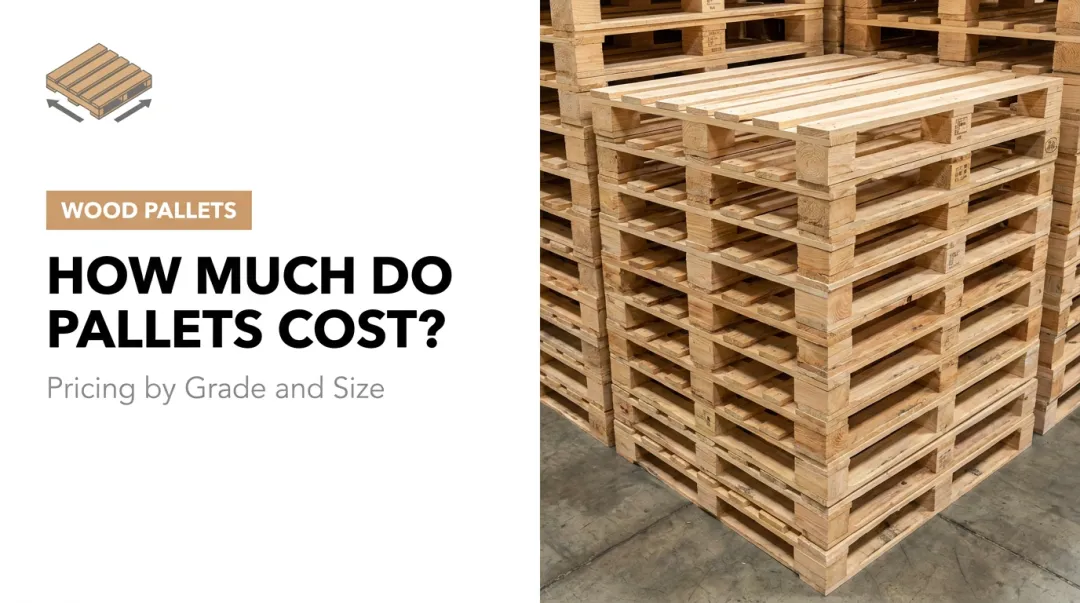
Grade A pallets are nearly new, with only minor, professionally completed repairs. They suit food, pharma, and manufacturing buyers who need structural reliability for repeated handling and stacking.
Grade B / Standard Pallets
Grade B pallets keep full structural integrity, with a repair or two still visible. Skid Management Services defines Grade B as pallets with one or two minor board repairs that retain complete structural soundness — fine for general warehousing and non-critical loads.
Scrap / Damaged Pallets
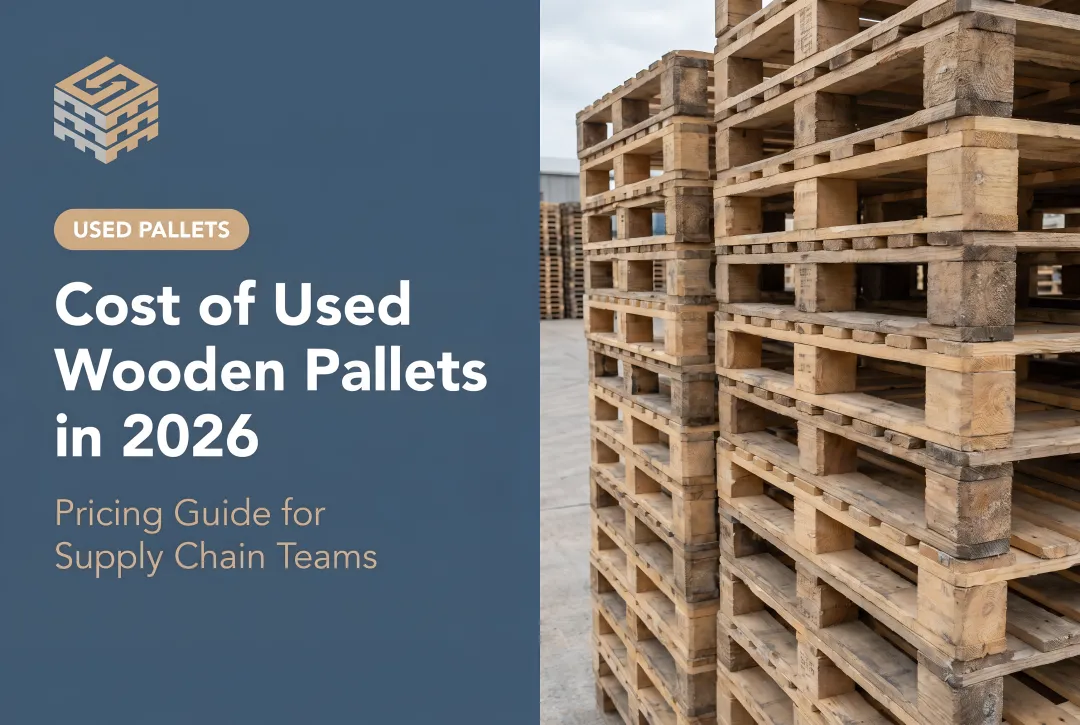
Scrap pallets are broken, heavily worn, or beyond cost-effective repair. They still hold value for mulch, animal bedding, biomass fuel, or buyers willing to handle their own repairs.
Key Factors That Affect Used Pallet Prices
Five variables determine where your quote lands: grade, size, material, order volume, and regional demand.
Grade and Condition
Grading tiers break down as:
- Premium/Grade A – minimal wear, nearly new
- Standard A – moderate wear, minor repairs, still structurally sound
- Grade B – multiple repairs, reinforced stringers, visible weathering
- Repairable core/scrap – broken but usable for parts, chips, or biomass
Each step down the ladder drops the price. A Grade B pallet with reinforced stringers often costs about half what a Premium/Grade A pallet costs.

Size and Standardization
The 48x40 GMA pallet is the industry benchmark, thanks to universal compatibility with US racking, forklifts, and conveyor systems. A 2025 BioResources study found repaired pallet cores were 74% 48x40 stringer construction, confirming this size dominates the recycled supply chain too.
Odd or custom sizes see weaker demand because fewer buyers can use them without modification.
Material Type
Material choice shapes both availability and price transparency. Wood dominates the used-pallet market; plastic and metal units exist, but their secondary markets are thin and pricing data is inconsistent. Competitive, comparable used quotes concentrate on wood.
Volume and Consistency of Supply
Order pattern matters as much as grade. Bulk or recurring orders almost always beat one-off purchases on a per-unit basis because suppliers price predictability into their rates:
- One-time small orders — standard or premium per-unit pricing
- Recurring monthly volume — negotiated program rates
- High-volume closed-loop programs — trade-in credits plus volume discounts
Regional Market Demand
Areas with heavy food, pharma, or manufacturing activity tend to push prices up because reliable, sanitation-grade supply gets scarce. Pallet Enterprise reported in September 2025 that Chicago, Atlanta, and Kansas City were seeing tight supplies of better-quality pallets, with especially strong demand for A-grade stock and comparatively weak demand for B-grade.
Cost Breakdown: What Goes Into a Used Pallet Price
The sticker price is only part of the equation. Purchase price, transport, repair, and grading all shape your real total.
- Purchase/sale price – one-time cost, based on grade and size
- Transportation/pickup – often separate on smaller orders; sometimes bundled for larger accounts
- Repair/refurbishment – recurring cost to bring damaged pallets back to sellable condition
- Inspection/grading services – cost of sorting mixed loads so pricing reflects actual condition, not guesswork

Buy-back and pickup rates typically vary by pallet grade, volume, and pickup distance rather than a flat published fee. That's worth asking about directly before assuming a quote covers everything.
Buying vs Selling Used Pallets — What to Expect
Your role in the transaction changes the math entirely.
For buyers:
- Grade A and repaired pallets cost more; Grade B and mixed loads cost less
- Food-grade and export-treated needs raise price at every grade
For sellers:
- Payouts sit below retail buying prices
- Resellers deduct regrading, repair, and resale costs before writing a check
Those spreads matter even more once volume, grade mix, and supply reliability enter the picture.
Where Skid Management Services Fits
Buying in volume from a single local yard creates a supply bottleneck the moment that yard runs low. Skid Management Services pairs its own pallet stock with an expansive network of pallet and packaging suppliers, so volume buyers get consistent, competitive pricing without depending on one source.
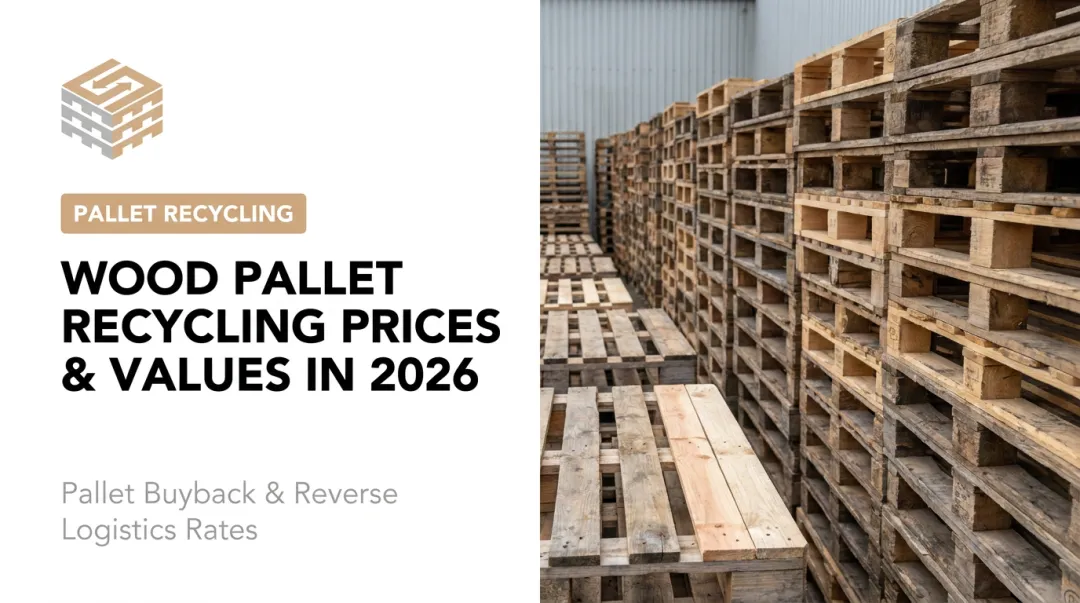
For operations generating steady used-pallet volume, SMS also runs a buyback and closed-loop program. Pallets are sorted by condition:
- Grade A — returned to inventory
- Grade B — repaired and recycled
- End-of-life — processed into biomass or wood chip
Trade-in credit typically offsets 15–40% of new-pallet spend, depending on grade mix and volume. The model fits operations moving roughly 500 or more pallets per month two-way.

How to Estimate Your Used Pallet Budget
Matching pallet grade to your actual use case matters more than chasing the lowest sticker price. A cheap Grade B pallet that fails mid-shipment costs you more than the few dollars you saved.
Build your budget around these factors:
- Load weight and product type – heavier or fragile goods need higher-grade structural integrity
- Shipment frequency – recurring shipments justify negotiating program pricing over one-off buys
- Compliance needs – food-grade sanitation standards or ISPM-15 heat treatment for export add cost but aren't optional
- Local supplier availability – tighter regional supply pushes prices up, so build in a buffer
- Reuse or resale plans – Grade A pallets you plan to resell later justify the higher upfront cost
For export shipments, remember that compliant heat treatment requires 56°C (133°F) at the wood core for at least 30 minutes, with proper IPPC marking. Skipping that step on a "cheap" used pallet can get your shipment held at the border—so treat HT compliance as a fixed line item, not an optional upgrade.
Frequently Asked Questions
Who buys used pallets?
Recyclers, pallet management companies, and national suppliers with buyback programs all purchase used pallets. Businesses generating steady volume typically find the most reliable buyers and best rates.
Is reselling pallets profitable?
Yes, for businesses with consistent volume of good-condition pallets. It turns a disposal cost into revenue, though actual profitability depends heavily on grade mix and local demand.
What is the most valuable used pallet size?
The 48x40 GMA pallet, due to universal compatibility with US racking systems and material handling equipment. It's the most in-demand size and the easiest to resell.
Does anyone buy broken or damaged pallets?
Yes. Damaged pallets almost always retain scrap or repair value; they're rarely worthless. Recyclers grind them for biomass or wood chips when repair isn't cost-effective.
How much does a used wood pallet cost on average?
Expect $2–$16 depending on grade and condition, with regional demand shifting that range. Tighter markets like Chicago or Atlanta can push Grade A pricing higher.
Can businesses get better pricing by buying pallets in bulk?
Yes. Bulk and recurring orders unlock volume pricing and steadier supply than one-off purchases. Exact discounts are typically quoted per program.