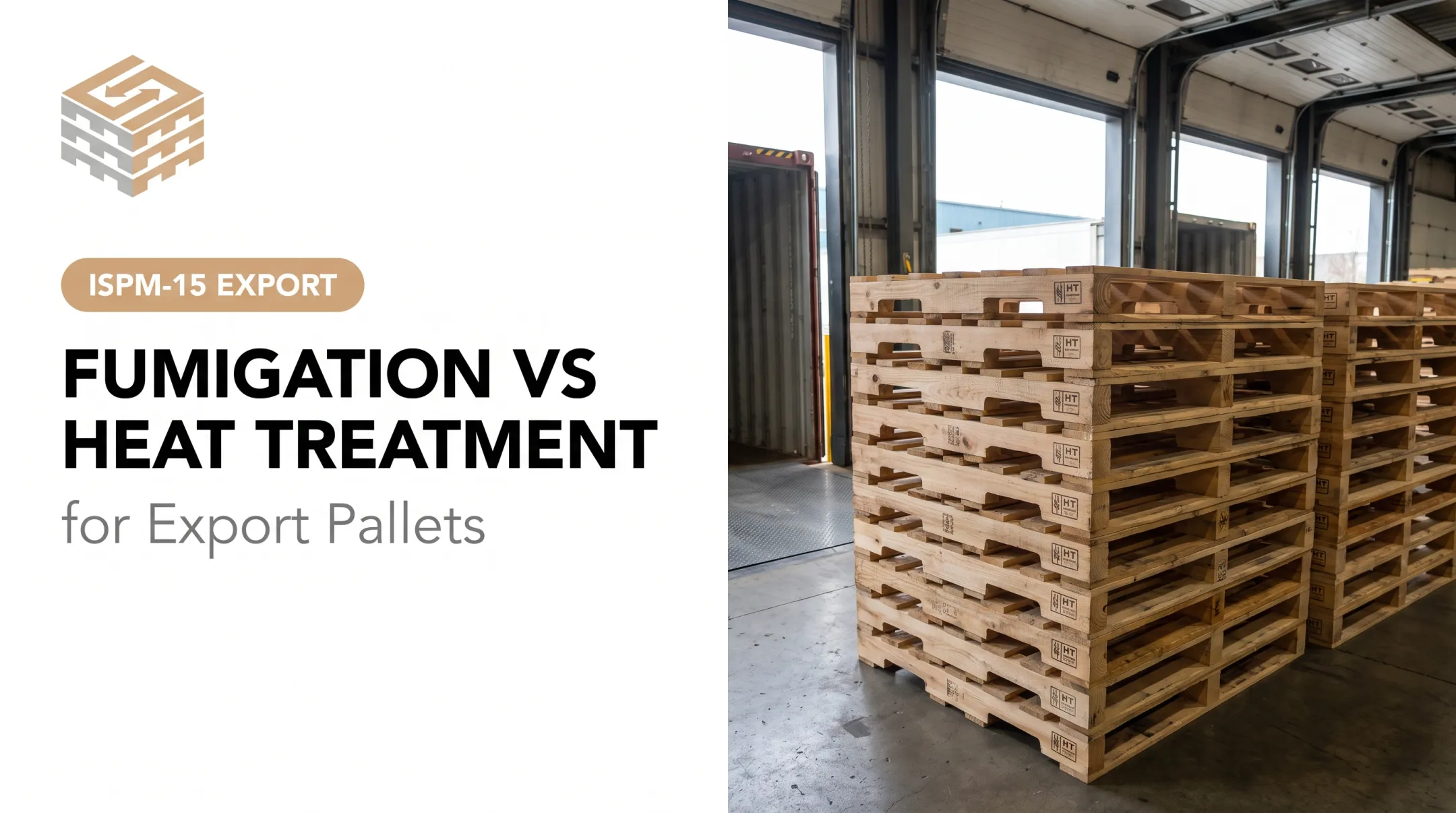

The choice affects more than a stamp on a pallet. It touches customs clearance speed, compliance risk, cargo safety, and long-term cost. Get it wrong, and you're looking at rejected shipments, return freight, or destroyed cargo at the port.
This article breaks down how MB and HT pallets differ, where each still fits, and how to choose the right option for your export program.
TL;DR
- MB pallets use methyl bromide gas; HT pallets use controlled heat—both meet ISPM 15
- MB needs 24+ hours of temperature-based gas exposure; HT holds the wood core at 56°C for 30 minutes
- MB is still legal but chemical-based and under tightening environmental limits
- Most exporters now choose HT for regulatory certainty and cargo safety
Fumigated vs Heat-Treated Pallets: Quick Comparison
| Factor | Fumigated (MB) | Heat-Treated (HT) |
|---|---|---|
| Treatment method | Methyl bromide gas in a sealed chamber | Wood core heated to 56°C for 30 continuous minutes |
| Exposure time | Minimum 24 hours, temperature-dependent schedule | 30 minutes once core temperature is reached |
| Chemical residue | Possible chemical exposure risk | None — no chemicals used |
| Regulatory trend | Increasingly restricted; QPS-exempt uses only | Preferred default under ISPM 15 |
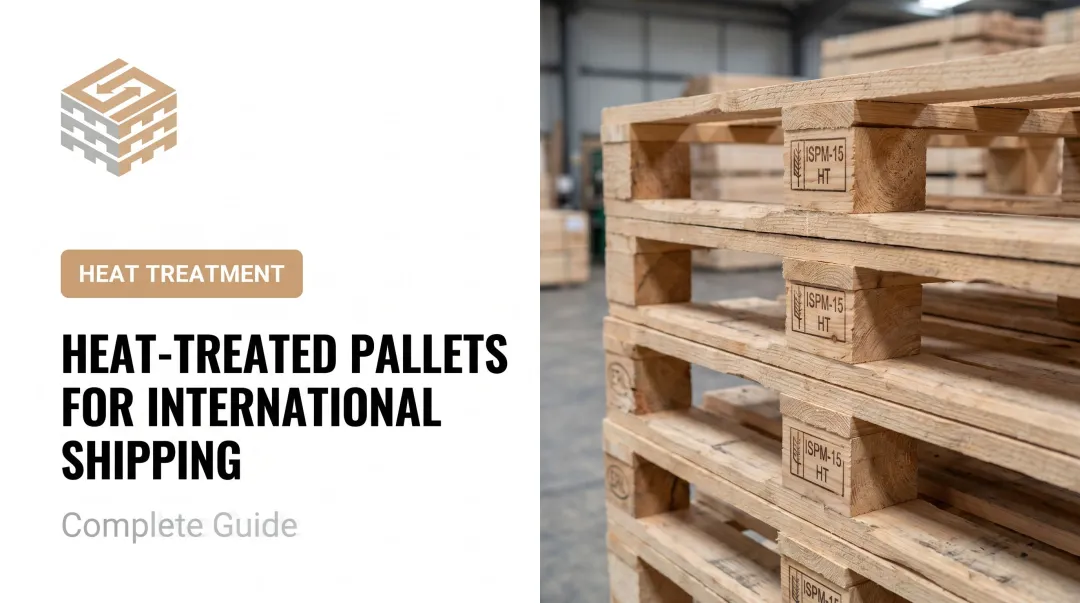
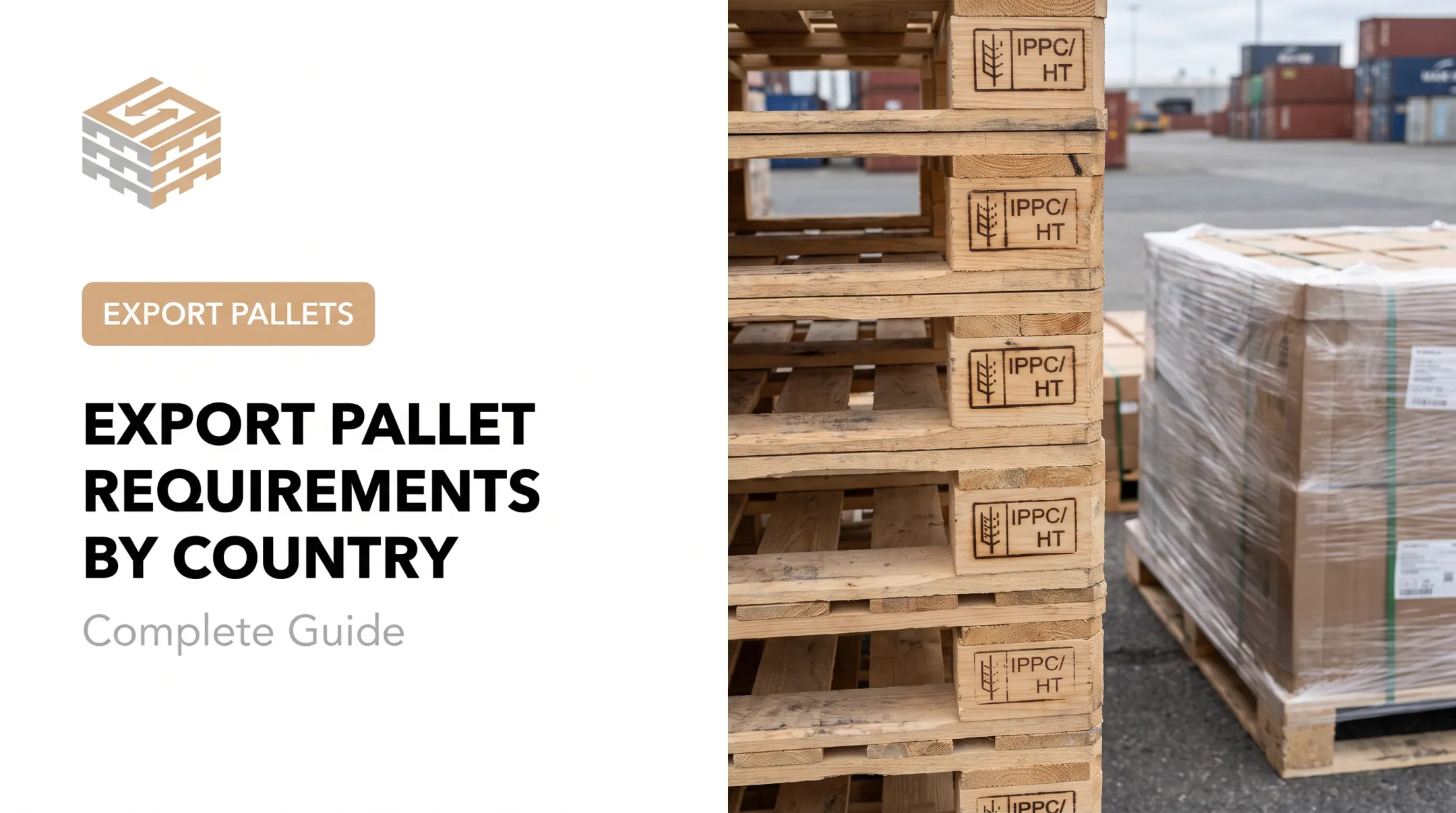
| Marking | "MB" stamp | "HT" stamp |
According to ISPM 15's revised annexes, MB fumigation schedules vary by temperature. At 21.0°C or above, the schedule is 650 g·h/m³ with a final concentration of 24 g/m³; colder conditions require higher doses.
HT has one clean benchmark: 56°C at the core, sustained for 30 minutes.
Both marks must also include the IPPC symbol, ISO country code, and a unique treatment-provider ID. An informal stamp without these elements doesn't count as compliant.

What Are Fumigated and Heat-Treated Pallets?
ISPM-15 requires solid wood packaging to be treated before most international shipments. Two methods still dominate: methyl bromide fumigation (MB) and heat treatment (HT).
Fumigated (MB) Pallets
Fumigated pallets sit sealed in a chamber while methyl bromide gas penetrates the wood, killing pests and larvae. MB was once popular because turnaround was often faster than waiting on kiln access.
That popularity is fading. The U.S. EPA phased out MB production and consumption on January 1, 2005, though certain uses remain exempt, including quarantine and pre-shipment (QPS) applications. MB hasn't disappeared. It's been narrowed to specific, regulated use cases.
MB still shows up where:
- A specific import regulation names MB as the required treatment and no HT alternative exists
- QPS exemptions apply and the treatment window (within 21 days of export) fits the shipment timeline
- Local kiln capacity is unavailable and a certified fumigation provider is the faster option
The risk: as more countries and industries phase out MB, exporters relying on it face growing uncertainty. A country that accepts MB today may tighten requirements tomorrow, so many exporters are already moving away from it.
Heat-Treated (HT) Pallets
HT pallets go through a kiln until the wood core reaches at least 56°C for 30 continuous minutes. There's no gas and no chemical residue, so disposal stays straightforward.
Additional benefits beyond compliance:
- Reduces moisture content, which limits mold and warping
- Improves structural durability over the pallet's service life
- Removes any question about chemical residue for sensitive cargo
HT has become the default for exporters handling:
- Food and beverage products — where any chemical residue risk is a non-starter
- Pharmaceutical shipments — where regulatory scrutiny is already high
- Export-heavy manufacturing — where consistent, predictable compliance matters more than a marginal time savings
Both HT and MB remain officially recognized treatment options under current USDA APHIS export guidance. The operational and reputational upside of HT still keeps pushing exporters toward heat treatment.

Fumigated vs. Heat-Treated: Which Should Exporters Choose?
Your decision comes down to four factors:
- Destination country regulations: Some countries specify HT only; others still accept either. Check current requirements before booking freight, not after.
- Cargo sensitivity: Food, pharma, and consumer goods almost always favor HT to avoid any residue question.
- Turnaround time: If you have kiln access lined up, HT timing is predictable. If you don't, weigh that against MB's regulatory uncertainty.
- Long-term cost and risk: A cheaper fumigation run today isn't worth it if a shifting regulation forces a re-treatment later.
Simple rule of thumb: Choose MB fumigation only if a specific import regulation requires it and no HT alternative exists. Choose HT for standard export shipments, sensitive goods, or any lane touching a region actively phasing out methyl bromide, which increasingly means most of them.
A consistent supplier network makes that HT choice easier to execute. Skid Management Services sources ISPM 15-compliant heat-treated pallets through USDA APHIS-recognized treatment providers, verifying stamps before export and coordinating re-treatment when markings fall short.
Owned inventory plus a national supplier network helps exporters stay compliant without sacrificing competitive pricing or supply reliability.
Real-World Example: Choosing the Right Treatment
Picture a mid-sized food manufacturer exporting snack products through the Port of Baltimore corridor. For years, the company used whichever pallet treatment its packaging vendor had on hand — sometimes MB, sometimes HT, without much thought given to the difference.
Then an environmental audit flagged the MB-fumigated pallets in its outbound shipments. The audit didn't cite a violation, but it raised a red flag: continued reliance on a phase-out chemical created compliance exposure the company hadn't budgeted for.
Buyers were also asking more sustainability questions during vendor reviews, which made the MB issue harder to ignore.
The fix was straightforward. The company standardized on HT pallets across its export program and had its existing pallet stock verified for proper stamping before shipment. Pallets missing valid marks went through re-treatment and re-stamping with a licensed provider rather than getting flagged at the port.

The result:
- Fewer questions from customs brokers
- No scrambling to explain treatment methods during audits
- One less variable in an already complex export process
The takeaway: A supplier who verifies compliance before pallets leave the dock prevents this scenario. If you export food, beverage, or other sensitive cargo, source compliant HT pallets with steady supply—don't wait to find the gap in an audit.
Conclusion
There's no universal answer to "MB or HT." The right choice depends on your destination's specific regulations, how sensitive your cargo is, and whether you're prioritizing speed or long-term regulatory stability.
For most exporters, HT is now the safer default. It removes the chemical-residue question, sidesteps methyl bromide phase-out risk, and keeps cargo integrity intact from dock to destination. That predictability usually outweighs a marginal speed advantage when customs timelines and trade rules keep shifting.
Before you book the next load, confirm the destination’s current ISPM-15 rules, specify HT on the PO, and verify the treatment stamp and documentation match the shipment.
Frequently Asked Questions
What is a fumigated pallet and why is fumigation required?
A fumigated pallet is treated with methyl bromide gas to kill pests before international shipment. ISPM 15 requires either fumigation or heat treatment to prevent wood packaging from spreading invasive species across borders.
What is methyl bromide (MB) fumigation used for?
MB fumigation kills insects, larvae, and other pests living inside wood pallets. It's applied in a sealed chamber following a temperature-dependent exposure schedule before the pallet is cleared for export.
What does the MB marking on pallets mean?
The MB stamp certifies the pallet was fumigated with methyl bromide under an approved ISPM 15 schedule. It appears alongside the IPPC symbol, country code, and treatment-provider ID.
Why is methyl bromide restricted?
Methyl bromide is a Class I ozone-depleting substance. The EPA phased out general production and consumption in 2005, though quarantine and pre-shipment exemptions still apply under the Montreal Protocol.
How can you tell if pallet wood is toxic?
Check the ISPM 15 stamp for the "MB" or "HT" code. MB-treated wood carries a higher chemical exposure risk, while HT-treated wood carries none since no chemicals are used.
Why is burning pallets illegal in many jurisdictions?
Burning treated wood, particularly MB-fumigated pallets, can release toxic compounds into the air. Disposal regulations generally restrict burning treated wood packaging for this reason.
Have questions about sourcing compliant HT pallets for your export program? Contact Skid Management Services at 717-202-0304 or Info@SkidManagementServices.com.