Cleaning a wood pallet looks simple. Grab a hose, spray it down, done. In practice, results depend heavily on the wood's condition, what it carried before, and which method you use.
This guide walks through the exact steps for cleaning wood pallets safely, what you need before starting, the variables that change your results, common mistakes, and when cleaning stops making sense and replacement becomes the smarter move.
Key Takeaways
- Cleaning protects product integrity and reduces pest risks, but the right method depends on contamination type
- A proper process requires PPE, debris removal, an appropriate cleaning solution, and full sun-drying
- Chemically treated, colored, or structurally damaged pallets should be replaced, not cleaned
- Over-soaking and poor ventilation cause most failed cleanings and pallet damage
How to Clean Wood Pallets: Step-by-Step
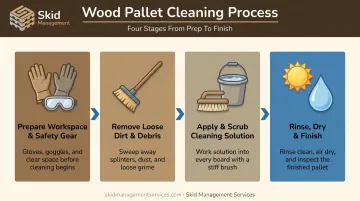
Step 1: Prepare Your Workspace and Safety Gear
Clean outdoors or in a well-ventilated space. Bleach fumes build up fast in enclosed areas, and the CDC specifically warns against using bleach indoors without open windows and doors, plus never mixing bleach with other cleaning products.
Gear up before you touch anything:
- Rubber or neoprene gloves
- Safety goggles or a face shield (splashing is common when scrubbing)
- A dust mask for dry debris removal
- Long sleeves if working with bleach solutions
This PPE list isn't optional once bleach enters the picture.
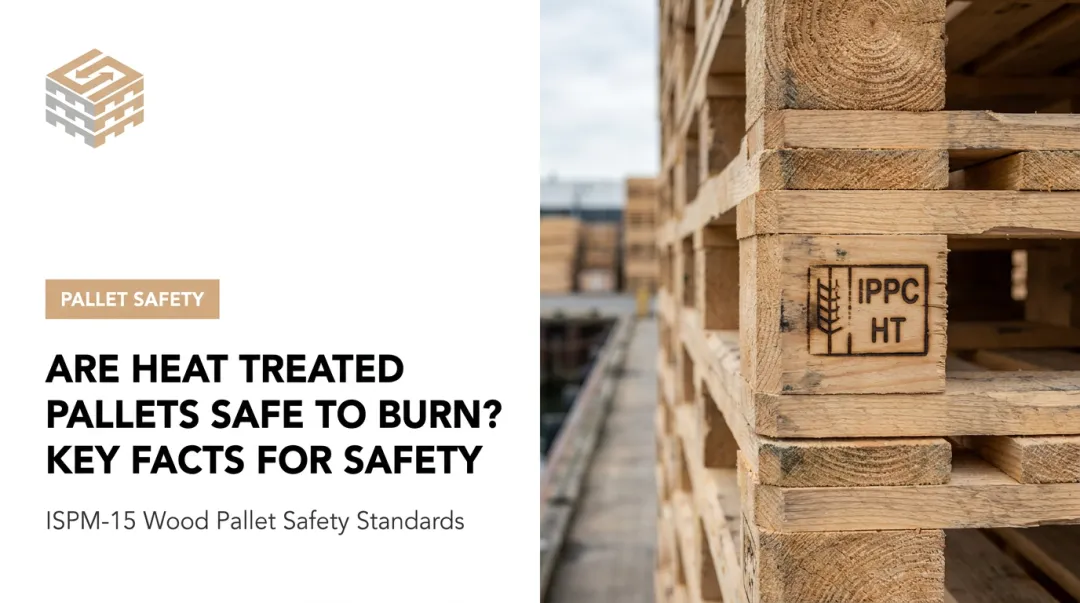
Before scrubbing anything, flip the pallet and check the stamp. You'll typically see HT (heat-treated), MB (methyl bromide fumigated), or occasionally DB referenced alongside a treatment code.
Note that DB isn't actually a treatment method like HT or MB: it simply indicates the wood was debarked, a separate requirement under the ISPM-15 standard. Knowing what you're looking at here saves wasted effort later.
Step 2: Remove Loose Dirt and Debris
Grab a stiff broom or brush and clear off loose dust, wood chips, and surface grime first. Skipping this step means your cleaning solution fights through layers of debris instead of reaching actual grime.
For caked-on residue:
- Scrape it off with a flat scraper or putty knife
- Work along stringers and deckboard edges where buildup accumulates
- Brush away loosened material before moving to wet cleaning
This dry pass matters more than people think. Less debris means less runoff, less cleaning solution wasted, and a faster overall job.
Step 3: Apply and Scrub a Cleaning Solution
Three solution types cover most situations:
| Solution | Ratio | Best For |
|---|---|---|
| Dish soap + water | A few tablespoons per gallon | General surface grime, non-food pallets |
| Diluted bleach + water | Roughly 5 tablespoons per gallon (regular unscented bleach) | Mold, odor, food-adjacent surfaces |
| Vinegar + water | 1:1 ratio | Mild disinfecting, odor neutralizing |
For food-grade applications, always follow the specific EPA-registered product label rather than a generic ratio. Labels for food-contact surfaces differ from general disinfection guidance, and wood is notoriously hard to sanitize compared to smooth, sealed surfaces.
Scrub with a stiff-bristled brush, working into joints, stringers, and deckboard gaps. That's where grime hides and where a quick surface wipe never reaches.
Bleach needs contact time to work: figure on a minute or two minimum depending on the product label. But every trace has to be rinsed away before the pallet touches food or product again. Leftover bleach residue is its own contamination problem.
Step 4: Rinse, Dry, and Finish
Rinse thoroughly with a hose or pressure washer until no soap or bleach residue remains. Don't rush this part: a quick spray isn't a rinse.
Then dry the pallet in direct sun, spaced apart with airflow on all sides. Stacking wet pallets together traps moisture between boards, and that's one of the fastest ways to trigger rot and mold.
Once fully dry, run a light sanding pass over rough spots and splinters left behind from scrubbing. This step matters for worker safety on the next handling pass: nobody wants a hand full of splinters from a pallet that just got "cleaned."
What You Need Before Cleaning Wood Pallets
Under-preparing is the number one reason cleaning jobs drag on or fail outright. Gather everything before the first pallet hits the workspace.
Equipment and Materials Checklist
- Stiff broom or brush for dry debris
- Hose or pressure washer for rinsing
- Bucket for mixing solution
- Stiff-bristled scrub brush
- Sponge or cloth for detail work
- Chosen cleaning solution (soap, bleach, or vinegar based)
Safety and Compliance Readiness
Businesses cleaning pallets bound for food-grade or pharmaceutical use need to confirm their cleaning agents meet the relevant standard before starting. That standard might be FDA FSMA guidance, a GFSI scheme like SQF or BRCGS, or an internal sanitation program, depending on the facility.
That verification responsibility sits with the operation reusing the pallet rather than the pallet's original supplier.
Skid Management Services, for instance, supplies new kiln-dried HT pallets built for the strictest FDA-facing applications, since they carry no treatment-chemical residue and no prior-load history. Confirming a cleaning agent's suitability for a specific GFSI audit still falls to the facility running that audit.
Key Factors That Affect Wood Pallet Cleaning Results
Two nearly identical pallets can clean up completely differently. Here's why.
Wood Type and Age
Older, more weathered wood tends to be more porous, which means it absorbs both cleaning solution and moisture more deeply into the grain. The practical result: longer drying times and a higher chance of warping if you don't get the pallet fully dry before stacking or reusing it.
Wood is hygroscopic by nature — it constantly exchanges moisture with the surrounding air. Uneven drying after washing is what typically produces checking, cupping, or twisting, not the wood's age by itself.
Prior Load and Contamination History
A pallet that previously hauled chemicals, pesticides, or pool products can carry residues embedded deep in the grain. Scrubbing the outside won't reach what's soaked into the wood fibers.
Here's a nuance worth understanding: color alone doesn't confirm contamination. Blue or gray discoloration is often bluestain fungus, weathering, or simple iron staining from metal contact rather than chemical exposure, according to industry guidance from the National Wooden Pallet and Container Association.
That said, unusual staining combined with an unknown load history is still a legitimate reason to be cautious and consider replacement over cleaning.
Treatment Method and Stamp (HT vs. MB)
Check the IPPC stamp before you spend an hour scrubbing:
- HT (Heat-Treated): Kiln-heated with no fumigant chemicals, making it the safer candidate for cleaning and reuse.
- MB (Methyl Bromide): Fumigated with methyl bromide. Many food and pharmaceutical operations avoid reusing MB pallets in sensitive environments as a conservative policy, though this isn't a universal regulatory ban. Treat MB stamps as a hard pass if your facility runs a zero-tolerance chemical-history rule.
Checking the stamp first prevents wasted labor on a pallet you're going to retire anyway.
When to Clean vs. When to Replace Your Pallets
Cleaning isn't automatically the right call. Sometimes replacement costs less time and carries less risk.
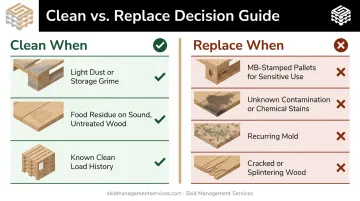
Cleaning makes sense when you're dealing with:
- Light dust or general storage grime
- Food residue on structurally sound, untreated wood
- Surface dirt on pallets with a known, clean load history
Replacement is the smarter move when you're facing:
- MB-stamped pallets in sensitive food or pharma applications
- Chemical spill stains or unknown contamination history
- Mold that keeps returning after repeated cleaning attempts
- Cracked, splintering wood that poses an injury risk
For operations running high pallet volumes, repeatedly cleaning compromised stock often costs more in labor than it saves.
Skid Management Services offers new and recycled pallet replacement at competitive pricing, backed by uninterrupted supply. Pickup and buy-back programs turn retired stock into trade-in credit instead of a pure disposal cost.
At more than 500 pallets a month, a closed-loop program (new supply delivered and compromised pallets picked up on the same trip) usually beats cleaning on both cost and risk.
Common Mistakes and Troubleshooting While Cleaning Wood Pallets
Most failed cleanings trace back to a handful of repeat offenders:
- Skipping PPE or ventilation when using bleach solutions, since fumes build up fast in closed spaces
- Over-soaking pallets, which pushes moisture deep into the grain and accelerates rot instead of preventing it
- Using abrasive tools or excessive scrubbing force, which splinters wood and creates new injury hazards
Troubleshooting Common Problems
Problem: Mold or odor persists after cleaning. This usually means moisture penetrated below the surface, not just the top layer. Extend the sun-drying period and check for damp pockets. If odor or visible mold returns after a couple of days, the pallet is a candidate for discarding rather than another wash cycle.
Problem: Pallet warps or swells after washing. Uneven drying or stacking pallets while still wet is almost always the cause. Dry pallets flat, spaced apart, with airflow reaching all sides — not stacked tight against each other.
Frequently Asked Questions
How do you treat pallets to prevent rot?
Thorough sun-drying, avoiding over-soaking, and storing pallets off damp ground are the main defenses against rot after cleaning. Keeping pallets elevated and spaced for airflow prevents the trapped moisture that leads to decay.
How can I tell if a pallet is toxic?
Look for unusual staining, discoloration, or colored/painted wood paired with an unknown load history, and check the stamp for an MB (methyl bromide) code. No single sign confirms toxicity, so treat these as red flags only.
How often should wood pallets be cleaned?
It depends on the use case. Food-grade pallets typically need cleaning between uses or on a defined sanitation schedule, while general storage pallets can be inspected periodically and cleaned only when visibly dirty.
Can you pressure wash wood pallets?
Yes, pressure washing works well for rinsing off scrubbed debris and cleaning solution. Just follow it with complete air-drying in a ventilated space, since pressure washing adds water that needs somewhere to go.
Is bleach safe to use on wood pallets used for food storage?
Diluted bleach is commonly used for sanitizing, but it must be fully rinsed and completely dried before the pallet touches food again. Always check the specific product label for food-contact dilution and contact-time instructions.
When should you stop cleaning a pallet and replace it instead?
Structural damage, an MB treatment stamp for sensitive applications, or mold that keeps returning after cleaning are all signs it's time to replace the pallet rather than keep washing it.