
Get the grade wrong and you risk product damage, wasted freight spend, or worse, a rejected shipment at a customer's dock. This guide breaks down what separates #1 from #2 pallets, where each fits best, and how to choose without guesswork.
One thing worth noting upfront: there's no single national standard that defines "#1" or "#2" pallets. The National Wooden Pallet and Container Association's 2025 Uniform Standard is voluntary and covers classifications, construction, and repair classes, but it doesn't set commercial grade labels like #1 or #2. Those terms are supplier shorthand. Always ask your supplier for their written specification.
Key Takeaways
- #1 (often called Grade A) pallets are near-new, defect-free, and built for heavy or high-value loads.
- #2 pallets are repaired and reused, more budget-friendly, and suited to general shipping.
- Choose by load weight and value, budget, and whether appearance or presentation matters.
- Skid Management Services supplies both grades nationwide through its inventory and supplier network for steady availability.
#1 vs #2 Pallets: Quick Comparison
| Factor | #1 Pallet | #2 Pallet |
|---|---|---|
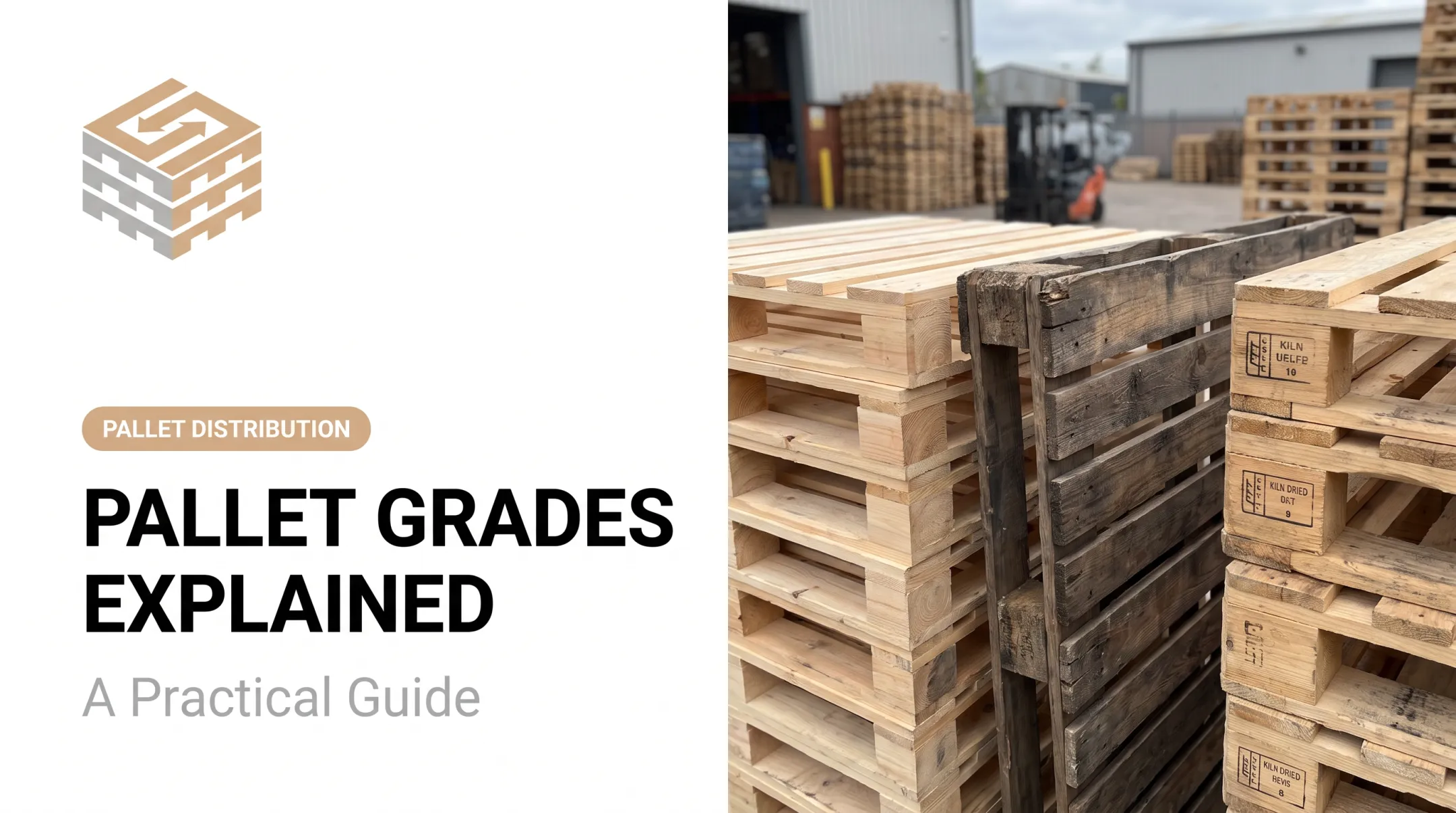
| Condition | Like-new, no visible repairs, minimal wear | Shows repairs (replaced boards, reinforced stringers) |
| Cost | Higher price point | More budget-friendly for high-volume use |
| Durability | Built for heavy, fragile, or high-value goods | Structurally sound, better for light-to-moderate loads |
| Appearance | Clean, uniform, professional look | Functional but shows discoloration or graying |
A Fastmarkets snapshot from October 2025 put used Grade A (#1) pallets at $8.50 to $10.50 and used Grade B (#2) at $4 to $8.50 per pallet. Those figures are one snapshot, not a national rule. Delivered pricing always depends on size, volume, and your region.

What Is a #1 Pallet?
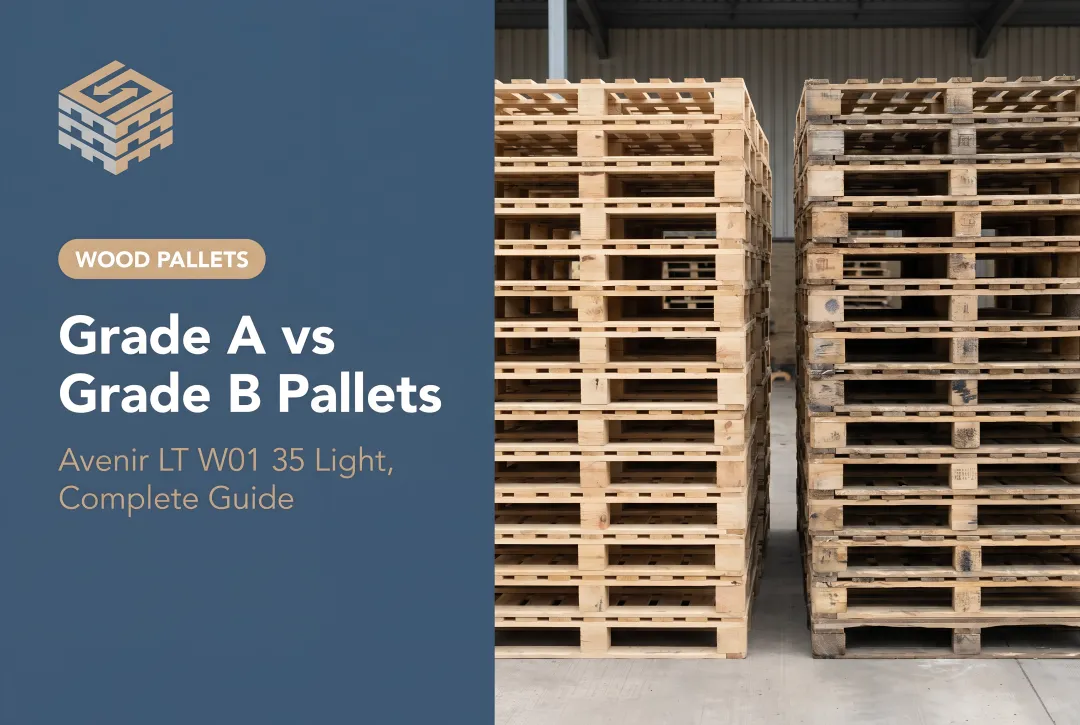
A #1 pallet is the top used-pallet tier: structurally intact, free of major defects, and about as close to new condition as you can get without paying new-pallet prices. Most suppliers, including Skid Management Services, use the "Grade A" label for this category. Grade A pallets typically have all seven deck boards present, no broken stringers, and minimal repair history.
Why it matters:
- Consistent dimensions support automated racking and conveyor systems
- Longer reuse life before it needs repair or retirement
- More reliable under heavy or fragile loads
One distinction matters: some suppliers separate "#1/Grade A used" pallets from brand-new milled pallets. They're not the same. A #1 used pallet has already carried loads; a new pallet hasn't. Both can be clean and structurally sound, but they come from different production paths and price points.
Use Cases of #1 Pallets
Industries where a #1 grade pays for itself:
- Food and beverage manufacturing — sanitation and structural reliability matter for FDA-regulated transport
- Pharmaceuticals — cGMP-adjacent operations often require consistent, damage-free platforms
- Electronics — fragile, high-value goods need stable footing
- Retail displays — presentation counts when the pallet is customer-facing
Even #1 grade isn't a free pass on quality control. A 2023 peer-reviewed study in BioResources inspected 430 field pallets and found stringer-notch damage in 52% of the sample, splits in nearly 26%, and missing wood in about 22% (BioResources, 2023). Grade alone doesn't guarantee performance, so inspection still matters on every load.

What Is a #2 Pallet?
A #2 pallet, sometimes labeled Utility Grade, is a repaired or lightly worn pallet that's still structurally sound but shows signs of use. Think replaced boards, reinforced stringers, or visible discoloration. It's functional, just not pristine.
Why businesses choose #2:
- Lower cost per unit than #1 or new pallets
- Reduces demand for new lumber, supporting circular-economy goals
- Performs adequately for general shipping and internal warehouse flow
Recycled pallets overall (across grades) commonly deliver 40–60% cost savings versus new pallets, according to Skid Management Services' internal pricing data. That figure covers recycled pallets broadly—not a strict #1-to-#2 comparison—but it shows the savings available when top-tier condition isn't required.
Use Cases of #2 Pallets
#2 pallets fit well in these settings:
- Warehousing and internal material flow — no customer ever sees these pallets
- Manufacturing floor operations — moving raw materials between stations
- General retail shipping — non-premium, high-volume lanes
- One-way or short-term shipments — no need to pay for longevity you won't use
USDA Forest Service research found that pallet repair companies recycled 326 million wooden pallets in 2016. Surveyed municipal facilities recovered or reused another 15.9 million pallets that same year (USDA Forest Service, 2021). Sourcing #2 pallets taps directly into that reuse stream.

#1 vs #2: Which Pallet Is Better for Your Business?
There's no universal winner. The right grade depends on a handful of factors:
- Load requirements — heavy, fragile, or high-value goods lean toward #1
- Budget — cost-sensitive, high-volume operations often do fine with #2
- Industry regulations — food, pharma, and export shipments may demand cleaner, more consistent pallets
- Frequency of reuse — pallets cycling through automated systems need #1 consistency
- Brand presentation — customer-facing pallets should look the part
Choose #1 when:
- Goods are fragile, heavy, or high-value
- You're shipping export or hygiene-regulated products
- Automated handling systems need tight tolerances
Choose #2 when:
- Shipments are internal or non-customer-facing
- Volume is high and cost control is the priority
- Pallets are one-way or short-term use
Supply consistency matters just as much as grade selection. Skid Management Services combines its own inventory with an expansive supplier network, so businesses can secure the right grade — large order or small — without disruption to their supply chain.

Real-world scenario: Picture a food distributor shipping snack products on #1 pallets for every load, including internal transfers between warehouses. Switching internal, non-customer-facing shipments to #2 while keeping #1 for outbound customer shipments can cut per-pallet spend significantly.
Track cost per shipment and product-damage rate for a few months to confirm the switch doesn't introduce new handling problems.
Conclusion
Neither #1 nor #2 pallets are universally "better." The right choice depends on three factors:
- What's riding on the pallet
- What your budget allows
- How much appearance and repeat use matter to your operation
A pharmaceutical shipper and a warehouse moving raw materials internally have very different needs, even if they're both buying "pallets."
Matching grade to operational need is what reduces costs and prevents damage down the line. If you're unsure which grade fits your shipments, or you need consistent supply of both grades, Skid Management Services can walk through your specific load and volume requirements.
Frequently Asked Questions
What is a number 2 pallet?
A #2 pallet is a used, repaired grade that's structurally sound but shows signs of wear, such as replaced boards or reinforced stringers. It's a lower-cost option suited to general shipping and internal warehouse use.
What is the difference between #1 and #2 pallets?
#1 pallets are like-new with no visible repairs and higher durability. #2 pallets have visible repairs but remain functional, structurally sound, and more affordable for high-volume use.
What does "2 pallets" mean?
This refers to the #2 grading classification, not a quantity of two pallets. Grading systems like this help buyers quickly identify condition and price point without inspecting every unit individually.
What does 1 pallet mean?
"#1 pallet" refers to the top used-pallet grade, distinct from a brand-new milled pallet. It signals near-new condition and reliability, though pricing sits below new-pallet cost.
What is 1 pallet size?
Size and grade are separate concepts. The most common standard size across grades is 48x40 inches (GMA standard), though custom dimensions are available regardless of grade.
How long do #1 and #2 pallets typically last?
#1 pallets typically handle more reuse cycles because they start with less prior wear. #2 pallets have already been repaired once, so expect a shorter remaining service life under heavy use.