TL;DR: Key Takeaways for Pharmaceutical Exporters
- Wood pallets remain practical for pharmaceutical export — especially one-way, high-volume international shipments — due to cost and load advantages.
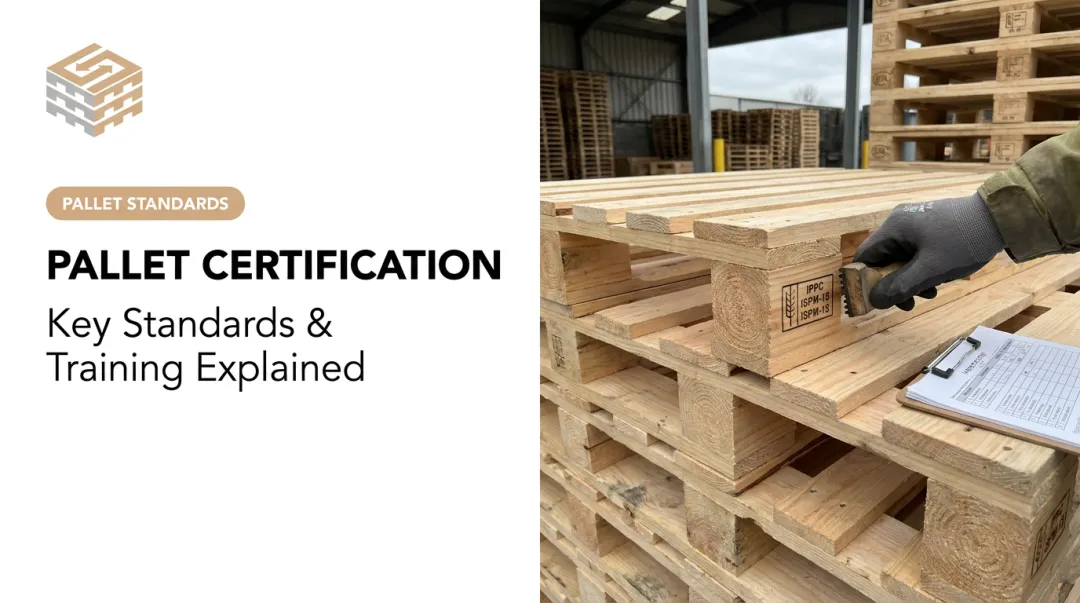
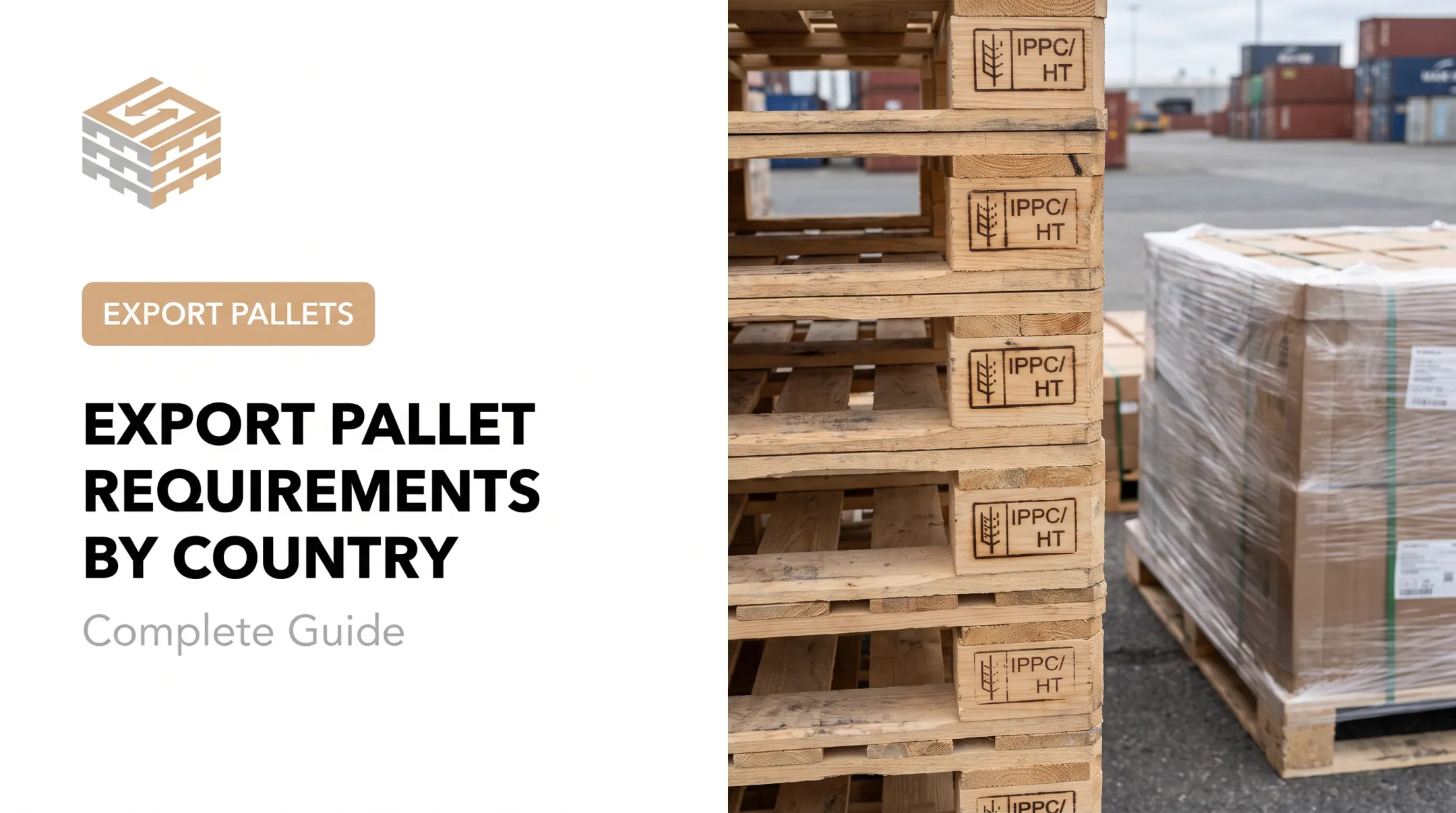
- All wood pallets in international trade must comply with ISPM 15 and carry the IPPC mark showing country code, facility number, and treatment type.
- FDA GMP standards require "household clean" pallets free from chemical contamination, moisture, pests, and physical contaminants.
- New pallets are typically required for raw material deliveries; recycled pallets are acceptable for finished goods under proper management controls.
- Halophenol-based wood treatments can produce anisole taint, a contamination risk linked to documented product recalls.
Why Wood Pallets Are Still Used in Pharmaceutical Export
Cost is the primary driver. According to Grand View Research, new 48x40-inch GMA wood pallets run approximately $8–$10 each, while comparable plastic pallets cost $20–$25 — roughly 60–67% more. For one-way international shipments where pallet return is logistically impractical, that gap makes wood the default choice.
Beyond price, wood pallets offer structural performance well-suited to pharmaceutical cargo. A standard GMA pallet supports a minimum of 2,500 lbs, handling bulk APIs, bottled liquids, and packaged equipment without modification.
The Pallet Design System (PDS) calculates load capacity, deflection, component stress, and service life using engineering data, giving buyers a documented performance baseline rather than relying on assumptions.
Where Wood Pallets Fit in Pharmaceutical Logistics
Wood wins on infrastructure compatibility. Standard forklifts, pallet jacks, and racking systems at virtually every pharmaceutical distribution center handle wood pallets without modification — no capital investment required to adopt them.
Wood pallets are the right tool for pharmaceutical export when:
- Shipments are high-volume and one-directional (no return logistics)
- Destination countries accept ISPM 15-treated wood packaging
- Internal SQA programs are structured to manage contamination risks
- Cost efficiency is a priority over the closed-loop tracking that plastic enables
The NWPCA noted in an FDA docket submission that approximately 93% of the estimated 1.8 billion pallets in U.S. service were wood , including in food and pharmaceutical supply chains. That share reflects a functional fit that compliance requirements shape but don't displace — understanding those requirements is where the real operational work begins.
ISPM 15 Compliance: The Non-Negotiable Standard for Wood Pallet Export
ISPM 15 — the International Standards for Phytosanitary Measures No. 15 — governs all solid wood packaging material (WPM) in international trade. Its purpose is preventing the cross-border spread of forest quarantine pests including the Asian longhorned beetle, bark beetles, and pinewood nematode. For pharmaceutical exporters, this isn't optional: APHIS prohibits noncompliant WPM from entering or transiting the United States.
Approved Treatment Methods
Heat Treatment (HT): Wood must reach a minimum core temperature of 56°C for at least 30 continuous minutes throughout the entire profile. Two methods achieve this:
- Kiln drying — removes moisture while achieving temperature targets; reduces mold risk significantly and is the preferred method for pharmaceutical applications
- Steam heat treatment — achieves temperature targets without meaningful moisture reduction; higher mold risk post-treatment makes it less suitable for pharmaceutical use
Methyl Bromide (MB) fumigation: Still listed as an approved method under ISPM 15, but being phased out broadly. The EU banned remaining quarantine and shipping exemptions by 2011. Beyond regulatory momentum, MB raises product safety concerns in pharmaceutical contexts. Most pharma exporters specify HT-certified pallets.
The IPPC Mark
Every compliant pallet must display a mark that includes:
- The IPPC symbol
- ISO two-letter country code
- Unique producer or treatment provider code
- Treatment type code (HT, MB, DH, or SF)
The mark must appear within a rectangular or square border, visible on at least two opposite sides. CBP and APHIS inspectors verify this mark at entry points. Illegible, missing, or incorrect marks constitute noncompliance regardless of whether the wood was actually treated.
Consequences of Noncompliance
When APHIS agricultural inspectors identify a WPM violation, they issue an Emergency Action Notification (EAN). The importer must then choose from three options:
- Fumigation under government supervision
- Re-exportation of the shipment
- Destruction of the noncompliant material
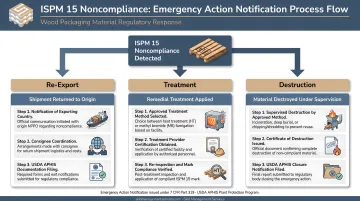
For time-sensitive pharmaceutical shipments, any of these outcomes creates serious supply chain disruption.
Certification verification matters: In the United States, ISPM 15 facilities are audited by third-party agencies accredited by the American Lumber Standard Committee (ALSC) under agreement with USDA APHIS. Pharmaceutical exporters should confirm their pallet supplier's active certification status before procurement — ALSC publishes accredited agency lists publicly.
Skid Management Services supplies ISPM 15-certified, heat-treated pallets for pharmaceutical export, with pallets stamped and documented for customs clearance. The company works with pharmaceutical manufacturing customers whose procurement teams require verified ISPM 15 compliance at the supplier level.
FDA, GMP, and Good Distribution Practice Requirements for Wood Pallets
The FDA does not publish a standalone wood pallet standard. Instead, GMP obligations flow from 21 CFR Part 211, which requires contamination prevention across all equipment, materials, storage conditions, and supply chain touchpoints. Pallets fall within the scope of multiple subsections — including 211.56 (cleaning procedures), 211.80 (component handling and storage), and 211.142 (warehousing conditions).
The "Household Clean" Baseline
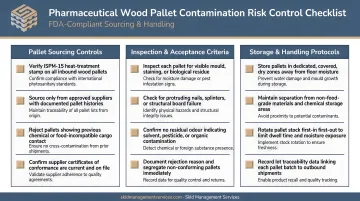
The pharmaceutical industry requires "household clean" pallets — meaning no gross contaminants:
- Grease or oil residue
- Chemical residues of any kind
- Soil or mud
- Insect infestation or frass
- Visible mold
- Foreign materials that could compromise product integrity
This standard applies to both incoming raw material pallets and outbound finished goods pallets.
The Halophenol-to-Anisole Risk
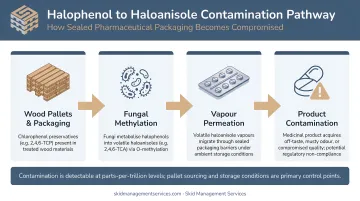
Wood products treated with fungicide preservatives containing 2,4,6-tribromophenol (TBP), 2,4,6-trichlorophenol (TCP), or pentachlorophenol can undergo microbial conversion in moist conditions, producing haloanisoles (including TBA and TCA).
These compounds create a musty taint that penetrates sealed pharmaceutical packaging. The FDA's CGMP Q&A guidance addresses this risk, tracing musty/moldy odor contamination to wooden pallets treated with TBP.
The McNeil/Tylenol recalls of 2010–2011 are the defining real-world example. McNeil's own FDA response confirmed TBA contamination from TBP-treated pallet wood, triggering a broad product recall and a supplier mandate to source heat-treated, TBP/phenol-free pallets.
The FDA now recommends that manufacturers and distributors prevent use of any wood products treated with halogenated phenolic preservatives in facilities that manufacture, hold, or distribute drug products, components, or packaging materials.
GDP Documentation Expectations
WHO GDP guidelines (Annex 7) require:
- Pallets stored off the floor, maintained in good repair and cleanliness
- Comprehensive receipt, storage, and distribution records
- Dispatch records sufficient for traceability and rapid recall
EU GDP mirrors this approach: medicinal products must never be stored directly on the floor, and transport containers must not adversely affect product quality.
What this means for supplier management: Pharmaceutical companies should require pallet suppliers to participate formally in their Supplier Quality Assurance (SQA) programs with documented adherence through audits, treatment certifications, and corrective action processes.
Managing Contamination Risks: Chemical, Mold, and Pest
Mold Control
Mold requires moisture content above 20% to colonize wood. The practical target: softwood pallet components at or below 19% moisture content, which industry guidance identifies as the threshold that significantly reduces mold likelihood.
Key controls:
- Specify kiln-dried components for softwood pallets
- Require air- or kiln-drying after assembly for hardwood pallets using green components
- Store pallets indoors in dry, ventilated spaces
- Re-inspect any pallets stored outdoors before shipment
One common oversight: new pallets produced via steam heat treatment can arrive at elevated moisture content. Steam HT achieves ISPM 15 temperature compliance without reducing moisture — so "new and compliant" does not automatically mean "low mold risk."
Chemical Contamination Prevention
Halophenols in fungicide treatments are a known contamination risk for pharmaceutical products. Supplier controls should include:
- Prohibit halophenol-containing fungicide formulations — document this in the SQA agreement, not just verbal understanding
- Require Material Safety Data Sheets confirming wood treatments are halophenol-free before first delivery
- Re-confirm compliance on any supplier specification change
Pest Mitigation
- Pest control at manufacturing and storage sites should be managed by professional providers on documented schedules
- Pallets should arrive in clean, enclosed trailers
- Compressed air to remove residual sawdust is acceptable pre-shipment practice
- Avoid leaving pallets in non-ventilated trailers during warm weather — enclosed heat accelerates mold growth
New vs. Recycled Wood Pallets: What Pharmaceutical Exporters Need to Know
When New Pallets Are Required
New pallets are generally required for raw material deliveries directly to pharmaceutical manufacturing sites. The core issue is traceability: no reliable method exists to establish a recycled pallet's complete history — what it carried, what environments it passed through, or what chemical exposures it had.
One important caveat: new pallets produced with steam HT (rather than kiln drying) can carry a higher mold risk if moisture content is not controlled post-treatment. "New" status alone does not guarantee quality. Treatment method and moisture content still require verification before use.
When Recycled Pallets Are Acceptable
Recycled pallets are a practical, cost-effective option for finished goods export when these controls are in place:
- Incoming lots are inspected and sorted upon receipt
- Visibly contaminated units are segregated for cleaning or disposal
- Replacement components come from traceable, controlled suppliers
- The prior-use cycle completed without known contamination
When replacement components are properly sourced and controlled, anisole taint risk in remanufactured pallets is low. That said, traceability remains the core limitation. SQA programs for pharmaceutical accounts typically impose stricter incoming inspection requirements on recycled lots because prior use cannot be confirmed.
Skid Management Services supplies both new and used/recycled wood pallets, so pharmaceutical exporters can match pallet type to application — new stock for raw material receipt, recycled where inspection controls are in place for finished goods.
How to Source Compliant Wood Pallets for Pharmaceutical Export
Supplier Evaluation Checklist
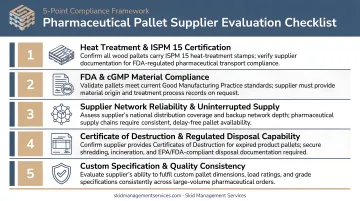
Before approving a pallet supplier for pharmaceutical export, verify the following:
- ISPM 15 certification — active status from an ALSC-accredited facility, verifiable before procurement
- GMP/GDP documentation — ability to provide treatment records, storage condition data, and delivery vehicle cleanliness confirmation
- Halophenol-free assurance — documented confirmation via MSDS or equivalent, included in the SQA agreement
- Clean storage and delivery — pallets stored indoors in dry, ventilated conditions; delivered in enclosed, clean trailers
- SQA participation — willingness to participate in the buyer's supplier quality program, including audit access and corrective action response
The Case for a National Supplier Network
Pharmaceutical supply chains don't tolerate gaps. A single-source pallet supplier can become a point of failure during high-demand periods, regional supply disruptions, or tight compliance windows that narrow available inventory.
Working with a national provider that maintains both owned inventory and an expansive supplier network reduces that risk. Skid Management Services holds its own inventory while drawing on a national network of pallet and packaging suppliers — keeping supply consistent and pricing competitive regardless of regional conditions. Their coverage near the Philadelphia and Baltimore port corridors is particularly relevant for pharmaceutical exporters managing ocean freight timelines.
Pre-Delivery Documentation Requirements
Compliant pharmaceutical pallet procurement should include:
- ISPM 15 treatment records confirming HT compliance and IPPC mark details
- Moisture content documentation (especially for softwood and new steam-HT pallets)
- Clean trailer delivery confirmation
- Signed SQA agreement committing the supplier to audit access and corrective action obligations
Frequently Asked Questions
What are the FDA requirements for wood pallets used in pharmaceutical export?
The FDA has no standalone wood pallet standard, but 21 CFR Part 211 requires all materials in the pharmaceutical supply chain — including pallets — to remain free from contamination. Pallets must meet the "household clean" GMP standard, covering chemical, biological, and physical contamination risks.
Why are wooden pallets used in pharmaceuticals?
Wood pallets remain widely used due to their cost-effectiveness for one-way export shipments, high load-bearing capacity, and compatibility with standard warehouse handling equipment. They are appropriate when ISPM 15, GMP cleanliness, and chemical sourcing requirements are properly managed.
Is ISPM 15 mandatory for wood pallets used in pharmaceutical export?
Yes — ISPM 15 compliance is mandatory for all solid wood packaging material crossing international borders. Pallets must be heat-treated or fumigated and marked with the IPPC logo, country code, producer number, and treatment method. Noncompliant shipments risk rejection, supervised fumigation, re-export, or destruction at the port by APHIS and CBP.
What are the OSHA regulations for wooden pallets in pharmaceutical facilities?
OSHA 29 CFR 1910.176 requires that stacked loads remain stable, storage areas stay clear of tripping and fire hazards, and materials not create pest harborage conditions. Pharmaceutical facilities must incorporate these requirements into pallet management SOPs alongside their existing GMP obligations.
Can used or recycled wood pallets be used for pharmaceutical export?
Recycled pallets are acceptable for finished goods export when backed by incoming inspection, sorting, and documented pallet management controls. For raw material deliveries to manufacturing sites, new pallets are generally required. In either case, ISPM 15 compliance and GMP cleanliness standards apply without exception.
What wood pallet grades are acceptable for pharmaceutical use?
The Pallet Design System defines component grades from select through economy. Pharmaceutical use requires higher-grade components to reduce splinter risk, board breakage, and debris contamination during handling. Specify minimum grade requirements in your supplier quality agreements to enforce this at the source.