Yet many e-commerce operations wrap pallets inconsistently. Some under-wrap and risk load collapse in transit. Others over-wrap and waste film on every cycle. Neither extreme is acceptable when a single damaged shipment means a return claim, a lost customer, and absorbed freight costs in both directions.
This guide explains exactly how pallet wrapping works — the mechanics, the sequence, the methods — and the specific tips e-commerce fulfillment teams need to wrap smarter.
Key Takeaways
- Pallet wrapping applies elastic stretch film to unitize goods, prevent load shifting, and protect against moisture and handling damage
- Wrapping follows a fixed sequence: load prep, base anchor, vertical coverage, and final seal — skip a stage and load integrity suffers
- Containment force determines wrap security, not the number of layers applied
- Film gauge should match the load weight and transit distance, not default to a one-size-fits-all specification
- Wrapping cannot fix a bad pallet: a compromised deck or broken stringer will fail regardless of how much film you apply
What Is Pallet Wrapping?
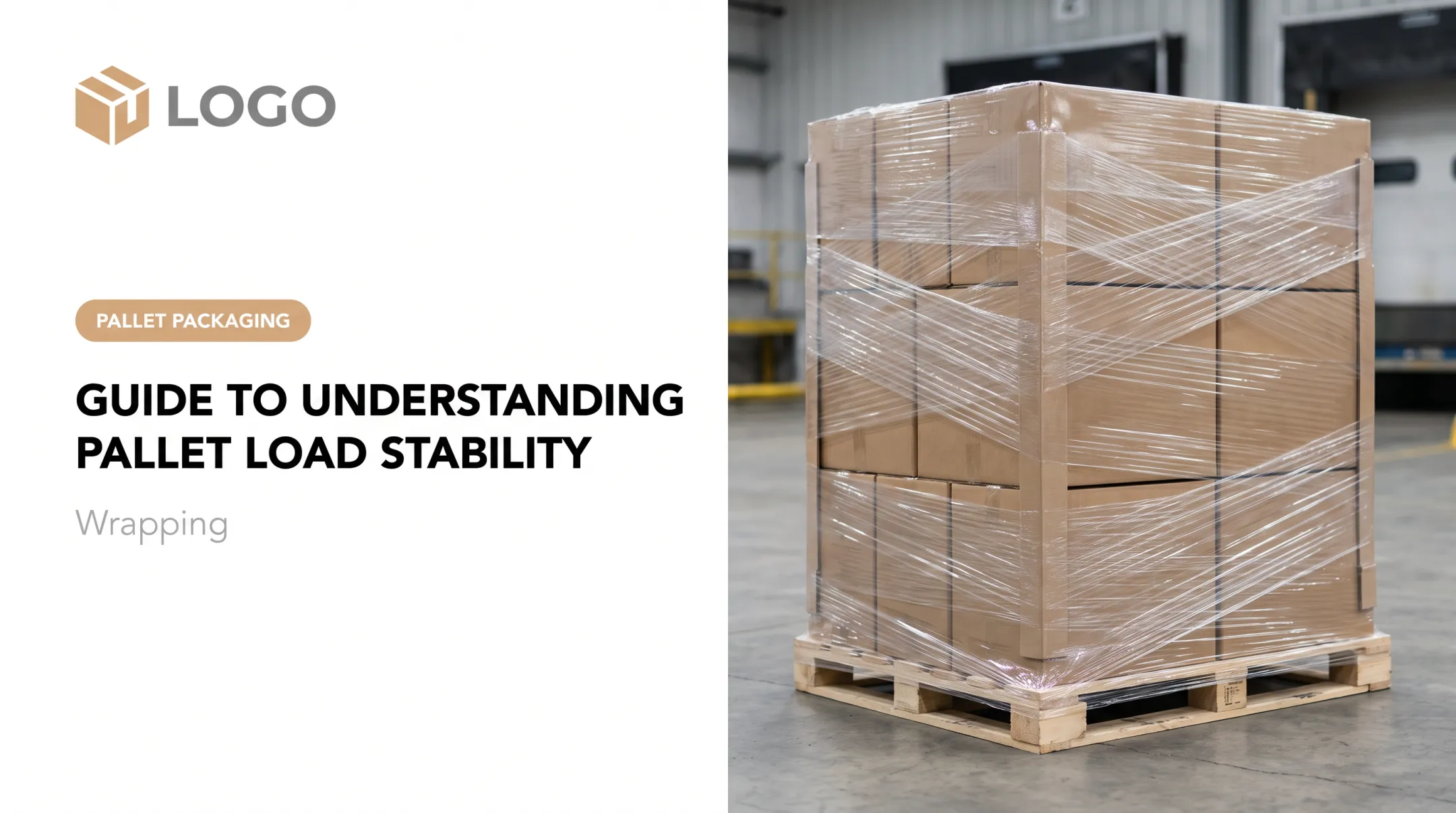
Pallet wrapping — also called stretch wrapping — is the process of applying elastic polyethylene stretch film around goods stacked on a pallet to unitize the load, prevent movement, and protect against dust, moisture, and handling damage.
Without it, stacked boxes can shift during forklift handling, topple on a truck, or separate in warehouse storage. The result: product damage, costly returns, and avoidable freight claims.
How Stretch Wrapping Differs from Alternatives
Stretch wrapping is often confused with two other securing methods:
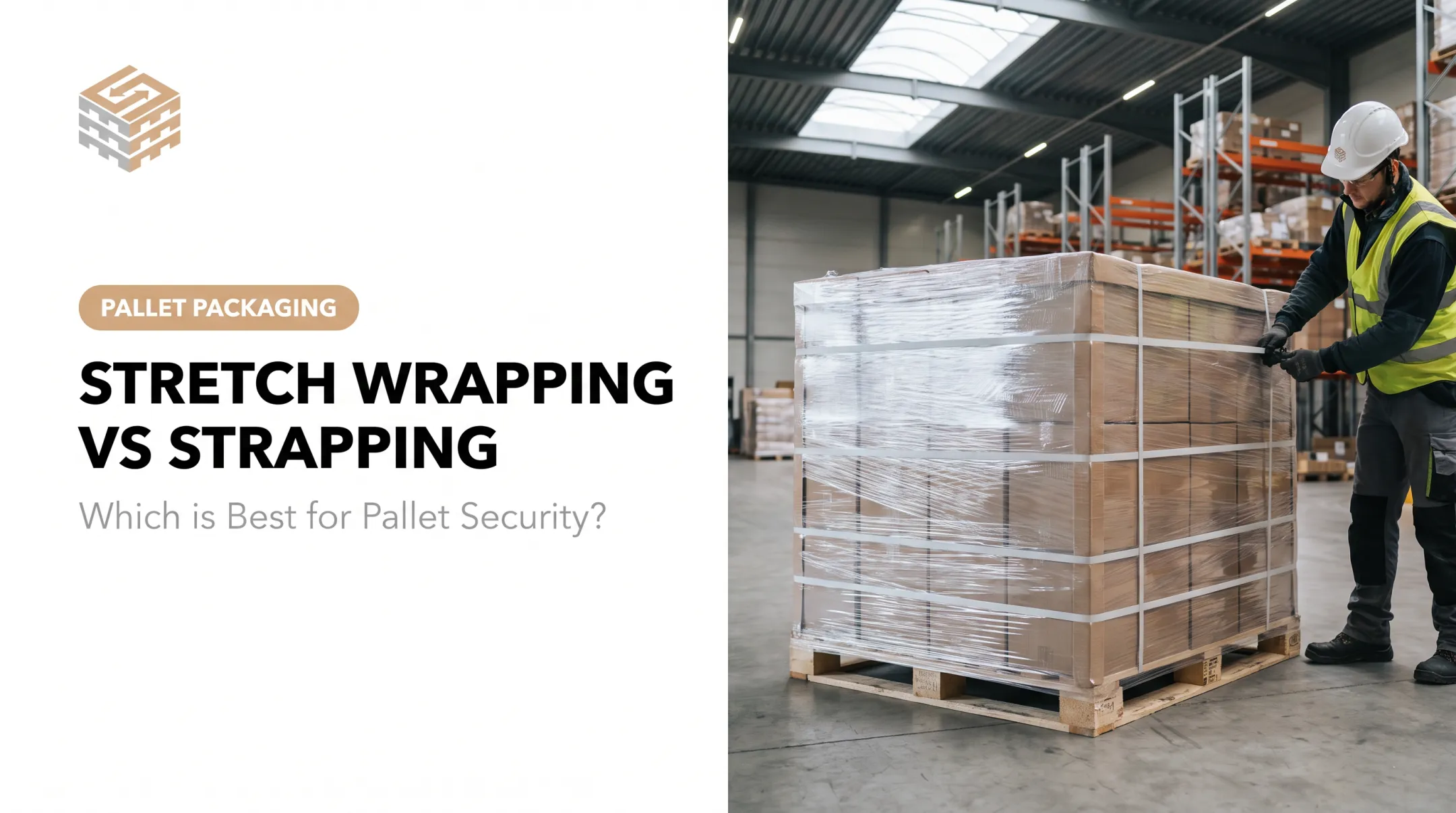
- Shrink wrapping uses heat to tighten film around goods; stretch film achieves containment through tension and cling, no heat required
- Strapping uses rigid bands to secure loads; stretch film wraps the entire load circumferentially, providing containment bands alone can't match
Film Types
Two primary film grades are used:
- Hand-grade stretch film: thinner, applied manually, best for lower-volume operations or irregular load shapes
- Machine-grade pre-stretch film: higher gauge film engineered for semi-automatic and fully automatic wrappers, delivering consistent tension at high throughput
Film choice directly affects both protection level and cost per pallet. For loads requiring airflow during transit, vented or breathable stretch film is also available as a specialty option.
Why Stretch Film Remains the Standard
Stretch film delivers full circumferential containment force that corner-bracing or strapping alone cannot match. One case study cited by Packaging Digest found ultra-strength stretch film reduced unitizing materials by 91% and packaging material costs by 72% compared to traditional alternatives, replacing up to 5.4 lb of materials with just 8 oz of film.
How Does Pallet Wrapping Work?
Pallet wrapping follows a defined sequence. Skipping or rushing any stage reduces load integrity — whether you're hand wrapping or using an automated machine.
Stage 1: Preparing the Load
The process begins before any film is touched. Load configuration determines whether wrapping can do its job:
- Stack heavier boxes at the base, lighter goods on top
- Use column or brick-lay patterns for stability
- Eliminate overhanging edges (overhang creates leverage points wrapping cannot contain)
- Ensure the pallet deck is intact before loading
According to Lantech, load preparation is one of the primary factors in pallet-load stability, shipping performance, and workplace safety. A poorly configured load cannot be saved by the wrap applied over it.
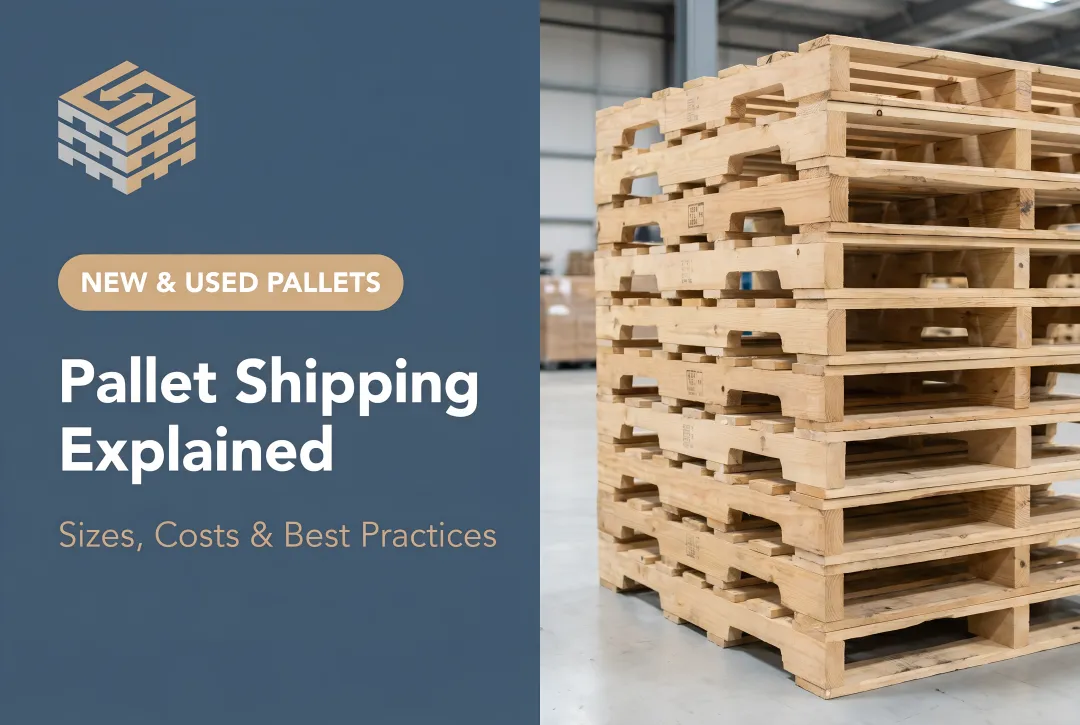
The pallet itself is the foundation of this process. A structurally sound GMA 48x40 wood pallet — intact stringers, no broken deck boards, confirmed 4-way entry — distributes load weight evenly and gives stretch film a stable surface to lock against. For e-commerce operations, sourcing FBA-compliant pallets in new or Grade A recycled condition ensures the foundation holds up before a single layer of film is applied.
Stage 2: Anchoring and Applying the Wrap
Once the load is configured, the film tail is tucked under the base of the pallet or held against the bottom tier. This creates the anchor point from which the vertical wrap builds.
The wrapping principle: as the pallet rotates on a turntable (or the film carriage travels on a rotary arm machine), film is dispensed under tension. Pre-stretch rollers elongate the film 150–300% of its original length before it contacts the load. That elongation is what creates containment force, not the number of layers applied.
The vertical progression works as follows:
- Apply 2–3 base rotations to anchor the load to the pallet deck
- Move the film carriage upward in overlapping passes until the top of the load is reached
- Return downward to reinforce the base with 2–3 top rotations
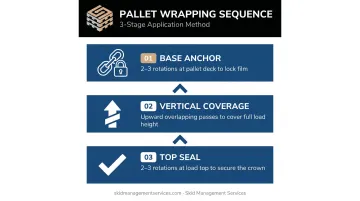
The key variable throughout is consistent film tension. Too loose and the load shifts. Too tight and the film tears or crushes soft goods.
Stage 3: Finishing and Inspecting
With the final pass complete, cut the film tail and press it firmly against the load (or heat-seal it on automated systems). A properly finished pallet has:
- No loose film tails
- No uncovered gaps above or below the load
- Sufficient containment force to withstand forklift handling and transport
On machines, pre-stretch roller settings control film elongation and can be calibrated by load weight, height, and fragility. In hand wrapping, the operator controls tension manually, which introduces variability. That inconsistency is one of the most common causes of load failures in e-commerce fulfillment.
Types of Pallet Wrapping Methods for E-Commerce
Choosing the right wrapping method comes down to daily pallet volume and throughput requirements.
| Method | Best For | Throughput | Key Trade-off |
|---|---|---|---|
| Hand wrapping | Fewer than 10–15 pallets/day | Low | Inconsistent tension; operator fatigue |
| Semi-automatic | Mid-volume fulfillment | Up to 40 loads/hour | Requires operator to attach film and start cycle |
| Fully automatic | High-volume / 3PL operations | Up to 50 loads/hour | Higher upfront investment; dedicated floor space |
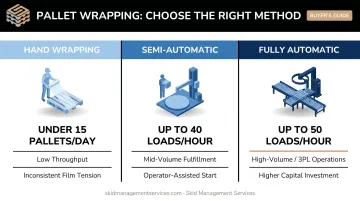
Wulftec notes that stretch wrapper costs are easily justified at 10–15 loads per day. At that volume, hand wrapping becomes an economically weak choice.
Handle-It reports annual labor savings of $1,300 to $6,500 from switching to machine wrapping, depending on volume, with pre-stretch feature ROI achievable in as little as 4–6 months.
For mid-to-high volume e-commerce operations, semi-automatic turntable wrappers (typically $6,000–$20,000) are the most common starting point. Fully automatic inline systems for high-throughput 3PL environments are priced on a quote basis.
Pallet Wrapping Tips for E-Commerce Operations
Tip 1: Configure the Load Before Wrapping
E-commerce pallets often carry mixed SKUs in varied box sizes. Use corner boards on vertical edges to prevent film cutting into cartons, place the heaviest boxes at the base, and never rely on stretch film to hold together a poorly stacked load. Wrapping a poorly configured load guarantees a collapsed pallet — film can't compensate for bad stacking.
Tip 2: Match Film Gauge to Load Type
Film gauge should be matched to the specific load, not defaulted to a single specification. Sigma Stretch describes this as "rite-gauging" — selecting the optimal film type and thickness per load to reduce excess material without compromising containment. Heavier or unstable loads require higher-gauge films. Lighter, uniform loads can run on standard gauges without over-investing in material.
Skid Management Services stocks multiple gauges across both hand-grade and machine-grade film lines — reach out to get a recommendation matched to your specific load profile.
Tip 3: Reinforce Base and Top Coverage for Multi-Transfer Transit
E-commerce pallets frequently travel through multiple transfer points — fulfillment center to carrier hub to last-mile destination. That means more forklift handling events and more opportunities for load movement.
Apply extra wrap passes to the bottom two rows. Add a pallet cover or top sheet before the final wrap cycle to protect against moisture and top-load compression. Skid Management Services supplies clear and printed top sheets and shrouds sized to work with standard pallet dimensions across its full materials line.
Tip 4: Standardize Pre-Stretch Settings Across Shifts
For semi-automatic and fully automatic operations, establish a documented pre-stretch setting for standard e-commerce loads and post it at the machine. Lantech cites common pre-stretch ranges of 150–300%, with many loads running at 200–300%.
Inconsistent settings between operators or shifts rank among the leading causes of load failures in fulfillment environments. A posted written standard eliminates the variability entirely.
Tip 5: Inspect Every Wrapped Pallet Before It Leaves the Dock
A 30-second inspection per pallet prevents costly damage claims downstream. Check for:
- Loose film tails at the base or top
- Uncovered gaps in vertical coverage
- Visible pallet deck damage (broken boards, protruding nails)
- Missing top protection on loads going through carrier transfer points
Common Pallet Wrapping Mistakes to Avoid
Wrapping too loosely. Containment force (wrap tension multiplied by film revolutions) is the real measure of load security. A loose wrap with many layers delivers less containment than a taut wrap with fewer passes. Measure it; don't assume it.
Wrapping before the load is stable. Throughput pressure pushes fulfillment teams to wrap fast, but wrapping an unbalanced or top-heavy load locks the instability in place. It won't hold through the first sharp turn or hard brake in transit.
Not anchoring the film tail. An unanchored tail unravels during transport, defeating the entire wrap cycle. Tuck, knot, or heat-seal the tail at both the start and end of every wrap.
Starting on a damaged pallet. A broken stringer or missing deck board creates uneven load distribution from the first layer up. No amount of stretch film compensates for a compromised foundation. Use pallets with intact stringers, no broken deck boards, and no protruding nails before wrapping begins.
Frequently Asked Questions
What is pallet wrapping?
Pallet wrapping is the process of applying elastic polyethylene stretch film around a loaded pallet to unitize goods, prevent movement during transit, and protect against dust and moisture. It works through film tension and cling, holding the load together as a single stable unit.
What is e-commerce packaging?
E-commerce packaging is the complete system of materials used to protect, identify, and ship products sold online. It covers individual item packaging — boxes, mailers, void fill — as well as bulk outbound methods like palletizing and pallet wrapping.
How much does a pallet wrapper cost?
Manual hand-wrap dispensers run around $300. Semi-automatic turntable stretch wrappers typically range from $6,000 to $20,000 depending on features and pre-stretch capability. Fully automatic inline systems require a custom quote. The right investment depends on daily pallet volume — machine wrapping typically justifies at 10–15 pallets per day.
What type of stretch film is best for e-commerce pallets?
Film gauge should match the load weight and transit distance. Standard e-commerce loads typically run well on mid-range gauges; heavier or irregularly shaped freight requires higher-gauge film. When in doubt, test with a heavier gauge — under-wrapping costs more in damaged freight than the film savings are worth.
How many times should you wrap a pallet?
Pass count matters less than consistent tension throughout. A practical baseline: 2–3 rotations at the base, overlapping vertical passes up the full load height, and 2–3 rotations at the top to seal. Check containment force at the base, middle, and top to confirm the wrap is holding.
What is the difference between hand wrapping and machine wrapping?
Hand wrapping relies on operator-applied tension — it's inconsistent, physically demanding, and delivers uneven hold from one pallet to the next. Machine wrapping uses calibrated pre-stretch rollers to deliver consistent, measurable containment force at significantly higher speeds. As e-commerce order volume scales, machine wrapping becomes the practical and economic standard.