That oversight gets expensive fast. Poor stacking creates tipping hazards. Damp storage breeds mold. Disorganized yards waste square footage you're already paying for.
This guide covers three pain points head-on: fire and safety compliance, moisture damage prevention, and space efficiency. Whether you're stacking pallets indoors, storing them in a yard, or managing a food-grade program, the practices below will help you protect your inventory and your bottom line.
Key Takeaways
- Stack height and spacing directly affect fire code compliance and tipping risk
- Moisture control through elevation, covers, and airflow prevents rot
- Food and beverage facilities need documented inspection and cleaning protocols
- FIFO rotation and smart racking extend pallet lifespan and cut waste
Why Efficient Wood Pallet Storage Matters
Sloppy pallet storage hits your bottom line in three ways: replacement costs from damaged stock, product loss from contaminated or crushed goods, and delivery delays when a collapsed pile shuts down an aisle for cleanup.
None of this is trivial at scale. Trade estimates put annual U.S. pallet production and recovery in the hundreds of millions of units. With nearly 2 billion pallets in active use across the country, even a small percentage of storage-related losses adds up to real money industry-wide.
Pallet storage is a strategic decision, not just a housekeeping task, and it shows up directly on your P&L.
Consider what's actually at stake:
- Pallets stored correctly last longer, reducing per-unit replacement spend
- Fewer damaged loads mean fewer rejected shipments and chargebacks
- Organized storage speeds up picking, loading, and truck turnaround
- Compliant fire and safety practices reduce insurance risk and liability exposure
Treat pallet storage like any other operational lever, and you'll find the ROI shows up in fewer write-offs and smoother throughput. The sections below break down exactly how to get there, indoors and out.
Indoor Wood Pallet Storage Best Practices
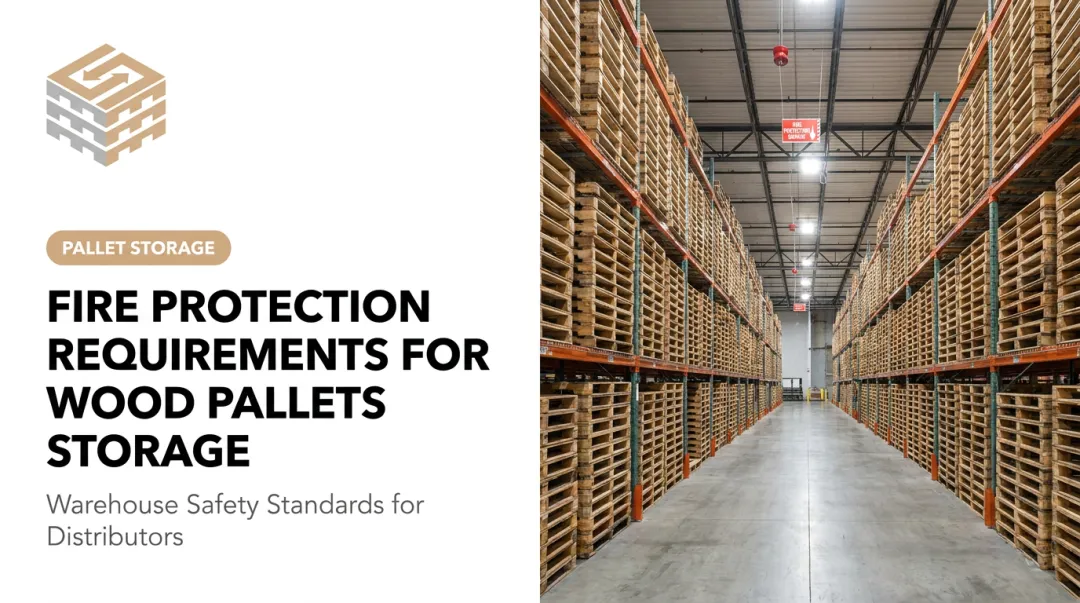
Floor-piled idle wood pallets sitting inside a building are one of the more underestimated fire risks in a warehouse. Dry wood burns fast, and the air gaps between boards feed a fire oxygen.
A tall pile can also physically shield sprinkler discharge from reaching the base of a fire. That combination is exactly why fire codes treat idle pallet storage as its own category, separate from general commodity storage.
Stacking Height & Spacing Guidelines
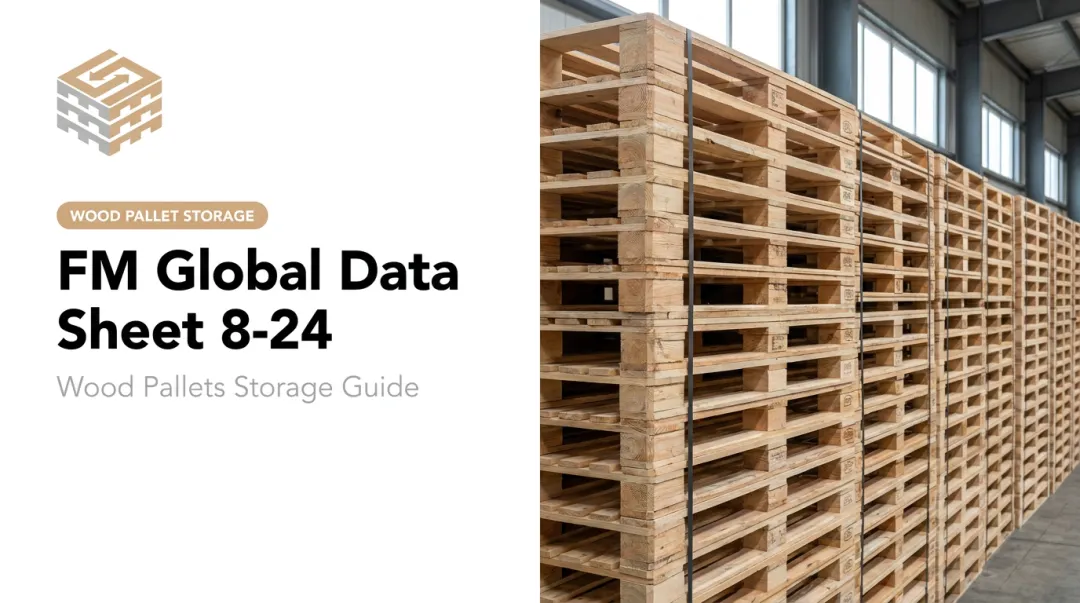
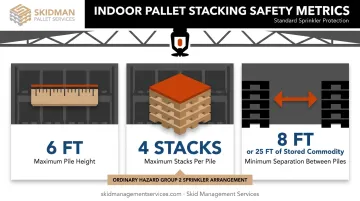
Under the Ordinary Hazard Group 2 arrangement referenced in NFPA 13's guidance on idle pallet storage, the standard recommendation for buildings with typical sprinkler protection is:
- Maximum pile height: 6 feet
- Maximum stacks per pile: four
- Separation between piles: at least 8 feet of clear space, or 25 feet of stored commodity
These numbers apply to the specific sprinkler arrangement NFPA 13 describes for this hazard class. Taller storage isn't automatically off-limits, but it requires a design-specific sprinkler configuration, not just a taller pile under standard protection.
Fire Safety & Facility Compliance
OSHA doesn't publish pallet-specific stacking rules. Instead, general industry standard 29 CFR 1910.176 governs the broader safety picture:
- Keep aisles and passageways clear: sufficient clearance is required at aisles, loading docks, doorways, and turns
- Stack tiered materials so they can't slide, fall, or collapse: blocking and interlocking matters more than height alone
- Maintain clearance below sprinkler deflectors: a minimum of 18 inches is required between the top of stored material and the sprinkler head itself
Beyond the regulatory minimums, pulling pallets away from walls gives you room to inspect, clean, and let air circulate. This cuts down on pest harborage and moisture buildup.
If your storage volume or stack height starts to exceed what standard sprinkler protection was designed for, loop in a fire protection engineer or your local fire code official before you keep stacking. It's a cheap call compared to a failed inspection.
Outdoor Wood Pallet Storage Best Practices
Wood pallets can be stored outdoors, but doing it well takes more than just leaving them exposed to the elements. Without deliberate protection, moisture, sunlight, and ground contact will degrade a pallet stack faster than almost any indoor condition.
Protecting Pallets from Moisture, Mold & Rot
Moisture is the single biggest threat to outdoor pallet inventory, and the fix comes down to three habits:
- Elevate pallets at least six inches off the ground, ideally on a paved or blacktopped surface, so ground moisture doesn't wick up into the wood
- Use breathable, waterproof covers or overhangs instead of sealed tarps — sealed coverings trap condensation underneath, which can do more damage than rain would
- Monitor wood moisture content periodically. Woodpack Global (formerly NWPCA) notes that keeping wood near 19% moisture content greatly cuts mold risk
Spot-check a sample of your outdoor stock every few weeks, especially after a wet stretch. Catching a moisture problem early is far cheaper than replacing a rotted pallet run.
Seasonal Storage Considerations
Every season brings a different risk profile:
| Season | Primary Risk | Adjustment |
|---|---|---|
| Summer | Heat and UV exposure dry and crack surface wood | Increase shade coverage, monitor for surface checking |
| Fall | Condensation from temperature swings | Improve ventilation under covers |
| Winter | Freeze-thaw cycling stresses wood fibers | Keep pallets dry before hard freezes |
| Spring | Rainfall and rising humidity | Confirm elevation and drainage are still adequate |
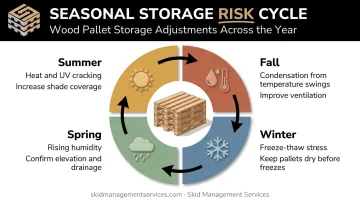
Adjust your cover type and ventilation approach as the seasons turn rather than leaving a single setup in place year-round.
One more factor to plan around: maintaining adequate clearance between outdoor pallet stacks and nearby buildings reduces fire spread risk. NFPA guidance on idle pallet storage recommends scaling separation distance to your stockpile size. A yard holding a couple hundred pallets needs considerably more buffer than a small stack of a few dozen.
Food Industry & Sanitation Considerations
Food and beverage manufacturers face a sharper level of scrutiny than most industries, and for good reason. Pathogens and chemical residue from prior loads can survive on wood surfaces. A single contaminated pallet entering a production zone creates real regulatory exposure under FDA's Preventive Controls for Human Food rule and GFSI frameworks like SQF and BRCGS.
A solid pallet management program typically covers three areas:
- Pallet specifications — clean, splinter-free, with no history of chemical treatment or animal byproduct exposure
- Inspection routines — checking incoming pallets for chemical, biological, and physical contamination before they reach the floor
- Cleaning and sanitizing procedures — applied consistently before pallets touch food-contact zones
Many facilities also insert slip-sheets between wood pallets and food products as an added barrier. Choose a smooth material rather than standard corrugated stock, which can trap debris and defeat the purpose.
This is where sourcing decisions matter as much as on-site protocols. Skid Management Services supplies food manufacturers such as Campbell Snacks, Knouse Foods, Hain Celestial Group, and Plainville Farms with pallets matched to sanitation risk level:
- New kiln-dried, heat-treated pallets with no prior-load history for the most sensitive applications
- Sanitation-grade recycled pallets sorted to exclude any units with a contamination-flagged return history
- Custom builds with no protruding fasteners and smooth runner edges for solid-top-deck configurations near open-product lines, cutting physical contamination risk before it becomes an audit finding
Consistent, quality-inspected inventory from a reliable national supplier keeps production lines moving, without the disruption of a rejected pallet shipment mid-run.
Maximizing Storage Efficiency & Organization
Getting storage right isn't just about avoiding damage. It's about using your square footage well and keeping product moving.
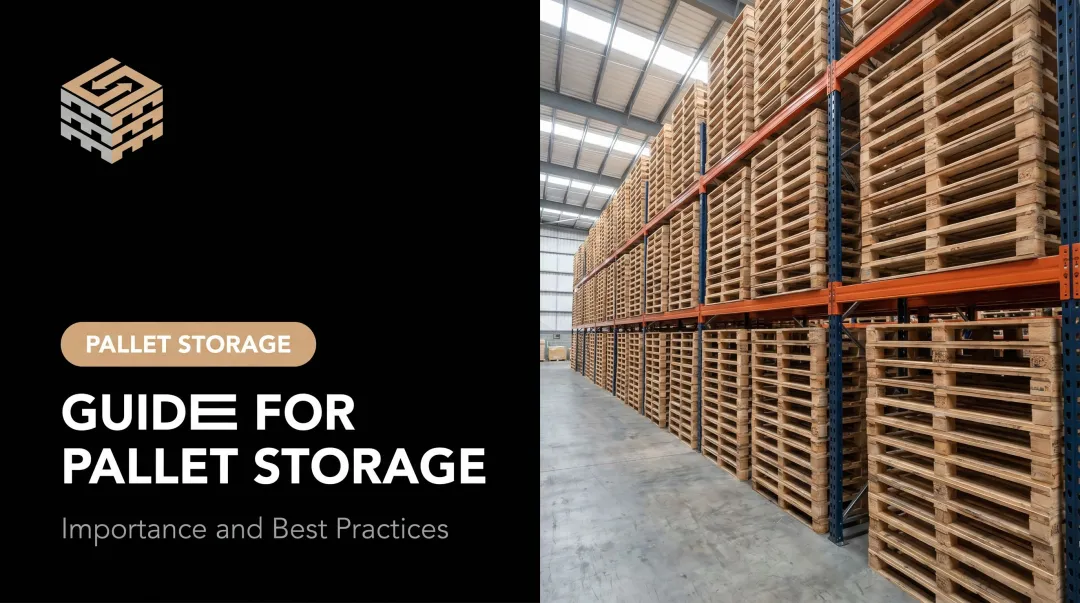
Start with FIFO. A first-in, first-out rotation system ensures older pallets and stored goods get used before newer stock, which cuts down on degradation risk for both the pallets and whatever's sitting on them.
Rotation is only half the equation, though. Know your load ratings. Overloading a pallet damages the pallet and creates a genuine safety hazard. Load capacity varies by construction. For reference:
- Standard 48x48 drum pallets typically run 2,500 to 3,000 lb dynamic capacity
- 44x44 IBC tote pallets are often rated at 3,000+ lb
- Custom-engineered heavy-duty builds can reach 4,000 to 10,000+ lb
Ask your supplier for this data before you load out, not after something buckles.
Once you know what your pallets can handle, the next question is how to arrange them on your floor. Choose the right storage method for your layout:
| Method | Best For | Trade-off |
|---|---|---|
| Selective racking | Many SKUs, lower volume each | Highest accessibility, lowest density |
| Drive-in racking | Few SKUs, high volume each | Great density, weaker FIFO compliance |
| Block stacking | Uniform, stackable loads | Simple and cheap, limited access to interior pallets |
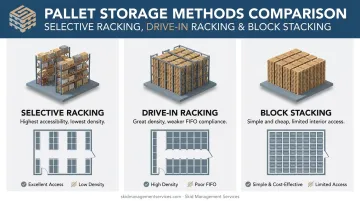
Whichever method you pick, one habit ties it all together. Label your stacks. Tagging by date, product, or condition speeds up retrieval and keeps your rotation system honest.
Finally, don't underestimate what a dependable supplier relationship does for your floor space. Skid Management Services pairs its own inventory with an expansive supplier network, plus scheduled closed-loop delivery that picks up used pallets on the same trip as new deliveries. That combination means facilities can run leaner on-site stock without worrying about a replenishment gap.
Frequently Asked Questions
What are the OSHA rules and safe practices for stacking and storing wooden pallets?
OSHA's general industry standard, 29 CFR 1910.176, requires clear aisles and stable, blocked, interlocked tiered storage. Specific height and spacing limits for idle pallet piles come from NFPA 13, not OSHA.
Can wooden pallets be stored outside, and how can I prevent them from rotting?
Yes. Elevate pallets at least six inches off the ground, use breathable waterproof covers instead of sealed tarps, and ensure good drainage underneath the stack to prevent moisture absorption.
How high can you stack wood pallets safely?
Indoors, the common guideline under standard sprinkler protection is 6 feet with a maximum of four stacks per pile. Outdoor stacks should follow manufacturer guidance and local fire code limits.
How do you prevent mold on stored wood pallets?
Keep airflow moving around the stack, store on dry paved surfaces rather than bare ground, monitor moisture content periodically, and avoid storing pallets in sealed, closed trailers.
What is the ideal moisture content for wood pallets in storage?
Keeping wood around or below 19-20% moisture content reduces mold risk and helps prevent structural weakening over time.
How much space should be left between pallet stacks for fire safety?
For indoor floor-piled storage under standard sprinkler protection, NFPA 13 recommends at least 8 feet of clear space between piles, or 25 feet of stored commodity as an alternative.