Introduction
Warehouses and manufacturing plants generate pallets by the thousand. Most of them pile up in a corner of the dock until someone finally asks: what do we do with all these?
Tossing them in a dumpster wastes usable lumber and burns cash you didn't need to spend. It also wastes square footage that could hold inventory instead of broken skids.
Here's the catch: recycling results aren't uniform. A clean, heat-treated Grade A pallet has completely different disposal paths than a chemically fumigated one with a cracked stringer. The condition, treatment type, and disposal channel you choose all change the outcome.
This guide walks through the exact steps for responsible pallet disposal, along with the variables that affect your results. It also covers the mistakes that cost businesses money, and the alternatives worth considering before you recycle anything.
Key Takeaways
- Wood pallets are almost entirely recyclable, but sorting by condition and treatment comes first
- 95% of pallets manufactured annually avoid landfills entirely, based on industry landfill research
- Treated and untreated pallets need separate handling; mixing them lowers recycling value
- Reuse, resale, donation, and recycling each suit different pallet conditions and volumes
- No single disposal method works for every business
How to Dispose of Wood Pallets Responsibly (Step-by-Step)
Step 1: Assess Pallet Condition and Sort
Every pallet needs a quick inspection before you decide its fate. Check for:
- Broken or missing deck boards
- Protruding nails or exposed fasteners
- Splintering along the stringers
- Overall structural weakness (does it wobble or flex under load?)
Sort pallets into three buckets: reusable, repairable, and beyond repair. This single step determines whether you're looking at a resale opportunity or a scrap-wood cost.
While you're at it, check for stamped markings. HT means heat-treated under ISPM-15 export standards, while MB indicates methyl bromide fumigation.
DB and KD refer to debarking and kiln-drying, which are process requirements rather than treatment codes on their own, according to the IPPC's ISPM 15 documentation. Knowing which stamp you're looking at changes everything downstream.
Step 2: Identify the Right Recycling or Disposal Channel
Not every hauler takes every pallet. Before loading a truck, confirm a few things with your recycling contact:
- Do they accept treated pallets, or only clean, untreated wood?
- Is it pickup or drop-off, and what does each cost?
- Do they pay for pallets in resalable condition?
- What volume minimums, if any, apply?
Some recyclers specialize in food-grade or export-compliant streams and reject fumigated stock outright. Others handle mixed loads but charge a sorting fee. Ask before you commit a full trailer.
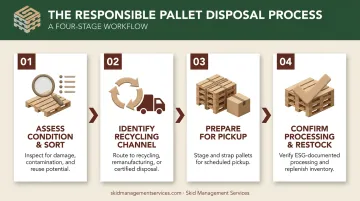
Step 3: Prepare Pallets for Pickup or Drop-off
Strip anything that isn't wood, meaning strapping, plastic wrap, and metal banding. Recyclers grind wood, not plastic film, and contaminated loads often get rejected or discounted at the gate.
Stack pallets by grade before the truck arrives. A load pre-sorted into reusable versus scrap moves through intake faster, which matters when a hauler bills by the hour.
If your dock generates a steady flow of pallets rather than an occasional surplus, set up a recurring pickup schedule instead of calling every few weeks. Recurring service tends to unlock better per-pallet economics than one-off hauls.
Step 4: Confirm Responsible Processing and Restock if Needed
Ask your recycler what actually happens to the wood. A responsible facility separates pallets that can be resold from broken units that get processed into mulch, boiler fuel, or panel board.
If your municipality enforces a landfill waste ban on wood pallets, request documentation confirming your load was diverted, not dumped. North Carolina, for example, has prohibited pallets from municipal solid waste landfills since 2009 under state statute, a rule still enforced through the state's landfill disposal ban program.
Once the old inventory clears out, you'll likely need replacement stock. Skid Management Services supplies new and recycled pallets across its national network, so a disposal run doesn't leave your dock scrambling for replacements.
Key Factors That Affect Pallet Recycling Outcomes
Recycling payouts and processing options hinge on a handful of variables you can actually control.
Wood Treatment Type
Heat-treated pallets can generally be mulched, burned as boiler fuel, or reused without restriction. Chemically treated pallets are a different story.
Why it matters: Treatment type determines what a recycler is legally and safely allowed to do with the wood.
Impact on outcome: Standard recyclers frequently reject methyl bromide-treated pallets outright or route them to specialized handling. Skid Management Services, for instance, builds its recycled inventory around heat-treated and chemical-treatment-free stock, since its food and pharma clients can't risk chemical residue in their supply chain.
Pallet Grade and Structural Quality
Why it matters: Grade decides whether a pallet gets resold, repaired, or sent straight to the grinder.
Impact on outcome:
- Higher-grade pallets (all boards intact, no broken stringers) earn cash back or trade-in credit
- Mid-grade pallets with minor repairs still hold resale value
- Broken or low-grade units carry only scrap wood value
Volume of Pallets Generated
Why it matters: Volume decides whether a one-time haul-off or a recurring program makes financial sense.
Impact on outcome: Higher, steady volumes typically unlock free pickup and better per-pallet rates. Programs moving 500+ pallets a month in both directions tend to deliver the strongest economics, since delivery and pickup can happen on the same trip.
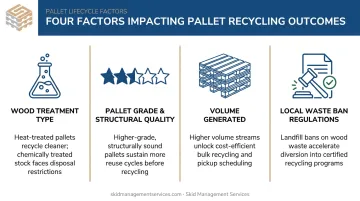
Local Waste Ban and Regulatory Requirements
Why it matters: Some states and counties prohibit wood pallets from landfill disposal under commercial waste bans.
Impact on outcome: North Carolina's ban is one clear example, but Massachusetts and Wisconsin also restrict certain wood waste from standard disposal streams. Ignoring these rules risks fines and forces a scramble to find compliant disposal after the fact.
Common Mistakes When Disposing of Wood Pallets
Even well-intentioned businesses trip over the same handful of errors.
- Curbside recycling bins: Municipal programs handle bottles, cans, and paper, not oversized wood, and pallets can contaminate the whole load, as Madison, Wisconsin's recycling guidelines note.
- Burning chemically treated pallets: MB-stamped wood releases toxic fumes when burned, and the EPA's wood-burning guidance warns against combusting any treated lumber.
- Mixing reusable pallets with broken ones: A good pallet loses its resale value once tossed in with scrap, and that lost buyback revenue won't return.
- Defaulting straight to the dumpster: Skipping the search for a local recycler or buyer means paying disposal fees for material that could have generated cash or credit.
Alternatives to Full-Scale Pallet Recycling
Recycling isn't always the smartest move. The right choice depends on pallet condition, quantity on hand, and what your business needs next.
Here's how the quickest options compare:
| Option | Best For | Trade-offs |
|---|---|---|
| Reuse or in-house repair | Steady inbound/outbound flow, only minor damage to fix | Requires storage space and labor, but skips repurchase costs entirely |
| Resell to buyers or brokers | Bulk quantities of good-condition, standard-size pallets | Resale value shifts with market demand and grade — a Grade A pallet fetches more in a tight market than during oversupply |
| Donate for upcycling or DIY projects | Smaller quantities, when community goodwill or CSR goals matter more than cash value | Doesn't scale: donating 20 pallets a month is manageable, but 2,000 is not |
Source Recycled or New Pallets to Replenish Stock
Once old inventory clears out, most operations need continuous supply without disruption. This is where a national supplier like Skid Management Services fits in.
Trade-offs: Working with an established supplier network balances competitive pricing with reliable delivery, which matters more once you're relying on a steady pallet flow rather than occasional purchases. Recycled Grade A and Grade B stock typically runs 40-60% cheaper than new pallets, so restocking with recycled inventory instead of new can meaningfully cut costs without sacrificing quality.
Conclusion
Responsible pallet disposal comes down to two things: sort first, then match condition to method, whether that's recycling, reuse, resale, or donation.
Most disposal failures trace back to skipping the assessment step or mishandling treated wood. Neither mistake is complicated to avoid once you know what to look for.
The most efficient, compliant approach balances sustainability with a dependable supply chain, backed by a partner like Skid Management Services, so clearing out old stock doesn't leave your dock short on inventory the next morning.
Frequently Asked Questions
What do you do with old wood pallets?
Reuse or repair sound pallets, resell or donate them, or send broken units to a pallet recycling facility for mulch, boiler fuel, or scrap wood processing. The right option depends on condition and volume.
Are wooden pallets recycled?
Yes, wooden pallets are widely recyclable. Specialized facilities break them down into mulch, biofuel, or new wood products, though standard curbside programs won't accept them.
Can you put wood pallets in curbside recycling bins?
No. Pallets are too large and mix too many materials for curbside systems. They need to go to a dedicated pallet recycler or hauler instead.
How do you know if a pallet is chemically treated?
Check for stamped markings. HT means heat-treated, while MB indicates methyl bromide fumigation. Always verify the stamp before recycling or burning any pallet.
Is it safe to burn wood pallets for firewood?
Untreated pallets can be burned safely. Chemically treated pallets release toxic fumes when burned and should never be used as firewood.
Do pallet recycling companies pay for used pallets?
Many recyclers, including Skid Management Services, offer cash back or free pickup for good-condition, resalable pallets. Broken or mixed loads may involve a smaller handling fee or a lower buyback rate instead.