The same platform that moves a pallet of Campbell Snacks from a Pennsylvania facility to a retail distribution center can also become a garden planter, a coffee table, or a compost bin. The material is versatile, durable, and often free or low-cost.
This guide covers 10 distinct uses for wooden pallets across three categories: commercial and industrial, home and DIY, and garden and outdoor. It also covers what to check before repurposing one — because not every pallet is safe to reuse.
Key Takeaways
- 93% of pallets in the U.S. are made of wood, making them the dominant platform across supply chains
- Pallets serve critical roles in shipping, warehousing, and retail display — not just as a raw material for DIY projects
- Check for the HT stamp before repurposing any pallet; never use one marked MB (methyl bromide)
- Pallets are owned property, so always get permission before taking them
- Commercial buyers need a verified supplier to guarantee consistent specs, compliant grades, and uninterrupted supply
What Are Wooden Pallets?
A wooden pallet is a flat, structured platform used to support goods during storage and transport. Forklifts and pallet jacks lift them from below, making it possible to move large quantities of product quickly and safely. Most are built from softwood species like Southern Yellow Pine or hardwood species like oak.
Two main construction types dominate the market:
- Stringer pallets — three parallel boards (stringers) run lengthwise, supporting the deck boards above. Available in 2-way or notched 4-way entry. Simpler design, widely used across general distribution.
- Block pallets — nine wooden blocks positioned at corners, edges, and center support the deck. True 4-way entry on all sides. Heavier-duty and common in export and industrial applications.
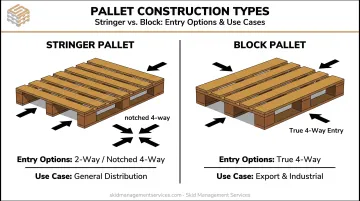
The standard North American size is 48 × 40 inches — it accounted for 35% of new wood pallets produced in the U.S. according to a 2020 USDA Forest Service study.
Woodpack Global reports nearly 2 billion wooden pallets in use every day, with wood accounting for 93% of all pallets used in the U.S. That scale reflects how deeply embedded wooden pallets are in domestic supply chain operations — from food manufacturing floors to retail distribution centers.
Commercial and Industrial Uses of Wooden Pallets
The commercial and industrial applications of wooden pallets are where their design was born — and where the vast majority of pallet demand still originates. Every specification decision, from standard dimensions to load ratings, traces back to these use cases.
Shipping and Freight Transport
Pallets are the primary unit-load platform for moving goods through the supply chain. From food manufacturers to pharmaceutical distributors to automotive parts suppliers, the pallet is the common denominator. More than 90% of all products in the U.S. move on wooden pallets, according to Woodpack Global.
The standard 48 × 40 GMA pallet handles most general freight. For heavier or specialized loads, other sizes step in:
- 48 × 48 — the chemical and drum industry standard, sized for four 55-gallon drums
- 44 × 44 — the IBC tote standard for 275- and 330-gallon containers
- 42 × 42 — used in telecom infrastructure and specialty chemical shipping
- Custom builds — load-rated up to 10,000+ lbs for heavy machinery and industrial equipment
Load capacity is not a single universal number. It depends on the load type, support condition (fork tines vs. racking vs. floor), and pallet construction. Virginia Tech's Center for Packaging and Unit Load Design notes that load capacity varies based on ultimate load, stiffness, and support condition — which is why custom specifications matter for demanding applications.
Warehousing and Storage Organization
In warehouse racking systems, pallets are the interface between inventory and infrastructure. A standard 48 × 40 pallet fits the beam spans designed into most selective rack configurations, letting operations stack inventory vertically and maximize usable floor space.
Uniform pallet dimensions drive efficiency across the whole operation. When sizing is consistent:
- Rack systems can be standardized across all storage bays
- Load positions become predictable, reducing forklift cycle times
- Risk of rack damage or dropped loads drops significantly
- Grade selection aligns with system type — automated systems need new pallets with tight tolerances; general flow can run Grade A or B recycled
ANSI MH16.1-2023, published through MHI's Rack Manufacturers Institute, governs the structural design of industrial steel storage racks, with palletized loads central to those load specifications.
Retail Display and Point-of-Sale Merchandising
Big-box retailers have turned pallets into a merchandising format. In warehouse-style environments like Costco, merchandise is displayed directly on pallets containing large quantities, reducing labor by eliminating the need to break down bulk shipments before they hit the sales floor. Costco's FY2022 Form 10-K explicitly notes this: merchandise is displayed on pallets, which reduces the labor required in its self-service warehouse model.
For suppliers shipping into Walmart, Costco, Target, Home Depot, or Kroger, pallet compliance is non-negotiable. Each retailer publishes its own vendor-pallet specification — board count, entry type, lumber grade, weight limits — and pallets that don't meet spec get refused at the distribution center. The freight cost comes back to the supplier.
Construction, Flooring, and Temporary Structures
Pallets have a documented history in construction applications beyond standard logistics. Common site uses include:
- Temporary flooring and work platforms on active job sites
- Raised surfaces at outdoor events and festivals on uneven ground
- Structural elements in emergency and transitional housing
I-Beam Design's Pallet House — originally conceived as transitional shelter for Kosovar refugees after the 1999 war — is an early example of pallets functioning as a legitimate building material under resource-constrained conditions.
Creative DIY and Home Uses for Wooden Pallets
The structural qualities that make pallets work in industrial settings — flat surfaces, modular dimensions, durable softwood construction — translate directly into raw material for home projects. A single pallet can become furniture, storage, or wall décor with basic tools and a weekend afternoon.
Furniture: Tables, Chairs, Sofas, and Bed Frames
Pallets stack cleanly, sand down well, and accept stain or paint without priming. Common furniture builds include:
- Coffee tables — two pallets stacked and fitted with casters. Beginner-level, takes a few hours.
- Outdoor sofas and lounge chairs — pallets arranged into an L-shape, fitted with weatherproof cushions. The rustic, industrial look is part of the appeal.
- Platform bed frames — multiple pallets arranged to standard mattress dimensions, sanded and sealed. More involved, but structurally sound for the application.
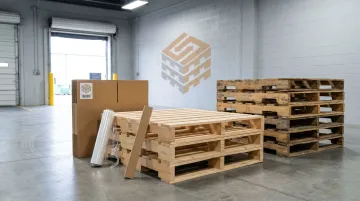
The weathered grain of reclaimed pallet wood has a character new lumber doesn't offer — and that natural aging is precisely what drives the aesthetic appeal in these builds.
Home Storage and Organization: Shelves, Bookcases, and Coat Racks
A single pallet mounted vertically on a wall becomes a functional bookshelf or coat rack without modification. The horizontal slats create natural display ledges; add a few hooks and it handles outerwear and bags.
For more refined storage, disassemble the pallet and work with the individual planks. The boards can be reconfigured into:
- Custom wall shelving units
- Shoe storage benches
- Wine racks
- Pegboard-style tool organizers in a garage or workshop
The slight variation in plank width and thickness is worth accounting for during layout — measure before cutting rather than assuming uniformity.
Home Décor: Wall Art, Mirrors, and Clocks
Pallet wood's rough-hewn texture works well in purely decorative applications too:
- Wall paneling — pallet boards installed horizontally across a feature wall create an accent that would cost two to three times as much in reclaimed barn wood
- Rustic mirror frames — the weathered finish pairs well with both industrial and farmhouse interior styles
- Decorative clocks — a clock mechanism mounted to a pallet section or individual planks
Kids' Projects and Play Structures
Pallets are a practical material for children's builds because the cost of failure is low. If the project doesn't work out, not much is lost. Popular builds include:
- Mud kitchens
- Small playhouses
- Toy storage benches
- Craft tables
One caution applies here more than anywhere else: confirm the pallet is heat-treated (HT stamp), structurally sound, and free of chemical contamination before involving children. The safety check covered later in this guide applies especially to any project where kids will be in direct contact with the wood.
Garden and Outdoor Uses for Wooden Pallets
Outdoor use suits pallets well. They're built for weight, weather, and rough handling. With basic preparation, they hold up in garden environments for several seasons.
Vertical Planters and Herb Gardens
Standing a pallet upright, stapling landscape fabric across the back and sides, and filling each cavity with potting mix creates a low-footprint vertical planter. Texas A&M AgriLife Extension documented this approach using a 25 × 38 inch pallet with approximately 2.5 cubic feet of potting soil.
One key detail: keep the planted pallet horizontal for one to two weeks before standing it upright. That gives roots time to establish before gravity pulls at the soil.
This works particularly well for:
- Herbs (basil, thyme, rosemary, mint)
- Strawberries and compact fruiting plants
- Seasonal flowers and trailing annuals
For patios, balconies, or small urban gardens where floor space is at a premium, a vertical pallet planter delivers a meaningful growing area in a single square foot of footprint.
Patio Decking and Outdoor Flooring
Pallets laid flat can create temporary patio surfaces, garden pathway sections, or raised decking areas on uneven ground. They're especially practical in rental properties or allotment gardens where permanent construction isn't an option — easy to lay, easy to lift and move when needed.
Treat or seal the wood if the surface will see regular foot traffic and weather exposure. Untreated pallet wood outdoors will deteriorate faster than sealed wood, especially at ground level where moisture accelerates decay.
Compost Bins and Garden Storage
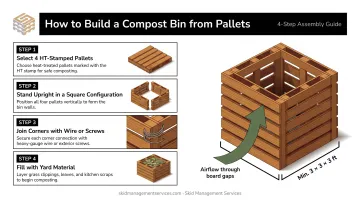
Four pallets stood upright and joined at the corners with wire or screws create a functional compost bin. The University of Wisconsin Extension documents this design — the result is a bin at least 3 × 3 × 3 feet with capacity for eight to ten 30-gallon bags of yard material. The gaps between pallet boards provide the airflow that active composting requires.
The same structure works for garden storage: a few pallets arranged into an open-sided shed holds tools, bags of soil, and seasonal equipment without requiring a foundation or building permits.
What to Check Before Repurposing a Wooden Pallet
Not every pallet is safe to bring home. A few checks before you pick one up can prevent real problems.
Check the IPPC Stamp
Every pallet that meets international phytosanitary standards carries an IPPC stamp. Look for two critical codes:
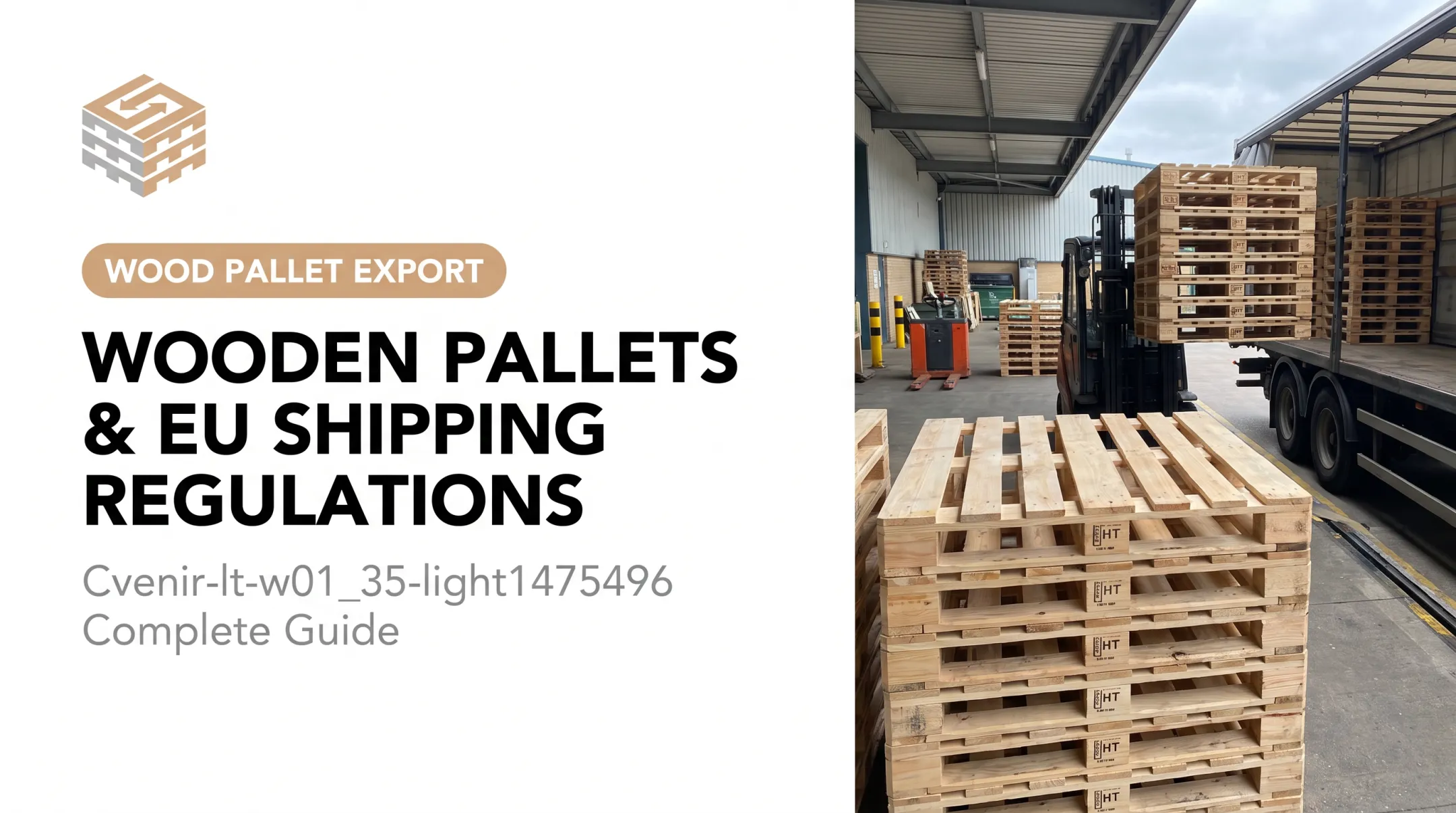
- HT — Heat-treated. The wood was heated to a core temperature of 56°C for at least 30 minutes, eliminating pests and pathogens. This is what you want. HT pallets are safe for repurposing around food, plants, and children.
- MB — Methyl bromide. The pallet was chemically fumigated with a highly toxic, ozone-depleting gas. According to the CDC/ATSDR, methyl bromide exposure can cause convulsions, coma, and permanent neurological damage. Never repurpose an MB-stamped pallet for any home or garden project — and never burn one.
If there's no stamp at all, treat the pallet as unknown and avoid it for repurposing.
Check the Physical Condition
Beyond the stamp, inspect the pallet itself:
- Dark stains or oily residue may indicate chemical cargo from a prior load
- Strong chemical odors suggest contamination that heat treatment won't remove
- Heavy splintering or broken boards create injury risk during handling and use
- Loose nails protruding from the deck are a puncture hazard
- Weight is a factor too: Penn State Extension notes pallets can top 50 lbs, making drops and kickback a genuine risk during sawing or sanding
Understand the Ownership Question
Pallets are property. The company that purchased them owns them, even when they're sitting outside a loading dock. Taking pallets without permission can legally constitute theft, and in California, AB 1583 specifically restricts unauthorized possession of bulk merchandise pallets bearing ownership markings.
The right approach: ask the facility manager before taking anything. Many businesses are happy to give away used pallets rather than pay for disposal. You can also look for pallets listed as free on classified platforms or pallet exchange programs. For the cleanest option with no ownership questions, source used pallets directly from a licensed pallet recycler or distributor, where provenance is documented and grades are clearly defined.
Frequently Asked Questions
What are wooden pallets used for?
Wooden pallets serve as the primary transport and storage platform for commercial goods — used in shipping, warehouse racking, and retail display. Beyond logistics, they're widely repurposed for DIY furniture, garden planters, home décor, and outdoor structures.
Are wooden pallets worth any money?
Used pallets have value depending on grade and condition — Grade A commands higher demand than Grade B. Distributors like Skid Management Services run buyback programs where used pallets earn trade-in credit or a direct per-pallet payment.
Is it illegal to pick up wooden pallets?
Pallets are owned property, so taking them without permission can be illegal. Always ask the business owner or facility manager first. Pallets explicitly listed as free through classified ads or pallet exchange programs are a legitimate alternative.
Is it illegal to burn wooden pallets?
Burning MB-stamped pallets releases toxic fumes and is hazardous, potentially illegal under local air quality regulations. The Scituate Fire Department warns against burning painted, contaminated, or MB-marked pallets. HT pallets may be burned as plain wood in some jurisdictions — check local open-burning rules before proceeding.
What does the HT stamp mean on a wooden pallet?
HT stands for heat-treated. The wood was heated to a minimum core temperature of 56°C for at least 30 minutes, meeting ISPM 15 international phytosanitary standards. This treatment eliminates pests and pathogens without chemicals, making HT pallets safe for repurposing and required for international freight shipments.
How long do wooden pallets last?
Wood pallets typically last 5 to 30 use cycles, though a peer-reviewed Sustainability study found some modeled at up to 90 cycles. Virginia Tech notes commercial pallets can remain in service for up to 30 years, though outdoor repurposing without sealing shortens that considerably.