Introduction
A warehouse manager flips over a pallet and spots a strange stamp: a wheat-sheaf logo, a string of letters, maybe a splash of blue paint. What does it mean, and is the pallet even safe, legal to use, or theirs to keep?
These questions matter more than most businesses realize. Pallet stamps aren't decoration. They're a coded system that tells you about treatment, size, ownership, and condition, all in a few characters burned or stamped into the wood.
Misreading them creates real risk. Customs agents hold shipments over unclear markings, and companies unknowingly use pallets that belong to a pooling company. This guide breaks down every major stamp type you'll encounter in the US, what it means, and how to use that knowledge when sourcing pallets.
Key Takeaways
- Pallet stamps reveal four things: treatment, size, ownership, and grade
- ISPM 15/IPPC marks are mandatory for international wood pallet shipments, verified by USDA/APHIS-accredited providers
- HT (heat treated) and MB (methyl bromide) aren't interchangeable; only HT is safe for reuse
- Colored pallets like blue CHEP or red PECO signal rental ownership, not free inventory
- Matching stamp data to your compliance needs and budget beats guessing based on appearance
What Are Pallet Stamps and Why Do They Matter in the USA?
Pallet stamps are standardized markings, applied by branding iron, ink stamp, or nail tag, that communicate a pallet's treatment history, size classification, ownership status, or physical condition. Think of them as a pallet's ID card.
In the US supply chain, these marks let customs officials, receiving docks, and logistics teams verify compliance instantly. Nobody has to test the wood itself. A quick glance at the stamp tells the whole story, assuming you know how to read it.
Ignoring stamps carries real business risk:
- Customs officials flag and hold shipments over missing or illegible ISPM 15 marks
- Companies unknowingly integrate rental pallets into their own inventory, creating legal exposure with pooling operators
- Warehouse teams load products onto pallets treated with chemicals unsuitable for food-adjacent or export use
The APHIS wood packaging program confirms this isn't a minor formality: U.S. Customs denies entry to noncompliant wood packaging material and can detain, destroy, or force its re-export at the shipper's expense. That's a costly lesson to learn on a live shipment.
Types of Pallet Stamps and Markings in the USA
US pallet stamps generally fall into four functional categories: phytosanitary/treatment, size/industry standard, ownership/pooling, and quality/condition. Each one answers a different question. Here's how to tell them apart.
IPPC / ISPM 15 Treatment Stamps
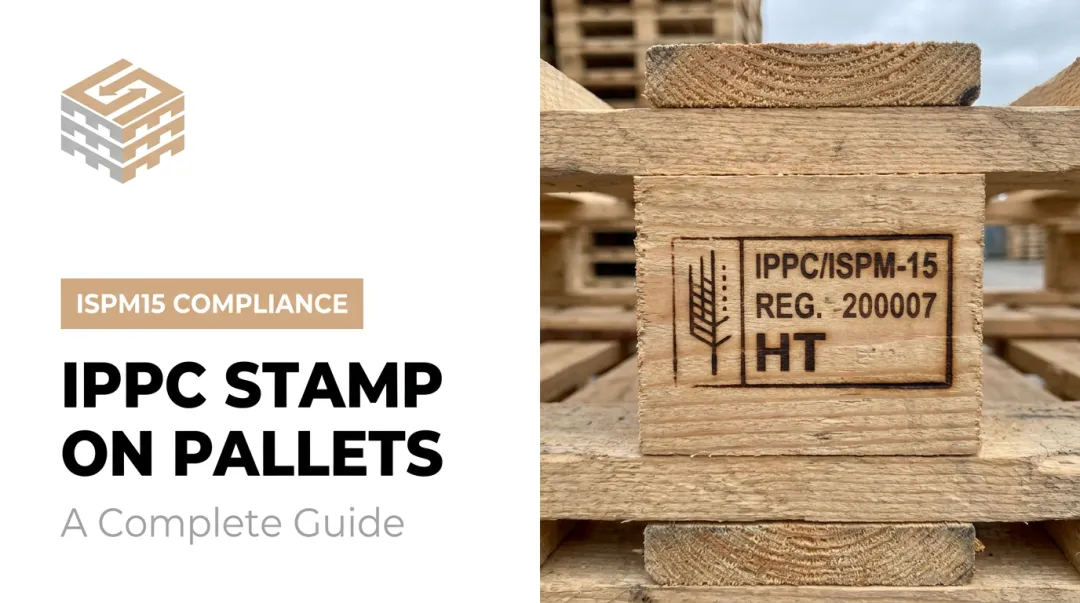
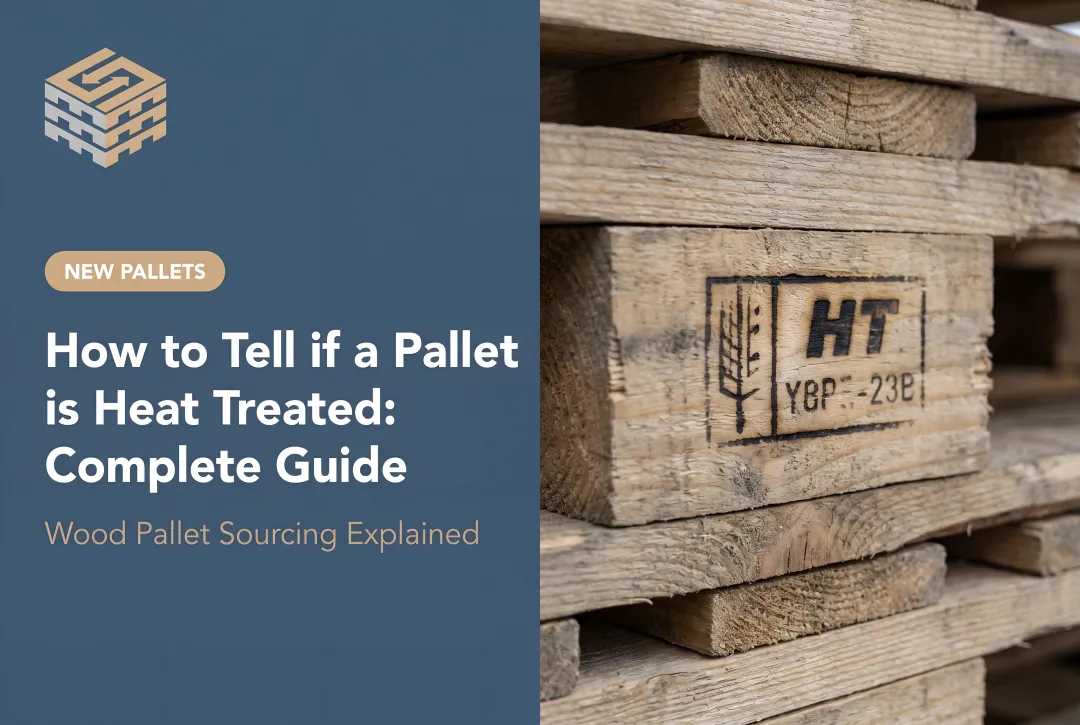
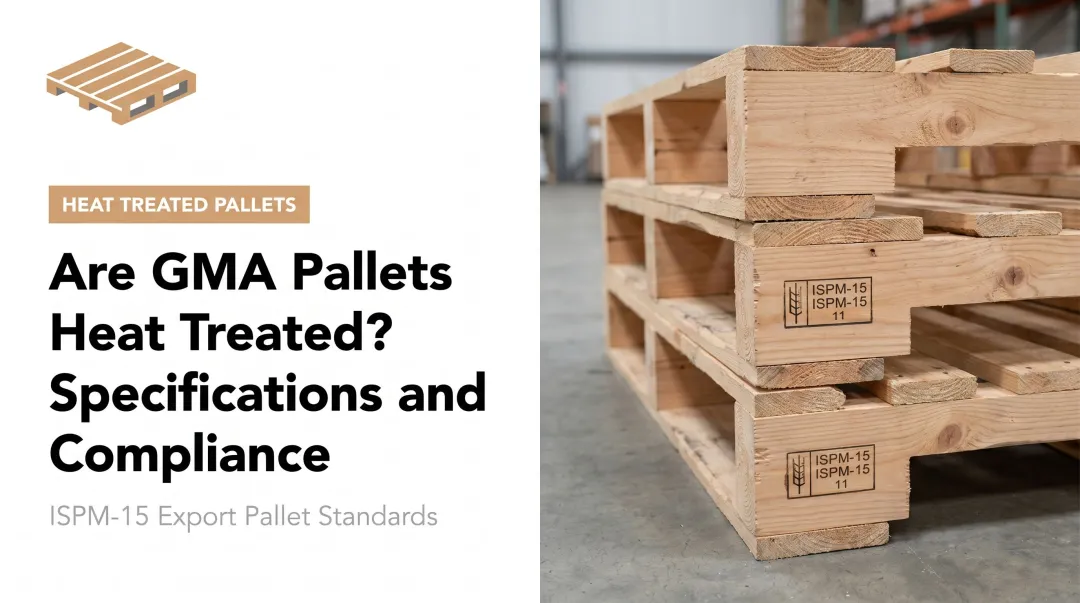
This is the mark you'll see on any pallet crossing an international border. It includes the wheat-sheaf IPPC symbol, a two-letter country code, a unique registration number for the treatment provider, and a treatment code.
What makes this stamp different: it's a regulatory compliance mark, not a branding or logistics identifier. In the US, it's overseen through USDA/APHIS in coordination with American Lumber Standard Committee (ALSC)-accredited inspection agencies, which supervise producers and fumigators enrolled in the program. An unaffiliated warehouse can't self-certify or apply the stamp on its own.
The two treatment codes you'll encounter most:
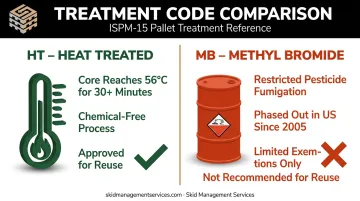
- HT (heat treated): the wood's core reaches at least 56°C for a minimum of 30 continuous minutes. Chemical-free and widely accepted.
- MB (methyl bromide): fumigation with a restricted pesticide. Effective for pest control, but the US phased out general production of methyl bromide back in 2005, with only limited exemptions remaining.
Best suited for: any business shipping goods internationally or receiving imports on wood pallets.
Skid Management Services verifies and re-stamps ISPM-15 pallets for exporters moving through the Port of Baltimore corridor, catching registration or treatment-code mismatches before they trigger a customs hold.
Limitations: ISPM 15 compliance says nothing about structural quality. A pallet can carry a perfect stamp and still have a cracked stringer. Compliance and durability are two separate questions.
Size and Industry Standard Stamps
These stamps standardize physical dimensions rather than treatment or ownership. The most common in the US is the GMA/CBA stamp, tied to the 48"x40" footprint that dominates grocery and consumer goods distribution. A 2020 industry survey found that 68% of 146 qualified respondents used the 48x40-inch pallet as their primary format, though that reflects survey usage, not total market share.
Chemical and petrochemical industries lean on a different family: CP1 through CP9, each with fixed dimensions for drum and IBC handling.
| Mark | Dimensions (L x W x H, mm) |
|---|---|
| CP1 | 1000 x 1200 x 138 |
| CP3 | 1140 x 1140 x 138 |
| CP6 | 1200 x 1000 x 156 |
| CP9 | 1140 x 1140 x 156 |
Best suited for: businesses needing pallets compatible with standard racking, automation, or industry-specific handling equipment.
Limitations: standard sizing won't fit every load shape. Odd dimensions or specialized freight often require a custom build instead.
Ownership and Pooling Stamps (Colors & Logos)
Colored pallets aren't a design choice. A blue pallet usually belongs to CHEP, and a red pallet usually belongs to PECO. Both companies operate pooling models where customers rent and reuse pallets rather than buy them outright, and both explicitly state the pallets remain company property throughout their circulation.
How this differs from other stamps: this stamp marks ownership under a rental agreement, not a physical property of the pallet itself.
Best suited for: companies enrolled in closed-loop pooling systems that want consistent pallet quality without owning inventory.
Companies looking to exit a pooling arrangement can work with providers like Skid Management Services, which designs CHEP and PECO pool-exit alternatives that transition ownership to company-held inventory without disrupting supply.
Limitations: using, reselling, or repurposing a pooled pallet outside its network isn't a gray area. Both CHEP and PECO publish clear prohibitions against buying, selling, or discarding their pallets, with potential legal consequences for violations.
Quality Grade and Repair Stamps
These marks assess structural condition rather than treatment or ownership. Grading typically breaks down into tiers:
- Grade A / premium: all deck boards present, no broken stringers, minimal repair history — close to new-condition performance
- Grade B / standard: one or two minor board repairs, full structural integrity maintained
- Utility / #2: lowest-cost tier, appropriate for internal-flow use only
Best suited for: buyers weighing cost savings against load safety, especially for internal shipments or lower-risk cargo.
Limitations: grading isn't standardized industry-wide. One supplier's "Grade A" might match another's "Premium." Confirm how a specific supplier defines its tiers before placing a bulk order.
How to Choose the Right Pallets Based on Their Markings
Picking the right pallet means matching stamp information to your shipping destination, industry, and budget, rather than chasing the "safest-looking" stamp.
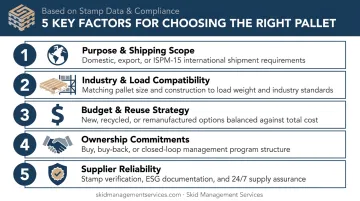
Purpose and shipping scope. Domestic-only shipments don't need ISPM 15 marks. International shipments require them, no exceptions.
Industry and load compatibility. Match size stamps to your racking and automation systems. A GMA 48x40 works for most grocery and CPG operations; chemical and drum handling often calls for CP-series sizing instead.
Budget and reuse strategy. New pallets cost more upfront but carry no repair history. Recycled, graded pallets save money if the grade matches your risk tolerance.
Ownership commitments. Decide between owning pallets outright or relying on pooled inventory. This decision usually comes down to:
- Outbound volume predictability: steady volumes favor ownership or a closed-loop model; variable volumes favor rental
- Cost control priorities: consistent shipping lanes favor direct purchase, which eliminates per-turn pool fees
- Warehouse capacity: limited space for holding inventory pushes toward pooling instead
Supplier reliability. This is where a lot of buyers get burned. Partnering with an established national supplier ensures consistent access to correctly stamped, compliant pallets without gaps in supply.
Skid Management Services, for example, sources HT-stamped export pallets through USDA APHIS-recognized treatment providers. Before each Port of Baltimore corridor shipment, SMS verifies:
- IPPC logo authenticity
- ISO country code accuracy
- Treatment provider ID
- HT vs. MB treatment code
For businesses looking to exit CHEP or PECO pooling arrangements, SMS also runs a no-cost pool-exit economics analysis. This models whether direct ownership or a closed-loop buy-back program would reduce total pallet spend.
Common Mistakes to Avoid When Reading Pallet Stamps
Even experienced buyers trip up on a few recurring errors.
- Assuming unmarked means unsafe (or safe). Unmarked pallets are fine for domestic, single-use shipments, but skip them for international freight or reuse projects like furniture and garden builds.
- Reusing an MB-stamped pallet. Methyl bromide is a restricted fumigant linked to central-nervous-system and respiratory risks—never repurpose an MB-marked pallet into furniture or a garden bed.
- Overlooking ownership stamps. Reselling a pooled pallet without authorization can trigger reclaim fees or legal disputes with the pooling company.
Read the stamp before you reuse, resell, or ship—it's the fastest way to avoid all three mistakes.
Conclusion
Pallet stamps function as a compact but critical data system, covering treatment, size, ownership, and quality in one small mark. Each stamp type answers a different question: is this pallet compliant, compatible, or owned by someone else? Misreading any one of them can create real cost or compliance exposure, whether that's a held shipment or an unexpected reclaim fee.
Partnering with Skid Management Services removes the guesswork: we verify ISPM-15 stamps and coordinate re-stamping on every heat-treated pallet we deliver. Every pallet you receive should be correctly marked, compliant, and fit for its intended use.
Frequently Asked Questions
What do the stamps on pallets mean?
Stamps typically indicate phytosanitary treatment (IPPC/ISPM 15), size standard, ownership/pooling, or quality grade. Reading them together tells you the full story of a pallet's compliance and condition.
How do I get an ISPM 15 stamp for pallets?
Only USDA/APHIS-accredited, certified treatment facilities can apply the ISPM 15 stamp. Source your pallets from an accredited provider like Skid Management Services, which sources through USDA/APHIS-recognized treatment providers and offers stamp verification and re-stamping coordination for export shipments.
What is the difference between HT and MB pallet stamps?
HT (heat treatment) is a chemical-free process widely accepted for reuse. MB (methyl bromide) involves a restricted pesticide fumigation and should be avoided for any reuse project.
Can I use a pallet with no stamps at all?
Unmarked pallets are generally fine for domestic, single-use shipments. Avoid them for international shipping or projects involving food or furniture contact.
What does a colored pallet (blue, red) mean?
Colors typically indicate ownership by a pooling company: blue for CHEP, red for PECO. Using or reselling these without authorization can lead to reclaim issues.
Are all wooden pallets in the USA required to have ISPM 15 stamps?
No. ISPM 15 is only mandatory for pallets used in international shipments. Domestic-only pallets aren't required to carry this specific stamp.