
This isn't a minor operational detail. Treatment choice affects compliance risk, cost per pallet, turnaround time, and whether your supply chain runs smoothly or hits snags every time you ship internationally.
This guide compares fumigation and heat treatment across cost, compliance, and use cases, so exporters can choose with confidence instead of guessing.
TL;DR
- Heat treatment (HT) raises wood core temperature to 56°C for 30 continuous minutes.
- Methyl bromide (MB) fumigation uses gas over a longer cycle and faces stricter regulatory hurdles.
- HT is chemical-free, faster to reuse, and preferred as MB faces global restrictions.
- Choose based on export destination, order volume, and one-way vs. reusable pallet needs.
Fumigation vs Heat Treatment: Quick Comparison
| Factor | Fumigation (MB) | Heat Treatment (HT) |
|---|---|---|
| Core standard | Temperature-specific CT schedule per (IPPC Annex 1); 10°C (50°F) minimum | 56°C (133°F) wood core for 30 continuous minutes |
| Treatment time | 16–24 hours minimum, plus aeration | Typically hours, not days |
| Environmental/health | EPA classifies MB as a Class I ozone-depleting substance | No chemical residue applied |
| Regulatory trend | Facing phaseout and restrictions in multiple markets | Gaining preference as MB availability shrinks |
| Reusability after repair | Often requires retreatment when marks are disturbed | Generally retains compliance after minor repairs |

Cost
Fumigation often looks cheaper per pallet on paper, especially for low-volume, one-way shipments. Heat treatment can carry higher setup costs tied to chamber and energy use, but exporters running reusable pallet pools tend to recover that cost through fewer retreatment cycles.
Treatment Time
MB fumigation cycles typically run 16–24 hours minimum, plus aeration time before pallets can ship. Heat treatment moves faster, since chambers can process a full load in a matter of hours rather than days.
Environmental & Health Impact
The EPA classifies methyl bromide as a Class I ozone-depleting substance, which is why its use has been curtailed globally under the Montreal Protocol. Heat treatment applies no chemical fumigant at all, meaning no residue, no off-gassing concerns, and no ozone-depletion impact.
Regulatory Acceptance
Most destinations accept both treatment codes on an ISPM-15 stamp. But acceptance isn't universal; some markets, including parts of the EU, restrict methyl bromide outright. Always confirm destination-specific rules before committing to a treatment path.
Reusability After Repair
Heat-treated pallets generally keep their compliance status after minor repairs. Fumigated pallets, by contrast, often need retreatment once markings are altered or damaged, adding cost and delay to reuse cycles.
What is Fumigation (Methyl Bromide Treatment)?
Fumigation involves sealing pallets or wood packaging material and exposing them to methyl bromide (MB) gas until pest elimination meets ISPM-15 concentration-time (CT) standards. The IPPC schedule sets minimum exposure periods and gas concentrations based on temperature, with readings checked at multiple intervals over at least 24 hours.
Why some shippers still use it:
- Lower treatment cost when providers already have MB setups
- Practical for one-way or single-use export pallets
- Still accepted in many non-EU markets
That said, MB is losing ground. The Montreal Protocol required developed countries to phase out controlled uses by 2005, and developing countries by January 1, 2015. Quarantine and pre-shipment (QPS) fumigation remains exempt from those schedules (UNEP).

Use Cases of Fumigation
Fumigation tends to make sense for:
- Low-volume exporters without access to heat treatment chambers
- Regions where heat treatment infrastructure is limited or unavailable
- One-off or rush shipments to destinations still accepting MB
By 2013, UNEP reported that more than 85% of controlled MB uses in developing countries had already shifted to alternatives. Fumigation has not disappeared, but most controlled use has already moved to other treatments.
What is Heat Treatment for Export Pallets?
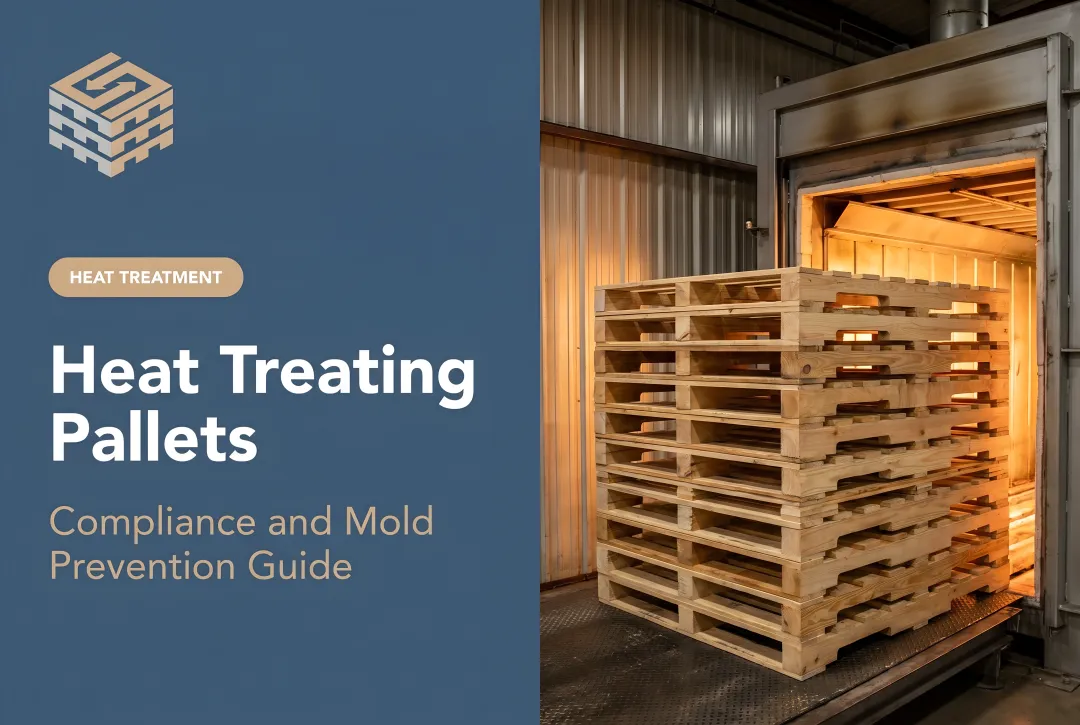
Heat treatment raises the pallet's core wood temperature to 56°C (133°F) for a minimum of 30 continuous minutes, meeting the ISPM-15 standard set by the International Plant Protection Convention (IPPC). Providers typically use chambers or kilns to bring wood to temperature uniformly throughout the profile, including the core, not just the surface.
Core benefits:
- No chemical residue
- Compliance status generally holds even after minor repairs
- Faster turnaround supports quicker inventory cycling
There's also dielectric heating (DH), which uses microwaves or radio waves to reach 60°C (140°F) for 1 continuous minute. It's a distinct method from conventional kiln treatment, though kiln-based HT remains the standard most exporters encounter through their pallet suppliers.
Use Cases of Heat Treatment
Heat treatment fits best for:
- Closed-loop supply chains where pallets get treated once and reused repeatedly
- Large-volume exporters and manufacturers shipping to the EU, where MB faces restrictions
- Operations that can't afford multi-day fumigation delays
A historical case from Pallet Enterprise illustrates the shift: Industrial Pallet Corp. in Indiana was fumigating about 80% of its pallets before installing sterilization kilns in 2002.
The kilns cut treatment time to roughly 5-8 hours, compared to a two- to three-day fumigation cycle for rush orders, and let the company treat a full truckload as one batch (Pallet Enterprise).

Fumigation vs Heat Treatment: Which Should Exporters Choose?
The decision comes down to a handful of factors:
- Export destination requirements – Does the market restrict MB?
- Order volume – Are you treating a handful of pallets or full truckloads regularly?
- Pallet reuse plans – One-way shipment, or part of a closed-loop pool?
- Available lead time – Can you absorb a multi-day fumigation cycle, or do you need faster turnaround?
Situational recommendation:
- Choose fumigation for low-volume, one-way shipments to regions still accepting MB.
- Choose heat treatment for high-volume, reusable pallet programs or any EU-bound shipments.
For exporters who'd rather skip the infrastructure investment, sourcing pre-treated, ISPM-15 certified pallets removes the guesswork.
Skid Management Services works through a national network of pallet and packaging suppliers to secure compliant, heat-treated pallets. Exporters get the HT stamp and documentation without building or operating treatment chambers themselves.
Real-World Example: Choosing the Right Treatment
Picture a mid-size snack manufacturer shipping regionally within the US for years, relying on fumigated pallets because that's what its regional pallet supplier offered. Then a new contract opens up EU distribution.
The challenge: EU import rules restrict methyl bromide, and the exporter's existing fumigated pallets don't clear the compliance bar. Worse, every time a pallet gets repaired, the fumigation mark needs re-verification, adding cost and delay right when speed matters most.
The decision trigger: The new EU contract forces a hard look at treatment methods. Heat-treated pallets, which retain compliance status after minor repairs, become the obvious fix.
The outcome: For the snack manufacturer, moving to heat-treated pallets replaced a multi-day fumigation cycle with same-day or next-day turnaround. That change cut lead times when EU shipping windows were tight.

Takeaway: Reusable, high-volume exporters benefit most from switching to HT. If you're facing a similar transition, a national pallet supplier network like Skid Management Services can help you secure consistent, compliant supply without scrambling for last-minute treatment capacity.
Conclusion
Neither fumigation nor heat treatment is universally "better." The right choice depends on your export volume, your destination's regulations, and whether your pallets are one-way or part of a reuse cycle. A low-volume exporter shipping occasionally to a market that still accepts methyl bromide (MB) may find fumigation perfectly workable. A high-volume operation shipping repeatedly to the EU almost certainly needs heat treatment. What matters most is compliance certainty. Match the treatment method to your actual shipping pattern, and you cut retreatment costs and keep export schedules intact—more than chasing the lowest price on a single invoice. Get that match right, and treatment stops being a shipping-day headache.
Frequently Asked Questions
What does ISPM-15 require for export pallets?
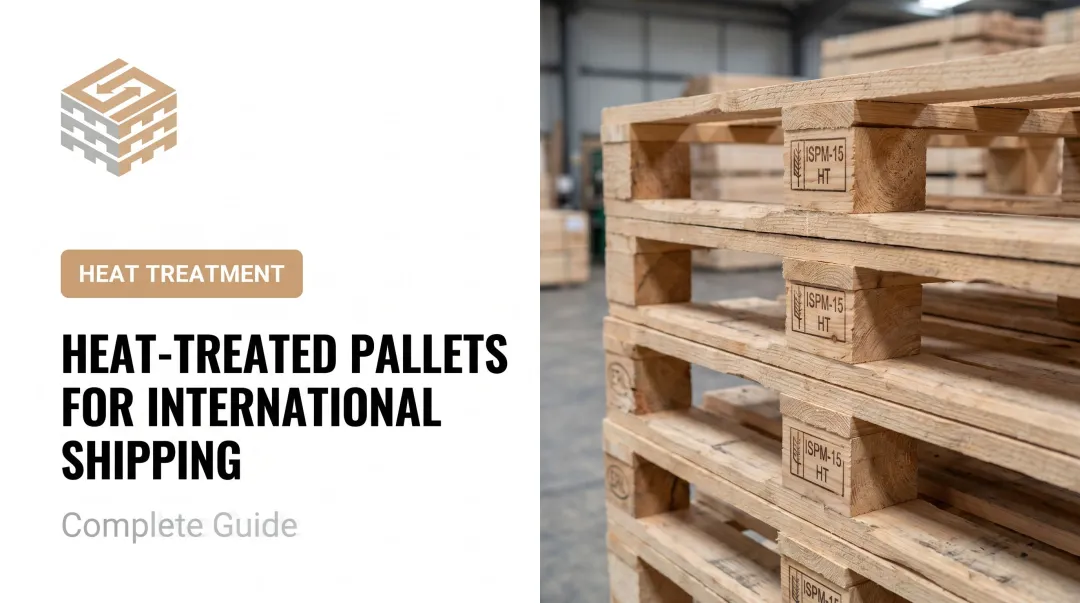
ISPM-15 requires either heat treatment to a 56°C core temperature for 30 minutes, or an approved fumigant concentration-time schedule. Pallets must carry a mark showing the IPPC symbol, country code, and treatment code.
Is methyl bromide fumigation being phased out?
Yes. MB faces increasing restrictions globally, particularly in the EU, pushing many exporters toward heat treatment as the more reliable long-term option.
Can heat-treated pallets be reused after repair?
Generally, yes. HT pallets typically retain their compliance status after minor repairs, while MB-treated pallets more often require retreatment and remarking.
Which method is faster: fumigation or heat treatment?
Heat treatment is generally faster. Fumigation cycles run at least 16-24 hours plus aeration time, while heat treatment chambers can process a full load in a matter of hours.
Do all countries accept both treatment methods?
Most countries accept both, but some regions restrict methyl bromide. Always verify destination-specific requirements before choosing a treatment method.
How can exporters ensure compliance without investing in treatment equipment?
Sourcing pre-certified, heat-treated pallets from an established national supplier network, like Skid Management Services, removes the need for in-house treatment infrastructure entirely.