
But strap type, tension, and sealing technique all matter more than most people assume. Get any one of them wrong, and you're looking at shifted loads, crushed product, or a strap that snaps mid-transit.
Businesses that move product on wood pallets know this firsthand. Skid Management Services, a national pallet and packaging supplier working with food and consumer brands like Campbell Snacks and Knouse Foods, sees daily how secure strapping protects goods from the loading dock to the delivery bay. This guide walks through choosing the right strap, prepping your load, and running a strapping tool correctly, step by step.
TL;DR
- Match strap material—polyester, steel, or polypropylene—to load weight and type
- Wear PPE (gloves and eye protection), especially when working with steel strapping
- Strap in order: wrap, tension, seal, cut, then inspect the finished load
- Skip over-tightening and twisted straps to avoid load shift or product damage
When Should You Use a Pallet Strap Tool?
Strapping earns its place when a load needs more containment than stretch wrap alone can provide. Common uses include:
- Securing stacked boxes on a pallet during transit
- Bundling irregular loads, such as lumber or pipe, that don't stack neatly
- Reinforcing stretch-wrapped pallets against shifting on the truck
Strapping beats stretch wrap alone for heavy, rigid, or non-compressible loads—think bricks, lumber, metal coils, or concrete blocks. These items won't crush under tension, so a tight strap holds them in place without damaging the goods.
Signode's own guidance draws the line clearly: steel and PET strapping are built for large, heavy, irregular loads, while polypropylene works better on lighter, compressible loads because of its elongation and recovery properties.
That's also where strapping gets misused. Fragile or compressible items—cartons of snack food, packaged soft goods, anything that can crush—don't respond well to strap tension the same way lumber does.
Over-tighten a strap on a soft product and you'll crush the edges before the truck even leaves the dock. Edge protectors help, but the real fix is choosing the right material and dialing in tension for the product, not just the pallet.
What You Need Before Using a Pallet Strap Tool
Before you pick up a tensioner, get these basics squared away:
- Correct strap type and width matched to your tool. Steel, polyester/PET, and polypropylene each need specific tensioners, sealers, and seals. They aren't interchangeable.
- Working tensioner, sealer, and cutter (or a combination tool). A worn gripper plate or dull cutter blade will cause more problems than it solves.
- PPE, specifically gloves and safety glasses. This matters most with steel strapping, where snapback and sharp cut ends pose real injury risk.
- A flat, stable surface for positioning the pallet or load before you start strapping.
Skip any one of these and you're setting yourself up for a failed strap somewhere down the supply chain. Skid Management Services supplies polypropylene, polyester/PET, and steel strapping in both hand-grade and machine-grade options as part of its broader packaging materials line, so sourcing the right material for your load is usually a phone call away.
How to Use a Pallet Strap Tool (Step-by-Step)
Skipping steps, especially proper tensioning or sealing, is the number one reason straps come loose or fail in transit. Here's the sequence that actually works.
Wrapping and Positioning the Strap
Wrap the strap around the load, keeping it centered and flat against the pallet's edges. No twists. A twisted strap won't distribute tension evenly and can cut into packaging at odd angles.
Common mistake: leaving too little slack. You need enough strap length overlapping to work with the tensioner comfortably. Too tight from the start, and you won't have room to seal properly.
Tensioning the Strap
- Load the strap into the tensioner's gripper and cutter wheel, making sure both layers sit flat.
- Pull the tension lever or handle to draw the strap tight and firm against the load.
- Stop once the strap is snug, not once it's maxed out.

Over-tightening damages load edges and can snap the strap outright, sending it flying with real force. OSHA requires safety glasses with side shields for flying-object hazards on this kind of work.
Sealing and Locking the Strap
- Place a seal or buckle over the overlapping strap ends, directly where the tensioner is holding tension.
- Crimp the seal with the sealer tool, fully closing the jaws so the crimp holds.
A poorly seated seal is a silent failure point. It looks fine until the load hits a bump on the highway.
Cutting and Finishing
Trim the excess strap using the built-in or separate cutter, always cutting away from your body. Never use an improvised tool like a hammer, chisel, or crowbar to cut tensioned strap. Signode's own manual warns that improper cutting can send tensioned strap flying with hazardous force.
Finish with a quick inspection: press or shake the strap to confirm it holds tight against the load. If it flexes or slides, redo it before the pallet moves.

Choosing the Right Strapping Material for Your Load
Picking the wrong material is one of the most common ways businesses end up with damaged goods or failed straps mid-shipment.
| Material | Best for | Watch out for |
|---|---|---|
| Polypropylene (PP) | Light-to-medium, compressible loads like cartons and general bundles | Not built for heavy, rigid, outdoor, or long-haul loads |
| Polyester/PET | Medium-to-heavy, non-compressible loads like packaged goods pallets | Higher cost than PP; needs a compatible tensioner and sealer |
| Steel | Sharp-edged, heavy industrial loads or extreme temperature environments | Requires PPE; sharp edges and high stored tension |

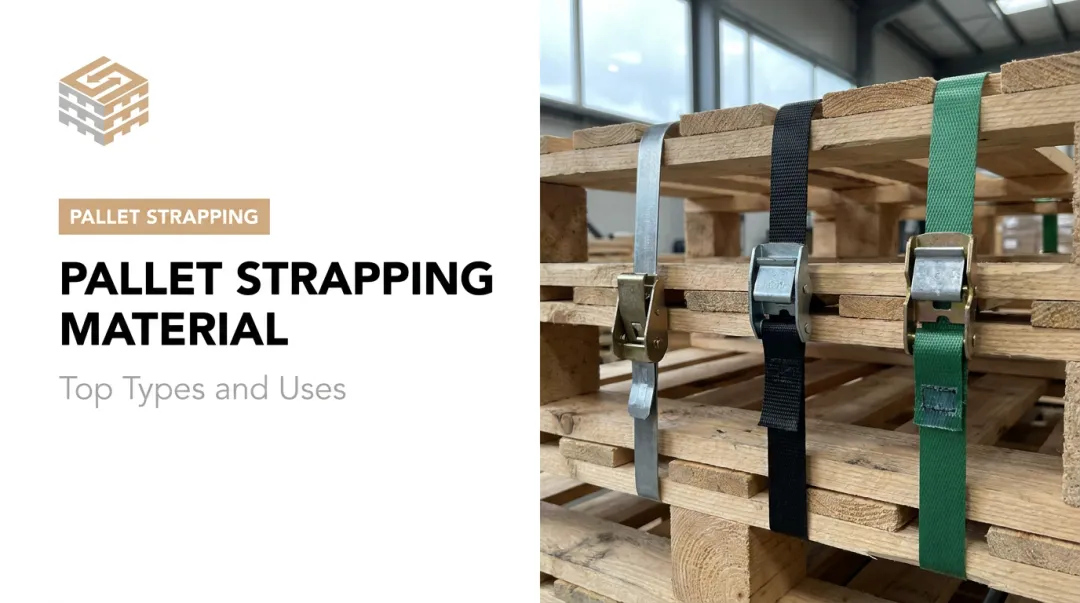
Polypropylene (PP) is the everyday choice for cartons and soft bundles. Match it to a light-duty strap tool and keep it off heavy or long-haul freight where stretch and UV exposure cause failures.
Polyester/PET strapping fits medium-to-heavy, non-compressible loads such as palletized packaged goods on regional or national runs. It holds tension longer than PP without steel’s handling risks—use a PET-rated tensioner so joints don’t slip.
Steel strapping suits sharp-edged, heavy industrial loads—steel coils, timber bundles, or concrete blocks—and extreme temperatures where plastic can lose performance. Plan on cut-resistant gloves, eye protection, and a steel-specific sealer or crimp tool.
Skid Management Services' network of pallet and packaging suppliers helps businesses source the right combination of pallets and strapping materials for consistent, reliable shipments, whether that's PP for a cartons-only run or PET for a full pallet of canned goods heading cross-country.
Best Practices and Common Mistakes to Avoid
A few habits separate reliable strapping jobs from repeat headaches:
- Inspect tools every shift. Worn gripper plates or dull cutters cause slipped tension and ragged cuts—catch wear before the first load, not after a failure.
- Center straps on the load. Off-center placement loads one edge harder and lets product shift in transit.
- Match seals and tools to strap type. A steel sealer will not seat correctly on PP (or the wrong width), and mixed kits are a common failure point.
- Maintain moving parts. Light oil and timely part swaps beat forcing extra tension to cover worn grippers or cutters.
Done consistently, these habits keep tension even, seals secure, and fewer damaged loads reaching the customer's dock.
Conclusion
Using a pallet strap tool well comes down to a consistent sequence: wrap, tension, seal, cut, inspect. The skill is straightforward—what matters is running the same process every time with attention to detail.
Treat proper strapping technique as part of protecting product quality, not just an afterthought before the truck backs up to the dock. Over time, that discipline shows up directly in fewer shipping losses and fewer damaged-goods claims.
Frequently Asked Questions
What is Uline poly strapping?
It's a type of polyester strapping sold by Uline, commonly used for medium-to-heavy loads. It's valued for high retained tension and easier handling compared to steel strapping.
How tight should a pallet strap be?
The strap should sit snug and firm around the load without denting edges or crushing product. Use the tensioner's lever to control tightness precisely rather than pulling by hand.
What's the difference between steel and plastic strapping?
Steel handles sharp-edged, heavy-duty, high-heat loads best. Polyester and polypropylene suit general palletized goods and are generally safer and easier to apply.
Can I reuse strapping seals or buckles?
Seals are generally single-use once crimped. Reusing a crimped seal risks strap failure, so always use a fresh, matched seal for each application.
Do I need PPE to use a strapping tool?
Yes, gloves and eye protection are recommended, especially with steel strapping, due to snapback risk and sharp cut ends after trimming.
How often should strapping tools be maintained?
Inspect tools before each use and service them when parts show wear, dirt buildup, or reduced tensioning performance. Regular upkeep prevents mid-job failures.