"Alternatives" doesn't just mean another rental network. It also covers plastic pallet poolers and direct ownership models where you buy pallets outright and skip the fee structure entirely. This guide compares the top CHEP competitors on cost, network reach, and operational fit, so you can pick the model that actually works for your supply chain.
Key Takeaways
- CHEP alternatives fall into three lanes: pooling networks, plastic poolers, and ownership
- Ownership models cut the transfer, recovery, and lost-pallet fees that inflate CHEP's true cost
- The right choice depends on dwell time, geographic reach, and exchange frequency, not just the rental rate
- This guide ranks five top CHEP competitors and explains the evaluation criteria behind each pick
Overview of CHEP and the Pallet Pooling Market
CHEP runs a rent-use-return pooling model: you pay to use its pallets, ship them through your network, and return them (or pay if you don't). For decades, that's been the default setup for U.S. and global retail supply chains, and Brambles (CHEP's parent company) now manages roughly 348 million pooled assets across 60 countries.
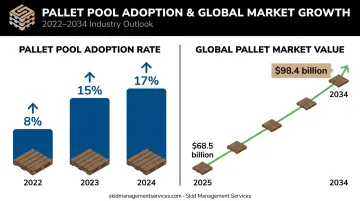
Pooling isn't shrinking, but it's not the runaway default it once was either. Modern Materials Handling's 2024 pallet survey tracked steady growth in pool adoption:
- 8% of respondents used a pallet pool in 2022
- 15% used a pallet pool in 2023
- 17% used a pallet pool in 2024
Growth, yes, but plenty of businesses are still weighing pooling against ownership.
Part of that reassessment comes down to cost creep. Fees for rental, transfer, recovery, and lost or damaged pallets add up fast, especially for operators shipping to regions where CHEP's recovery infrastructure is thinner than advertised. That cost pressure is playing out against a fast-growing backdrop: IMARC values the global pallet market at $68.5 billion in 2025, climbing toward $98.4 billion by 2034.
That growth is fueling more competition. Below, we rank the alternatives businesses are actually switching to in 2026, whether they want a different pooling network, a plastic asset, or full pallet ownership.
Top 5 CHEP Alternatives for 2026
We ranked these five on cost transparency, network reach, flexibility, and how well each fits closed-loop versus multi-party supply chains.
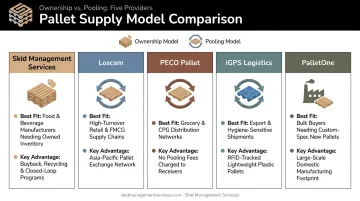
Skid Management Services
Skid Management Services (SMS) is a national provider of wood pallets and packaging products, positioned squarely as an "own vs. rent" alternative to CHEP. Rather than operating a pooling network, SMS combines its own inventory with an expansive network of pallet and packaging suppliers, which keeps pricing competitive and supply uninterrupted even during regional lumber shortages.
The core differentiator is simple: you own the asset. That eliminates the recurring transfer, recovery, and lost-pallet fees that pooling contracts build in. SMS backs this up with nationwide supply reliability, serving major food and CPG manufacturers including Knouse Foods, Campbell Snacks, and Nissin—companies that need consistent, food-grade pallet supply without pool-fee volatility.
| Attribute | Details |
|---|---|
| Model Type | Direct purchase/ownership (new, used, and custom wood pallets) vs. CHEP's rental-based pooling |
| Best Fit | Businesses with high-volume, predictable outbound flows, longer dwell times, or shipping to regions with thin CHEP recovery infrastructure |
| Key Advantage | Competitive nationwide pricing and uninterrupted supply through an expansive supplier network, avoiding CHEP's rental and fee escalation |
Loscam
Loscam is a major pallet pooling provider across Australia and Asia-Pacific, operating on a hire-and-return model similar to CHEP but with red and yellow pallets instead of blue. The company has built strong network density across 12 Asia-Pacific regions, including Australia, mainland China, Singapore, and Thailand.
What sets Loscam apart is its cost structure. Daily hire rates and lost-pallet compensation tend to run lower than CHEP's, and Loscam sources its pallets almost entirely from sustainably managed radiata pine forests. For multi-party retail chains already operating in Loscam's core markets, it's a straightforward pooling swap.
| Attribute | Details |
|---|---|
| Model Type | Pooling/hire (daily rate model) |
| Best Fit | Multi-party retail supply chains in regions where Loscam has strong network density |
| Key Advantage | Competitive daily rates and lower lost-pallet fees relative to CHEP |
PECO Pallet
PECO is a North American reusable wooden pallet pooling provider and the most direct head-to-head competitor to CHEP. The company now operates more than 2,900 full-service depots, sort/recovery locations, and manufacturing facilities, with a pool numbering in the tens of millions of red block pallets.
PECO leans hard into compliance and quality control. Every returning pallet gets a 15-point inspection before re-entering circulation, and the company requires SFI or FSC certification from its lumber suppliers. For businesses that want to stay in a pooling model but escape CHEP's specific fee terms, PECO is the natural next stop.
| Attribute | Details |
|---|---|
| Model Type | Reusable wooden pallet pooling |
| Best Fit | Retailers and manufacturers wanting pooling benefits without CHEP's specific network/fee terms |
| Key Advantage | Nationwide coverage with compliance-focused, sustainable reuse program |
iGPS Logistics
iGPS takes a different approach entirely: plastic instead of wood. Its pooled pallets carry embedded RFID tags and barcodes, giving shippers real-time visibility into location and dwell time that wood pooling networks generally can't match.
Weight is the other big selling point. iGPS pallets weigh about 50 pounds, up to 35% lighter than an average wood platform, which trims freight costs on every load. Plastic also doesn't absorb moisture, chemicals, or bacteria, making it a natural fit for food and pharma shippers who need washable, hygiene-compliant assets.
| Attribute | Details |
|---|---|
| Model Type | Plastic pallet pooling with embedded tracking technology |
| Best Fit | Food, pharma, and hygiene-sensitive supply chains needing durable, trackable assets |
| Key Advantage | Lower freight weight and long asset lifespan reduce lifecycle cost versus wood pooling |
PalletOne
PalletOne skips pooling altogether. As one of the largest pallet manufacturers in the U.S., it produces both standard and custom pallets at scale, running 18 locations across nine states and processing more than 200 million board feet of wood annually.
This is a manufacturing-first model built for volume. High-throughput industries like automotive, retail, and food manufacturing rely on PalletOne for fast turnaround on large, consistent orders, choosing from new or recycled stock depending on budget and spec requirements.
| Attribute | Details |
|---|---|
| Model Type | Direct manufacture and purchase (custom + standard) |
| Best Fit | High-volume industries needing large, consistent orders with fast turnaround |
| Key Advantage | Manufacturing scale supports bulk pricing and reliable large-order fulfillment |
How We Chose the Best CHEP Alternatives
Every option above was evaluated on total cost of ownership, not just the sticker price on a pallet or daily hire rate. That distinction matters more than it sounds. Comparing per-pallet rental rates alone ignores transfer fees, recovery costs, and lost-pallet charges that can double the real cost of a pooling contract over a year.
We weighed each alternative against factors tied directly to business outcomes:
- Dwell time compatibility – how long pallets sit before turning over, and whether that favors ownership or pooling
- Industry-specific needs – hygiene requirements, heavy-duty load ratings, and export compliance (ISPM-15, for instance)
- Sustainability commitments – certified lumber sourcing or recycled content requirements
- Network/geographic reach – whether the provider's infrastructure actually covers your shipping lanes
- Ease of switching – whether you can transition without disrupting outbound shipments
None of these factors work in isolation. A food manufacturer with tight hygiene standards and long dwell times will land on a different answer than a retailer running high-velocity, multi-party lanes.
Conclusion
There's no single "best" CHEP alternative. The right pick depends on whether you need another pooling network, a plastic asset with tracking, or full ownership that eliminates recurring fees entirely.
Before you decide, pull your last 12 months of CHEP invoices and total the real costs:
- Rental fees for pallet use
- Transfer fees between facilities
- Recovery fees for pallet retrieval
- Lost or damaged pallet charges
Weigh that total against your dwell time and geographic footprint. The math often looks different than the headline rate suggests.
If you're ready to move from pooling to ownership, Skid Management Services offers competitively priced wood pallets with reliable nationwide supply. Request a quote to see what a pool-fee-free program could look like for your operation.
Frequently Asked Questions
What is the difference between GMA pallets and CHEP pallets?
GMA pallets follow a standardized 48x40 wood specification and can be purchased outright. CHEP pallets share that GMA footprint but remain CHEP's property, meaning you rent and pool them rather than own them.
What is a good substitute for pallets?
Depending on load weight and hygiene needs, businesses use plastic pallets, slip sheets, presswood or molded pallets, or corrugated pallets. Each trades off differently on cost, durability, and export compliance.
Is it cheaper to buy pallets than rent from CHEP?
Ownership tends to be cheaper for businesses with high pallet volumes, longer dwell times, or dispersed customers, since it avoids recurring transfer, recovery, and lost-pallet fees. Lower-volume, high-turnover operations may still benefit from pooling.
Can I mix CHEP pallets with pallets from other suppliers in my supply chain?
CHEP pallets are designed to move only within the CHEP network, so mixing them with owned or other-brand pallets requires careful sorting. Skip that step and you risk recovery fees or contract violations.
How do I switch from CHEP to a pallet ownership model without disrupting operations?
Run owned pallets alongside your existing CHEP stock during a phased transition, audit your invoices for outstanding fees, and partner with a national supplier like Skid Management Services for uninterrupted pallet supply during the changeover. This avoids a hard cutover that could disrupt outbound shipments.
What happens to lost or damaged CHEP pallets if I stop using CHEP?
Outstanding CHEP pallets still need to be reconciled or returned per your contract terms. Unresolved losses or damages can generate fees even after you've formally ended the relationship, so reconcile before you walk away.