
Yet ask three suppliers what "reconditioned" means and you'll likely get three different answers. Some use it interchangeably with "recycled." Others mean something closer to "remanufactured." That confusion costs buyers money and, occasionally, damaged product.
This guide breaks down what a reconditioned pallet actually is, how the process works, what the grades mean, and what to confirm before you sign a purchase order.
Key Takeaways
- A reconditioned pallet is used, inspected, repaired, and returned to service — not built from scratch.
- Grading (A, B, C or Utility) lets you match pallet quality to your application without overpaying.
- Reconditioned pallets typically cost 40–60% less than new pallets while performing comparably for most warehouse use.
- Always confirm grading criteria, treatment status, and supplier traceability before ordering.
What Is a Reconditioned Pallet?
A reconditioned pallet is an existing pallet that's been inspected, repaired if necessary, and made ready for another round of service. The original frame stays mostly intact. That's the key difference between reconditioning and remanufacturing, where a pallet gets rebuilt from salvaged parts pulled off multiple damaged units.
Industry terminology here is genuinely messy. The National Wooden Pallet & Container Association's 2025 standard defines "recycled," "repaired," and "remanufactured" pallets clearly, but doesn't formally define "reconditioned" as its own category. Suppliers use it as shorthand for "used and made usable again," which means the label alone tells you very little.
Skid Management Services runs its recycled-pallet program the same way: pallets get picked up, sorted by size and grade, repaired where needed, and redistributed into inventory. That process, not the word on the invoice, is what determines quality.
Why the Distinction Matters
Buying the wrong grade for the wrong job creates real problems:
- Automated conveyor systems can jam on pallets with warped boards or inconsistent dimensions
- Export shipments get rejected at ports over missing heat-treatment stamps
- Overpaying for Grade A when Utility grade would've done the job just as well
Reconditioning exists to balance three things: safety, cost, and sustainability. Get the grade-to-application match right, and you capture all three.
The Reconditioning Process Step-by-Step
Reconditioning is a multi-step sequence. Here's how it typically runs:
- Collection and sorting — Used pallets come from returns, production sites, or drop-trailer programs. They get sorted by material type and general condition before anything else happens.
- Initial inspection — Each pallet is checked for broken boards, damaged blocks, missing nails, and warping. Anything beyond repair gets pulled for recycling into mulch or biomass rather than reuse.
- Repair — Damaged deck boards, stringers, and fasteners are replaced with materials matching the original spec. This is where a pallet earns its grade.
- Treatment — Pallets may be heat-treated, kiln-dried, or fumigated. Any unit headed for international shipment must meet ISPM-15 standards, meaning heat treatment to a core temperature of 56°C (132.8°F) for at least 30 minutes [13].
- Finishing and grading — Pallets get sanded, labeled with a grade and inspection date, and tested for load capacity before re-entering circulation.

A 2022 USDA Forest Service lifecycle assessment found repaired and remanufactured pallets consume roughly 5.09 MJ of primary energy and generate about 0.355 kg of CO2 equivalent per unit [2]. Those figures come mostly from electricity, replacement fasteners, and forklift fuel—still meaningfully lighter than producing a pallet from raw lumber.
Skid Management Services handles sorting and grading at its own facility, then draws on its supplier network for repair capacity and consistent volume. That setup matters when a client needs thousands of units on a weekly cadence, not a one-off order.
Pallet Grades and Where They're Used
Grading isn't standardized nationally. What one recycler calls "Premium A" another might call "Standard A." But the general logic holds across most suppliers.
| Grade | Condition | Best Use |
|---|---|---|
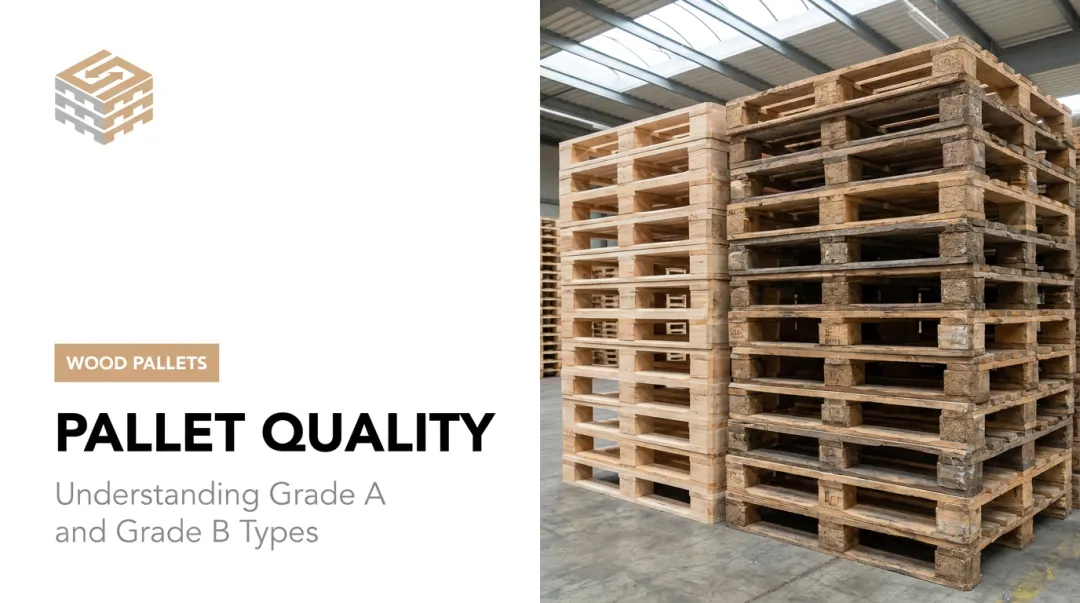
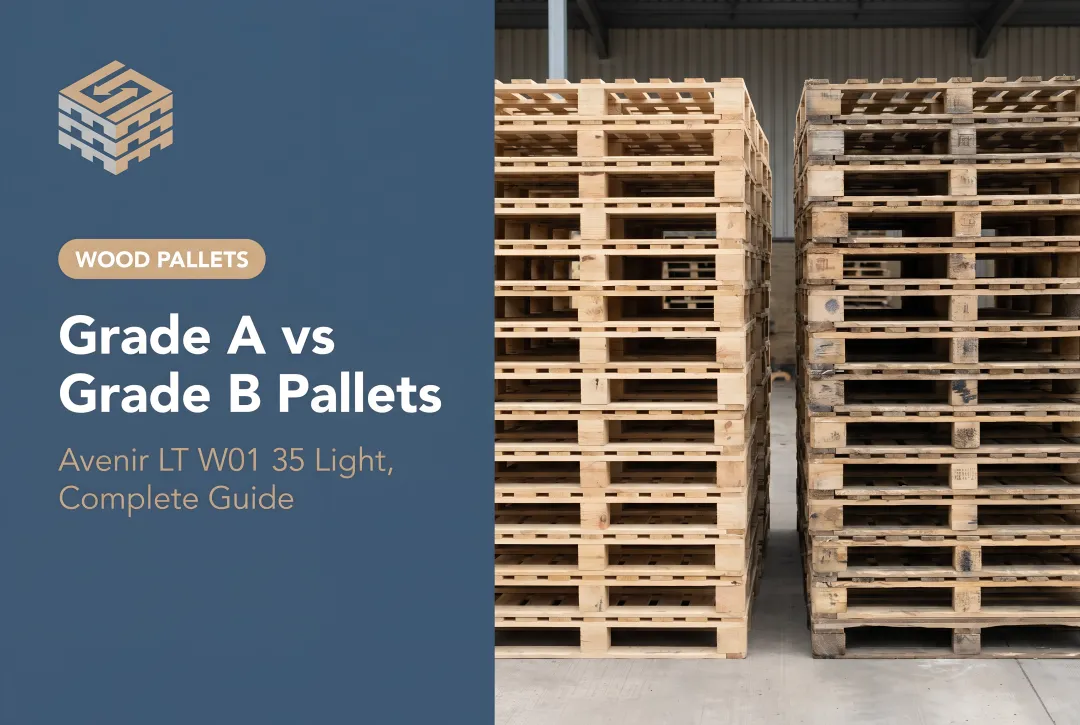
| Grade A | All 7 deck boards present, no broken stringers, minimal repair history | Retail, export, automated handling systems |
| Grade B | 1–2 minor board repairs, full structural integrity | General production, internal transport |
| Utility (#2) | Visible wear, functional but basic | Single-use, internal movement, non-critical storage |

Matching grade to application isn't optional if you're running automated conveyors or rack systems. Those systems need dimensional precision. A Utility-grade pallet with a slightly warped stringer can jam a line or drop product.
Skid Management Services grades to these same structural thresholds in-house. Grade A can stand in for new in most warehouse applications; Grade B covers general distribution where function outweighs appearance.
Reconditioned vs. Recycled vs. Remanufactured Pallets
These three terms get used loosely, and that's a problem for buyers trying to compare quotes.
- Recycled is the broadest term: reused, repaired, or fully reassembled. The NWPCA defines it as any pallet made reusable through sorting, repairing, or remanufacturing [11].
- Reconditioned typically means an existing pallet that's been inspected and repaired, with the original structure mostly retained.
- Remanufactured means a pallet rebuilt from components recovered off multiple used pallets, then reassembled with new fasteners [11].

Pallet Enterprise notes remanufactured pallets usually sit between recycled and new pallets on price, since they involve more labor and new hardware [12]. But price ordering alone won't tell you what you're actually buying.
The fix: don't rely on the label. Ask the supplier directly what work was performed.
SMS, like much of the industry, groups these terms together in some listings. That's why grade, condition, and application should drive your purchase decision, not terminology.
Benefits of Choosing Reconditioned Pallets for Your Business
Cost Savings
Reconditioned pallets typically run 40–60% less than new pallets for comparable performance in most warehouse and distribution settings, based on Skid Management Services program data. Grade A units match new pallets for most internal handling and manufacturing-flow applications.
Sustainability
Reconditioning reduces demand for virgin timber and keeps usable material out of landfills. One sector lifecycle study found 37.3% of boards from dismantled pallets get reused directly in repairs and remanufacturing [4] — material that would otherwise need replacing with fresh lumber.
Reliable Supply
Supply gaps hurt more than price increases. Working with a national supplier network like Skid Management Services helps businesses secure consistent inventory of both reconditioned and new pallets without production delays, even during volume spikes.
Performance Parity
Properly reconditioned Grade A pallets meet the same load capacity and handling standards as new pallets. The gap only shows up when a buyer accepts a lower grade than the job requires.

What to Confirm Before Buying Reconditioned Pallets
Before placing an order, cover these checks:
- Grading criteria — Ask exactly what "Grade A" or "Grade B" means for that supplier, including inspection and repair-log details.
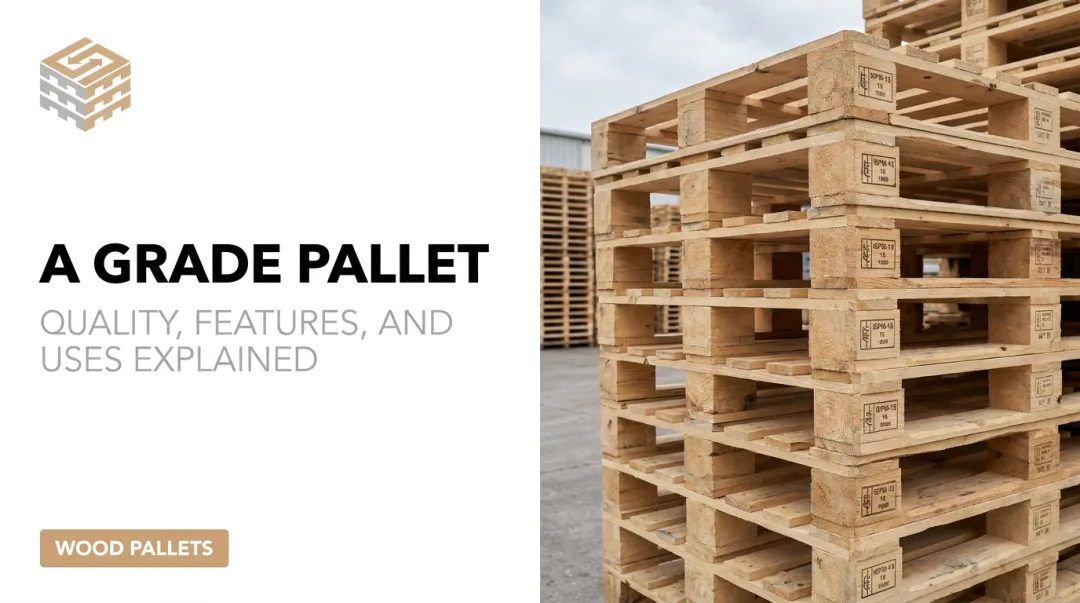
- ISPM-15 compliance — If pallets are export-bound, confirm heat treatment and a legible stamp showing the IPPC logo, country code, treatment-provider ID, and HT code.
- Dimensional fit — Match pallet size and entry style (2-way vs. 4-way) to your forklifts, conveyors, or automated systems.
- Rotation planning — Set up a routine inspection cadence once pallets are in circulation, rather than waiting for a failure on the floor.
Repaired or remanufactured pallets bound for export must be re-treated and re-marked, with any old stamp obliterated first. Skip that step and you risk rejection at the port.
Frequently Asked Questions
How can I tell if a pallet is chemically treated?
Chemically treated pallets carry an IPPC stamp with a country code and a treatment code such as MB for methyl bromide. Heat-treated (HT) pallets are the more common, safer alternative and use a different code on the same stamp.
How long will pallet wood last outside?
Untreated wood left outdoors typically degrades faster due to moisture absorption and rot risk. Covered or treated storage, and keeping moisture below the fiber saturation point, extends usable life considerably.
What is the difference between a reconditioned and a repaired pallet?
The terms are often used interchangeably. "Repaired" usually refers to one specific fix, like replacing a board, while "reconditioned" implies a fuller inspection and grading process.
Are reconditioned pallets as strong as new pallets?
Properly reconditioned Grade A pallets can match new pallet load capacity and durability. Lower grades trade some structural margin for a lower price point.
How much can businesses save by using reconditioned pallets instead of new ones?
Savings vary by material, grade, and volume. Skid Management Services reports 40–60% savings on typical programs. Request a supplier quote comparison for figures specific to your order.
Can reconditioned pallets be used for international shipping?
Yes, as long as they meet ISPM-15 heat-treatment and marking requirements, including a valid stamp with country code, treatment-provider ID, and treatment code.