Introduction
A single wrong measurement can cost you more than a headache. If your pallet arrives at an Amazon fulfillment center over-height, missing a label, or wrapped in the wrong material, expect the shipment to be refused at the dock.
That means stranded inventory, unplanned service fees, and a scramble to fix a problem that should never have happened.
Knowing Amazon's specs before you ship prevents that scramble entirely. The core FBA pallet specs, GMA 48x40 footprint, 72-inch height cap, 1,500 lb weight limit, have stayed fairly consistent. Most rejections still trace back to preparation and sourcing mistakes, not confusion over the numbers themselves.
This 2026 guide breaks down exact size, weight, and height specs, material and grade rules, labeling and wrapping standards, and the most common triggers behind pallet rejections, so you can prep shipments right the first time.
Key Takeaways
- FBA requires GMA 48x40, 4-way entry wood pallets rated Standard B grade or higher
- Pallets must stay under 72 inches tall and 1,500 lbs total weight
- Product must not overhang the pallet edge in any direction, per current Amazon guidance
- Clear stretch wrap only and four correctly placed pallet labels are mandatory for receiving
- Non-compliant pallets get refused at the dock, triggering fees and possible shipping plan restrictions
What Is an FBA Pallet?
An FBA pallet is a standardized wood platform used to consolidate boxes for Fulfillment by Amazon inbound shipments. It lets forklifts and pallet jacks move large volumes of inventory efficiently at fulfillment centers, rather than staff handling loose boxes one at a time.
Amazon requires palletization once a shipment crosses certain thresholds. Rather than shipping individual small parcels, sellers moving high box counts or full truckloads use Amazon's LTL (less than truckload) or FTL (full truckload) programs, both of which depend on properly built pallets.
Here's the part sellers often miss: "FBA pallet" doesn't just mean the wood platform. It refers to the complete prepared unit:
- The wood platform itself (base structure)
- Cartons stacked squarely on top
- Clear stretch wrap securing the load
- Amazon-compliant labels on all four sides
Skip any one of these components and the whole unit is non-compliant, even if the wood pallet underneath is flawless. Suppliers like Skid Management Services build pallets to these FBA specifications from the start, so sellers don't inherit compliance headaches at receiving.
Amazon FBA Pallet Size, Weight & Height Requirements for 2026
Amazon's Seller Central requirements page lays out core specs that govern nearly every domestic FBA pallet shipment. Get these wrong and you're looking at a rejected load. Amazon's current seller requirements page for LTL, FTL, and FCL deliveries confirms the following baseline.
Core Dimensional Requirements
- Footprint: 40 x 48 inches (the standard GMA pallet size used across most US supply chains)
- Fork access: Four-way entry required, so forklifts can approach from any side
- Maximum weight: 1,500 lbs total, including the pallet itself
- Maximum height: 72 inches, including the pallet deck, for a single pallet
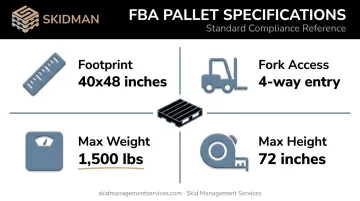
Splitting heavy SKUs across two pallets instead of overloading one is the simplest way to avoid a weight-related hold. It costs a little more in materials but saves you the rejection and rebooking hassle.
The Overhang Rule Sellers Get Wrong
Many sellers assume a small overhang, an inch or two per side, is fine. It isn't. Amazon's current guidance states that pallet contents must not overhang the pallet edge at all. Cartons need to be stacked evenly and squarely within the deck boundaries, matched to the footprint rather than hanging over it.
This single detail causes more preventable rejections than almost anything else on this list, largely because it contradicts older seller-forum advice still floating around online.
Quick Reference Table
| Requirement | Specification |
|---|---|
| Footprint | 40 x 48 inches |
| Entry type | 4-way |
| Max weight | 1,500 lbs (including pallet) |
| Max height | 72 inches (including deck) |
| Overhang | Not permitted |
| Box limit | 5,000 boxes per shipment ID |
Specs can shift by fulfillment center or product category, so always double-check the current numbers inside your Seller Central shipment creation workflow before you finalize a build. Skid Management Services builds pallets to these exact specs, including 40 x 48 four-way entry construction ready for FBA receiving, so compliance isn't something you have to engineer after the fact.
Pallet Material, Grade & Labeling Standards for FBA Compliance
Getting the dimensions right solves half the problem. The other half is material quality, grading, and labeling, three areas where sellers routinely underestimate how strict Amazon's receiving teams actually are.
Approved Pallet Materials and GMA Grades
Amazon requires sturdy wood pallets for FBA inbound shipments. Cardboard, particle board, and visibly damaged wood pallets get rejected on sight. Plastic pallets exist in specific niche cases, but wood remains the default across virtually every FBA shipment type.
Grading terminology gets murky fast. Amazon's own guidance calls for Standard B grade or higher, and requires 1A or 1B specifically for Health & Personal Care and Beauty products. Here's the catch: the pallet industry doesn't have a universally agreed definition of "Grade A" or "1A." One supplier's premium grade might match another's mid-tier stock.
The safer approach: specify measurable construction criteria rather than relying on a grade label alone. That means confirming:
- All seven deck boards present
- No broken stringers
- No protruding nails
- Minimal repair history
This is exactly why sourcing from a supplier that pre-verifies these details matters. Skid Management Services stocks GMA 48x40, 4-way entry pallets as standing inventory, not a per-order special request, with 4-way entry verification performed on every pallet before it ships.
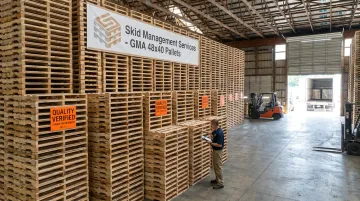
Combined with an expansive supplier network built for uninterrupted supply, that structure removes much of the grading guesswork that snags sellers relying on vague supplier claims.
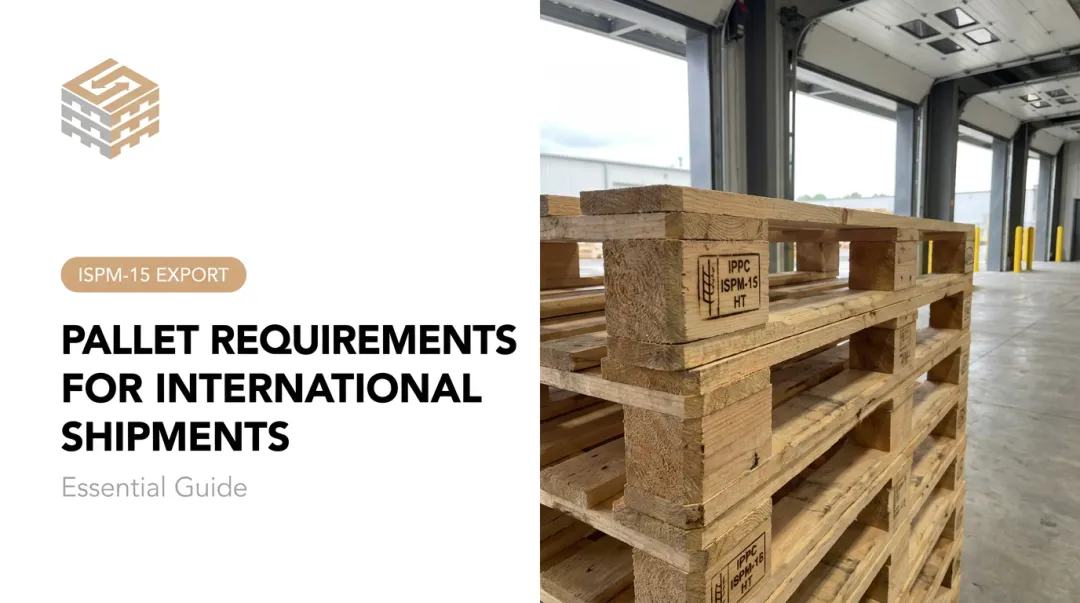
If you're exporting or importing wood packaging internationally, ISPM-15 heat-treatment rules apply. Wood must be heat-treated to a core temperature of 56°C for at least 30 continuous minutes and marked with the official IPPC stamp, according to the IPPC's ISPM 15 standard.
That stamp needs the IPPC logo, country code, treatment provider ID, and treatment code (HT or DB). A smudged or missing stamp is grounds for border rejection, no exceptions.
Stretch Wrap and Label Placement Rules
Wrap color trips up more sellers than you'd expect. Amazon requires clear plastic stretch wrap only. Colored, tinted, or black wrap isn't supported by current guidance, even if it looks more "protective." Wrap from base to top with enough passes to secure the load firmly without obscuring anything underneath.
Label placement follows a consistent rule:
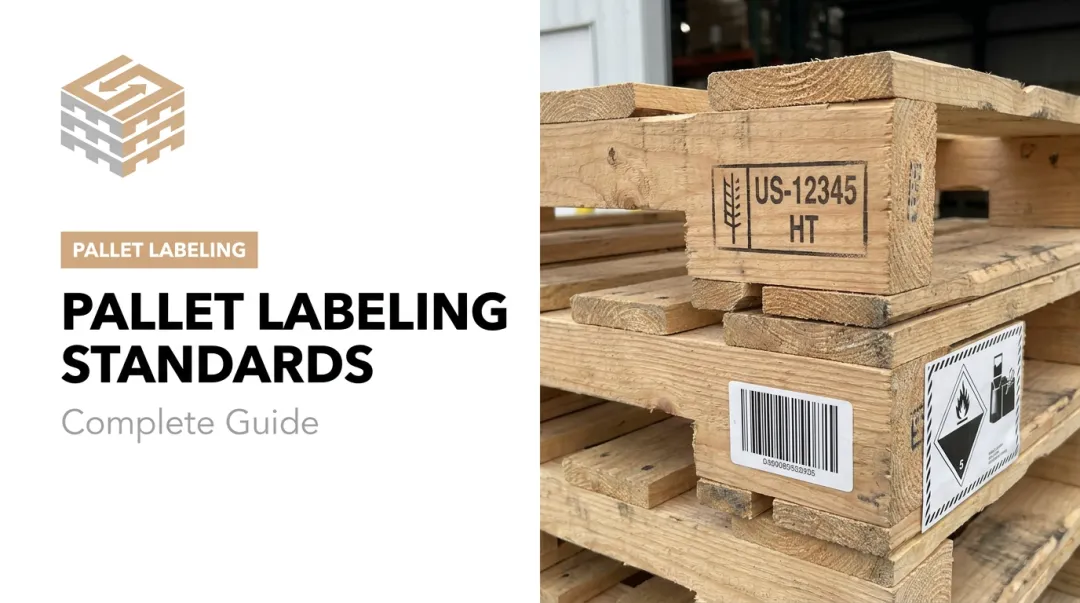
- One pallet label on each of the four sides
- Centered near the top
- Placed on the outside of the stretch wrap, not underneath it
- Fully scannable, no wrinkles or wrap bubbles over the barcode
Amazon generates four label copies per pallet directly through your Seller Central shipment workflow, pulling shipment and fulfillment center details automatically. Every box inside the pallet still needs its own individual FBA box label as well; pallet labels don't replace them.
Unscannable or obscured labels are a leading, and entirely avoidable, cause of receiving delays. A quick scan test before the truck leaves your dock takes thirty seconds and saves days of back-and-forth.
LTL vs FTL Shipments & Avoiding Common Pallet Rejections
Once your pallets meet spec, the next decision is how they travel. That choice affects cost, timing, and how much flexibility you have if something needs adjusting mid-shipment.
Choosing Between LTL and FTL for Pallet Shipments
According to Amazon's Partner Carrier program guide, shipments with fewer than 12 pallets typically route as LTL, sharing truck space with other freight. Shipments with more than 12 pallets generally move as FTL, occupying a full truck.
That said, Amazon can also assign FTL when 12 or more pallets are confirmed, or when FTL simply works out cheaper. Don't treat 12 pallets as a hard, seller-controlled line; the carrier mode assigned in your shipment workflow is the final word.
Both programs cap total volume at 5,000 boxes per FBA shipment ID. Exceed that and you'll need to split into a second shipment.
Choose LTL when you're shipping a handful of pallets and want shared-truck economics. Choose FTL when you're moving a large volume and want dedicated space with fewer handling touchpoints.
Top Reasons Amazon Rejects FBA Pallets
Getting the shipping mode right only pays off if the pallets themselves clear receiving. Amazon doesn't publish a ranked list of rejection causes, but the documented failure points show up again and again:
- Broken or damaged pallets – explicitly unacceptable, rejected at the seller's expense
- Wrong footprint or non-4-way entry – violates the base specification outright
- Overhang beyond the pallet edge – a persistent, preventable error
- Colored or opaque stretch wrap – fails the clear-wrap requirement
- Missing or unscannable labels – causes receiving delays or misrouted inventory
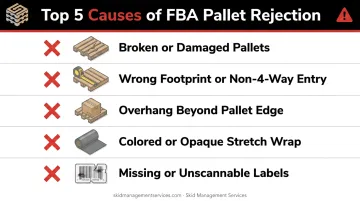
The financial hit isn't limited to a rejection notice. Sellers face unplanned service fees, return freight costs on top of the original shipping spend, and, for repeat issues, potential restrictions on future shipping plans.
Before your next pickup, run through a simple checklist:
- Verify pallet condition – no broken boards, no protruding nails, confirmed 4-way entry
- Measure height and weight – confirm both fall within 72 inches and 1,500 lbs
- Scan-test every label – all four sides, fully readable through the wrap
Sourcing from a compliance-focused supplier like Skid Management Services cuts down how often this checklist turns up a problem in the first place.
Frequently Asked Questions
What is an FBA pallet?
An FBA pallet is a fully prepared unit: a wood platform, stacked cartons, clear stretch wrap, and Amazon-compliant labels, used for LTL and FTL inbound shipments to Amazon fulfillment centers.
What are Amazon FBA pallet requirements?
Amazon requires a 48x40 inch, 4-way entry wood pallet, Standard B grade or higher, with a 1,500 lb max weight, 72-inch max height, clear stretch wrap, and compliant labeling on all four sides.
What is the maximum height allowed for an FBA pallet?
The maximum is 72 inches, including the pallet deck, for a single pallet. Confirm current limits inside your specific Seller Central shipment workflow before finalizing a build.
Can I use plastic pallets for Amazon FBA shipments?
Wood is the standard and preferred material for FBA shipments. Plastic pallets are accepted only in specific regional or niche use cases, not as a general substitute.
What GMA grade does Amazon require for FBA pallets?
Amazon technically accepts Standard B grade or higher, with 1A or 1B required for Health & Personal Care and Beauty products. Given inconsistent industry grading terms, sourcing Grade A or near-new condition pallets is the practical safe minimum.
What happens if Amazon rejects a non-compliant pallet?
Rejected pallets can mean shipment refusal at the dock, unplanned service fees, return freight costs, and, for repeat violations, restrictions on future shipping plans.