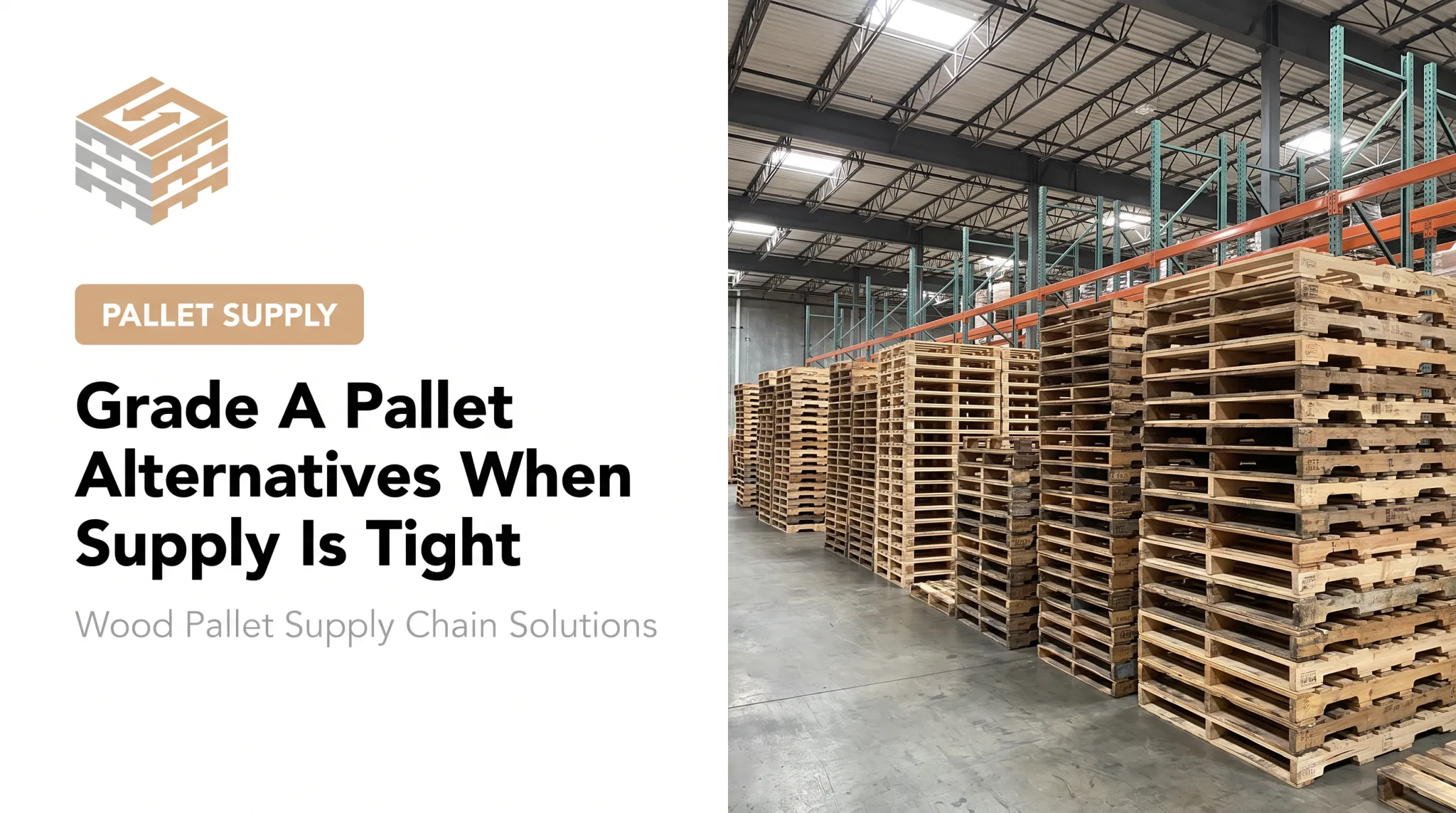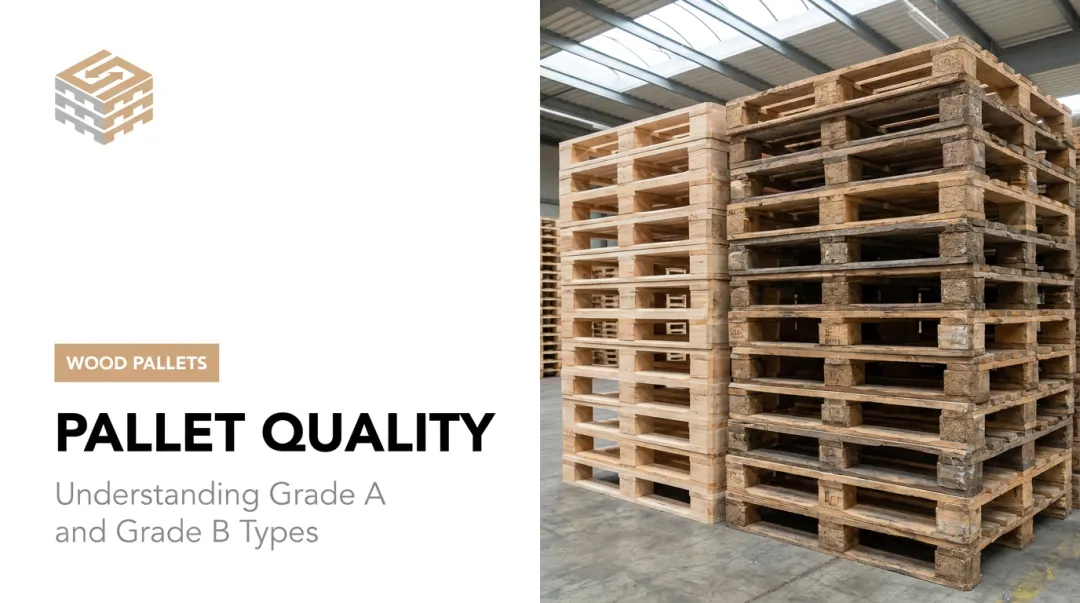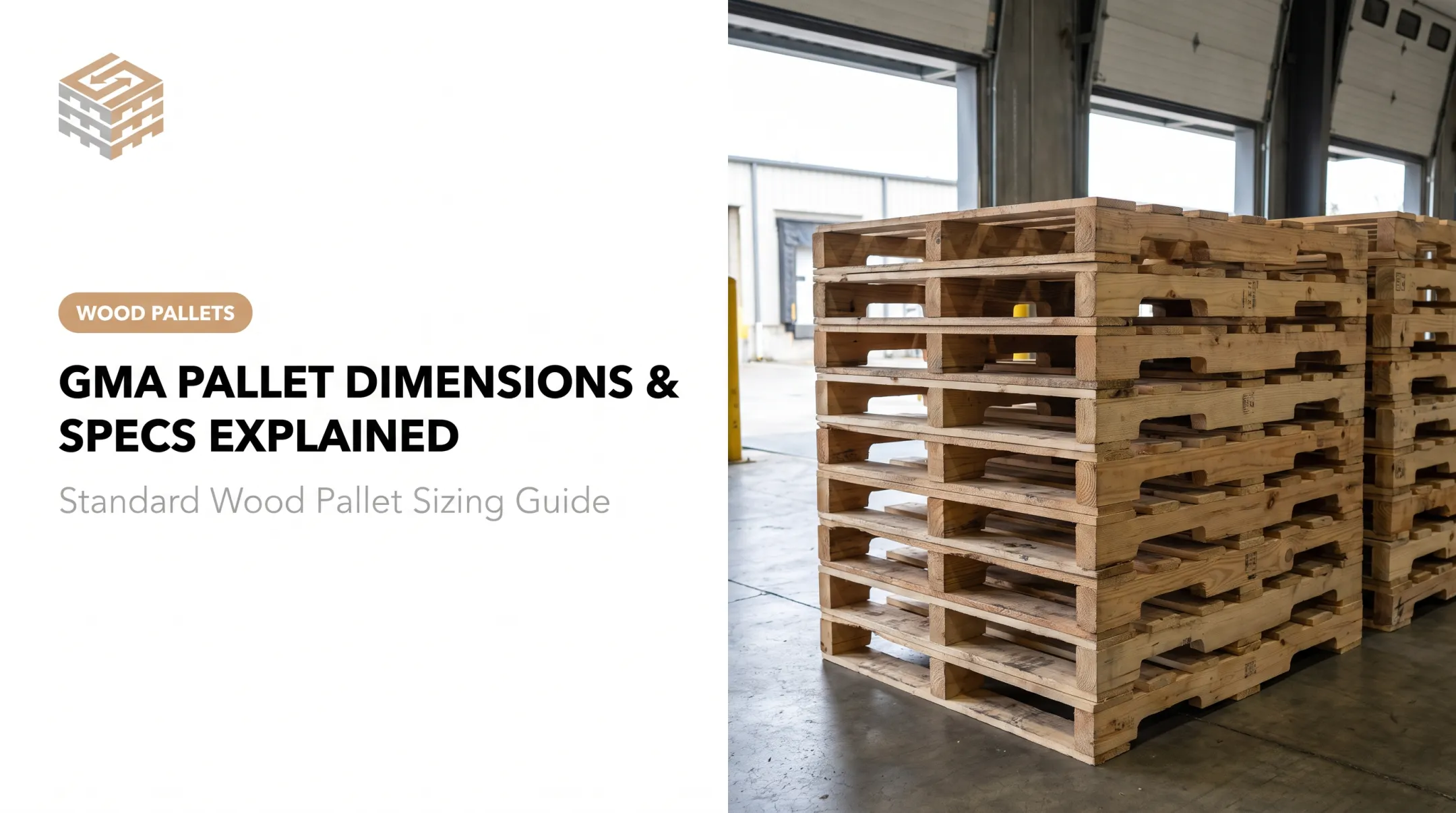

The problem: recycled pallet grades aren't standardized. What one supplier calls Grade A, another might call Premium or Standard A, and the repair allowances can differ significantly between them. In fact, Pallet Enterprise reports there's no consistent industry-wide definition of recycled-pallet grades, with terms like "Premium," "Triple-A," and "Club Pallet" used without shared meaning.
This guide walks through a practical inspection sequence: confirm the specification, inspect the deck and stringers, check dimensions and entry points, flag disqualifying damage, and document what you find.
Key Takeaways
- Confirm Grade A criteria in writing—minimal wear and limited repairs, defined by each supplier
- Check decks, stringers or blocks, fasteners, corners, and forklift entry points on every pallet
- Food-grade, heat-treated, export-compliant, and load-rated are separate specs—not Grade A by default
- Reject or quarantine units with broken stringers, missing boards, contamination, or off-spec dimensions
- Keep a written inspection record and an approved sample for every recurring supplier relationship
What You Need to Check a Pallet for Grade A
A reliable check combines the supplier's written specification with a hands-on review of condition, construction, cleanliness, and dimensions. No single visual feature proves the grade on its own. You need both the paperwork and the pallet in front of you.
Inspection Tools and Red Flags
Before you start inspecting, gather:
- Tape measure and a straightedge or level
- Flashlight, gloves, and safety footwear
- Camera or mobile device for photo documentation
- Inspection form or checklist
- A scale, if weight is part of your receiving specification
Watch for these visual red flags as you work through the pallet:
- Broken, missing, or protruding boards
- Cracks, splits, or splintering
- Repair plates, companion boards, or plugged stringers
- Stains, mold, or pest evidence
- Warped, twisted, or bowed components
Preconditions and Setup
Inspect on a stable, well-lit surface after removing stretch wrap or debris that could hide damage underneath. Before you even touch the pallet, confirm the purchase details:
- Pallet type, nominal dimensions, and entry-point count
- Deck configuration and acceptable repair types
- Heat-treatment requirement (if applicable)
- Intended load and destination
Get the supplier's terminology in writing. Ask directly whether "Grade A" means Standard A, #1, Premium A, or some other internal category. Don't assume every label means the same thing across vendors.
Methods to Check Whether a Pallet Is Grade A
The strongest verification combines three methods: visual inspection, structural and dimensional checks, and supplier documentation review. A pallet should pass all three, not just look acceptable at a glance.
Visual Condition and Component Inspection
Start with the top deck. Walk it end to end, looking for missing, loose, badly split, or severely worn boards. Note any stains, mold, chemical residue, or embedded debris — these are contamination flags, not cosmetic issues.
Then turn the pallet safely and examine:
- Bottom deck boards and lead boards
- Stringers or blocks for cracks, rot, or breaks
- Corners and edges for excessive wear
- Repairs against the agreed Grade A specification
Check fasteners last. Protruding nails, loose boards, oversized repair plates, and repeated repair patterns all warrant a closer look. Photograph anything questionable and compare it to your approved sample.

Visual checks are the fastest receiving screen, but appearance alone can't confirm hidden weakness or consistency across an entire shipment.
Structural Soundness and Dimensional Inspection
Measure length and width at the specified points and compare against your purchase tolerance. NWPCA's 2025 standard, for example, sets a completed-pallet tolerance of +1/4 inch, -1/2 inch from target for its repaired Class 1 designation. That figure is a useful benchmark, though it applies to a specific pallet class, not every supplier's Grade A label (NWPCA Uniform Standard, 2025).
Place the pallet on a level surface and check for:
- Rocking or an uneven base
- Severe bowing, twisting, or sagging
- Visible distortion using a straightedge
Finally, confirm forks or pallet-jack tines enter and exit cleanly, that the deck supports the expected load pattern, and that no board shifts under controlled handling. Never exceed the supplier's stated safe-use limits while testing.
Supplier Documentation and Lot Verification
Compare the physical pallet to the seller's written description, approved sample, and purchase order.
- Get a measurable definition in writing: allowable repairs, board condition, dimensions, and contamination limits
- Sample the delivery — inspect a representative set and record defects by pallet, lot, or stack
- Separate nonconforming pallets and document quantities, identifiers, and the resolution you need before anything goes into use
Skid Management Services supplies wood pallets and packaging products nationally and can pair shipments with a written Grade A specification, which makes later receiving checks faster and easier to defend.
How to Interpret the Results
Grade A is a classification, not a guarantee that every pallet in a shipment is identical. Judge your findings against the written specification and your application's risk level.
| Result | What it looks like | Action |
|---|---|---|
| Acceptable | Matches ordered dimensions, sits stable, intact deck and stringers, only permitted repairs present | Approve and document with photos and a signed inspection form |
| Minor issues | Light cosmetic discoloration, minor surface wear, permitted repairs only | Accept with a note, request clarification, or downgrade |
| Out-of-spec | Broken stringers, missing boards, protruding fasteners, rot, mold, contamination, wrong dimensions | Quarantine, return, or request replacement; record the incident |
Grade A alone doesn't establish food suitability, ISPM 15 export compliance, or a guaranteed load rating. Those require separate marking, documentation, or specifications tied to your actual use case.
If you're exporting, confirm the ISPM 15 mark independently. USDA APHIS requires the IPPC symbol, country code, facility number, and treatment code on regulated wood packaging. A clean-looking pallet says nothing about whether that mark exists or is valid.

Common Errors in Checking a Pallet for Grade A
Even experienced receiving teams fall into predictable traps:
- Trusting appearance alone: skipping the underside, stringers, and entry points because the top deck looks fine
- Assuming labels transfer: applying one supplier's Grade A definition to another supplier's stock without confirming terms like #1, Standard A, or AAA
- Inspecting one pallet, not the lot: missing lot-to-lot variation because only the top of the stack got checked
- Mixing up qualifications: treating heat-treatment marks, GMA dimensions, and food-related cleanliness as the same thing as condition grade
- Ignoring end use: approving a pallet for racking or conveyor use without checking compatibility with that specific system
A documented sampling process, applied consistently across deliveries, solves most of these on its own.
Safety and Best Practices
Pallet inspection carries its own handling risks, so follow these precautions:
- Wear gloves, safety footwear, and eye protection; damaged boards and protruding nails cause real injuries
- Use a stable, level inspection area and proper equipment when turning or moving pallets
- Never put hands or feet under an unsupported pallet
- Isolate damaged or contaminated pallets from approved inventory and follow your site's injury-reporting procedures
- Store accepted pallets off wet ground in a clean, ventilated area
If your operation handles food-contact pallets, confirm sanitation requirements separately. FDA's sanitary transportation rules and GFSI standards like SQF, BRCGS, or FSSC 22000 apply on top of, not instead of, a condition grade.
Conclusion
Verifying Grade A takes more than checking whether a pallet looks new. It means inspecting condition, repairs, dimensions, structural stability, cleanliness, and handling compatibility against a written specification. Do that check every time, not just on the first delivery.
Consistent records, an approved sample, and clear supplier terminology prevent mixed grades and receiving disputes at receiving.
If you need competitive pricing and uninterrupted national pallet supply, contact Skid Management Services at 717-202-0304 or Info@SkidManagementServices.com for availability, a written specification, or a quote on your next order.
Frequently Asked Questions
What is a Grade A pallet?
Grade A generally describes a high-quality recycled wood pallet with limited wear, sound components, and few or no major repairs. Definitions vary by supplier, so confirm the specifics in writing before you order.
How do I identify a Grade A pallet?
Check the pallet's type, dimensions, construction, condition, repairs, and markings, then compare those details against the supplier's stated grade. Always inspect both decks and the stringers or blocks, not just the top surface.
What is the average weight of a standard Grade A pallet?
Weight varies by dimensions, wood species, moisture content, and repair history — there's no single reliable average. Ask your supplier for a stated weight or weigh a representative sample rather than relying on the grade label alone.