
Many freight forwarders and trucking companies treat pallet selection as an afterthought. That's a mistake. The wrong pallet type or size leads to damaged freight, wasted trailer capacity, and compliance headaches at customs. This guide breaks down pallet types, standard sizes, weight capacities, cost drivers, and how to line up a supplier who won't leave you scrambling during a demand spike.
Key Takeaways
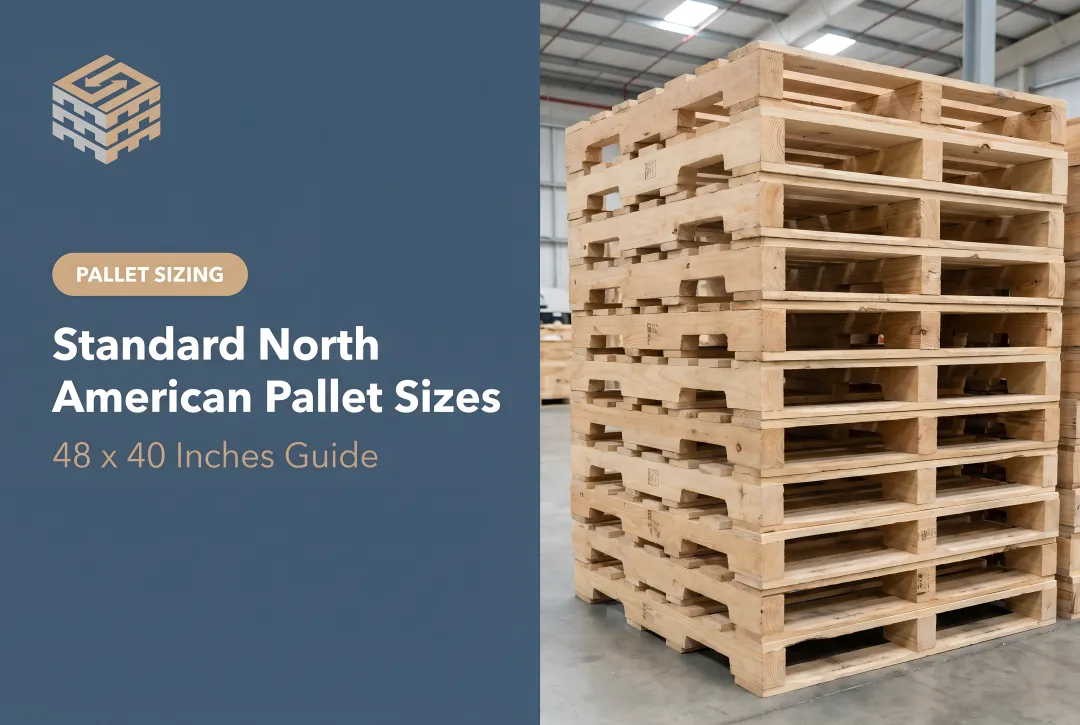
- The 48"x40" GMA pallet is the U.S. industry standard, fitting most trailers and racking systems
- Wood pallets offer the lowest cost and widest availability for freight and trucking fleets
- Pallet choice directly affects trailer loading efficiency, freight class, and shipping costs
- International shipments need ISPM-15 compliant wood pallets to avoid customs delays
- Consistent pallet quality and supply prevent loading delays and unexpected freight cost spikes
What Is a Pallet and Why It Matters in Freight & Trucking
A pallet is a flat, load-bearing platform designed for forklift or pallet jack handling. It stabilizes goods so they can be stacked, moved, and shipped without shifting or collapsing mid-transit.
For freight forwarders and trucking companies, pallets aren't just packaging. They're operational infrastructure. The right pallet:
- Speeds up loading dock turnaround by allowing quick forklift access
- Reduces freight damage claims from shifting or crushed loads
- Protects drivers and dock workers from unstable stacking hazards
- Influences freight classification, which directly affects LTL and FTL shipping rates
Get the pallet wrong, and everything downstream suffers, from dock scheduling to the final freight bill.
Types of Pallets Used in Freight Shipping
Not all pallets serve the same purpose:
- Wood pallets – The most common and affordable option, available in softwood, hardwood, or mixed lumber. These are the default for the vast majority of trucking freight.
- Plastic pallets – Moisture- and chemical-resistant, commonly used for food, pharmaceutical, and export-sensitive shipments where sanitation matters.
- Metal pallets – Heavy-duty and durable, used for industrial applications and long-term storage rather than routine freight moves.
Construction style matters too:
- Stringer pallets – Longitudinal wood supports (usually three); typically two-way forklift entry. Notched stringers can allow four-way entry without full block construction.
- Block pallets – Grid of wood blocks with true four-way entry from any side.

Four-way access speeds up loading, which matters when dock time is money (PalletOne, 2024).
Standard Pallet Sizes and Weight Capacities
The 48"x40" GMA pallet dominates U.S. freight, accounting for more than 30% of pallets in circulation nationally (PalletOne, 2024). It's sized to work with most trailers, racking systems, and dock equipment, which is exactly why it's the default choice for freight forwarders and truckers alike.
Other Common Sizes
Beyond the GMA standard, several sizes serve specific industries:
- 48"x48" – Drums, chemicals, cement
- 42"x42" – Retail and telecommunications equipment
- 40"x40" – Dairy and beverage
- 48"x42" – Shingles and paint
If you're handling cross-border freight, the international standard shifts. The Euro pallet measures 1200mm x 800mm (roughly 47" × 31.5") with a 144mm height, per EPAL's official product specification (EPAL, 2025).
Weight Capacities and Height Limits
A standard GMA wood pallet weighs 30-48 lbs empty and can carry up to 4,600 lbs, depending on construction and load distribution (PalletOne, 2024). Plastic and metal pallet capacities vary widely by model, so always check the manufacturer's static, dynamic, and rack-load ratings rather than assuming a blanket figure.
For total shipment height, most carriers recommend staying at or under 60 inches, including cargo, though this is a carrier guideline rather than a universal federal rule (Unishippers, 2025). Always confirm limits with your specific carrier before loading.
How Pallet Choice Impacts Trailer Loading and Shipping Costs
Pallet dimensions determine trailer capacity, plain and simple. A standard 53-foot dry van typically holds 26 standard 48"x40" pallets when straight-loaded. Turn the pallets and pinwheel them, and you can fit 28-30 pallets, though actual numbers depend on weight, stackability, and axle limits (Cowtown Logistics; Hale Trailer, 2025).

That two-to-four pallet gap between straight-loading and pinwheeling can mean the difference between running an extra truck or not, and it's closely tied to how weight and density are distributed across the load.
Weight, Density, and Freight Class
In LTL shipping, density drives classification. Density equals weight divided by volume, measured in pounds per cubic foot, and it plays a major role in setting your National Motor Freight Classification (NMFC) (NMFTA, 2025). A bulkier, lighter pallet load can trigger a higher freight class and a higher rate than a denser one carrying the same product.
Cost Comparison by Material
| Pallet Type | Relative Cost | Best Fit |
|---|---|---|
| Wood (new) | Lowest | General freight, most trucking |
| Wood (recycled Grade A) | 40-60% less than new | Regular freight, distribution |
| Plastic | Higher upfront | Food, pharma, export-sensitive |
| Metal | Highest | Heavy industrial, long-term storage |
Simpler two-way stringer pallets also cost less than notched or block four-way builds, since the additional notching and blocking require more material and labor (PalletOne, 2024). Suppliers like Skid Management Services stock both stringer and block configurations, making it easier to match pallet construction to your trailer's loading pattern and freight class.
Compliance: Phytosanitary Standards for Wood Pallets
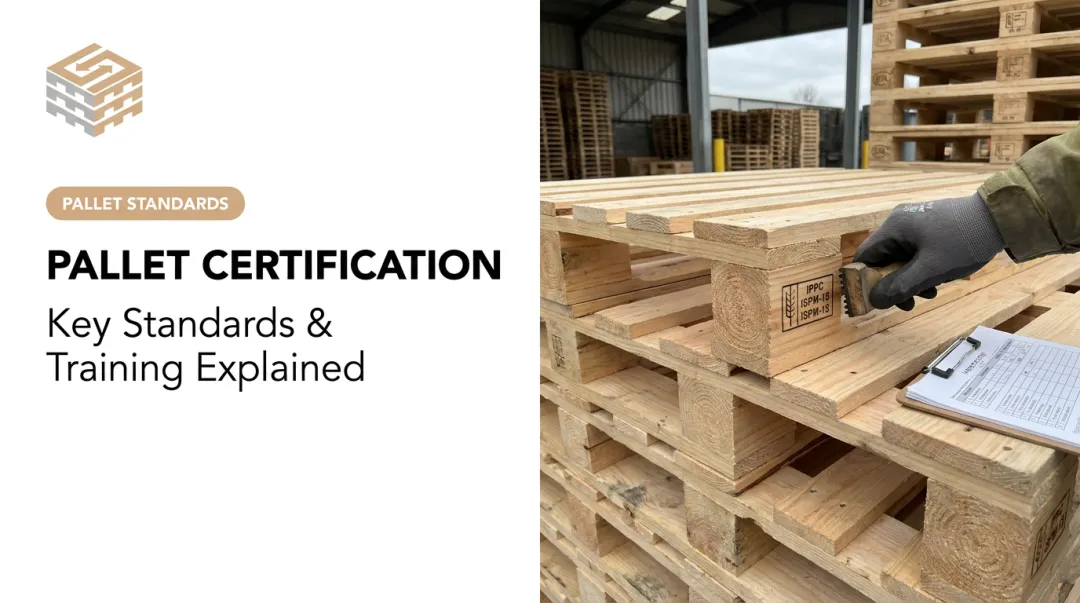
If your freight crosses a border, wood pallets must meet ISPM-15 requirements. This international standard requires wood packaging to be debarked and treated, either through heat treatment or fumigation, to eliminate quarantine pests.
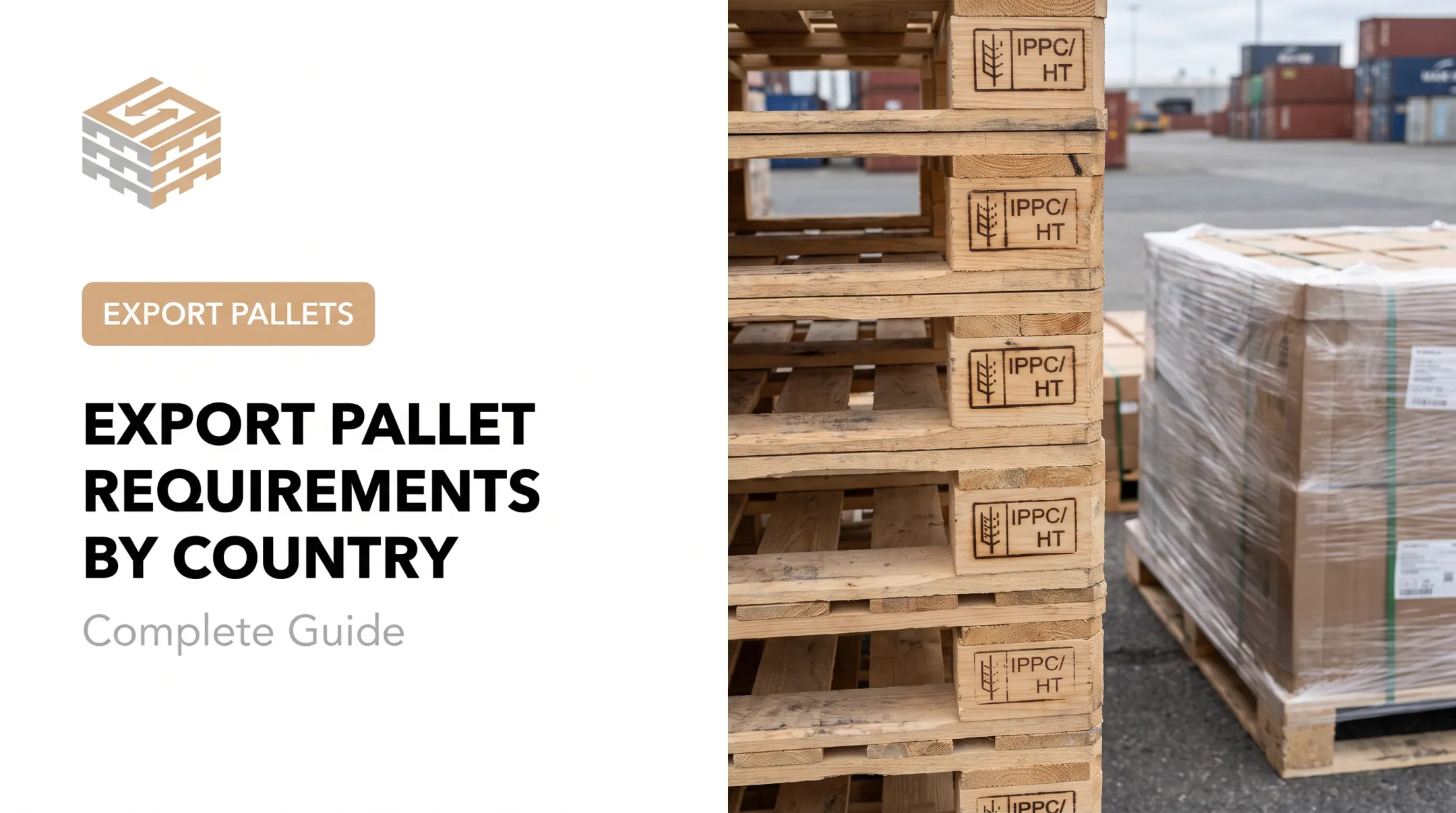
The heat treatment benchmark is specific: the wood core must reach 56°C (132.8°F) for at least 30 minutes. Compliant pallets must carry a permanent stamp showing:
- The IPPC logo
- The ISO country code
- A treatment-facility identifier
- The treatment method (HT for heat treatment, DB if debarked)
U.S. Customs and Border Protection requires this mark on at least two opposite sides of the pallet (U.S. Customs and Border Protection). Skip it, and you risk customs holds, fines, or outright shipment rejection at the port.

Before any cross-border shipment, verify that your pallets carry a legitimate, legible ISPM-15 stamp. A smudged or missing mark is treated the same as no treatment at all.
Sourcing Reliable Pallets for Your Fleet or Freight Operation
Downtime caused by a pallet shortage is entirely avoidable. Freight forwarders and trucking companies that rely on a single, thin supply chain often find that out the hard way, usually during peak season.
A supplier with both owned inventory and a broad network absorbs demand spikes without leaving you waiting. Skid Management Services, for example, combines its own pallet stock with an expansive network of pallet and packaging suppliers, giving customers two sourcing channels instead of one. That structure supports competitive pricing and consistent supply even when volumes surge.
When evaluating a pallet supplier, look for:
- Inventory depth across standard sizes (GMA 48x40, 48x48, 42x42, and beyond)
- Multiple grades of recycled pallets (Grade A, Grade B, Utility) so you can match cost to application
- ISPM-15 stamp verification for export freight, with re-stamping via USDA APHIS-licensed providers when marks are missing or illegible
- National delivery capability, not just a local footprint
- Buy-back or reverse logistics programs that reduce pallet clutter and offset new-pallet costs
Skid Management Services offers trade-in credit programs that typically offset 15-40% of new-pallet spend, along with closed-loop delivery-and-pickup routes that improve round-trip efficiency for regular shippers.
For freight-heavy operations, that kind of consistency matters more than a slightly lower per-unit price from a supplier that runs out when you need them most.
Frequently Asked Questions
How much does it cost to ship a 500 lb pallet?
Cost depends on pallet dimensions, freight class, shipping distance, and whether you use LTL or FTL service. Because pricing varies so much by lane and carrier, request a freight quote for an accurate number.
What is a standard freight pallet size?
The 48"x40" GMA pallet is the U.S. standard, used across most industries and trailer configurations. Other sizes like 48"x48" or 42"x42" exist for specific applications such as retail or chemical shipping.
What's the difference between a pallet and a skid?
A pallet has deck boards on both the top and bottom, giving it more stability. A skid only has top deck boards, making it lighter and cheaper but less structurally sound.
How many pallets fit in a 53-foot trailer?
Straight-loaded, a 53-foot trailer typically holds 26 standard 48"x40" pallets. Turned or pinwheeled, that number rises to roughly 28-30, depending on weight and stackability.
Do wood pallets need special treatment for international shipping?
Yes. Wood pallets crossing international borders must meet ISPM-15 requirements, meaning heat treatment or fumigation plus a permanent compliance stamp.
How much weight can a standard pallet hold?
A standard GMA wood pallet can carry up to 4,600 lbs, depending on construction and load distribution. Heavier loads may need a heavier-duty or custom build—confirm the rating for the pallet grade you specify.