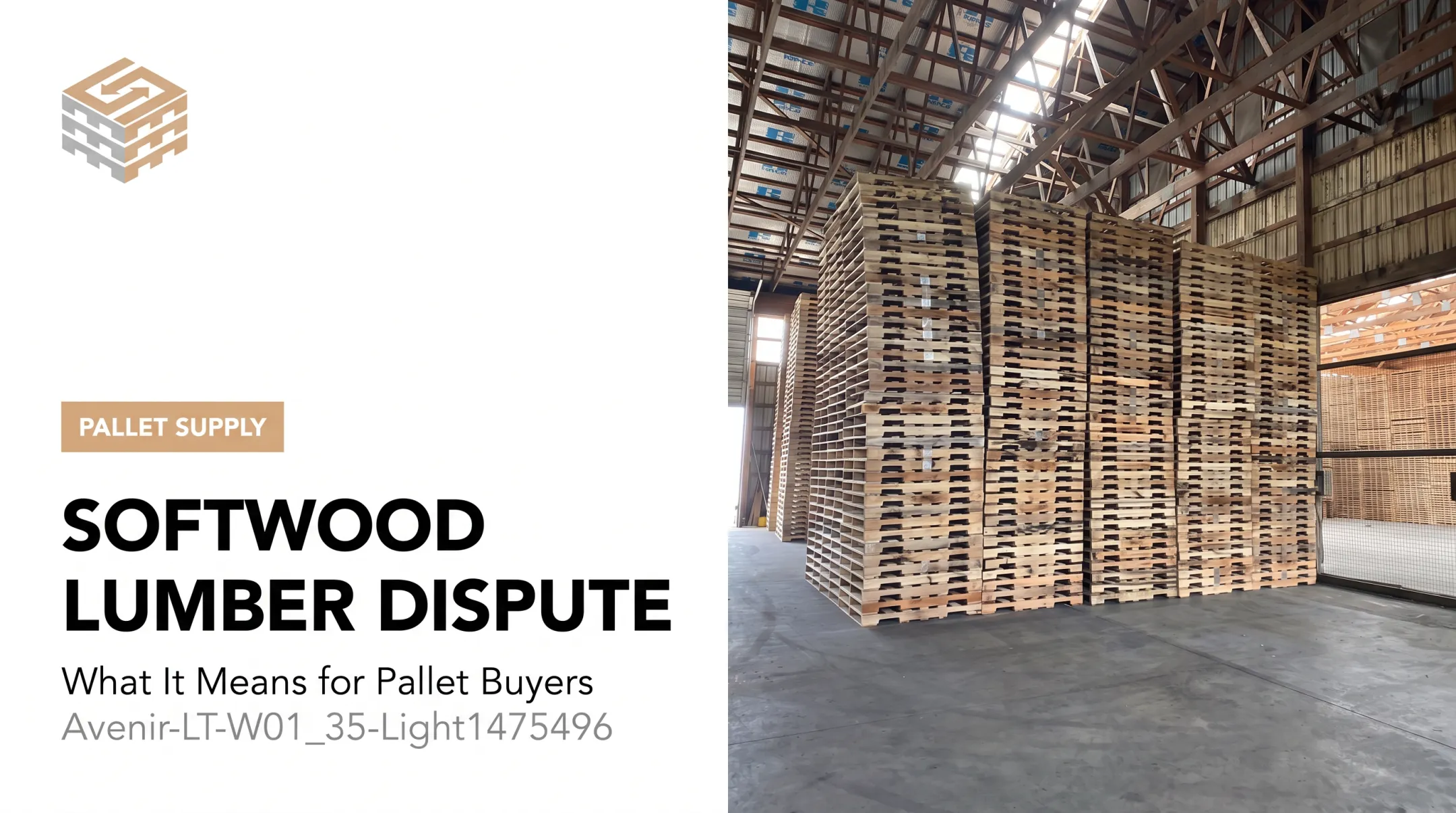

Many buyers learn this the hard way: a shipment of "kiln-dried" pallets arrives warped, split, or spotted with mold. That's not a fluke. It's a predictable outcome of drying softwood without the right process controls.
This article breaks down why softwood behaves the way it does in a kiln, the specific defects manufacturers battle most, and the practical fixes the industry relies on to ship consistent, moisture-stable pallets.
Key Takeaways
- Softwood's high initial moisture content and resin makeup drive warping, checking, and mold risk more than hardwood does
- A single kiln batch can still show wide moisture variance even with standardized settings
- Pre-kiln air drying, steam conditioning, and multi-point moisture testing cut defects significantly
- Sourcing through a supplier network with kiln-drying and heat-treatment access protects supply during demand spikes
What Is Kiln Drying and Why Softwood Needs Special Attention
Kiln drying uses controlled temperature, humidity, and airflow to pull moisture out of lumber. For softwood dimension lumber, the USDA Forest Products Laboratory sets a general benchmark of 15% average moisture content (MC), not exceeding 19%. That's a product norm, not a universal pallet spec, so buyers should still write their required MC range into the purchase order.
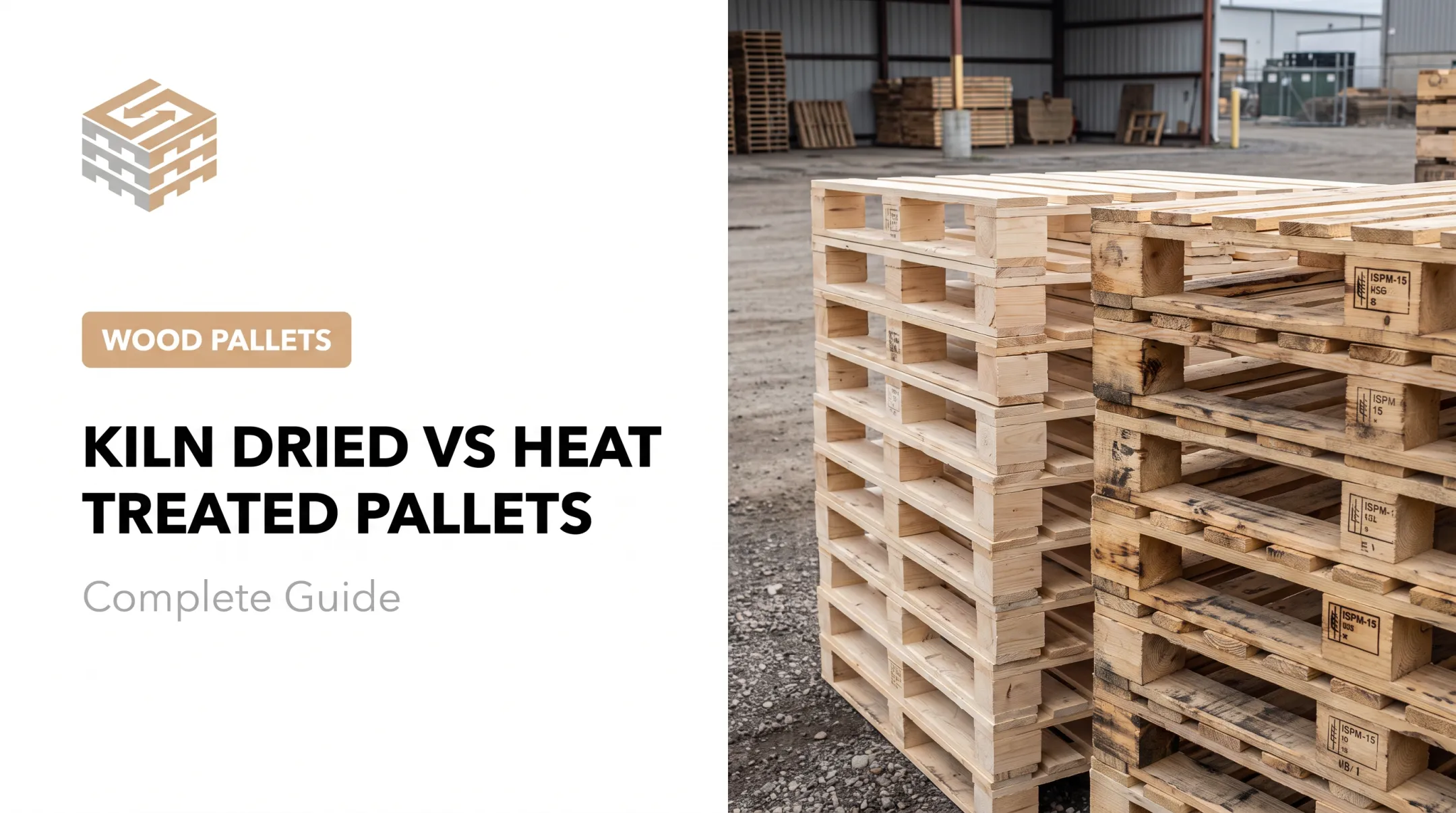
Kiln drying is not the same as ISPM-15 heat treatment. The two get confused constantly. ISPM-15 requires the wood core to hit 56°C (132.8°F) for 30 continuous minutes, targeting pest elimination for export compliance. It says nothing about moisture content.
| Factor | Kiln Drying | ISPM-15 Heat Treatment |
|---|---|---|
| Goal | Reduce moisture to a target MC | Kill forest pests |
| Control basis | Temperature, humidity, airflow, schedule | Minimum core temperature and duration |
| Export compliance | No — moisture control only | Yes, with proper stamp |
Skid Management Services supplies both kiln-dried (KD) and kiln-dried heat-treated (HT) softwood pallets built from pine, spruce, and fir, letting buyers choose based on whether they need moisture control, export compliance, or both.
Softwood is where that choice demands tighter process control. Its looser grain structure and higher starting moisture react faster to heat. Resin and sap can migrate to the surface during drying, creating a sticky substrate that mold loves if humidity isn't managed afterward.
Core Challenges of Kiln Drying Softwood for Pallets
Uneven Moisture and Batch Variability
Stacking creates "wet zones." Boards near the kiln's edges or in dense stack sections dry differently than boards with open airflow, even under identical kiln settings.
A 2014 TIMCON project covering 1,360 Sitka spruce pallets across 18 kiln batches found final moisture readings ranging from 15% to 22%, according to Pallet Enterprise. Wide variation showed up even within the same kiln run or a single pallet. That's the clearest evidence available that standardized kiln settings don't guarantee standardized results.

Warping, Twisting, and Checking
Internal stress builds as moisture leaves wood unevenly. Board ends dry faster than the middle, which is exactly why end checking happens. According to the USDA Dry Kiln Operator's Manual, softwood defect risks include:
- Collapse from excessive initial dry-bulb temperature
- Honeycomb from internal cracking across the grain
- Resin exudate from refractory wood and poor circulation
- Warp and splits from uneven drying stress

Mold and Blue-Stain Risk
Drying doesn't make wood permanently mold-proof. Blue-stain fungi generally stop growing around 24% moisture content (MC), and drying further to 20% adds a safety margin, per Oregon State research. But if pallets get rewetted in storage or transit, the risk returns.
Added Cost and Time
Getting softwood down to a low, consistent MC often means longer kiln cycles or supplemental air drying, which eats into energy budgets and production schedules. Green softwood lumber's moisture content also varies by season and harvest region, so a "standard" kiln schedule rarely fits every batch without adjustment.
Proven Solutions and Best Practices for Kiln Drying Softwood
Several proven practices shorten kiln time, limit softwood degrade, and keep finished pallets at target moisture content through shipping.
Pre-kiln air drying cuts kiln time. The TIMCON pallet project air-dried stock for 14 days before kiln placement and cut kiln operating time by an average of 35%. USDA guidance confirms air drying to 20-25% MC before kiln entry saves energy and reduces required kiln capacity. Exact timing still depends on species, thickness, and season.
Steam conditioning relieves internal stress. Partway through the cycle, kilns inject live steam to relax the wood, which reduces warping and checking before the load finishes drying.
Stacking discipline controls airflow and degrade. The USDA manual recommends:
- Aligning supports to prevent sagging, typically spaced about 2 feet apart
- Placing stickers flush with or near board ends to reduce end checking
- Distributing sample boards at varied heights and stack distances to reflect true airflow conditions

Those process controls only pay off when the drying spec matches the job. Not every pallet needs the same MC precision. A premium cold-storage program justifies tighter targets than a standard warehouse pallet, so tiered supply—premium, standard-plus, and standard—lets buyers pay only for the performance their use case requires.
Protect stock after it leaves the kiln. Covered, ventilated storage and first-in-first-out rotation keep dried pallets from picking up ambient humidity before they leave the yard.
Quality Control: Testing and Verifying Moisture Content
A single moisture reading tells you almost nothing. NC State's wood-products guidance treats oven-dry testing as the reference method. Resistance meters offer roughly ±1% MC accuracy across a 7-25% MC range when properly calibrated.
Reliable moisture verification should include:
- Multiple readings per pallet, covering both suspected wet and dry zones
- Species and temperature correction on the meter
- Documented charge ID, date, and operator
- Mean, high, and low readings retained per batch

Documentation beats blanket promises. A supplier claiming pallets are "mold-free" without data is guessing, not proving. Ask for moisture readings and drying protocols before you buy—especially for cold-storage or export-sensitive shipments.
Sourcing Reliable Kiln-Dried Softwood Pallets
Consistent kiln-dried quality depends on a supplier's kiln capacity, QC discipline, and access to properly conditioned lumber. When demand spikes, suppliers relying on a single production point often can't keep pace.
Skid Management Services pairs its own pallet inventory with an expansive supplier network, so kiln-dried softwood supply and pricing stay steady when demand spikes.
That hybrid model supports moisture-sensitive programs in food and beverage, cold storage, and export. Available builds include pine, spruce, and fir, plus kiln-dried heat-treated pallets that meet ISPM-15.
When vetting a supplier, prioritize:
- Verified ISPM-15 stamps with valid IPPC logo, country code, and treatment-provider ID for export loads
- Documented on-time delivery of kiln-dried supply—not just a low quote
- Access to a broader supplier network as backup during demand spikes
Frequently Asked Questions
Will kiln-dried wood still warp?
Yes, it can. Uneven drying, rewetting after processing, or skipping conditioning and airflow controls all raise warping risk. Proper kiln protocols reduce it significantly but don't eliminate it entirely.
How long should wood dry in a kiln?
Timing varies widely by species and target moisture content (MC). FPInnovations reports 24-36 hours for green SPF dimension lumber. The TIMCON pallet project saw 19-25 hours after 14 days of air drying first.
What moisture content should kiln-dried pallets have?
Most softwood pallets target 15-19% MC, following USDA's dimension-lumber benchmark. Premium service levels typically aim for the lower end of that range.
Does kiln drying eliminate mold risk on pallets?
No. It lowers moisture content, which reduces mold conditions, but rewetting or poor ventilation after drying can still let mold develop. Kiln-dried wood is only temporarily protected, not permanently immune.
Is kiln-dried softwood the same as heat-treated (ISPM-15) softwood?
No. Kiln drying targets moisture reduction; heat treatment targets pest elimination for export compliance via a 56°C (133°F) core temperature held for 30 minutes. Pallets can undergo both processes together.
Why is softwood more prone to drying issues than hardwood?
Softwood starts with higher moisture content, contains more resin that migrates during heating, and has a looser grain structure. All three make it react faster and less predictably to kiln conditions than hardwood.