
Most crews treat pallets as disposable packaging, something to toss aside once bricks or cement bags reach the ground. But the way materials get handled on-site directly affects labor hours, damaged inventory, and injury claims. NIOSH estimates a single lost-time back injury can cost $20,000 in workers' compensation alone. Multiply that across a crew handling heavy bags and tile pallets all day, and the stakes get real fast.
This article breaks down the specific economic benefits pallets deliver on jobsites, grounded in documented industry evidence rather than vague promises.
Key Takeaways
- Palletized loads let forklifts move bulk material in fewer trips, cutting manual handling hours
- Elevating materials off wet or dusty ground reduces moisture damage and re-order costs
- Reduced manual lifting lowers injury risk tied to $20,000-$25,000 average claim costs
- Reused and recycled pallets can cut acquisition costs by 40-60% versus new
- A reliable supplier network prevents shortages that stall project timelines
What Are Construction Pallets?
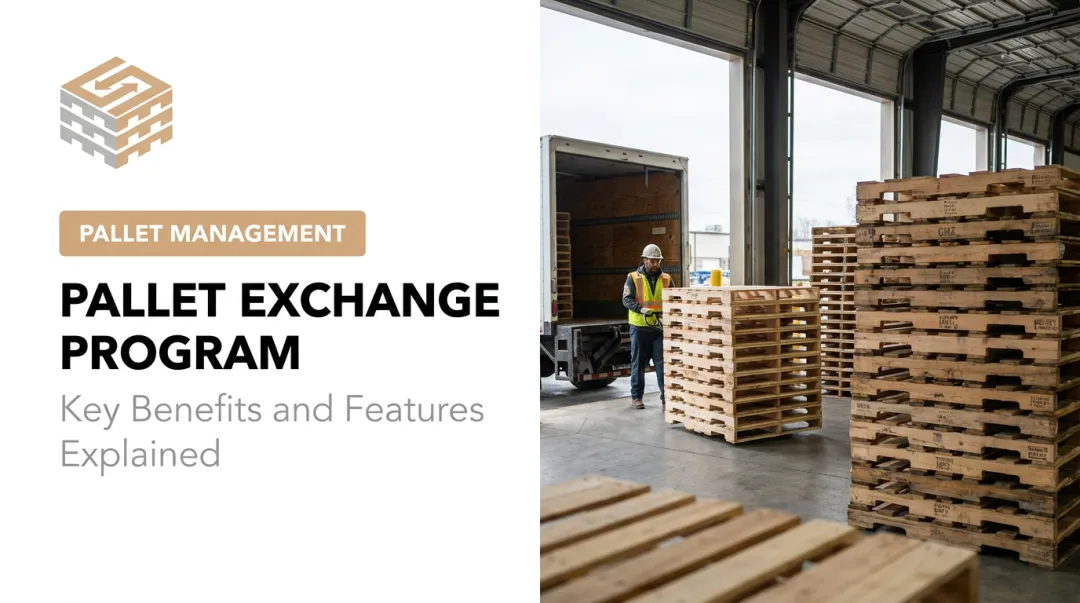
Construction pallets are wooden platforms built to transport and store heavy building materials like bricks, cement bags, tiles, and rebar bundles. Crews move them with forklifts or pallet jacks on-site, and they double as long-term storage units in yards and warehouses.
On a job site, a pallet is a cost-control tool. One forklift pass moves a full load of cement bags that would otherwise be carried one at a time.
Key Economic Advantages of Using Pallets on Construction Sites
These advantages tie directly to costs contractors already track: labor hours, material waste, injury claims, and schedule adherence.
Faster Material Handling and Reduced Labor Costs
Palletized loads let forklifts and cranes move large quantities of material in single trips instead of workers carrying materials by hand. That means fewer people needed for loading and unloading tasks on any given day.
The Carnegie Mellon Project Management for Construction guide defines productivity as output per labor hour and notes that mechanization increases output for the same labor input. The same source flags waiting for materials as a direct cost and productivity drag.

What this means in practice:
- Fewer touches per delivered unit when materials arrive bundled and staged correctly
- Reduced crew-minutes per delivery, especially on repeat shipments
- Less waiting time between deliveries and installation
KPIs impacted: labor hours per ton moved, equipment idle time, schedule adherence.
This advantage matters most on large-scale projects with high material volume, tight deadlines, or multiple delivery cycles. A site receiving weekly cement and brick shipments feels the difference far more than a small renovation job.
Reduced Material Damage and Waste
Materials stored directly on the ground absorb moisture, collect dust, and break down faster. The Pacific Northwest National Laboratory's Building America guidance is direct on this point: avoid storing building materials on the ground and keep them elevated with pallets or stickers.
Organized stacking on a pallet also reduces breakage compared to loose piles that shift during transport or get walked on.

Why it matters financially:
- Fewer rejected materials means fewer re-orders and less waiting on replacement deliveries
- Reduced ground contact lowers moisture-related loss, particularly for drywall and lumber
- Fewer disputes with suppliers over damaged deliveries
KPIs impacted: material waste percentage, re-order frequency, storage-damage claims.
This benefit compounds in outdoor storage yards, on long-duration projects, or in regions with heavy rainfall. A jobsite in a humid climate storing lumber for months has far more exposure than a fast-turnaround indoor build.
Lower Workplace Injury and Compliance Costs
Manual handling of cement bags, tile boxes, and steel bundles is one of the most common sources of construction injuries. NIOSH's guide for construction workers links repeated lifting, holding, and carrying to strains, sprains, and more serious soft-tissue injuries. Average costs run about $20,000 for a lost-time shoulder injury and $25,000 for a back injury.
Palletized loads improve balance and stability during moves, which cuts down on dropped-material accidents and awkward lifting positions.
Why this matters:
- Fewer manual-handling injuries mean fewer workers' comp claims and lost workdays
- Standardized loads reduce the odds of dropped materials injuring nearby workers
- Better handling practices support easier OSHA compliance documentation
KPIs impacted: injury rate per project, workers' comp claims, lost workdays.

Masonry, tile, and cement work feel this most, along with any crew stuck in repetitive lifting all day.
Cost Savings Through Reuse and Reliable Supply
A pallet doesn't have to be single-use. Reused and recycled pallets spread acquisition cost across multiple projects instead of buying new every time.
At Skid Management Services, recycled or remanufactured wood pallets typically run 40-60% cheaper than new pallets while still covering most jobsite material flows and project transfers. Closed-loop programs that recover, grade, and redeliver pallets can offset 15-40% of new-pallet spend through trade-in credit, depending on volume and grade mix.
Reliable sourcing matters just as much as reuse. Pallet Enterprise reports that recycled pallets are often more available and less exposed to lumber-price swings than new GMA pallets, making them a steadier option during supply crunches.
Why this matters:
- Uninterrupted supply prevents delays caused by handling bottlenecks
- Combining owned inventory with a broad supplier network protects against regional shortages
- Multi-site contractors benefit most from consistent pricing across locations
KPIs impacted: pallet cost per project, supply lead time, downtime from handling delays.

Multi-site contractors with recurring deliveries, and buyers in markets short on lumber or pallets, see the strongest return.
What Happens When Pallets Are Misused or Ignored on Site
Skipping proper palletization creates a chain reaction of avoidable costs:
- Slower loading and unloading times as crews resort to manual carrying
- Higher material damage from ground contact or improper stacking
- More frequent workplace injuries from repetitive lifting
- Unpredictable costs from emergency re-orders when materials arrive damaged
- Limited scaling of material logistics across multiple concurrent projects
These costs rarely appear as a single budget line item. By closeout, they surface as delayed schedules, higher claim rates, and thinner margins.
How to Maximize Pallet Value on Construction Projects
Getting the most out of pallets comes down to three practices:
- Match pallet specs to the material. Heavy loads like cement or steel bar bundles need thicker planks and reinforced stringer or block construction, not a standard GMA pallet stretched past its rating.
- Source from a supplier with consistent inventory. A single-source vendor running low on stock mid-project creates delays. Working with a supplier that combines owned inventory with a broader network avoids that gap.
- Track reuse and rotation. Knowing how many cycles a pallet has left before repair or replacement keeps per-project costs predictable instead of reactive.
Conclusion
Pallets deliver measurable economic value on construction sites, through faster handling, less material waste, and fewer safety incidents. Those gains show up in labor hours, reorder frequency, and workers' comp claims that project managers already track.
The value compounds when reuse and dependable sourcing enter the picture. A contractor buying new pallets for every job pays more than one working with a supplier offering recycled options and steady supply across multiple sites.
Pallet sourcing is an ongoing operational choice for contractors managing tight margins across recurring projects.
Frequently Asked Questions
How many 2x6 on a pallet?
The number of 2x6 boards per pallet varies widely by board length and pallet size, typically ranging from 200-400+ pieces. Confirm exact counts with your lumber supplier based on specific board dimensions.
Are wood pallets better than plastic for construction sites?
Wood pallets are generally more cost-effective and can carry heavier loads for typical construction materials. Plastic offers more durability in constant outdoor exposure, but most contractors choose wood based on budget and project duration.
How much weight can a construction pallet hold?
Capacity depends heavily on pallet construction, lumber grade, and deck design. Heavy-duty custom-engineered pallets can support 2,500 lb to over 10,000 lb dynamic load. Confirm the rating for your pallet and application.
Can construction pallets be reused across multiple projects?
Yes. Well-maintained pallets can serve multiple projects before retirement. Closed-loop programs that recover and regrade pallets reduce per-project acquisition costs.
What is the average cost of a pallet for construction use?
Costs vary by size, wood type, condition, and volume ordered. Recycled or remanufactured pallets often run 40-60% cheaper than new, and working with a national supplier helps secure competitive bulk pricing.
Do pallets help reduce workplace injuries on construction sites?
Yes. Pallets reduce manual lifting and improve load stability during moves, which directly lowers the risk of strains, sprains, and dropped-material accidents on-site.