This scenario plays out more often than it should. Pallet grading, whether A, B, or C, directly affects cost, safety, and how smoothly your supply chain runs. Yet plenty of buyers assume "Grade A" means the same thing at every supplier. It doesn't.
This guide breaks down what Grade A pallet quality actually means, the features that define it, where these pallets get used across industries, and how to source them reliably.
Key Takeaways
- Grade A pallets are top-tier, minimally repaired, and built for strong structural integrity
- Food, pharma, retail, and export industries choose Grade A for safety and presentation standards
- Grading criteria differ by supplier since no single national certification governs the term
- Partnering with an established national supplier keeps Grade A quality and supply consistent
What Is a Grade A Pallet?
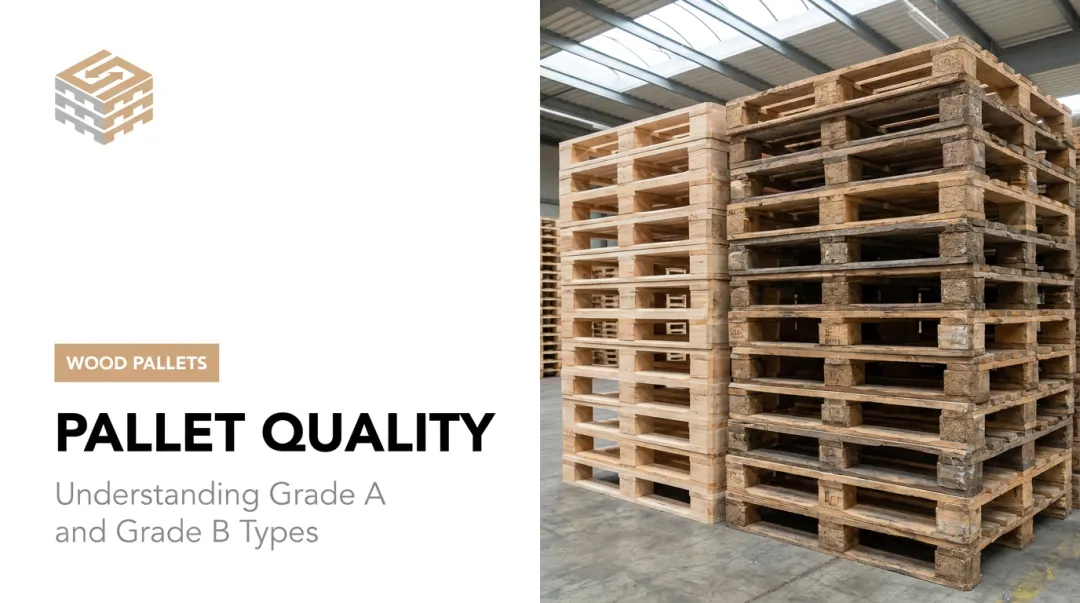
A Grade A pallet is a used or refurbished wood pallet in near-new condition. It shows minimal wear and requires little to no repair work before it goes back into circulation.
Suppliers typically grade pallets against a few core criteria:
- Structural integrity — stringers and deck boards free of cracks, splits, or warping
- Visible wear or damage — surface condition, discoloration, and overall cleanliness
- Repair history — presence of mending plates, replaced boards, or reinforced stringers
- Wood type — hardwood versus softwood, and how that affects durability
At Skid Management Services, Grade A pallets must have all seven deck boards present, no broken stringers, and a minimal repair history. That combination is what makes a recycled pallet perform like new for most applications.
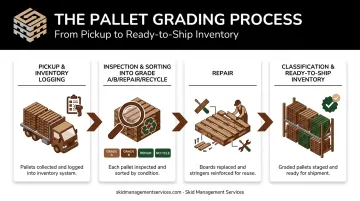
Getting a pallet to that standard follows a consistent process at most recycling facilities:
- Pallets arrive from pickups and get logged into inventory.
- Inspectors sort each unit into Grade A, Grade B, repair-candidate, or recycling-only piles.
- Repair-candidate pallets move through board replacement or stringer reinforcement.
- Qualifying units get classified and shelved as ready-to-ship inventory.
Terminology Buyers Should Know
"Grade A," "#1," and "Premium" often describe the same top-tier pallet, but the overlap isn't universal.
Pallet Enterprise reports that recycled pallet grades lack a consistent industry-wide definition. Terms like A, B, C, 1, 2, 3, Premium, Triple-A, and Club Pallet mean different things depending on the supplier and region.
There's no single nationally enforced certification for pallet grading. That means two suppliers labeling pallets "Grade A" could be shipping noticeably different products. Confirm criteria in writing before placing a bulk order, especially if quality is tied to a compliance requirement on your end.
Key Features & Characteristics of Grade A Pallets
Grade A status reflects specific, checkable characteristics you can verify at receiving.
- Minimal to no visible repairs — no mending plates, replaced deck boards, or reinforced stringers on a true Grade A unit
- Strong structural soundness — no cracks, splits, or warped stringers, so forklifts and pallet jacks can handle them safely
- Clean, uniform appearance — free from stains, mold, or contamination, which matters most in food-grade and retail-facing settings
- Reliable load capacity for both static and dynamic loads
- Hardwood construction in many cases, though square, defect-free softwood pallets can also earn Grade A status
- Compliance-ready for treatments like heat treatment and ISPM-15 certification for export
On load capacity, there's no single universal number that applies to every Grade A 48x40 pallet. Capacity depends on lumber species, board thickness, stringer design, and repair history.
As a reference point, some manufacturers rate a standard 48x40 pallet built with 5/8-inch boards at up to 4,600 lbs. That figure reflects one specific design, not a blanket Grade A guarantee. Always ask your supplier for load-support mode (static, dynamic, or racked) rather than assuming a grade alone tells the full story.
Export-Ready Treatment
For export shipments, heat treatment matters more than grade alone. ISPM 15 requires wood packaging to reach a minimum wood-core temperature of 56°C for at least 30 continuous minutes, along with a valid IPPC mark showing the treatment code, provider ID, and country code. Grade A quality and ISPM-15 compliance are two separate checks: a pallet needs both for international shipments.
Common Uses & Industries for Grade A Pallets
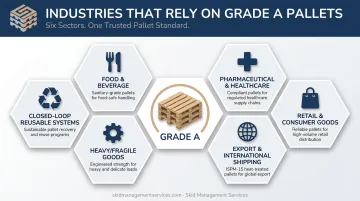
Grade A pallets show up wherever product safety, appearance, or handling reliability can't be left to chance.
- Food and beverage — hygiene and structural reliability matter for perishable and packaged goods. Food and snack producers like Knouse Foods and Campbell Snacks depend on consistently high-quality pallets to move product safely.
- Pharmaceutical and healthcare — strict cleanliness and safety regulations make Grade A a preferred baseline for transporting sensitive products.
- Retail and consumer goods — a clean, professional appearance supports in-store displays and brand presentation at the point of sale.
- Export and international shipping — durability and heat-treatment compatibility make Grade A suitable for long, multi-handling journeys.
- Heavy or fragile goods — electronics and automotive parts manufacturers rely on Grade A to reduce the risk of damage in transit.
- Closed-loop and reusable systems — businesses that cycle pallets repeatedly benefit from Grade A's longer lifespan, which cuts replacement frequency and long-term cost.
Pallet quality is becoming a bigger deal for automated operations, too. In Modern Materials Handling's 2024 survey of 174 readers, 70% of respondents acquired used or core wood pallets, and among those buyers, 28% reported poorer quality and 29% reported higher acquisition costs.
As more distribution centers add conveyors and automated storage, a missing deck board or protruding nail doesn't just look bad. It can jam a line.
Grade A vs. Grade B vs. Grade C Pallets: Key Differences
Grade A, Grade B, and Grade C pallets each work well in warehouse and distribution settings, but they're not interchangeable.
| Grade | Repair Allowance | Structural Standard | Typical Use |
|---|---|---|---|
| Grade A | Minimal to no repair history | All deck boards present, no broken stringers | Outbound shipments, food/bev, FBA, spec-strict receivers |
| Grade B | 1–2 minor board repairs | Full structural integrity maintained | General warehouse and distribution use |
| Grade C / Utility | Significant repairs or damage common | Lowest tier, minimal structural guarantee | One-time shipments, internal-flow, non-critical loads |
Cost tracks closely with repair history. Grade A commands a premium for its near-flawless condition, Grade B costs less while staying structurally sound, and Grade C sits at the lowest price point since appearance and longevity aren't priorities.
When does downgrading make sense? If pallets stay within a controlled environment, like intra-facility transfers or shipments to receivers without strict pallet specs, Grade B often performs just as well as Grade A at a lower cost. Recycled pallets in general can deliver 40–60% savings versus new stock. Reserve Grade A for shipments where appearance, compliance, or receiver requirements leave no margin for error.
How to Source Reliable Grade A Pallets for Your Business
Grading language isn't standardized, so supplier consistency is what actually protects your bulk orders. One vendor's "Grade A" might allow a common stringer repair that another vendor wouldn't touch.
Before committing to a large order, ask your supplier:
- What's your inspection process? Understand how pallets move from pickup to classification.
- What repair standards apply? Clarify what counts as "minimal" repair history at Grade A.
- What wood species are typical in your Grade A inventory? Hardwood and softwood perform differently under repeated loads.
- Can you document compliance? For food, pharma, or export shipments, ask for ISPM-15 stamp verification or sanitation screening records.
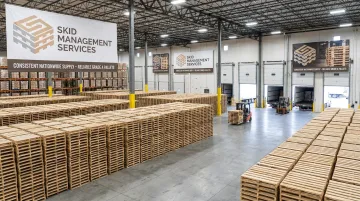
Working with a national provider with a wide supplier network, like Skid Management Services, helps smooth out the inconsistency problem. SMS combines its own inventory with an expansive network of pallet and packaging suppliers, so Grade A quality doesn't slip just because one source runs short during a demand spike.
That structure supports competitive pricing and uninterrupted supply, even during peak periods. It's backed by 24/7 availability for customers who can't afford a gap in their pallet flow.
Frequently Asked Questions
What is the difference between A and B pallets?
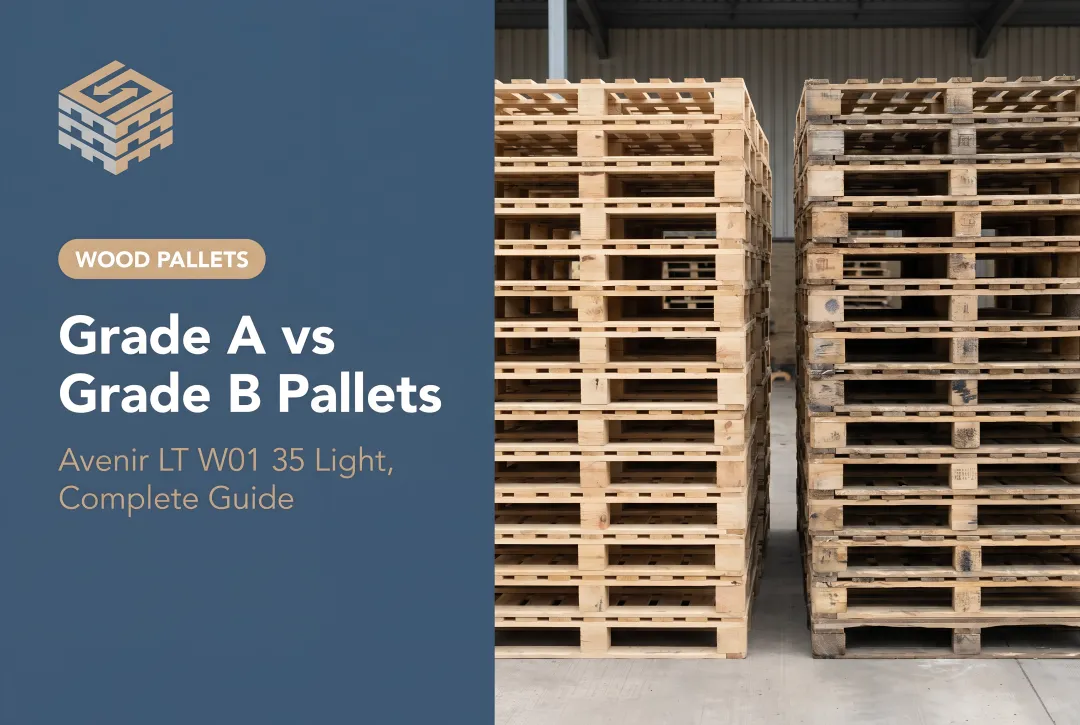
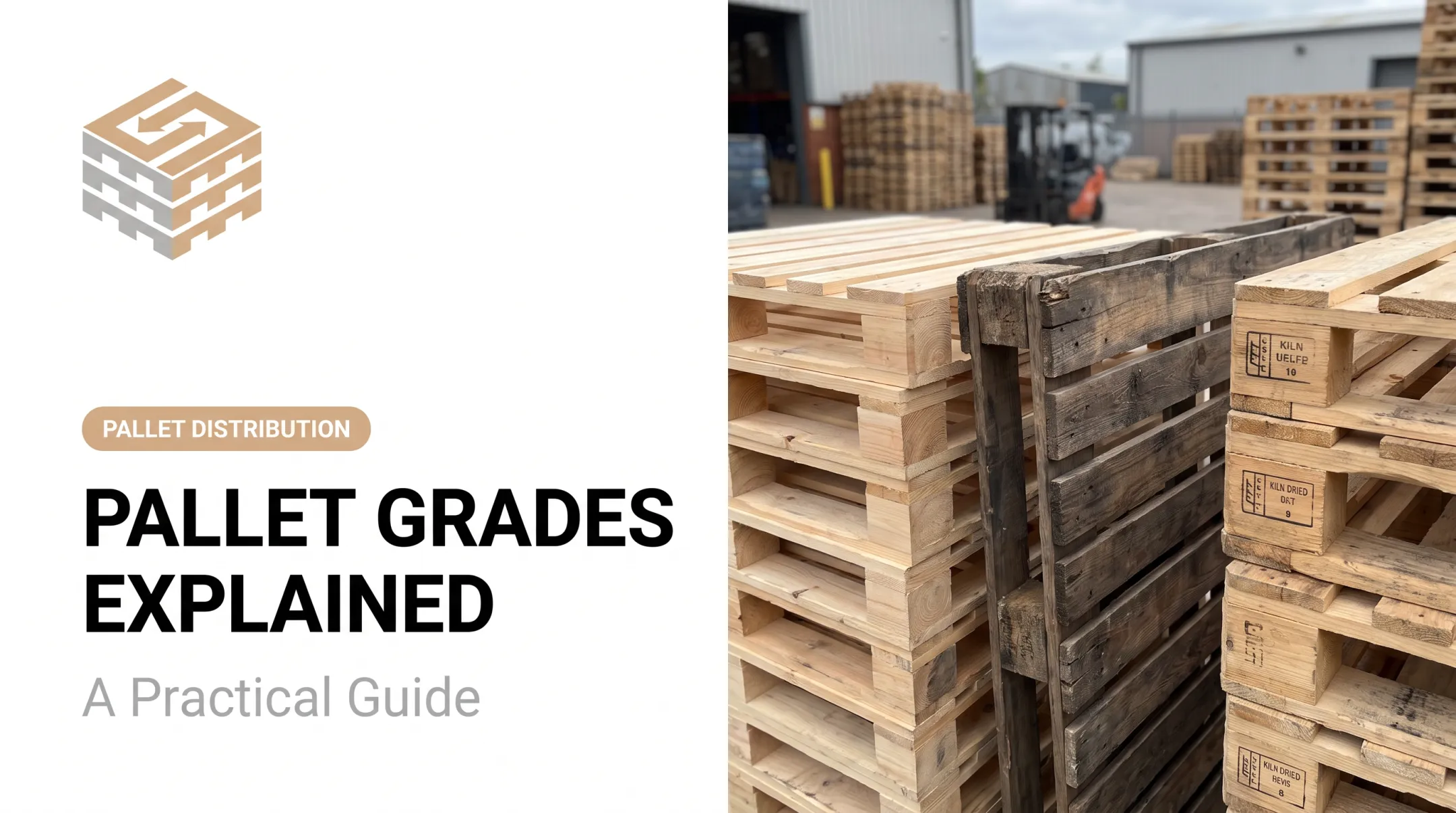
Grade A pallets have minimal to no repairs and a cleaner, near-new appearance. Grade B pallets show visible repair work, typically one or two board repairs, but remain structurally reliable at a lower cost.
What is the average weight of a Grade A pallet?
Weight varies by design and species, but standard 48x40 pallets generally fall in the 40 to 70 lb range for hardwood and lighter for softwood builds. Ask your supplier for exact weights based on the specific design and repair condition.
How long do Grade A pallets typically last?
With minimal repairs and strong structural integrity, Grade A pallets typically handle more reuse trips than Grade B or C. Actual lifespan still depends on load weight, handling conditions, and storage environment.
Are Grade A pallets more expensive than new pallets?
No. Grade A pallets typically cost less than brand-new pallets while still offering near-new quality and durability, often delivering meaningful savings for operations that don't require factory-fresh units.
Can Grade A pallets be used for export shipments?
Yes, as long as they're heat-treated and ISPM-15 certified with a valid IPPC mark. Skid Management Services supplies ISPM-15 heat-treated export pallets, including stamp verification for Port of Baltimore corridor shipments, so confirm both grade and export compliance before shipping.
Is there a universal standard for pallet grading?
No. Grading criteria vary by supplier since there's no single enforced national certification for pallet grades. Confirm your supplier's specific standards before placing a bulk order.