That gap creates real budget problems — especially for operations purchasing at volume. Underestimate your pallet spend and you're either scrambling for emergency orders (at premium prices) or running with pallets that fail inspection and stop product from shipping.
This guide breaks down pallet pricing by material type, condition, and grade, then covers the cost drivers most buyers overlook.
Key Takeaways
- New 48x40 GMA wood pallets run roughly $46–$52 per unit at standard catalog quantities; used Grade A options can drop to ~$9
- Wood makes up 93% of U.S. pallets in service — making it the default starting point for any cost comparison
- Plastic and metal pallets cost significantly more upfront but may offer better economics in closed-loop systems
- Pallet grade (A, B, Utility) is the single biggest lever buyers control on used pallet pricing
- Hidden costs like repair, storage, and compliance failures routinely exceed the initial purchase price difference
Pallet Pricing by Type
Pallet prices span a wide range depending on material, condition, size, and purchase volume. There's no single "market rate" — pricing is shaped by multiple variables working together.
Wood Pallets
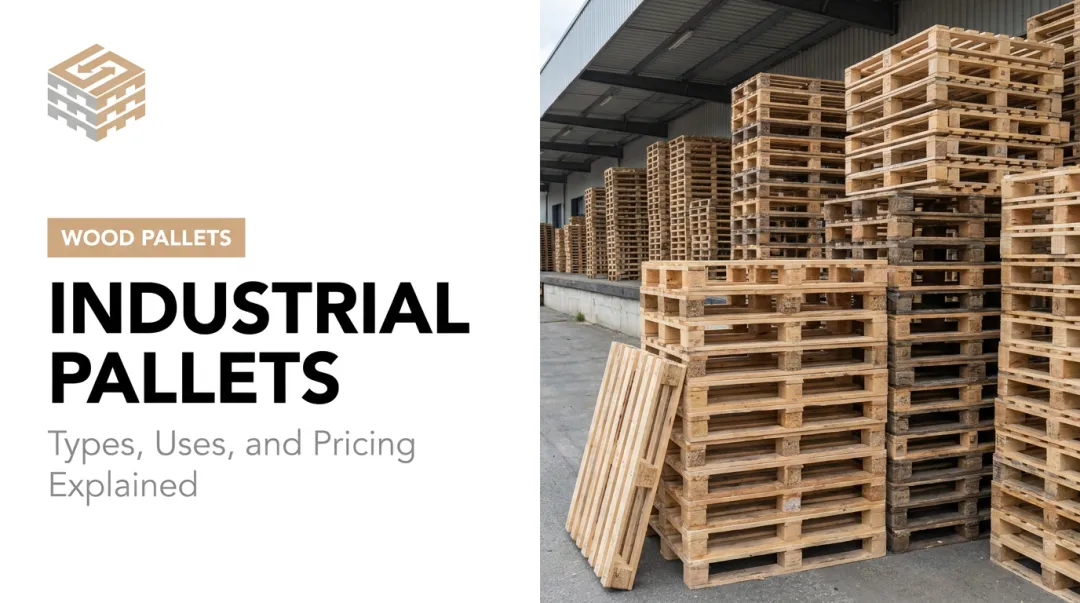
Wood dominates the U.S. market for a reason: it's cost-effective, widely available, and repairable. According to the National Wooden Pallet and Container Association, 93% of U.S. pallets in service are wood, with wood used by 95% of facility respondents surveyed.
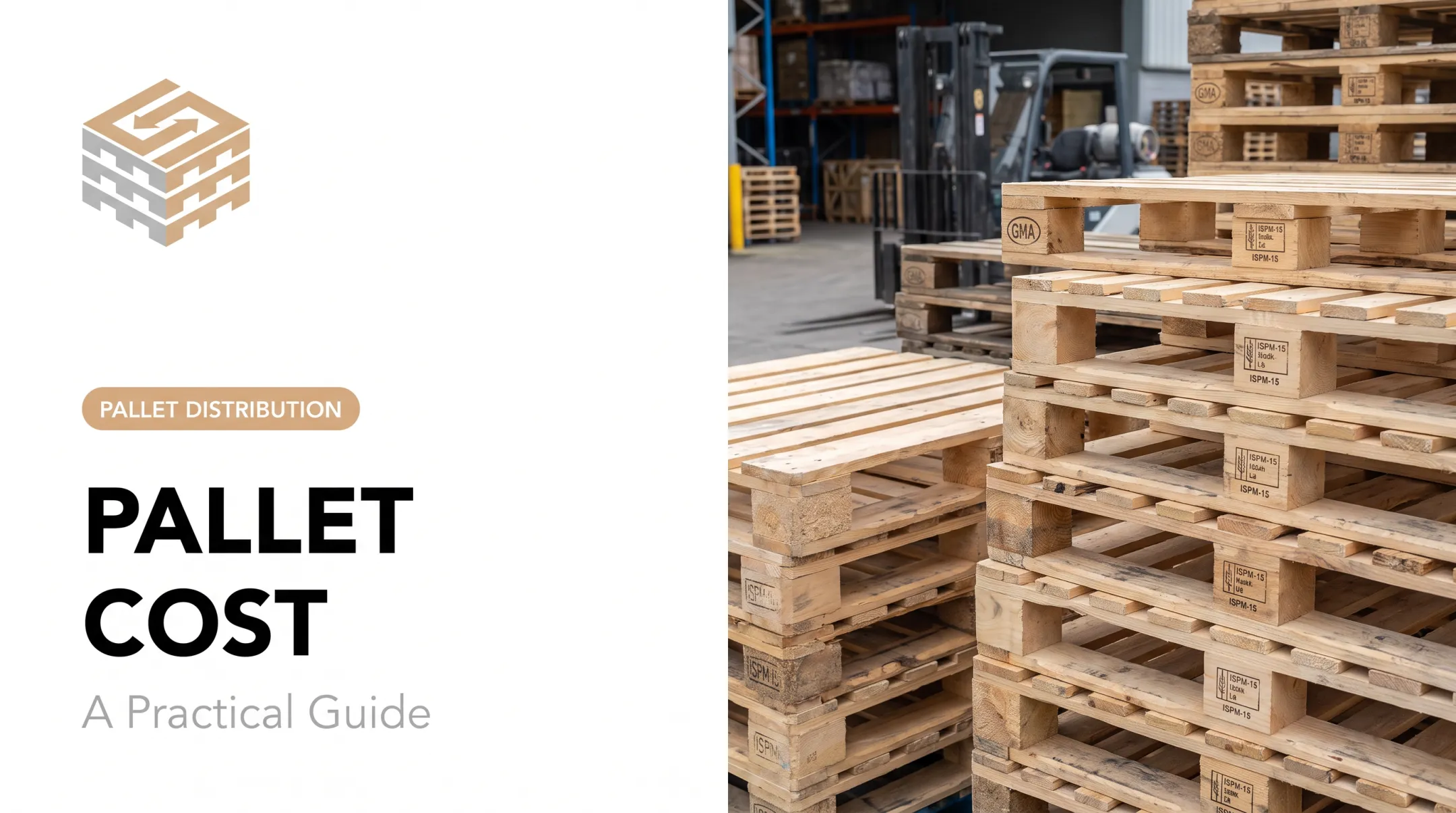
New 48x40 GMA pallets (the U.S. grocery and general distribution standard) run approximately:
| Pallet Type | 5-Unit Price | 20+ Unit Price |
|---|---|---|
| New Wood GMA 48x40 | ~$49 | ~$46 |
| Heat-Treated (HT) GMA 48x40 | ~$52 | ~$49 |
| HT Recycled GMA 48x40 | ~$32 | ~$30 |
| Block Pallet 48x40 (HT) | ~$89 | ~$83 |
Source: Uline supplier catalog, accessed June 2026. These are catalog examples, not industry-average benchmarks.
Key pricing factors for wood pallets:
- Heat-treated pallets carry roughly a $3/unit premium over non-HT equivalents, a minor cost for export compliance under ISPM-15
- Block pallets cost substantially more than stringer pallets due to their true 4-way entry construction and heavier lumber use
- Stringer pallets (the classic U.S. 3-stringer construction) are priced lower and remain the most common format in domestic supply chains
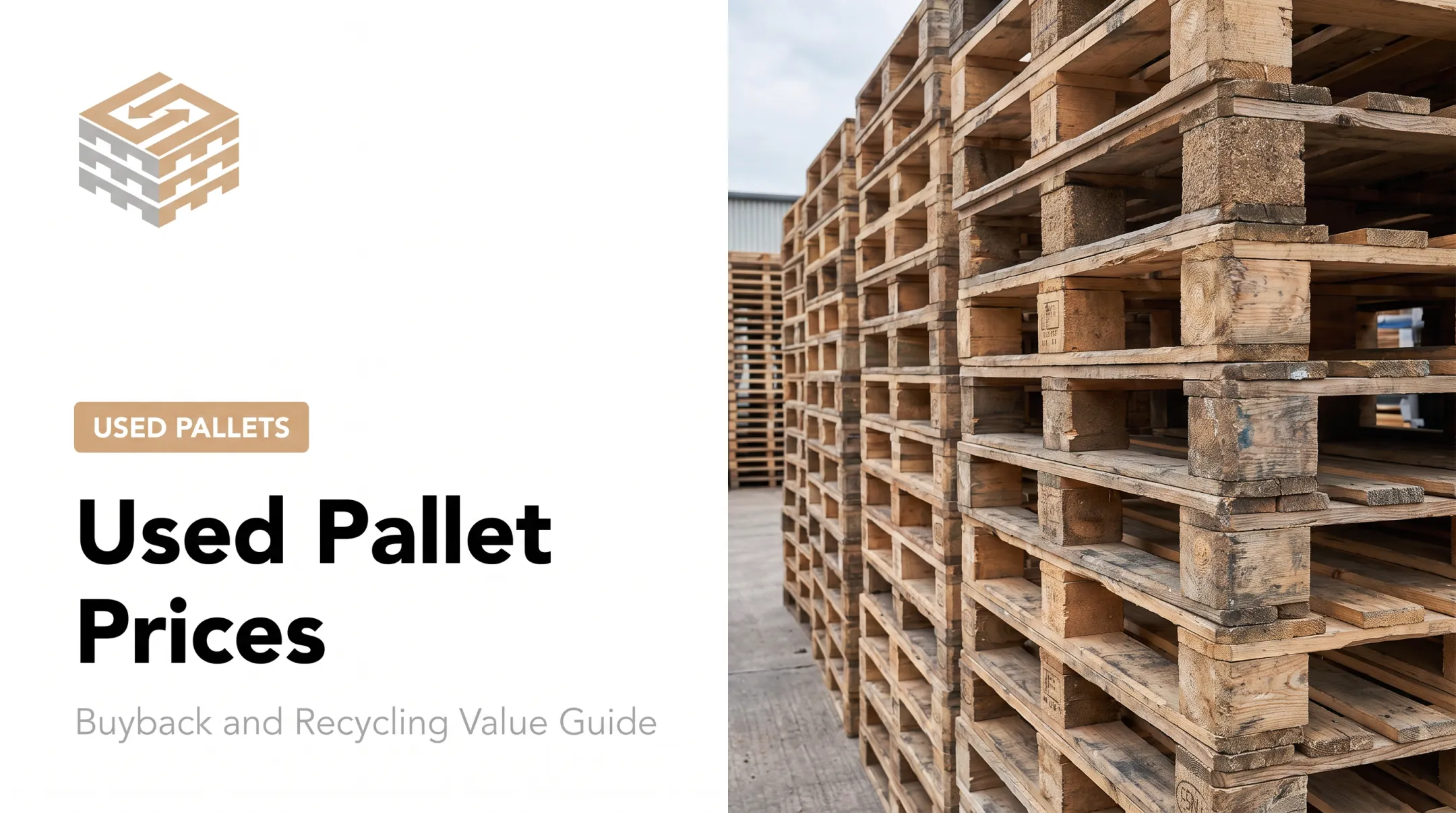
Used and recycled wood pallets bring costs down considerably. Marketplace examples show Grade A 48x40 pallets at approximately $9.00 and Grade B at $7.50, compared to new at around $13.00 from the same supplier. These are specific marketplace listings, not national averages — regional prices vary considerably.
Grade selection matters beyond price. Grade A pallets meet food-grade and retail-DC specifications, making them appropriate for FDA-regulated facilities and big-box supplier programs. Grade B pallets work well for industrial shipping and internal warehouse transfers where cosmetic condition is less critical. Utility or #2 pallets suit single-trip or low-load applications.
Presswood and Molded Wood Fiber Pallets
Presswood/molded wood fiber pallets offer a middle path for export-focused buyers. At $29–$33 per unit for a 48x40, they cost less than new solid wood and eliminate heat treatment requirements entirely — presswood is ISPM-15 exempt by default. They also nest for storage efficiency, reducing floor space between shipments.
For operations shipping internationally or managing export compliance costs, presswood is worth evaluating alongside standard HT-certified wood pallets.
Choosing the Right Wood Pallet Grade
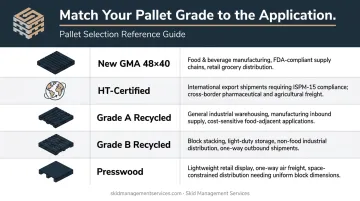
With pricing across new, recycled, and specialty wood formats varying by 3x or more, matching grade to application is where real cost control happens. A few practical guidelines:
- New GMA 48x40: Best for retail-DC programs, food manufacturing, and first-use cleanliness requirements
- HT-certified (new or recycled): Required for any international shipment under ISPM-15 regulations
- Grade A recycled: Suitable for food-grade, GFSI-audited, and FBA-compliant programs at significantly lower cost than new
- Grade B recycled: Reliable for industrial, cold storage, and internal distribution where appearance standards are relaxed
- Presswood: Streamlines export compliance and works well for single-trip or limited-use scenarios
Volume and geography also move the number. Buyers purchasing 100+ units per order typically see better per-unit pricing than catalog rates suggest, and sourcing locally within a region like central Pennsylvania or the Greater Philadelphia area avoids freight costs that can erase grade-based savings.
Key Factors That Affect Pallet Costs
Material and Build Quality
Material selection sets the price floor before any other factor applies. Within wood pallets:
- Hardwood (oak, maple) costs more than softwood (pine, spruce) but handles heavier loads and repeated use better
- Softwood (pine, spruce) suits lighter, single-trip, or interior applications at a lower per-unit cost
- Mixed hardwood/softwood construction balances cost and durability for general warehouse use
Spec the material to the load, not to a blanket standard. Over-specifying wastes budget; under-specifying leads to damage and replacement costs that far exceed the initial savings.
Size and Custom Specifications
Standard 48x40 GMA pallets are priced lower than any non-standard dimension because of production volume. Other common US standard sizes include 48x48 (chemical and drum), 42x42 (telecom and specialty chemical), and 48x42. Custom non-standard sizes include:
- 44x44 — IBC tote applications
- 36x36 — beverage and brewery distribution
Custom dimensions cost more across all materials. For plastic pallets, custom molds require significant tooling investment — sometimes tens of thousands of dollars before the first unit ships. Wood and presswood are far easier to customize at lower incremental cost, which is why wood remains the default for custom applications.
Condition and Grade
Grade classification is the primary pricing variable for used pallets:
- Grade A: All structural boards intact, no broken stringers, minimal repair history — performs comparably to new for most load-bearing applications
- Grade B: One to two minor board repairs with full structural integrity — the workhorse grade for general warehouse and distribution use
- Utility/Grade C: Economy-grade, suitable for internal flow applications where appearance is irrelevant
The price spread between Grade A and Grade B is modest — roughly $1.50 per pallet in marketplace examples — but the performance difference matters for load-bearing applications.
Purchase Volume
Volume is the most controllable cost lever for buyers. Catalog pricing demonstrates consistent tiering: a buyer purchasing 5 pallets pays more per unit than one ordering 20+. At truckload quantities, per-unit rates drop further.
Recurring volume contracts create additional savings versus spot purchases. Closed-loop pallet management programs — structured for operations running 500+ pallets per month — combine delivery, pickup, and trade-in credits (typically a 15–40% offset against new-pallet spend) to reduce net cost per pallet across the program.
Lumber Market and Regional Availability
Wood pallet prices track lumber commodity markets directly. Lumber is estimated to account for 60–70% of wood pallet manufacturing cost, which means lumber volatility hits pallet buyers hard.
According to NAHB data, the Random Lengths Framing Lumber Composite Price rose roughly 175% between April and September 2020, peaking above $1,500/mbf in May 2021 — nearly three times the pre-pandemic record. Pallet-grade lumber followed, jumping from $200–$400/MBF pre-pandemic to $1,600/MBF at the same peak.
Regional factors add another layer: proximity to sawmills, local labor costs, and transport distance all influence final pricing. A buyer in central Pennsylvania pays different rates than one in the Pacific Northwest or Southeast.
New vs. Used Pallets — What's the Real Cost Difference?
Most operations don't need new pallets as often as they think. The choice between new and used is the single biggest lever buyers control, yet many default to new without evaluating whether the application requires it.
Side-by-side comparison:
| Factor | New GMA 48x40 | Grade A Recycled | Grade B Recycled |
|---|---|---|---|
| Typical catalog price | ~$46–$52 | ~$9–$13 | ~$7.50–$8 |
| Condition | Unused | Near-new | Minor repairs |
| Best use case | Export, food-grade, strict spec | Domestic distribution, customer-facing | Internal warehouse, intra-DC transfers |
| ISPM-15 export ready? | With HT stamp | Not typically | Not typically |
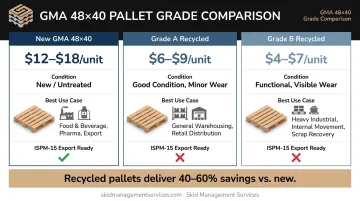
Recycled pallets typically deliver 40–60% cost savings versus new for buyers whose applications don't require pristine condition.
When new pallets are worth the premium:
- International export (ISPM-15 heat treatment required)
- Food-grade and FDA/GFSI-compliant applications
- Retail programs with strict pallet specifications (Walmart, Costco, Target)
- Heavy racking where load rating documentation matters
When used Grade A or B makes more sense:
- Shipping to receivers without strict pallet specs
- Handling internal warehouse moves and intra-DC transfers
- Running high-volume operations where unit cost compounds quickly
Skid Management Services supplies both new and recycled pallets from its own inventory and a national supplier network, which means buyers can switch grades or scale volume without hunting down a second vendor at spot pricing.
Hidden Costs Beyond the Purchase Price
Repair and Replacement
Cheap pallets generate repair costs. Broken boards, damaged stringers, and failed inspections create ongoing spend that isn't captured in the purchase price. Higher-quality pallets — whether new or Grade A recycled — typically reduce total repair burden over time. Paying $2 more per pallet upfront often beats $4–$5 in repairs and replacements across the pallet's life.
Storage and Handling
Empty pallets occupy dock space. For high-volume operations, managing idle pallet inventory creates real overhead: warehouse square footage, labor to move and stack, and management time. Buyers running thousands of pallets often find pallet management becomes a dedicated function. That's one reason closed-loop programs — where a supplier handles both delivery and pickup — reduce operational complexity alongside purchase cost.
Compliance and Treatment
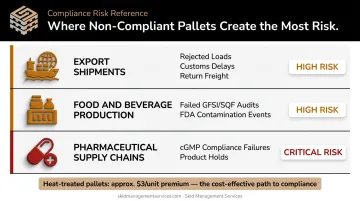
ISPM-15 compliance isn't optional for international shipments. Per U.S. Customs and Border Protection, wood packaging material for international trade must be heat treated to 56°C core temperature for at least 30 minutes or treated by other approved methods. Non-compliant pallets mean rejected loads — a cost that dwarfs the $3/unit premium for HT-stamped pallets.
Food-grade applications carry the same exposure. Using a non-compliant pallet on a food-grade shipment risks failed audits, product holds, or contamination incidents — outcomes where the pallet cost difference becomes irrelevant. Key risk areas include:
- Export shipments: Rejected loads, customs delays, and return freight costs
- Food & beverage production: Failed GFSI/SQF audits or FDA-reportable contamination events
- Pharmaceutical supply chains: cGMP compliance failures that trigger product holds
How to Get the Best Price on Pallets
Buy in Volume and Plan Ahead
Emergency or last-minute orders almost always carry a premium. Buyers who forecast pallet needs and place volume orders — ideally at truckload quantities — consistently secure the lowest per-unit rates. If lumber markets are favorable, that's the time to build inventory.
Match Pallet Grade to the Application
Over-specifying is a budget leak. Domestic distribution to a warehouse that doesn't inspect incoming pallets doesn't need new GMA spec. Grade B recycled works fine and saves 40–60% per unit. Reserve new pallets for compliance-sensitive applications.
Choose a Supplier Who Balances Price and Reliability
Price alone isn't the full picture. A supplier who quotes $0.50 less per pallet but delivers inconsistently forces spot purchases at premium rates, erasing the savings and then some.
Skid Management Services runs a national supplier network with 24/7 availability, so buyers maintain competitive per-unit pricing without the risk of gaps in supply — whether they're sourcing locally in Pennsylvania or running a national program.
Frequently Asked Questions
What's the average cost of a pallet?
It depends on material and condition. New 48x40 GMA wood pallets run roughly $46–$52 per unit at standard quantities; used Grade A and Grade B recycled options drop to $7.50–$13. Remanufactured and specialty sizes fall at various points in between depending on lumber grade and build spec.
Can you get pallets for free?
Free pallets are available from retailers, warehouses, and recycling programs that want to offload surplus inventory. Quality and condition vary widely, and free pallets are generally unsuitable for commercial or high-volume shipping where load ratings, appearance, and compliance matter.
How much do used pallets cost?
Used 48x40 wood pallets vary by grade. Marketplace examples show Grade A at approximately $9 and Grade B at $7.50–$8 per unit, with some heat-treated recycled Grade B pallets listed at $15. Regional markets and order volume affect pricing significantly.
What is the difference between Grade A and Grade B pallets?
Grade A pallets are near-new condition with all structural boards intact and minimal repair history. Grade B pallets have one to two minor board repairs but retain full structural integrity and are suitable for general warehouse and distribution use. Grade A typically runs $1–$2 more per unit than comparable Grade B stock.
Are wood or plastic pallets cheaper?
New GMA wood pallets at $46–$52 are the most cost-effective option for most operations. Used and remanufactured wood pallets drop that cost further — down to $7.50–$15 depending on grade — making recycled wood the clear choice for high-volume or budget-sensitive programs. Custom or specialty builds carry a premium based on lumber grade and dimensions.
Do pallet prices change over time?
Yes. Wood pallet prices track lumber commodity markets and can swing dramatically — lumber rose roughly 175% between April and September 2020 and peaked above $1,500/mbf in May 2021. Seasonal shipping demand and regional supply conditions add further variability, so monitoring market conditions before placing large orders pays off.