ISPM-15, the international phytosanitary standard adopted by more than 100 countries, requires all wood packaging crossing international borders to carry documented proof of treatment. Getting that verification wrong has real consequences — rejected shipments, customs holds, or accidental exposure to methyl bromide residue.
This guide covers exactly how to find the IPPC stamp, decode every code on it, and what to do when the stamp is missing or unreadable.
Key Takeaways
- Look for the "HT" code in the IPPC stamp, burned or branded onto the pallet's stringer boards
- HT = heat treated and compliant; MB = toxic methyl bromide treatment — avoid contact and never burn
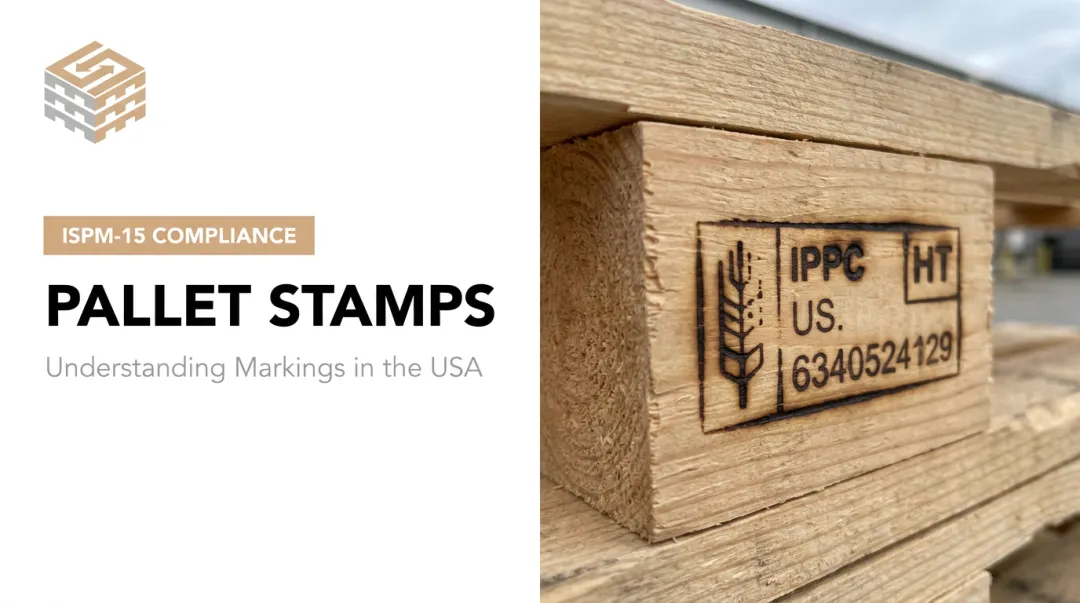
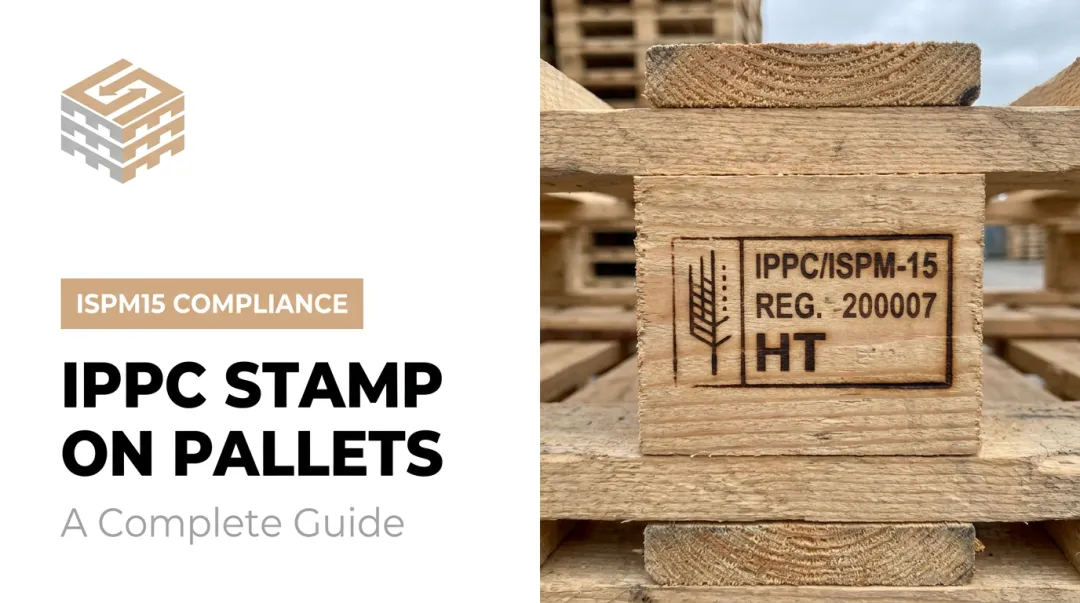
- A valid IPPC stamp includes a wheat symbol, country code, and producer code
- Faded or missing stamps require visual inspection or supplier documentation as backup
- Heat-treated pallets are mandatory for all wood packaging crossing international borders under ISPM-15
What You Need Before You Begin
No specialist tools are required. A few basics make the job easier:
- Adequate lighting — natural daylight or a bright work light; dim conditions cause missed stamps
- A stiff brush or clean cloth — to clear dirt, grime, or surface debris obscuring the stamp area
- This guide — as your reference for treatment codes and what each means
Where to Look
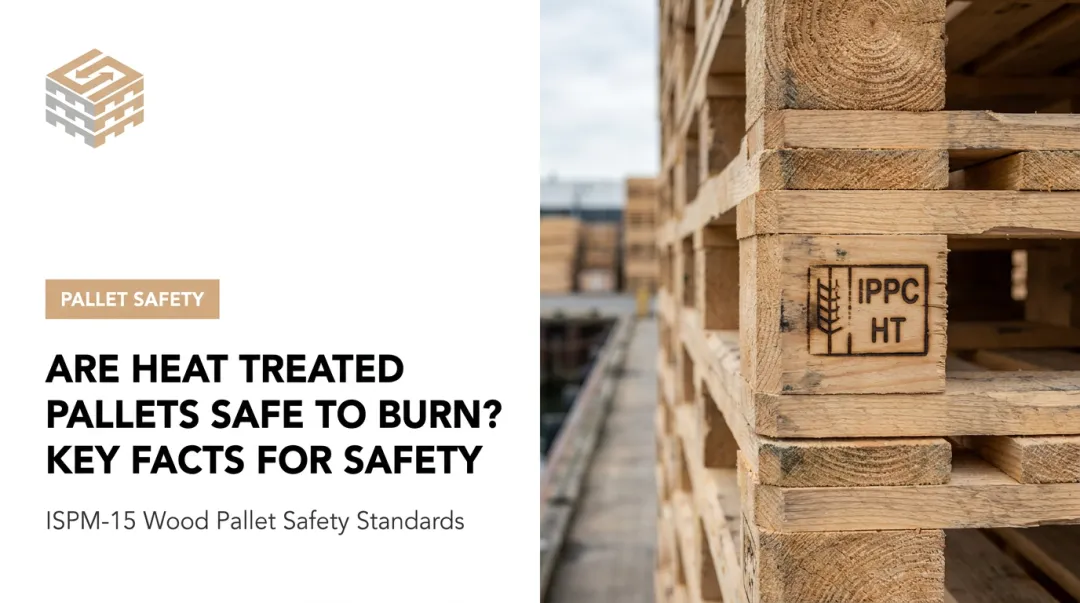
The IPPC stamp appears on the side stringer boards — the long boards running along the edges of the pallet. It is not typically on the top deck boards or the bottom boards.
Before concluding there is no stamp, keep three things in mind:
- Check both long sides — many pallets are marked on only one, and it is easy to overlook from a single angle
- Inspect pallets before stacking, loading, or moving them into storage
- A pallet face-down against a wall cannot be read without moving it first
Methods to Identify Heat Treatment on a Pallet
Three methods exist for determining treatment status, ranging from definitive to circumstantial. Always start with Method 1 — the other two are fallbacks, not substitutes.
Method 1: Reading the IPPC Stamp
The IPPC stamp is the only authoritative confirmation of heat treatment. No other indicator carries the same legal or regulatory weight.
What the stamp contains:
| Component | What It Looks Like | What It Confirms |
|---|---|---|
| Wheat symbol | Circular IPPC logo | Identifies this as an official ISPM-15 mark |
| Country code | Two-letter ISO code (e.g., US, CA) | Pallet's country of origin |
| Producer code | Alphanumeric facility ID | Treatment facility, useful for traceability |
| Treatment code | HT, MB, DH, or SF | The specific treatment applied |
How to read it — step by step:
- Locate the IPPC wheat symbol on the side stringer board. This circular emblem anchors the rest of the stamp.
- Find the treatment code — look specifically for "HT" (heat treated). Also note "KD" if present; KD-HT indicates the wood was kiln-dried and heat treated, confirming full ISPM-15 compliance.
- Note the country and producer codes beside the symbol. These confirm origin and allow traceability if compliance documentation is requested.
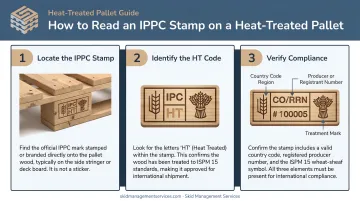
Limitation: Stamps on heavily used or weathered pallets can fade, get painted over, or suffer physical damage. If the stamp is unclear, move to Method 2 or 3.
Method 2: Visual and Physical Inspection
This is a supporting check, not a standalone verification. Use it when the stamp is partially visible or when you need additional reasons to flag a pallet for closer review.
What to look for:
- Unusual staining, discoloration, or oily residue — unexplained dark patches or a chemical odor warrant concern; genuinely heat-treated wood typically appears uniformly dried
- Signs of insect activity — bore holes, frass (fine insect debris), or live insects; heat treatment eliminates pests at a core temperature of 56°C (132.8°F) for a minimum of 30 continuous minutes, so active infestation suggests treatment was either absent or applied before re-infestation occurred
Limitation: Visual inspection cannot confirm heat treatment. The ISPM-15 standard is explicit that compliance is documented by the official mark, not by appearance. Use visual cues to flag pallets worth rejecting outright, not to approve them.
Method 3: Requesting Supplier Documentation
When stamps are absent or illegible, written verification from the supplier is the most reliable fallback.
Step 1: Ask your pallet supplier for a Certificate of Compliance or written confirmation of ISPM-15 heat treatment. Reputable national suppliers maintain this documentation readily. Suppliers who offer dedicated ISPM-15 heat-treated export pallets — like Skid Management Services — ship pre-confirmed pallets with proper stamping and documentation, eliminating the need to inspect every pallet individually.
Step 2: For pallets already on hand with no documentation, use the producer code on the stamp (if partially legible) to contact the originating facility and request treatment records.
Limitation: This method only works if records exist. Pallets that have changed hands multiple times with no paper trail may be unverifiable through documentation alone.
How to Interpret What You Find
Finding a code is only half the task. Acting on the wrong interpretation creates compliance failures or safety risks — here is what each result means and what to do next.
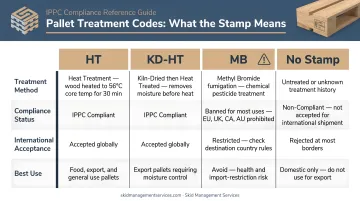
HT (Heat Treated) The pallet meets ISPM-15 standards and is compliant for international shipment. Safe for most reuse applications. One caveat: HT status does not protect against post-treatment contamination from cargo — chemical spills, food residue, or unknown cargo history can still make a pallet unsuitable for direct-contact or garden use regardless of the HT mark.
KD or KD-HT (Kiln Dried / Kiln Dried + Heat Treated) KD alone means moisture was reduced — it does not confirm pest treatment and does not satisfy ISPM-15 on its own. KD-HT means both processes were applied and the pallet is fully compliant. Look for both letters together before assuming compliance.
MB (Methyl Bromide) This pallet was treated with a chemical pesticide. Methyl bromide is classified by the EPA as a hazardous air pollutant and an ozone-depleting substance. MB use has been phased out or heavily restricted in many jurisdictions — the EU banned it in 2010 and Canada permits it only for narrow applications — but old stock continues to circulate.
If you find an MB-stamped pallet:
- Do not use it for DIY furniture, garden planters, or any close-contact application
- Contact a licensed waste disposal service for proper disposal
No Stamp or Illegible Stamp Domestic pallets are not legally required to carry an IPPC stamp in many countries, including the US. Absence of a stamp does not confirm or deny treatment. Do not use unmarked pallets for international shipments without additional documentation. For reuse or garden projects, treat as unverified and apply Method 3 before proceeding.
Common Mistakes When Checking Pallet Heat Treatment
Avoid these errors — each one is a genuine compliance or safety risk:
- Don't mistake DB for a treatment code. DB means debarked — bark was removed as a preparation step, not a pest control measure. It does nothing to satisfy ISPM-15 requirements. The valid codes are HT, DH, MB, and SF.
- Check both sides before concluding there's no stamp. The mark may appear on only one stringer board face — inspecting a single side can lead you to reject a compliant pallet or miss a non-compliant one.
- Never judge treatment status by appearance. A pristine pallet can be untreated domestic stock. A weathered, beat-up pallet can carry a perfectly valid HT stamp. Physical condition tells you nothing — the stamp is the only evidence that matters.
- Clean the area before reading a faded or dirty stamp. Dirt and wear can make "HT" indistinguishable from another code — or erase it visually altogether. Brush off the surface first, then use the IPPC wheat symbol as your orientation anchor before reading the treatment code.
Safety and Best Practices
Handling unverified pallets carries real risks. Follow these precautions before reusing or disposing of any pallet with an unknown treatment history:
- Never burn pallets you can't positively identify. Older MB-treated stock often loses visible markings over time. The EPA classifies methyl bromide as a hazardous air pollutant, and burning it — in a fireplace, bonfire, or open fire — can produce hydrogen bromide gas.
- Wear work gloves when handling unverified pallet wood, wash hands afterward, and keep children and pets clear.
- For any project involving skin contact — furniture, raised garden beds, play areas — use only pallets with a confirmed, legible HT stamp from a known source.
Frequently Asked Questions
How can I tell if a pallet is heat treated?
Locate the IPPC stamp on the side stringer board of the pallet and look for the "HT" code within it. If the stamp is faded or unclear, clean the area with a brush, re-examine in good lighting, and contact your supplier for documentation if the stamp remains unreadable.
What does HT mean on a pallet?
"HT" stands for Heat Treated. It confirms the pallet was heated to a core temperature of 56°C (132.8°F) for a minimum of 30 continuous minutes throughout the entire wood profile, including the core, meeting the ISPM-15 standard for pest elimination.
What is the difference between HT and KD on a pallet?
KD (Kiln Dried) refers to moisture reduction only — it does not confirm pest treatment and does not satisfy ISPM-15 on its own. KD-HT means both processes were applied and the pallet is fully ISPM-15 compliant.
Where is the IPPC stamp located on a pallet?
The IPPC stamp is typically heat-branded onto the side stringer boards — the long boards running along the edges of the pallet. It may appear on one or both sides and is not usually found on the top or bottom deck boards.
Can I use a pallet without a stamp?
Unstamped pallets are generally domestic-use pallets not required to carry IPPC markings. They should not be used for international shipments, and for reuse or garden projects their treatment status cannot be confirmed without supplier verification.
What should I do if a pallet's stamp is faded or unreadable?
Clean the stamp area with a stiff brush or cloth and re-examine in strong lighting. If still illegible, contact your supplier for documentation. For international shipping compliance, do not use a pallet without a legible, verifiable HT stamp.