Introduction
Using the wrong pallet for an international shipment can stop your freight at the border. Using a pallet with mold can contaminate your products, trigger recalls, and end customer relationships. Both problems are real — but they require different solutions. Treating them as the same problem is an expensive mistake.
Many supply chain operators assume that heat-treated pallets are also mold-resistant. They're not — heat treatment is a customs compliance requirement designed to eradicate pests, not control moisture. Mold is a separate problem entirely, and assuming one solution covers both leaves your supply chain exposed.
This guide breaks down what ISPM 15 heat treatment actually does, how certification works, and why you still need a separate mold prevention strategy — plus what to look for when sourcing pallets that meet both standards.
Key Takeaways
- Heat treatment to ISPM 15 standards kills pests and insects in wood — it is not a mold prevention measure
- Certified pallets must hit 56°C (133°F) at the core for 30+ continuous minutes and carry the IPPC stamp
- Mold prevention requires moisture control — reducing wood to 19% moisture content or below significantly lowers mold risk
- Any repair using new wood voids the original HT certification — the pallet must be re-treated and re-stamped
- Combining HT compliance with kiln drying and proper storage gives you the most complete supply chain protection
Why Heat Treating Pallets Matters for Compliance
The Standard Behind the Stamp
ISPM 15 — the International Standards for Phytosanitary Measures No. 15 — is the international standard governing how solid wood packaging materials must be treated before crossing international borders. It's administered through the International Plant Protection Convention (IPPC), whose Secretariat is provided by the FAO. The current official text was adopted in 2018 and published in 2019.
The standard exists for a clear reason: untreated wood can harbor invasive insects like the Asian longhorned beetle, pinewood nematode, and emerald ash borer. These pests travel invisibly inside timber and can devastate forests and agricultural ecosystems when introduced to new environments. ISPM 15 is the standard that prevents them from entering new countries through your shipment.
Who Must Comply
Any business using solid wood pallets, crates, or other wood packaging materials for international shipments needs to understand this standard. The IPPC has 185 contracting parties, though active enforcement varies by country. APHIS lists at least 46 countries and entities with written WPM requirements; the IPPC's own implementation records show 89 entries.
What Happens When You Don't
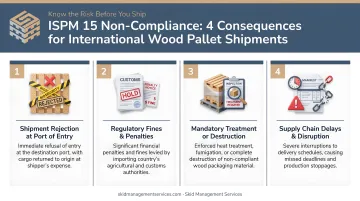
The consequences of non-compliant wood packaging material include:
- Refused entry into the destination country
- Detention or temporary storage at the importer's expense
- Forced fumigation, re-treatment, or destruction of the shipment
- Delayed delivery that can cascade through your customer commitments
Shipments containing non-compliant wood packaging material will not be allowed to enter the United States, per APHIS. Verifying treatment marks before shipment — not after a customs hold — is how you avoid these costs.
How the Heat Treatment Process Works
The Core Temperature Requirement
Conventional heat treatment under ISPM 15 requires that the entire wood profile — including the core — reach a minimum of 56°C (133°F) and hold that temperature for at least 30 continuous minutes. Total time inside the kiln varies based on wood thickness, moisture content, chamber quality, and ambient conditions, and can range from one hour to several hours.
The core measurement matters because pests and their eggs shelter deep inside timber, where surface heat never reaches.
Debarking Rules
Before or after treatment, wood must be debarked. Residual bark is permitted only under strict limits:
- Individual bark pieces less than 3 cm wide (regardless of length) are acceptable
- Pieces wider than 3 cm must have a total surface area below 50 square cm
Bark is where insect eggs are most commonly found — so once the thermal requirement is met, documentation has to confirm the wood was properly prepared too.
Reading the IPPC Stamp
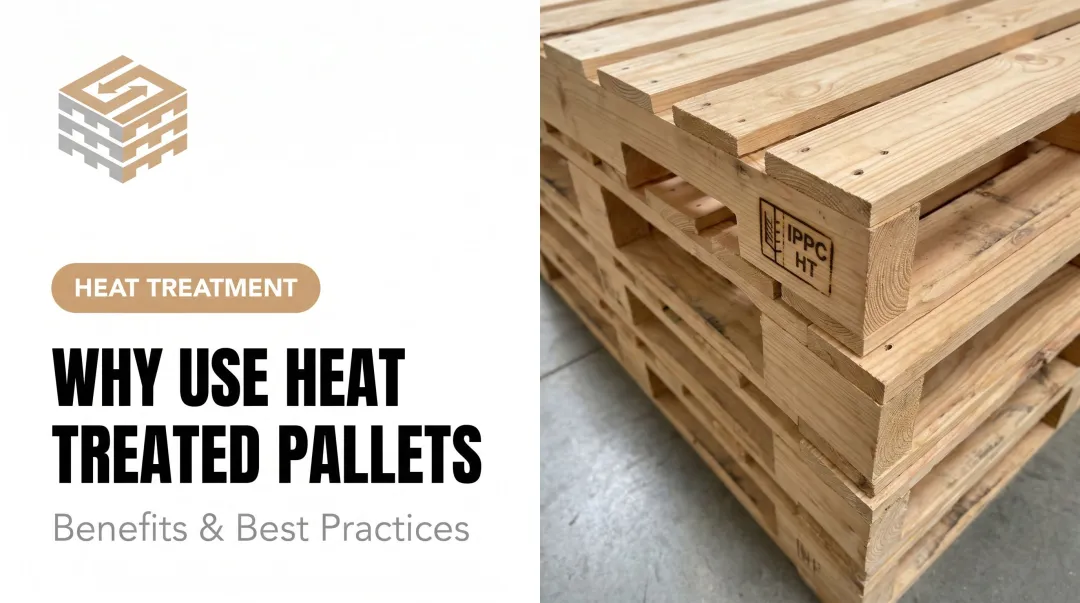
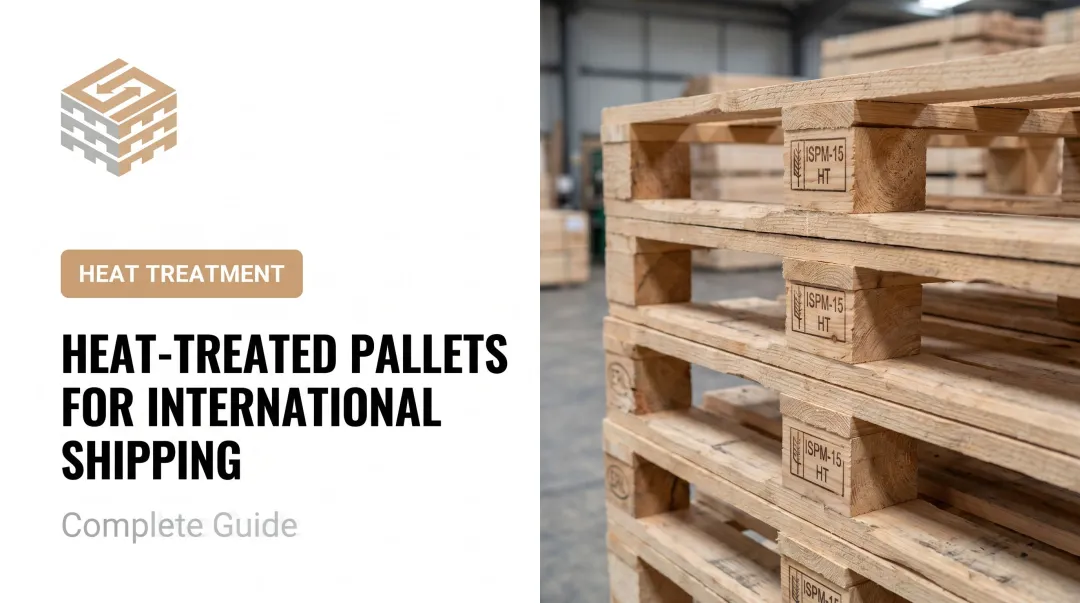
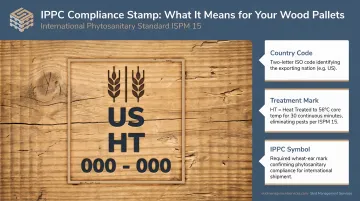
A legitimate IPPC compliance mark includes all of the following:
- The IPPC wheat/bug symbol
- A two-letter ISO country code (e.g., US)
- A unique producer or treatment provider registration number
- The treatment code — "HT" for heat treatment
The mark should appear on at least two opposing sides of the pallet. The official ISPM 15 text uses the word "preferably" for the two-sided placement, but customs inspectors expect it on both sides.
What's Exempt and What's Not
Only solid wood materials require ISPM 15 treatment. Engineered and processed wood products — plywood, particle board, oriented strand board, and veneer — are exempt because their manufacturing processes apply heat that already eliminates pests. Wood 6 mm or less in thickness is also excluded.
When Certification Gets Voided
This catches a lot of buyers off guard. If a pallet is repaired using new untreated wood components:
- Replacing up to one-third of components requires each new piece to come from treated and marked wood, or the whole unit must be re-treated and re-marked
- Replacing more than one-third means the unit is considered remanufactured — previous marks must be obliterated, and the pallet re-treated and re-stamped entirely
A pallet with a legitimate HT stamp that has been patched with unverified lumber is no longer compliant, regardless of what the stamp says.
Does Heat Treatment Prevent Mold? Clearing Up the Misconception
Heat treatment kills mold, insects, and pathogens present in the wood at the time of treatment. It does not prevent mold from growing after the pallet leaves the kiln. This is the most common and most costly misconception among supply chain professionals working with wood packaging.
Why Mold Returns After Treatment
Mold needs four things to grow: oxygen, warmth, a food source, and moisture. According to the NWPCA, heat treatment kills surface fungi but generally does not dry the wood. Once the pallet exits the kiln and is exposed to humid air, a warehouse floor, or outdoor storage, moisture reintroduces itself — and mold follows.
The heat treatment process can actually pull internal moisture to the wood's surface, creating conditions more favorable for mold colonization if the pallet isn't properly dried and stored afterward. This effect is most pronounced with hardwood pallets that aren't kiln-dried before assembly.
That surface moisture matters because wood already provides everything else mold needs. The EPA and NWPCA both confirm wood is an adequate organic food source for mold spores. Remove the moisture, and mold cannot establish itself — but heat treatment does nothing to seal wood against future moisture absorption.
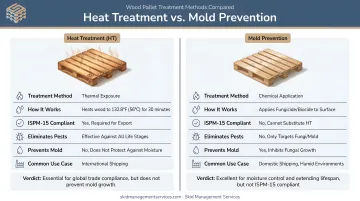
What this means in practice:
- Heat treatment satisfies ISPM 15 compliance requirements
- It does not reduce post-treatment mold risk
- Proper drying and dry storage are required separately to control mold
Bottom line: ISPM 15 compliance and mold prevention are separate problems that require separate solutions.
Best Practices to Prevent Mold on Heat-Treated Pallets
Kiln Drying: The Most Effective Control
NWPCA guidance states that reducing wood to 19% moisture content significantly lowers the likelihood of mold growth. The USDA Forest Products Laboratory supports 20% or below as a practical threshold against fungal damage. Neither figure is an absolute guarantee, but the risk reduction is meaningful.
Manufacturers approach this two ways:
- Softwood pallets — components are kiln-dried to 19% moisture content before assembly
- Hardwood pallets — assembled from green components, then air-dried or kiln-dried after assembly; most pallet drying cycles run 12 to 24 hours depending on weight and thickness
For businesses in food manufacturing or pharmaceutical supply chains, softwood pallets built from pre-dried lumber provide more reliable mold resistance than hardwood pallets dried after assembly.
Storage Practices That Reduce Mold Risk
Where and how pallets are stored after delivery matters as much as how they were manufactured. Key variables:
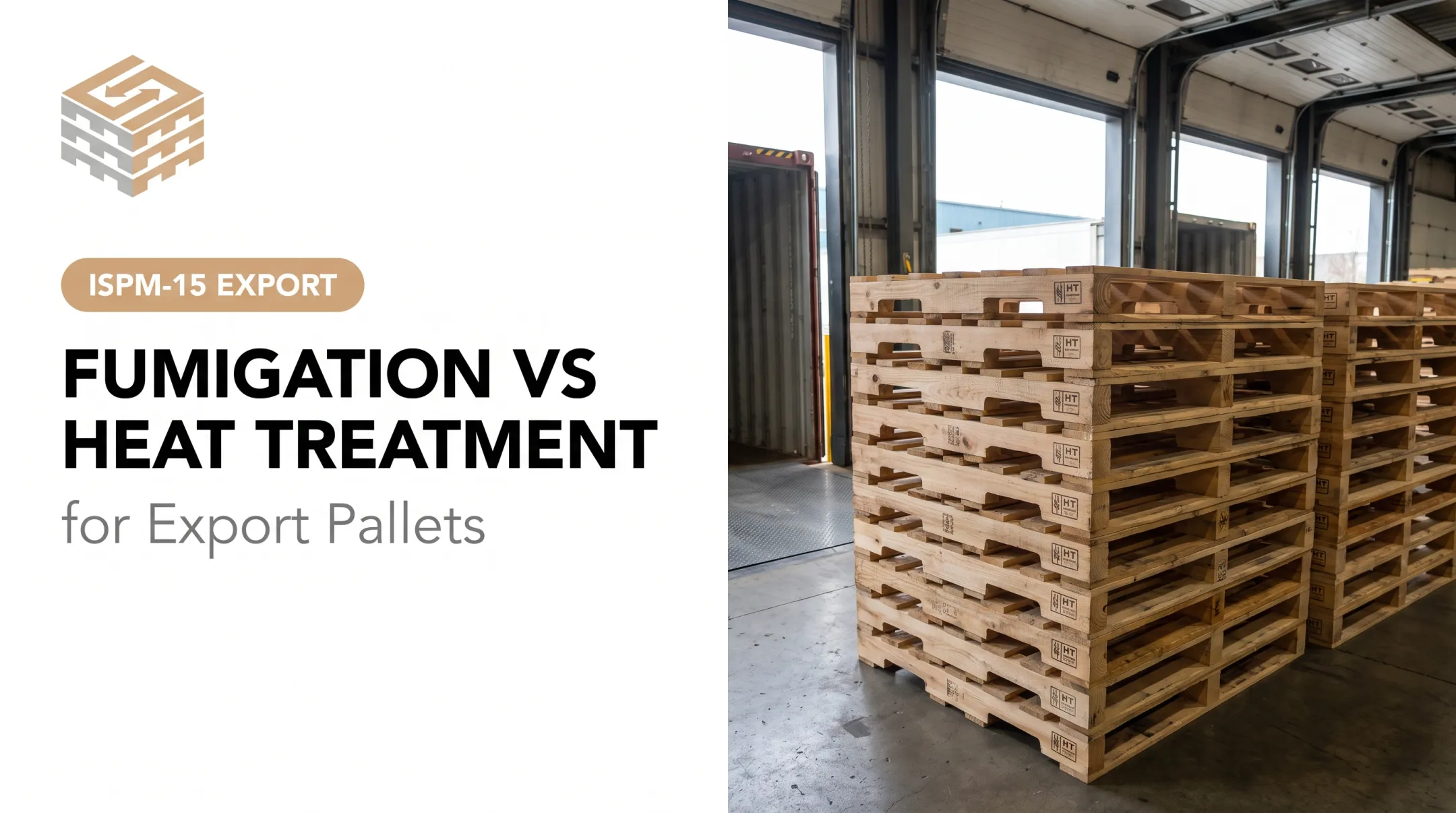
- Keep pallets elevated off wet ground or concrete floors
- Store in covered, ventilated sheds rather than open-air stacks exposed to rain
- Ensure airflow through stacked pallets — even a few feet per second of air movement can deter mold colonization
- Avoid stacking wet pallets against walls or in low-airflow corners of warehouses
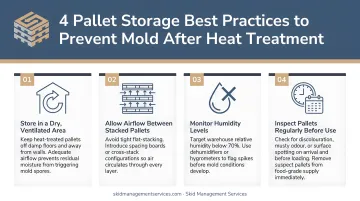
Indoor storage is the gold standard. If outdoor storage is unavoidable, cover pallets from rain while maintaining air circulation underneath and between stacks.
Seasonal Awareness
Those storage conditions become harder to maintain as temperatures rise. Warm, humid weather is the primary driver of mold acceleration on pallets, with growth rates increasing most rapidly in the 66°F to 90°F range. Businesses should treat the shift into warmer, wetter months as a prompt to:
- Reinforce storage practices and check for ground contact or drainage issues
- Audit ventilation in pallet storage areas
- Review moisture content specifications with their supplier before peak conditions arrive
Wood Species and Mold Resistance
Not all wood species respond to moisture the same way. Softwoods like pine contain natural resins that offer some inherent resistance to fungal colonization, even at comparable moisture levels. Dense hardwoods such as oak and maple tend to hold moisture longer after drying, which can create localized conditions favorable to mold — particularly in thicker deck boards or blocks. For operations in humid climates or facilities handling mold-sensitive products, asking your supplier about species and board thickness at the time of order is a worthwhile step.
How to Identify and Source Certified HT Pallets
Verifying the IPPC Stamp
A compliant IPPC mark contains four elements: the IPPC wheat/bug symbol, the two-letter country code, the producer registration number, and the "HT" treatment code. It must appear on two opposing sides of the pallet.
What to watch for:
- Missing or incomplete stamp elements indicate the pallet may not have been treated by a licensed facility
- Stamps that appear smudged, hand-written, or inconsistent across sides warrant closer inspection
- In the U.S., the American Lumber Standard Committee (ALSC) manages quality control for compliant WPM through 15 accredited independent agencies that oversee approximately 5,300 licensed facilities
Fraud Is a Real Risk
APHIS warned in 2025 that unauthorized use of the IPPC mark — including forged stamps and improperly formatted codes — is a documented problem. Full enforcement of ISPM 15 hyphen requirements resumed January 1, 2026 after a temporary suspension. Buyers should always request written compliance documentation from their supplier and avoid sourcing from unverified channels where stamp integrity cannot be confirmed.
Working With a Certified Supplier
Sourcing from a verified supplier is the most reliable way to avoid the stamp integrity issues described above. Skid Management Services offers a dedicated ISPM 15 Heat-Treated Export Pallet Service, providing heat-treated pallets stamped and documented for international customs clearance. Their expansive supplier network ensures consistent national availability for high-volume shippers.
They serve high-compliance food manufacturing accounts including Campbell Snacks, Knouse Foods, and Hain Celestial Group. To request verified HT pallets with documentation, contact Skid Management Services at 717-202-0304 or Info@SkidManagementServices.com.
Conclusion
Heat treating pallets to ISPM 15 standards satisfies international customs requirements and protects global ecosystems from invasive pests. It was never designed to be a mold prevention tool, and treating it as one creates real supply chain exposure.
Addressing both problems means taking two separate actions: sourcing certified HT pallets with proper documentation for compliance, and specifying kiln-dried lumber with sound storage protocols for mold control. A supplier who handles both simplifies the process considerably. Look for:
- Verified HT pallets with ISPM 15 documentation that clears customs without delays
- Kiln-dried lumber options with defined moisture content specifications
- Willingness to discuss wood species and storage conditions for your product type
Skid Management Services supplies certified heat-treated pallets and custom pallet specifications to food manufacturers and supply chain operations nationwide. Contact the team to discuss compliance requirements or moisture-sensitive applications.
Frequently Asked Questions
Do heat-treated pallets mold?
Yes, heat-treated pallets can still develop mold. Heat treatment kills pests and any mold present at the time of treatment, but it doesn't prevent future mold growth. Once the pallet is exposed to moisture after leaving the kiln, mold can take hold again quickly.
What temperature is required to heat treat pallets to ISPM 15 standards?
The core of the wood must reach 56°C (133°F) and hold that temperature for at least 30 continuous minutes. Total kiln time varies based on wood thickness, moisture content, and chamber conditions, and can range from one to several hours.
What is the ISPM 15 standard and who needs to follow it?
ISPM 15 is the international phytosanitary standard governing solid wood packaging materials in global trade, administered through the IPPC. Any business shipping goods internationally on solid wood pallets, crates, or similar packaging must comply with it.
What is the difference between heat-treated and kiln-dried pallets?
Heat treatment is a pest eradication process required for export compliance under ISPM 15. Kiln drying is a moisture reduction process that prevents mold and warping. A pallet can, and often should, be both.
How do I know if a pallet has been properly heat-treated?
Look for the IPPC stamp on two opposing sides of the pallet. It should include:
- IPPC symbol
- Two-letter country code
- Producer registration number
- "HT" treatment code
Always request written compliance documentation from your supplier in addition to verifying the stamp.
What happens if a heat-treated pallet is repaired or modified?
Repairs using new wood void the existing certification. Replacing up to one-third of the pallet requires that each new component come from treated and marked wood; replacing more than one-third requires obliterating the original mark and fully reprocessing the unit.