Introduction
Pallets move the bulk of commercial freight across the U.S., and the covering material on a finished load is the last line of defense between your product and everything that can go wrong in transit: dust, moisture, shifting, and contamination.
That barrier only works when you choose the right material, size it correctly, and apply it properly. A 1 mil poly cover on an outdoor shipment. Stretch wrap starting six inches above the deck boards. A pre-formed cover two sizes too large, pooling at the corners. Each of these looks fine at first glance and fails in predictable ways.
This guide gives you a practical framework for selecting the right covering material, sizing it for your load, and applying it in a sequence that holds up in real warehouse conditions. Get these variables right — gauge, exposure level, load geometry — and you'll stop generating damage claims before the load ever leaves the dock.
Key Takeaways
- Stretch wrap (LLDPE film) handles load containment; poly covers and top sheets add environmental protection
- Always inspect the pallet and stabilize the load before applying any covering material
- Use the correct sizing formula: add 2–4 inches to width and depth, and calculate cover height as loaded height plus half the depth
- Match the cover material to storage conditions: outdoor, temperature-sensitive, or high-moisture environments each require different solutions
- A structurally sound pallet from a reliable supplier is the foundation that makes every covering method more effective
Choosing the Right Material to Cover a Pallet
Material selection comes down to three variables: what you're protecting, where the load is going, and how it will be handled. Get those right and the correct covering choice follows naturally.
Stretch Wrap (Cast and Blown)
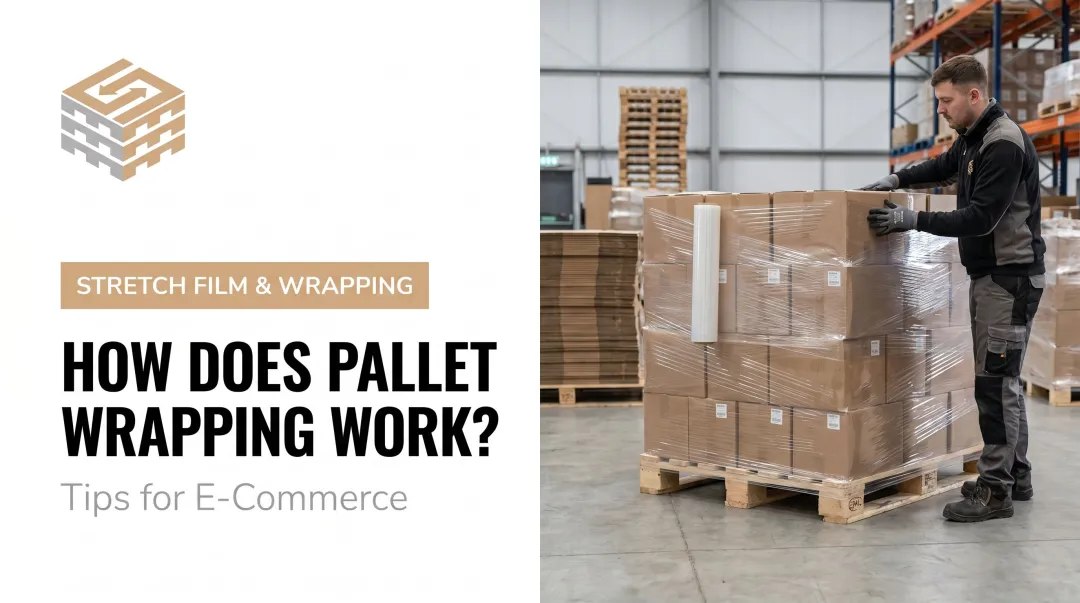
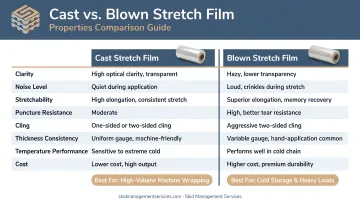
Stretch wrap is the industry default for pallet load containment. Applied by hand or machine, LLDPE film clings to itself without adhesives and provides 360-degree bundling force. According to Mordor Intelligence's North America shrink and stretch film market report, stretch wraps hold 51.35% of the market and pallet unitization represents 51.28% of overall film volume in the region — numbers that confirm stretch wrap as the dominant choice for pallet unitization.
The two main film types behave differently:
| Property | Cast Stretch Film | Blown Stretch Film |
|---|---|---|
| Clarity | High clarity | Hazier appearance |
| Noise on unwind | Quiet release | Noisier unwind |
| Puncture resistance | Lower | Excellent |
| Best for | Uniform box loads | Heavy or irregular loads |
Pre-stretch percentage matters for film efficiency. Machine wrap can achieve 150–300% pre-stretch, which reduces the amount of film needed per load and increases containment force. Hand wrapping delivers far less — typically 10–20% depending on technique and film type. Follow the film manufacturer's guidance for hand-application targets.
Poly Pallet Covers and Top Sheets
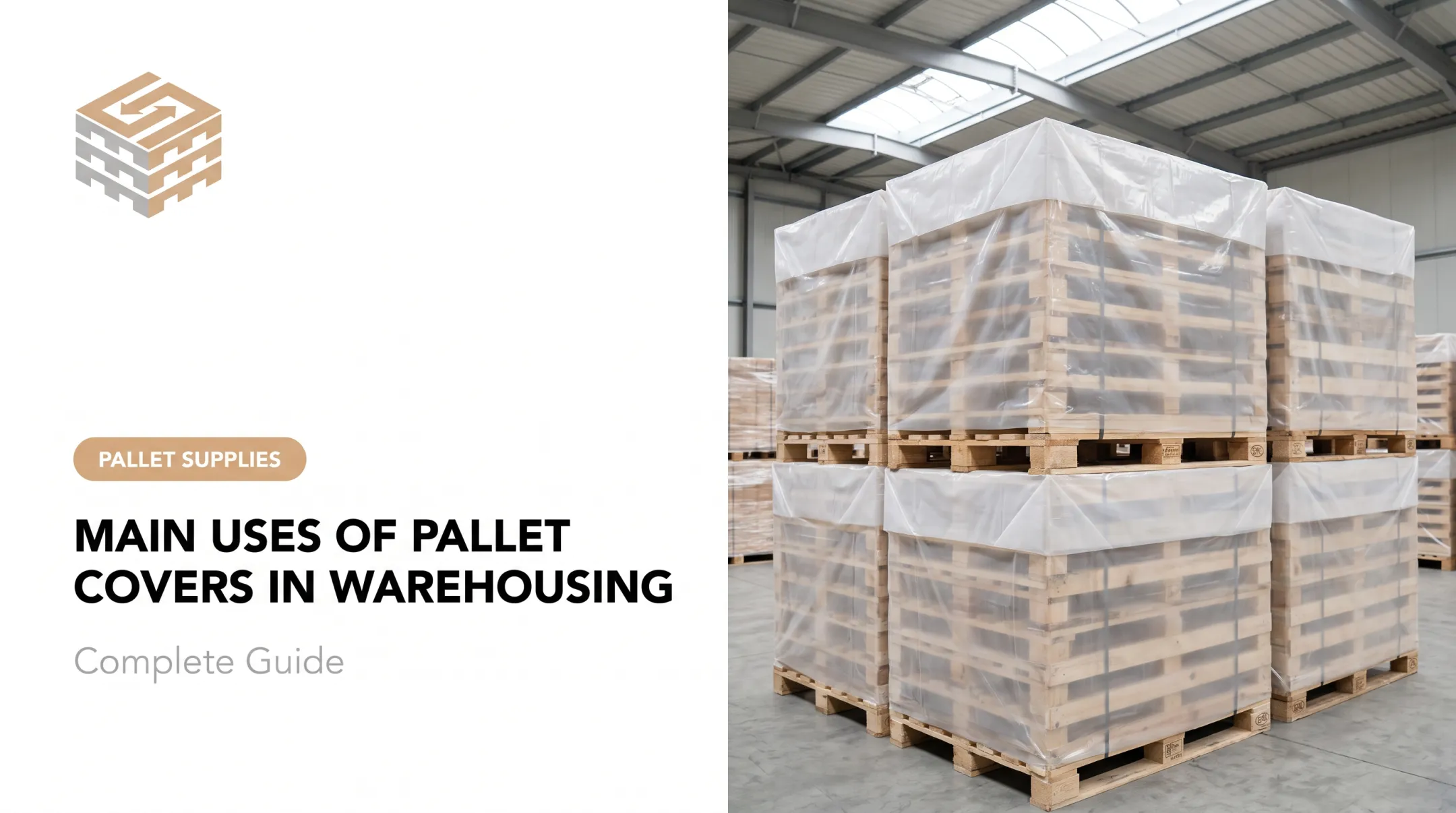
Poly covers (gusseted bags slid or draped over the finished load) protect against dust, light moisture, and contamination. They apply quickly, complement stretch wrap without replacing it, and are available in clear or black (UV-resistant) options.
Thickness determines the application:
- 1.5–2 mil — dust protection and short-term storage
- 3 mil — standard warehouse protection, parts, and hardware
- 4 mil+ — sharp-edged loads, reusable applications, heavier industrial use
For layer-by-layer protection, pallet top sheets offer a simpler alternative. These flat poly or kraft paper liners sit on top of each product layer or the finished load — preventing ink migration between layers, blocking condensation from settling on product surfaces, and working well in operations that prefer contamination protection without full wrap coverage.
Thermal and Specialty Covers
For temperature-sensitive loads, standard stretch film is the wrong tool. IQVIA estimates the pharmaceutical industry loses approximately $35 billion annually from failures in temperature-controlled logistics — a figure that underscores how much rides on proper cold-chain packaging.
Specialty cover options by environment:
- Insulated foil-bubble covers — food, pharma, and electronics requiring temperature stability
- Vented stretch wrap — produce and cold-chain loads requiring airflow
- UV-resistant black covers — outdoor storage where standard film degrades within months of direct sun exposure
Sizing and Preparation: What You Need Before You Start
Preparation is where most pallet covering failures begin. A damaged or undersized pallet undermines every covering method applied on top of it — so starting with a structurally sound deck matters before any wrap or cover goes on.
Inspect and Prepare the Pallet
Before loading, check for:
- Broken or cracked deck boards
- Protruding nails or splinters that can tear covers and wrap
- Moisture damage or soft spots that reduce load-bearing capacity
Replace damaged pallets before stacking goods. This takes 30 seconds and prevents far more costly problems downstream.
Stack and Stabilize the Load
Proper load-building principles:
- Place heaviest items on the bottom
- Maintain uniform layer heights
- Keep all boxes within the pallet footprint — no overhang
- Confirm the column is vertically stable before wrapping begins
An unstable stack will shift under wrap tension, creating voids that reduce containment force and leave product exposed.
Measure for the Right Cover Size
For pre-formed poly covers, the correct formula is:
- Measure the loaded pallet: Width (W), Depth (D), and Height (H)
- Add 2–4 inches to both W and D for fit allowance
- Cover length = H + (adjusted D ÷ 2)
Worked example: A pallet measuring 40″ W × 36″ D × 50″ H requires a cover of approximately 42″ W × 38″ D × 68″ L (50 + 18 = 68). This accounts for the gusseted tuck at the bottom of the cover.
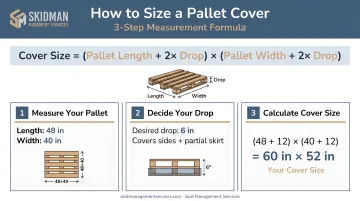
A cover that's too small tears at the corners. One that's too large creates loose folds that catch on equipment and allow moisture to pool.
For stretch wrap, sizing means wrap passes rather than fixed dimensions. Manufacturer guidance for standard loads under 2,000 lb typically calls for:
- Three revolutions at the base and top
- Full overlapping passes in between
- Additional passes for heavier or taller loads
No universal ASTM or ISTA standard specifies a minimum revolution count — follow your film supplier's recommendations for your specific load conditions.
How to Cover a Pallet: Step-by-Step
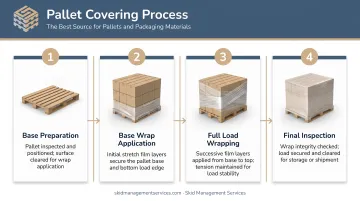
The sequence below covers the most common warehouse approach: stretch wrap for load containment combined with a poly cover or top sheet for environmental protection.
Step 1 — Secure the Base with Stretch Wrap
Anchor the wrap film to the pallet leg or base boards, bypassing the bottom product layer entirely. Make 2–3 tight revolutions around the base to lock the load to the deck before moving upward.
Check tension as you go. The wrap should be firm enough to resist movement but not so tight that it crushes cartons or deforms flexible containers. Soft goods and lightweight packaging are particularly vulnerable to over-tensioning.
Step 2 — Wrap the Load from Bottom to Top
Move upward in overlapping horizontal passes, with each pass overlapping the previous by at least 50%. For taller loads, angle the wrap diagonally on alternating passes to add cross-directional strength.
If using heat-shrink film instead of stretch wrap, apply the bag or sleeve over the load at this stage. Use a heat gun in slow, even strokes, moving uniformly around the load to avoid hot spots.
Step 3 — Apply the Poly Cover or Top Sheet
For poly cover bags:
- Slide the cover down over the top of the load, centering it so overhang is even on all sides
- Tuck the overhang between the wrap and the load, or fold edges down and secure with a final stretch wrap pass to prevent wind uplift
For top sheets:
- Lay flat over the final product layer before the last stretch wrap pass
- The wrap itself locks the sheet in place, creating a clean barrier between product and film contact
Step 4 — Secure the Top and Inspect
Apply a top cap by wrapping film over the top surface of the load, covering the top surface in addition to the sides. This prevents vertical shifting and closes the top against debris or moisture.
Final check before the load leaves the dock:
- Press lightly on each side — confirm no rocking or shifting
- Verify film is tucked under itself or heat-tacked, not left with a loose tail
- Check that poly cover overhang is secured and lying flat
According to Packaging Digest, as much as 11% of unit loads arriving at a distribution center have some level of case damage. Running through this checklist before dispatch takes under 30 seconds and catches most wrapping errors while the load is still on the dock.
Key Variables That Affect Pallet Cover Performance
Material choice alone doesn't determine protection quality — thickness, environment, and load shape all influence whether a cover holds up or fails in transit.
Material Thickness and Gauge
Using a cover that's too thin for the load is one of the most common causes of protection failure. The poly cover thickness ladder:
- 1.5–2 mil — light dust protection, short-term or indoor storage
- 3 mil — standard warehouse environments
- 4 mil+ — sharp edges, heavy-duty use, reusable applications
For stretch film, gauge selection should match load weight, edge sharpness, and handling frequency. Blown films (higher gauge range) suit irregular or sharp-edged loads; cast films work well for uniform box loads.
Environmental Exposure
The environment the load will move through determines material requirements:
- Indoor, climate-controlled — standard clear poly covers and LLDPE stretch wrap are adequate
- Outdoor storage — standard stretch film degrades within months under UV exposure; use UV-stabilized film or black UV-resistant poly covers
- Refrigerated transit or cold chain — insulated or foil-bubble thermal covers; vented wrap for produce requiring airflow
- High-humidity environments — moisture vapor barriers are essential; standard covers may allow condensation ingress at seams
A cover that performs reliably indoors can fail in days when moved outside without UV protection.
Load Geometry and Edge Profile
Load shape directly affects which material and sizing will hold:
- Uniform, box-stacked loads — thinner, lower-cost materials perform well
- Irregular or tall loads — require more generous sizing allowances to achieve full coverage
- Sharp-edged loads — need higher puncture resistance; going up one mil thickness is a low-cost insurance against damaged or rejected shipments
Common Mistakes When Covering a Pallet
Most pallet protection failures come down to the same handful of mistakes — wrong material, bad fit, or skipped steps that seem minor until a load arrives damaged.
Using the Wrong Cover Material
Material choice is the most consequential decision in the covering process. Common mismatches include:
- 1 mil clear poly used outdoors → UV degradation and moisture ingress within days
- Standard non-insulated film on temperature-sensitive product → thermal excursion and product loss
- Stretch wrap alone on a dust-sensitive load → contamination at the top surface layer
Sizing the Cover Incorrectly
Even the right material fails when the dimensions are off:
- Cover too small → tears at corners when the load shifts in transit
- Cover too large → loose folds catch on equipment and pool moisture at the base
Inadequate wrap passes or starting too high:
- Beginning the wrap several inches above the pallet deck leaves the base unsecured — the load can slide off during forklift handling
- Too few passes reduces containment force and allows individual cartons to shift or topple
- Lantech notes that a rejected unit load can cost $500 to $4,000 in product loss and administrative expenses — a direct result of under-wrapping
Skipping the final inspection:
- A 30-second push test and visual check of wrap tension and cover placement catches most application errors before the load moves
- Loads that leave the dock without this check are the most likely to arrive damaged
Frequently Asked Questions
What material is used to wrap pallets?
Stretch wrap made from LLDPE (linear low-density polyethylene) film is the most widely used material for securing and bundling pallet loads. Poly covers, shrink bags, and top sheets are layered on top for additional dust, moisture, or temperature protection depending on the application.
What is a pallet cover?
A pallet cover is a pre-formed poly bag or fitted cover slid over an entire pallet load to protect against dust, moisture, UV exposure, and contamination. It differs from stretch wrap: stretch wrap binds the load together for containment, while a cover focuses on environmental shielding.
How do you measure a pallet for a cover?
Add 2–4 inches to the loaded pallet's width and depth for fit allowance. Cover length equals the loaded height plus half the adjusted depth. For a 40″ W × 36″ D × 50″ H pallet, that yields approximately a 42″ × 38″ × 68″ cover.
What is the difference between stretch wrap and shrink wrap for pallets?
Stretch wrap is applied under tension and clings to itself without heat: fast, flexible, and the standard for most loads. Shrink wrap is applied loosely then contracted with a heat gun to form a tight, tamper-evident seal — more secure and airtight, but slower and more equipment-intensive.
Can pallet covers be reused?
Heavy-duty vinyl or woven poly covers are designed for multiple uses — reusable pallet wraps can last over 200 cycles with proper care, making them cost-effective. Thin poly bags (1–2 mil) are generally single-use and should be recycled where possible.
How many layers of stretch wrap does a pallet need?
For standard loads under 2,000 lb, plan on approximately three revolutions at the base and top with full overlapping passes; heavier or irregularly shaped loads need more. There is no universal ASTM-certified minimum — follow your film supplier's specifications.