Introduction
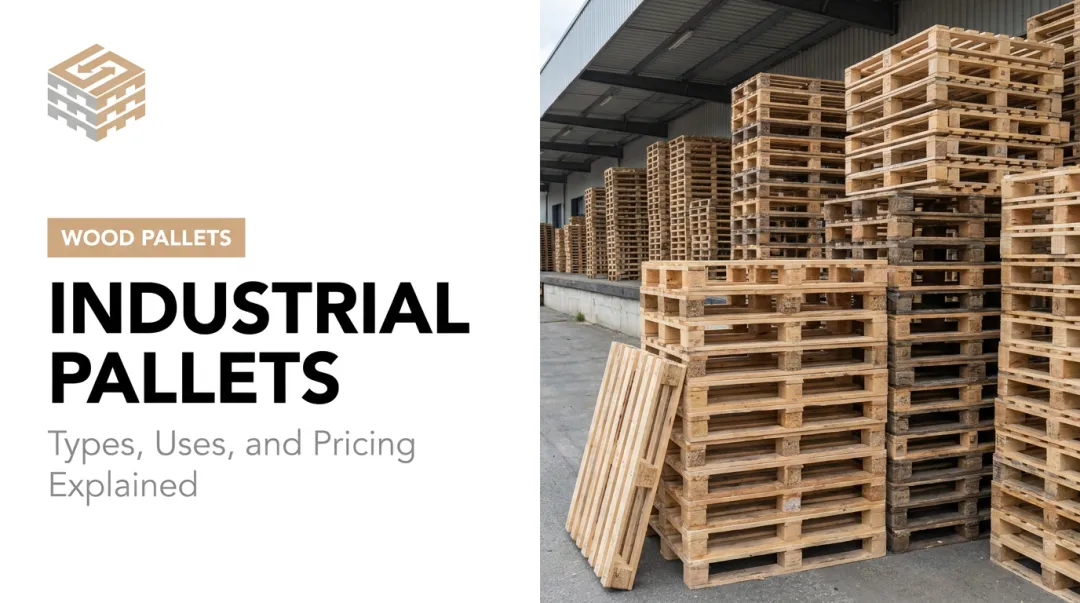
Wood pallets move nearly everything in the U.S. supply chain. According to Virginia Tech's Center for Packaging and Unit Load Design, approximately 1.9 billion pallets are used annually in the U.S. — and solid wood accounts for 92% of that market. For procurement teams, that makes pallet wood one of the highest-volume material decisions in any industrial operation.
Yet many buyers treat pallet wood as an afterthought, defaulting to the cheapest available option. The problem: wood species directly determines load capacity, durability, weight, and compliance eligibility. The wrong choice can mean structural failures under load, damaged product, or international shipments flagged at customs.
This guide covers the three major pallet wood types used in the U.S. — Southern Yellow Pine, oak, and mixed hardwoods — how each performs structurally, and what should drive your sourcing decision.
Key Takeaways
- Southern Yellow Pine (SYP) is the dominant softwood for pallets — lightweight, affordable, and widely available
- Oak is the most common hardwood — denser and stronger, suited for heavy-duty or multi-trip use
- Mixed hardwoods offer hardwood-level strength at lower cost, but species composition varies by supplier
- Your best option depends on load weight, trip frequency, industry compliance requirements, and budget
- "Hardwood" alone is not a performance specification — always verify density class and grade
Why Wood Type Matters for Pallets
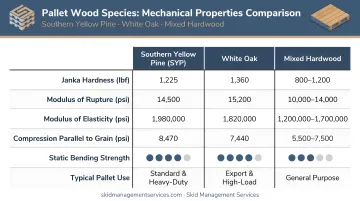
Wood species determines a pallet's structural limits. Density controls how much weight a pallet can bear before warping, splitting, or breaking under load. USDA Forest Products Laboratory data shows white oak with a specific gravity of 0.68 and a modulus of rupture (MOR) of 15,200 psi, compared to loblolly pine at 0.51 specific gravity and 12,800 psi MOR. That gap is meaningful when a pallet is carrying steel components or dense consumer goods.
What Goes Wrong When Wood Is Mismatched
Under-spec pallets fail. A 2023 BioResources study on field pallet damage found the most common failure modes were:
- Splits — 25.7% of damage incidents
- Missing wood — 22%
- Breaks — 15%
- High-severity stringer damage — 22.2% of severe cases
OSHA records include fatal incidents tied to split or broken pallet wood. The cost of a pallet failure isn't just the pallet — it's the product, the delay, and the liability.
Over-spec pallets create a different problem. Hardwood pallets weigh more than pine alternatives, which increases tare weight and freight cost per load. Both errors show up on the bottom line.
Compliance Adds Another Layer
Food, pharmaceutical, and export operations face additional requirements that make wood selection a regulatory matter. Kiln-dried (KD) wood reduces moisture and mold risk in food-grade environments. Export shipments to most trading partners require heat-treated (HT) wood under ISPM-15 phytosanitary standards. These requirements apply regardless of which species you prefer — so factor them into your spec before placing a purchase order.
Types of Wood Used for Pallets
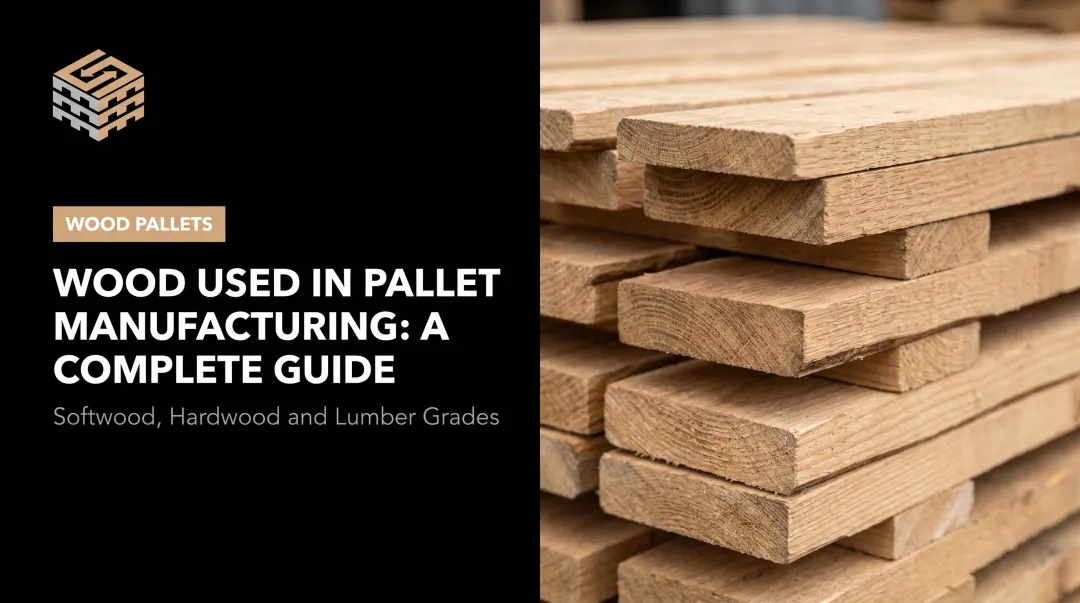
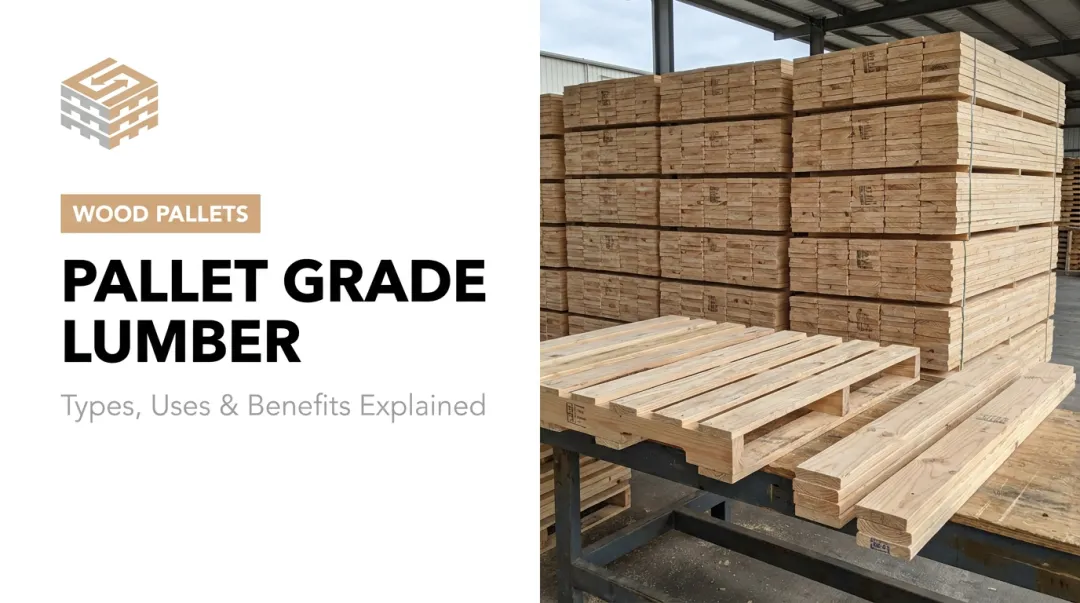
Pallet wood falls into three broad categories: softwood, hardwood, and mixed hardwoods. Each has a distinct cost-strength-availability profile. Regional supply also plays a role — the eastern U.S. relies heavily on SYP and oak, while the West Coast more commonly uses Douglas fir and alder.
Southern Yellow Pine (Softwood)
Southern Yellow Pine is not a single species — it's a group that includes longleaf, shortleaf, loblolly, and slash pine. According to USDA/Virginia Tech research on U.S. pallet wood use, southern pine accounts for 53.5% of softwood lumber and cant use in the U.S. pallet and container industry. It's the single most common softwood in pallet production.
Mechanical properties by species (USDA FPL):
| SYP Species | Specific Gravity | MOR (psi) | Hardness (lbf) |
|---|---|---|---|
| Slash/Longleaf pine | 0.59 | 14,500–16,300 | 870 |
| Shortleaf/Loblolly pine | 0.51 | 12,800–13,100 | 690 |
Best suited for:
- Lighter product loads where hardwood density isn't needed
- Single-use or limited-trip shipping pallets
- Food and pharmaceutical applications requiring kiln-dried (KD) wood
Limitations:
- Degrades faster than hardwood under heavy or repeated loads due to lower density
- Thicker board dimensions may be needed to compensate, which can reduce the weight savings advantage
Oak (Hardwood)
Oak — both red and white varieties — is the most commonly identified hardwood in U.S. pallet production. USDA/Virginia Tech data shows oak as 26.9% of hardwood volume in the pallet and container industry. USDA Forest Service research confirms that lower-grade hardwood lumber and cants have become the primary raw material for hardwood pallet manufacturers.
Mechanical properties (USDA FPL):
| Oak Species | Specific Gravity | MOR (psi) | Hardness (lbf) |
|---|---|---|---|
| White oak | 0.68 | 15,200 | 1,360 |
| Northern red oak | 0.63 | 14,300 | 1,290 |
Best suited for:
- Heavy-duty loads — machinery, steel, dense industrial goods
- Multi-trip reusable pallets where longevity offsets higher upfront cost
- Applications where pallet failure carries significant product damage risk
Limitations:
- Adds freight tare weight compared to pine pallets
- Costs more per unit than softwood alternatives
- Grows slower than pine, which can affect regional supply pricing
Mixed Hardwoods
Mixed hardwood pallets use a blend of available hardwood species — commonly maple, beech, poplar, sweetgum, and other regionally sourced woods — rather than a single species. USDA/Virginia Tech data identifies mixed hardwoods with no species separation as 61.2% of hardwood pallet wood volume, making it the largest single hardwood reporting category.
This approach lets manufacturers use surplus mill material and adjust properties by modifying the species blend. The NWPCA Pallet Design System specifies mixed hardwood blends using density classes — for example, 50% high-density, 25% medium-density, and 25% low-density Eastern hardwoods.
Best suited for:
- Operations needing hardwood strength at lower cost than pure oak
- High-volume sourcing where consistent single-species supply is difficult
- General industrial and warehouse applications
Key trade-offs to confirm before ordering:
- Properties vary batch-to-batch depending on species mix
- Some mixed hardwood species like yellow-poplar (specific gravity: 0.42) have lower density than common SYP species — the "hardwood" label alone is not a strength guarantee
- Always confirm density class and grade, not just species category
How to Choose the Right Wood for Your Pallets
Wood selection comes down to four variables. Work through each before specifying a pallet.
1. Load Requirements
Match density to weight. Dense hardwood or mixed hardwood pallets are necessary for heavy or high-value goods. Softwood pallets are sufficient — and more economical — for lighter shipments where structural margins are comfortable.
The USDA Forest Products Laboratory publishes specific gravity values for common pallet species. Check those figures against your load weight: if your shipment pushes the limits of what an SYP pallet is rated to carry, move up the density scale.
2. Trip Frequency
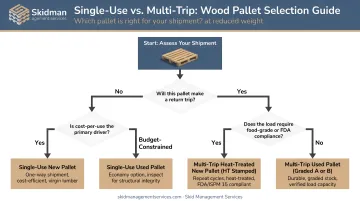
- Single-use / one-way shipments — SYP pallets are the standard choice. Minimizing per-unit cost makes sense when the pallet won't return.
- Multi-trip reusable pallets — denser hardwood holds up through repeated forklift impacts, racking, and handling cycles. The higher upfront cost may yield a lower cost-per-trip over the pallet's life.
Virginia Tech research confirms that pallet specifications are designed around trip count: single-use pallets need to survive one transit cycle, while reusable pallets must hold up across many.
3. Industry and Compliance Requirements
- Food and pharmaceutical — kiln-dried (KD) pine is commonly required to minimize moisture content and mold risk
- Export shipments — ISPM-15 heat-treated (HT) wood is mandatory for most international destinations, regardless of species
- High-compliance verticals — some customers require both HT certification and additional documentation (such as GMP compliance for pharma)
Skid Management Services supplies ISPM-15 heat-treated export pallets, stamped and documented for international shipments, for export shippers and compliance-driven industries.
4. Budget vs. Total Cost of Ownership
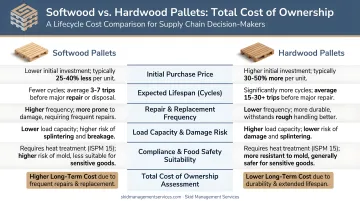
SYP pallets carry a lower purchase price but shorter lifespan under demanding conditions. Hardwood pallets cost more upfront but may deliver lower cost-per-trip when used in reusable programs. The right choice depends on your trip volume: a reusable hardwood pallet that lasts 20 cycles at $18 each often beats a $9 softwood pallet that lasts 8.
If your requirements fall outside standard configurations, Skid Management Services offers custom pallet solutions tailored to specific load, dimension, and treatment needs. Contact their team at 717-202-0304 or Info@SkidManagementServices.com to discuss specifications.
What to Watch Out for When Selecting Pallet Wood
A few sourcing mistakes come up repeatedly in pallet procurement — and each one carries a real cost.
Choosing wood by price without checking load rating. Under-spec softwood pallets under heavy machinery or dense goods is one of the most common errors. Product damage, shipment delays, and worker safety exposure add up fast — typically far more than any purchase-price savings.
Treating all hardwood pallets as equivalent. Mixed hardwood blends vary widely by species composition. Yellow-poplar has a specific gravity of 0.42, for example — lower than loblolly pine at 0.51. Ask suppliers to specify the dominant species or density class rather than accepting a generic "hardwood" label.
Skipping ISPM-15 verification for occasional exports. Companies that ship internationally even sporadically often discover their standard pallets lack the HT stamp only after a shipment is held at the border. Under USDA APHIS and IPPC requirements, non-compliant wood packaging can result in refusal of entry, mandatory disposal, or an Emergency Action Notification from CBP. Confirm export requirements before the shipment leaves — not after.
Conclusion
Pallet wood selection — whether SYP, oak, or mixed hardwoods — directly affects load safety, freight cost, pallet lifespan, and regulatory compliance. The right specification depends on your load weight, trip frequency, destination, and industry requirements — and getting that match wrong costs more than the pallets themselves.
The practical approach is to define your load requirements and trip expectations first, then match the wood specification to those parameters. Skid Management Services supplies multiple wood specifications, ISPM-15 compliant heat-treated options, and custom configurations, backed by an expansive supplier network that keeps your supply chain moving even when regional sources fall short.
Frequently Asked Questions
What wood is used for pallets?
The two most common woods in U.S. pallet production are Southern Yellow Pine (softwood) and oak (hardwood), with mixed hardwoods also widely used. Species choice depends on load requirements, strength needs, and cost — there's no single default that works for every application.
How much is pallet wood worth?
Pricing depends on species, lumber grade, condition (new vs. used), heat treatment status, dimensions, and region. Contact Skid Management Services at 717-202-0304 or Info@SkidManagementServices.com for a current quote. For ongoing market data, Pallet Profile Weekly and Fastmarkets both track price trends.
What is the strongest wood for pallets?
Dense hardwoods — white oak (SG 0.68, MOR 15,200 psi), sugar maple (SG 0.63, MOR 15,800 psi), and American beech (SG 0.64, MOR 14,900 psi) — rank among the strongest pallet woods. Slash pine has a competitive MOR at 16,300 psi but lower hardness, making the best choice dependent on your specific failure risk.
Do wood pallets need to be heat treated?
Heat treatment is not required for domestic use. For international shipments, ISPM-15 regulations require the wood core to reach 56°C for at least 30 continuous minutes — confirmed by the HT stamp on the pallet.
What does HT mean on a pallet?
HT stands for Heat Treated. It indicates the wood reached the required core temperature to eliminate insects and pathogens under ISPM-15 phytosanitary standards. The mark must include the IPPC symbol, country code, and producer/treatment codes, and must appear on at least two opposing sides of the pallet.
Is oak or pine better for pallets?
Neither is universally better — the right answer depends on how you're using the pallet. Oak's density makes it well-suited for heavy loads and multi-trip reusable programs. Pine costs less and weighs less, which works in its favor for single-use shipments. Lead with load weight and trip frequency when making the call.