But burning adds its own risk. Toss the wrong pallet into a fire pit, and you can release toxic fumes, trigger respiratory irritation, or run afoul of your local fire code. The good news: heat-treated pallets are generally low-risk to burn. Chemically treated or unmarked ones are a different story entirely.
This guide breaks down exactly what to check before you strike a match.
Key Takeaways
- HT pallets are generally safe to burn since the process uses heat, not chemicals
- Never burn pallets marked "MB," painted pallets, or ones without a visible stamp
- Always check the IPPC stamp before deciding a pallet is fuel-safe
- Burn outdoors only, in a well-ventilated space, away from direct smoke exposure
- A verified supplier removes the guesswork around pallet treatment history
Are Heat-Treated Pallets Safe to Burn?
Yes, in most cases. Pallets stamped HT have gone through a heat treatment process rather than chemical fumigation, which makes them the safer of the two common pallet types when it comes to burning.
How Heat Treatment Actually Works
Under the international ISPM 15 standard, HT-treated wood must reach at least 56°C (132.8°F) throughout the entire wood core for a minimum of 30 continuous minutes. The goal is pest control, not fuel prep, but the process happens to leave the wood free of fumigant residue in most instances.
ISPM 15 technically permits a few different heat-based methods worth knowing about: kiln drying, conventional steam, and in rare cases heat-enabled chemical pressure treatments. In practice, though, most HT pallets circulating in the U.S. market are simple kiln-dried lumber with no added chemicals. That's a meaningful distinction from MB-stamped pallets.
Why MB-Stamped Pallets Are a Hard No
MB means the pallet was fumigated with methyl bromide, a pesticide the EPA classifies as highly toxic. High-level inhalation exposure can damage the lungs and central nervous system. When methyl bromide residue contacts an open flame, it can thermally decompose into irritant gases like hydrogen bromide and carbon monoxide.
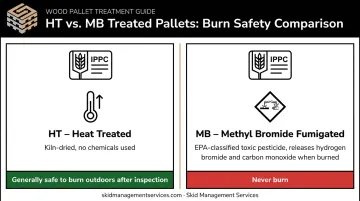
MB pallets should never go in a fire pit, wood stove, or any burn scenario.
The Stamp Doesn't Tell the Whole Story
An HT stamp confirms the treatment method used at the time of manufacture. It says nothing about what happened to that pallet afterward. A pallet can pick up paint, glue, spilled chemicals, or stains during years of warehouse use, and none of that shows up in the stamp.
The CDC's NIOSH division notes that burning painted or treated lumber increases toxic substances in smoke, citing lead from painted materials and arsenic or chromate from weatherized lumber as specific examples. So even a legitimately HT-stamped pallet needs a visual once-over before you burn it.
One more thing: your local fire code doesn't care about ISPM 15. Open-burning restrictions can apply regardless of treatment type, which we'll cover further down.
How to Identify Heat-Treated vs. Chemically Treated Pallets
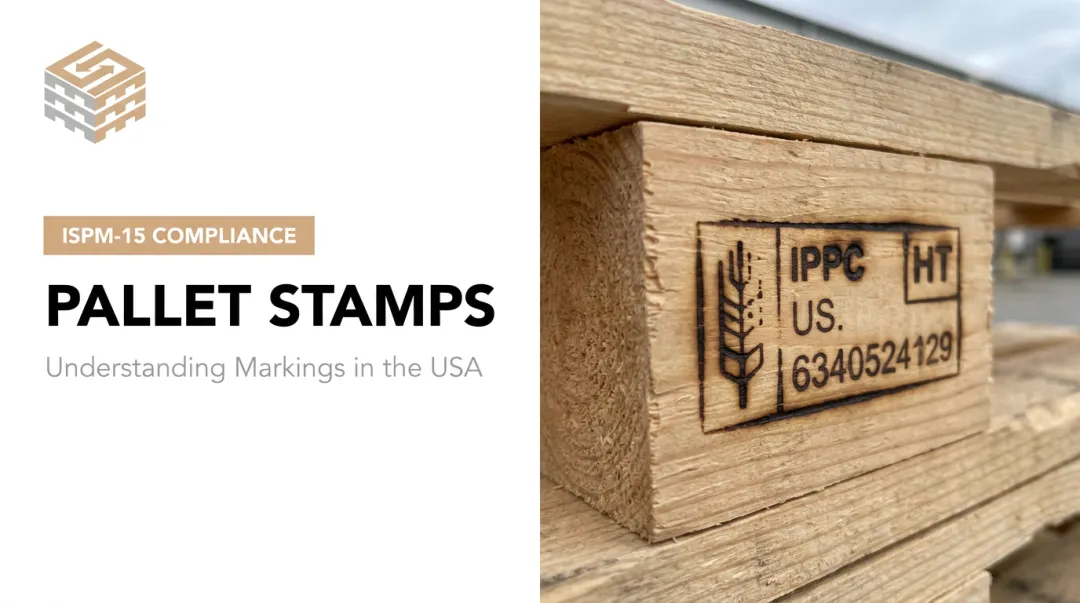
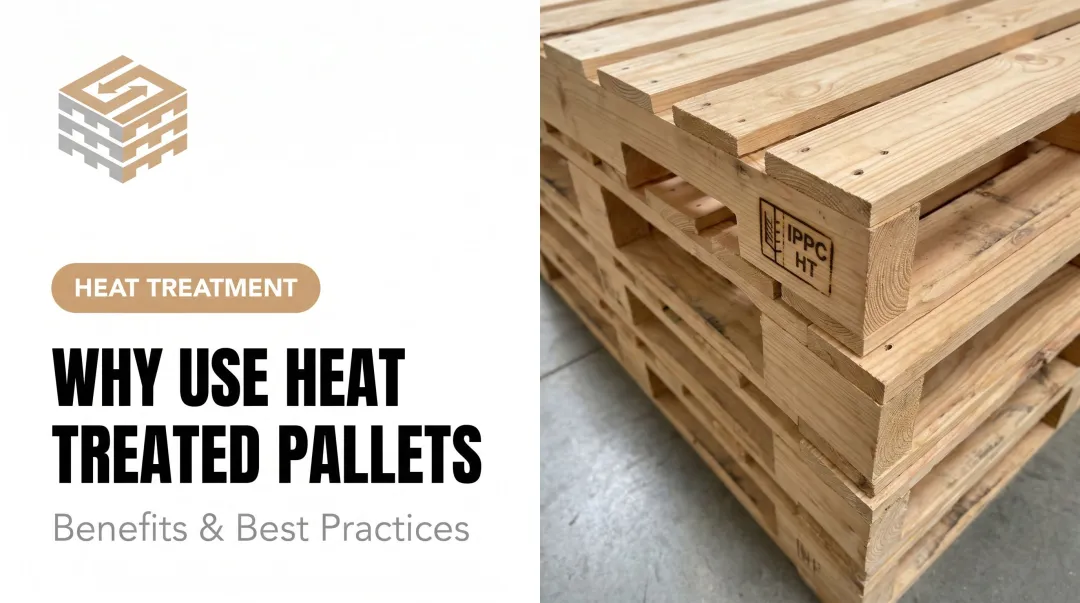
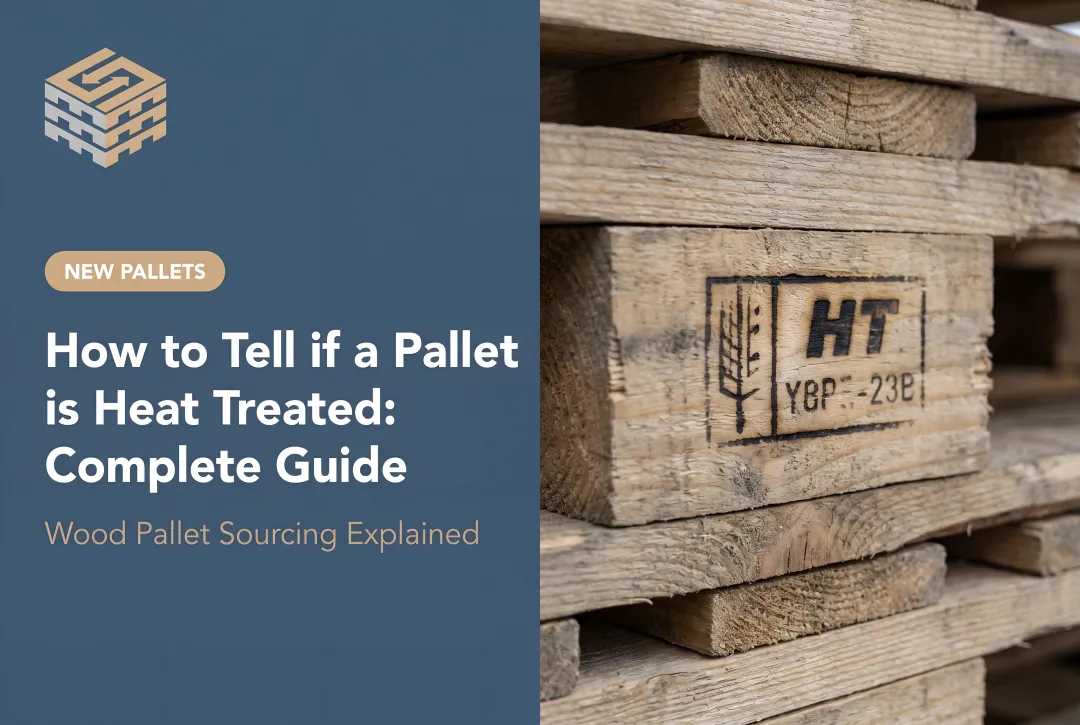
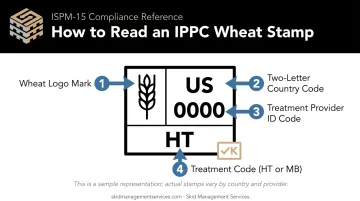
Before deciding whether a pallet is burn-safe, find the IPPC stamp. It's usually a small rectangular mark burned or printed into one of the pallet's blocks or stringers.
A compliant stamp includes four elements:
| Stamp Element | What It Tells You |
|---|---|
| IPPC wheat-style logo | Confirms it's an official phytosanitary mark |
| Two-letter country code | Country that authorized the treatment |
| Provider code | Unique ID of the treatment facility |
| Treatment code | HT (heat) or MB (methyl bromide) |
Reading the Treatment Code
- HT: Heat treatment only. Generally acceptable to burn outdoors, pending a condition check.
- MB: Methyl bromide fumigation. Do not burn, and don't use indoors either.
- No visible stamp: Treatment history unknown. Treat it like an MB pallet and skip the burn pile.
What About Colored Pallets?
Red pallets typically belong to PECO, and blue ones usually belong to CHEP. Both are pooling companies that retain ownership of their pallets even after they leave a warehouse. Regardless of what treatment stamp appears on a painted pallet, it isn't yours to burn, repurpose, or resell. It's rental property, plain and simple.
Because a missing or illegible stamp leaves you guessing about a pallet's treatment history, Skid Management Services runs stamp verification on all inventory before it moves through export or resale channels. Every HT-marked pallet is sourced through USDA APHIS-recognized treatment providers. When markings are missing, the team coordinates re-treatment and re-stamping through licensed providers instead of leaving it to chance.
Safety Precautions When Burning Heat-Treated Pallets
Stamp confirmed and pallet inspected? A few more precautions matter before you light it up.
Yes, Pallet Smoke Can Still Hurt You
All wood smoke, even from clean HT lumber, contains fine particulate matter known as PM2.5. The EPA identifies PM2.5 as the greatest health threat in wood smoke, capable of triggering asthma attacks, irregular heart rhythms, and increased susceptibility to lung infections. Children, older adults, and anyone with existing heart or lung conditions face higher risk.
Ground Rules for Any Pallet Fire
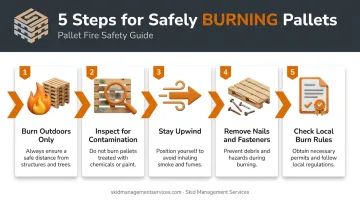
Follow these steps regardless of how "clean" the wood looks:
- Burn outdoors only: never in an enclosed fireplace, garage, or poorly ventilated space
- Inspect for contamination: check for paint flecks, dark stains, food residue, or chemical odors before adding a pallet to the fire
- Stay upwind: position yourself so smoke drifts away, not toward you
- Remove nails and metal fasteners: protruding hardware causes injury risk and can release fumes if coated with anything
- Check local burn rules first: many municipalities require permits even for untreated wood
State fire marshal guidance varies widely, even across the Pennsylvania and Maryland corridor where many pallet users operate. Minnesota, for instance, requires recreational fires to stay at least 25 feet from structures, while Missouri sets that distance at 75 feet. Neither figure is universal, so check your specific jurisdiction rather than assuming a neighboring state's rule applies to you.
Common Mistakes to Avoid
Even careful people slip up here. Watch for these habits:
- Assuming "it's just wood": every pallet needs a stamp check, no exceptions, no matter how clean it looks
- Burning painted or unmarked pallets: the absence of visible paint doesn't mean the absence of chemical treatment
- Standing too close or burning in tight spaces: smoke inhalation risk climbs fast in enclosed or downwind positions
- Skipping the permit check — some counties ban open burning entirely during dry seasons, regardless of what you're burning
Conclusion: Burn Smart, Source Safe
Safe pallet burning boils down to three checks:
- Verified treatment type
- Honest pallet condition
- A properly ventilated burn site
Skip any one, and you're gambling with toxic smoke exposure or a fire code violation.
Make stamp verification a habit, especially with pallets picked up from informal sources like curbside finds or unlabeled loading docks. When the source is unclear, treat the pallet as unsafe to burn.
For businesses that need certainty rather than guesswork, working with an established supplier removes the ambiguity. Skid Management Services sources HT pallets through USDA APHIS-recognized treatment providers and provides stamp verification with re-stamping coordination for compliance documentation. Customers know exactly what they're getting instead of hoping a stamp is legible and legitimate.
Frequently Asked Questions
Are heat-treated pallets safe to burn?
Generally, yes. HT-stamped pallets go through a heat-only process with no fumigant chemicals, making them lower-risk to burn than MB-treated wood. Still check the pallet for paint, stains, or contamination before adding it to a fire.
Is it bad to breathe smoke from burning pallets?
Wood smoke contains fine particulate matter (PM2.5) that can irritate lungs and worsen conditions like asthma. Always burn outdoors, stay upwind, and avoid standing directly in the smoke path.
What does the "HT" stamp on a pallet mean?
HT is part of the IPPC's international ISPM 15 marking system, confirming the wood reached the required core temperature during heat treatment. It does not certify the pallet's later condition or exposure to contaminants.
Can you tell if a pallet has been chemically treated?
Look for an "MB" stamp, which indicates methyl bromide fumigation. If there's no stamp at all, treat the pallet as unknown and avoid burning it.
Is it safe to burn painted pallets like red or blue ones?
No. Red pallets usually belong to PECO and blue ones to CHEP, both pooling companies that retain ownership. These shouldn't be burned, resold, or repurposed regardless of any treatment marking.
Are there laws about burning wood pallets outdoors?
Yes, many municipalities and states regulate open burning and may require a permit, even for untreated wood. Rules vary widely by location, so check with your local fire marshal before burning.