
CP1 is one of those formats. It's the designation for Type 1 of the Chemical Industry Pallet system — a fixed wooden construction, not a collapsible or nestable frame. This guide covers CP1 dimensions, construction, typical uses, compliance marks, and what to check before you buy.
One caution up front: CP1 pallets aren't automatically collapsible, chemical-resistant, or suitable for every load. Specifications vary by manufacturer, condition, and intended use, so treat every claim here as a starting point for verification.
Key Takeaways
- CP1 pallets use a 1200 x 1000 mm footprint (about 47.24 x 39.37 in) — close to, but not identical to, the US 48 x 40 in GMA pallet
- The format is tied to chemical-industry logistics but also carries cartons, cans, and bulk bags
- Load capacity, pallet condition, treatment status, and racking fit all need verification before use
- CP1 is one of nine CP designs (CP1–CP9); grade, condition, and treatment marks each communicate something different
What Is a CP1 Pallet?
Chemical manufacturers standardized the CP system in the early 1990s to cut down on pallet-design variety and simplify reuse. The industry ships enormous volumes of recurring load types (sacks, drums, cartons, and bulk containers) between plants, warehouses, and ports.
A single standardized footprint meant racking, forklifts, and conveyors could be built around predictable dimensions instead of a different pallet for every customer.
Standard Design Features
CP1 is a block pallet: nine wooden blocks, four-way entry, and a skid-style base rather than a full-perimeter deck. According to EPAL's CP1 specification, the typical build uses 15 boards, 9 blocks, and 81 nails, assembled on three bottom skids rather than continuous stringers.

Supplier builds can still vary in lumber species, grade, and fastening pattern. Always check a specific vendor's spec sheet rather than assuming every CP1 is identical.
What CP1 Pallets Typically Carry
CP1 pallets commonly move chemical containers, sacks, cartons, cans, and flexible intermediate bulk containers (FIBCs). Whether a given load fits well depends on:
- The product's footprint relative to the 1200 x 1000 mm (about 47 x 39 in.) deck
- Weight distribution across the pallet
- How the load is contained (rigid vs. flexible packaging)
- How it's secured for transport
CP1 Does Not Mean Collapsible
"Collapsible" describes a separate design category: pallets built to fold flat or nest for return-trip efficiency. CP1 is a dimensional and construction standard, not a folding mechanism. It's a fixed, rigid structure. If you need a folding or nestable pallet, you're shopping for a different product line entirely.
CP1 Pallet Dimensions, Construction, and Performance
CP1's published specs are a useful starting point, but real-world performance depends on more than a datasheet.
| Attribute | Metric | US Equivalent |
|---|---|---|
| Footprint | 1200 x 1000 mm | ~47.24 x 39.37 in |
| Height | 138 mm | ~5.43 in |
| Footprint tolerance | ±3 mm | ~±0.12 in |
| Height tolerance | +5/-2 mm | +0.20/-0.08 in |
| Components | 15 boards, 9 blocks, 81 nails | — |
How Deck and Block Layout Affects Handling
Four-way entry gives forklifts and pallet jacks access from any side, a real advantage in high-turn warehouses. The skid-style bottom (versus a full-perimeter base) also affects compatibility with conveyors and automated palletizers.
Some equipment needs continuous bottom-deck contact that a three-skid design doesn't provide. Check your palletizer and conveyor specs against the actual CP1 build before assuming it'll run through automated lines without modification.
Static, Dynamic, and Racking Loads Aren't One Number
"Load capacity" isn't a single figure. Static capacity covers stacked, non-moving loads. Dynamic capacity covers loads in motion, on a forklift or conveyor. Racking capacity, the most demanding of the three, accounts for unsupported spans between rack beams.
NWPCA's wood pallet standard ties all three to pallet design, condition, fastener quality, lumber grade, moisture content, and how the load itself is distributed. The same CP1 pallet can perform differently depending on what's stacked on it.
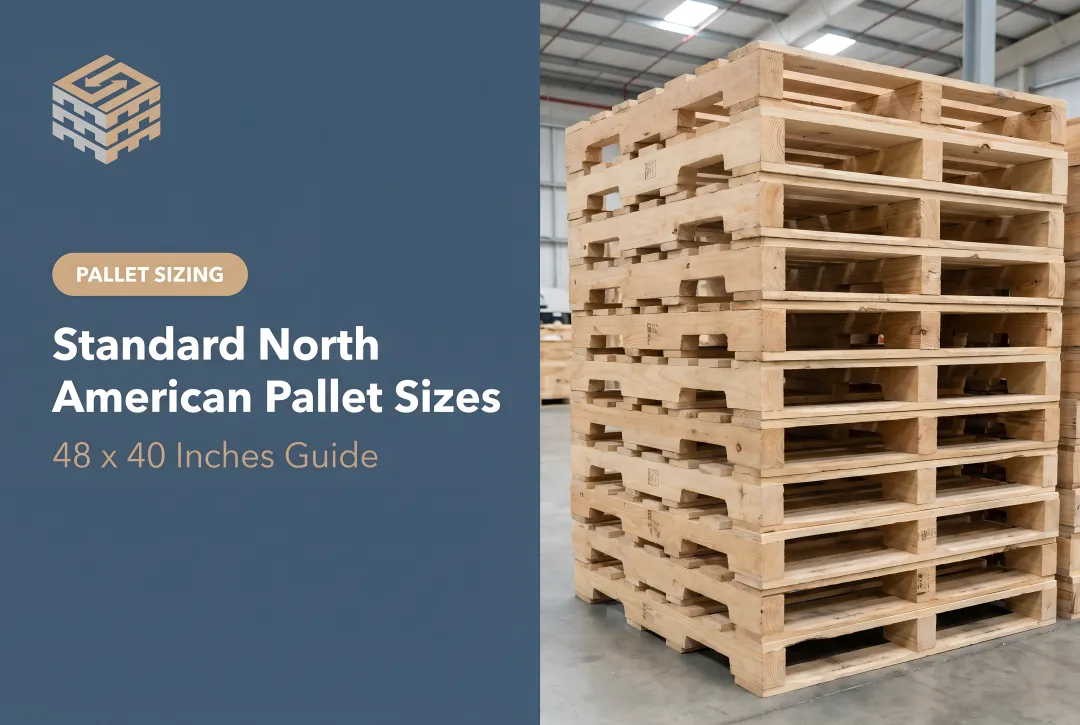
At roughly 47.24 x 39.37 inches, CP1 lands close to the 48 x 40 in GMA pallet common in American warehouses. That similarity is appealing if you're weighing standardization across domestic and international operations, but "close" isn't "identical."
GMA's typical stringer design uses three notched stringers, seven top deckboards, and five bottom boards. CP1's block-and-skid build is a different animal. Don't assume rack beams or automated handling set up for 48x40 will accept CP1 without testing.

Before swapping in CP1 pallets, confirm:
- Product footprint and overhang relative to the 1200 x 1000 mm deck
- Center of gravity once the load is stacked and secured
- Stacking pattern and total stack height for trailer or rack
- Wrapping or strapping method matching load containment needs
- Forklift and pallet-jack clearance for your specific CP1 build
- Rack beam support and warehouse aisle width
CP1 Pallet Uses, Benefits, and Limitations
CP1 pallets show up most in chemical and plastics logistics: moving packaged chemicals, sacks, cartons, cans, and bulk bags like FIBCs. Drums and other rigid containers can work too, but only with the right load arrangement. A pallet rated for sacks isn't automatically rated for four 500 lb drums stacked unevenly.
Operational benefits:
- Standardized footprint speeds up putaway, picking, and trailer loading
- Four-way entry (where the build supports it) lets forklifts approach from any side
- Stackability improves warehouse and trailer cube utilization
- A correctly matched unit load reduces shifting and product damage in transit
Durability and Repair Before Reuse
Wood CP1 pallets can be repaired and returned to service, but only after inspection. Check for:
- Broken or missing boards, protruding fasteners, or loose blocks
- Visible mold, staining, chemical residue, or oil contamination
- Excess moisture and warping
Simpler skid-based designs like CP1 are generally easier to repair than full-perimeter formats, which is part of why the chemical industry adopted them in the first place.
Repair, reuse, and recycling all extend a wood pallet's useful life and cut down on what heads to landfills. But treat broad environmental claims carefully: trip counts, carbon savings, and recycling percentages vary by program, and no single CP1-specific figure applies universally. Ask your supplier for documentation if sustainability reporting matters to your business.
Limitations to watch for:
- Chemical contamination or unknown residue: when in doubt, don't return it to service
- Incompatible loads, like products with a poor footprint match or off-center weight
- Load ratings that don't match your actual product weight
- Moisture exposure, which weakens boards and blocks over time
- Situations needing plastic, metal, or custom designs instead of standard wood CP1
CP1 Codes, Grades, and Compliance Marks
CP1 is one of nine standardized chemical-pallet designs, CP1 through CP9. All nine support four-way entry; CP1 through CP5 use skid bases, while CP6 through CP9 use full-perimeter bases built for different load types.
| Code | Footprint (mm) | Base Type |
|---|---|---|
| CP1 | 1000 x 1200 | Skid base |
| CP3 | 1140 x 1140 | Skid base |
| CP6 | 1200 x 1000 | Full-perimeter |
| CP8 | 1140 x 1140 | Full-perimeter, bottom-outlet containers |
Same footprint doesn't mean same pallet. CP8 uses 28 boards versus CP9's 24, and both stand taller than CP3. Construction details matter as much as outer dimensions.
Design Code, Grade, Mark, and Pooling ID Aren't Interchangeable
A CP1 stamp tells you the pallet's footprint and general construction family. It says nothing about:
- Condition grade: new, Grade A recycled, Grade B recycled, or utility/repair grade
- Manufacturer or licensee identification, such as a license number and production date
- Treatment stamp, showing whether the wood has been heat-treated for export
- Customer or pooling identifier, marking ownership in a closed-loop program
Each mark answers a different question. Mixing them up is a common and costly mistake.
ISPM 15 and Export Treatment
ISPM 15 covers raw wood packaging moving internationally. It isn't a blanket rule for every domestic CP1 pallet.
Per USDA APHIS export guidance, compliant wood packaging must be debarked and heat-treated to a minimum wood-core temperature of 56°C (132.8°F) for at least 30 minutes. The IPPC stamp must then show country code, producer ID, and treatment method (HT for heat treatment). A CP1 designation alone doesn't establish that treatment happened.

Don't infer chemical resistance, food-grade suitability, or export eligibility from a CP1 marking by itself. Check the full specification sheet, the treatment stamp, inspection records, and your shipment's actual destination requirements before it leaves the dock.
How to Choose and Buy CP1 Pallets
Nail down these details before requesting quotes:
- Quantity needed, and whether this is one-time or a recurring program
- New or used condition requirements
- Load type, unit-load dimensions, and total weight
- Handling equipment: forklift, pallet jack, conveyor, or palletizer
- Storage method and racking setup
- Domestic use or export destination, plus delivery schedule
What to request from a supplier:
- Dimensional drawing or spec sheet
- Static, dynamic, and racking capacity ratings
- Material and treatment details, with repair standards and inspection criteria
- Availability, lead time, and freight assumptions
When CP1 Isn't the Right Call
CP1 isn't automatically the best fit if you need:
- A different footprint for your product or rack system
- Support for unusual point loading
- Strict contamination controls beyond standard inspection
- Plastic or metal construction
- A fully custom design built around your specific load
For US businesses weighing CP1 against more common formats, Skid Management Services supplies new, used, and custom-engineered wood pallets, including 48x48 and 42x42 builds often used in chemical and industrial settings, alongside a broader packaging materials line.
With its own inventory plus a wide supplier network, the company works to keep pricing competitive and supply uninterrupted, even on recurring, high-volume programs. If you're not sure whether a standard size, a custom build, or something closer to CP1 dimensions fits your operation, reach out at 717-202-0304 or Info@SkidManagementServices.com and talk through the specifics.
CP1 Pallet Inspection, Storage, and Maintenance
Before putting any CP1 pallet into service, check for:
- Broken, missing, or split boards
- Loose or cracked blocks
- Exposed or protruding nails
- Mold, staining, or chemical residue
- Oil contamination or excessive moisture
- Structural warping or twisting
Storage practices that protect wood pallets:
- Keep stock off wet ground, ideally on racking or dunnage
- Allow airflow between stacks rather than tight, sealed piles
- Separate damaged or suspect pallets from usable stock immediately
- Avoid leaning stacks that can topple
- Follow your facility's fire code and storage height limits
Minor issues like a single cracked board or a protruding nail can often be repaired and returned to service. Pallets with chemical residue of unknown origin, structural warping, or repeated prior repairs should be quarantined and kept out of rotation. Reusing a compromised pallet risks product damage or an injury that costs far more than a replacement.
How long a CP1 pallet lasts depends on handling frequency, load weight, environment, and how well it's stored and repaired along the way. There's no single universal lifespan figure that applies across every facility, so treat any specific number you hear as an estimate, not a guarantee.
Frequently Asked Questions
What are the different grades of pallets?
Common condition grades include new, premium/Grade A used, standard/Grade B used, and economy or repair-grade pallets. Grading terms aren't fully standardized industry-wide, so confirm what a supplier means by each label before ordering.
What are the codes on pallets?
Codes can include CP design designations (CP1 through CP9), manufacturer or licensee marks, treatment stamps like ISPM 15/HT, and customer or pooling identifiers. If a marking looks unfamiliar, ask your supplier what it represents.
What size is a CP3 pallet?
CP3 measures 1140 x 1140 mm, or roughly 44.88 x 44.88 inches, at a height of about 138 mm (5.43 in). Confirm the exact specification with your supplier, since construction details can vary.
Is a CP1 pallet the same size as a GMA pallet?
They're close but not identical. CP1 measures about 47.24 x 39.37 inches versus the GMA standard of 48 x 40 inches, with different deck and block configurations — check load compatibility before substituting one for the other.
Are CP1 pallets heat treated for export?
Not automatically. Export eligibility depends on the wood actually being heat-treated and carrying a valid ISPM 15 stamp, not on the CP1 designation itself. Always verify current requirements for your destination country before shipping.