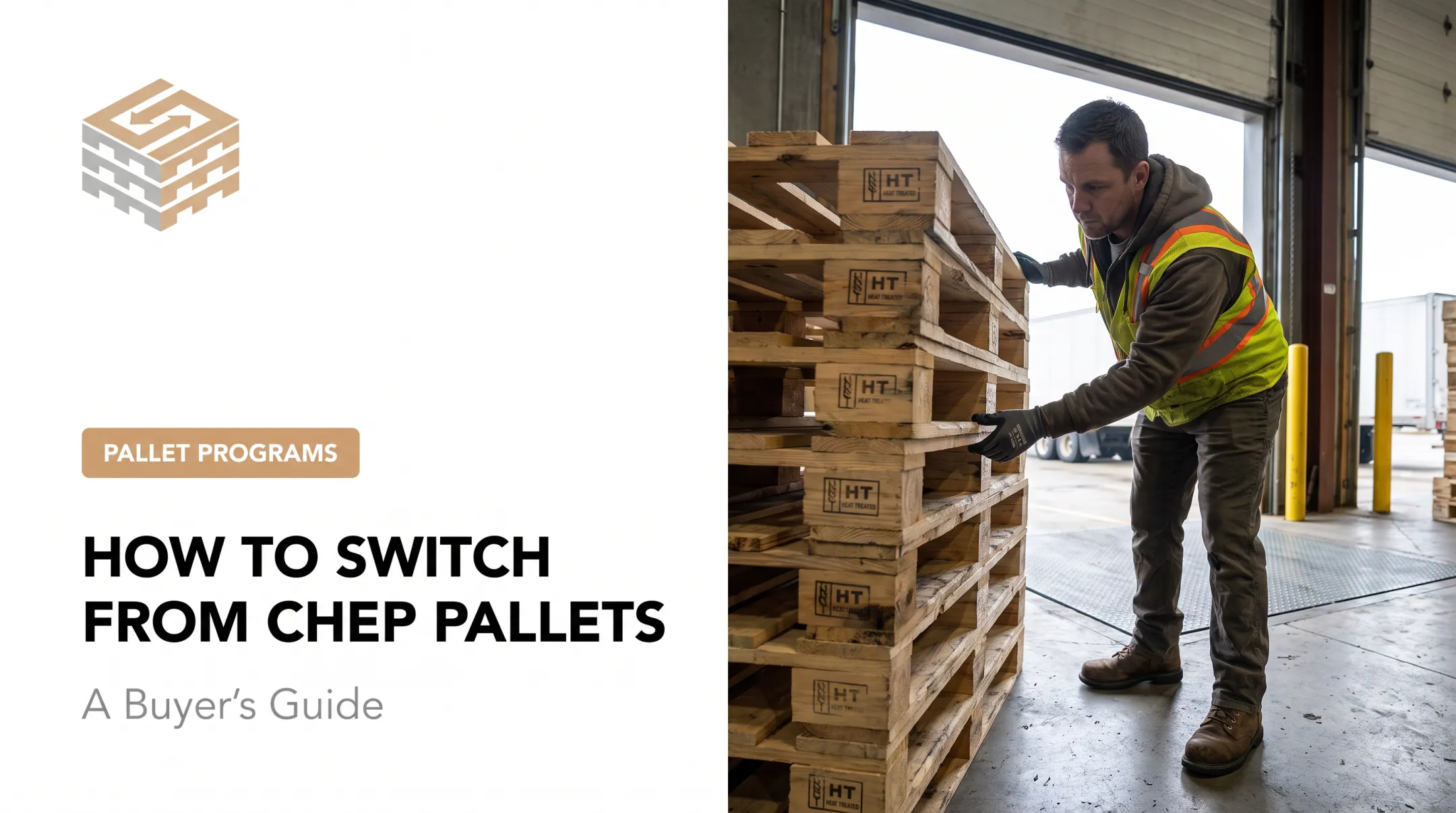

Rising per-trip fees, seasonal pallet shortages, and inconsistent pallet quality have pushed procurement and logistics teams to ask a harder question: is pooling actually the best fit for our operation?
Hidden costs, limited control over your own supply, and dependency on a single third-party network are common complaints. This guide walks through the real alternatives, how to evaluate them, and what to check before you make a switch.
Key Takeaways
- Owning and managing pallets can deliver stronger cost control and supply certainty than pooling alone
- Hidden fees (loss, damage, audits) often make pooling pricier than the sticker rate suggests
- Choose your alternative based on volume, footprint, and retailer requirements
- Hybrid models keep pooling for overflow while you own pallets on core lanes
Why Food & Beverage Shippers Look for Alternatives to CHEP
Pallet shortages aren't hypothetical. In 2022, The Packer reported "acute" pallet shortages putting fresh produce supply at risk, with effects reaching product availability for consumers.
A year earlier, Supply Chain Dive reported pallet costs up 400% amid a shortage the United Fresh Produce Association expected to persist for months.
That kind of volatility exposes a structural weakness: relying on one national pooler creates a single point of failure. If that provider hits a supply constraint, your production line waits.
Beyond supply risk, F&B shippers face compliance pressure that pooling doesn't always solve cleanly:
- FSMA sanitation requirements under 21 CFR Part 117 demand documented protection from contamination during transport and storage
- Retailer-specific pallet mandates, such as Walmart WFS (40x48, four-way, solid wood, under 2,100 lbs), that pooled inventory doesn't always match lane by lane
- Rigid contract terms that limit flexibility when demand swings seasonally
- Unexpected loss/damage billing that shows up after pallets leave your dock

Pooling still has a place. Shippers need real alternatives to weigh against it.
Types of CHEP Alternatives for Food & Beverage Shippers
There isn't one "right" replacement for pooling. Most F&B shippers land on one of these models, or a mix.
Owning Your Own Wood Pallet Fleet
Full ownership means no per-use fees and full control over spec, grade, and condition, which helps F&B plants meet buyer sanitation and grade requirements. The trade-off: you need internal (or outsourced) logistics for recovery, sorting, and repair.
National/Regional Pallet Supplier Networks
Working with a supplier network, rather than a rental pool, gets you consistent supply and competitive pricing without pool fees on every trip. You can standardize grade and size across plants without running your own recovery fleet.
Other Pooling Companies
PECO operates a comparable reusable wood-block pool to CHEP, retaining ownership and handling recovery and repair. Switching pools can keep recovery logistics familiar, but per-trip fees usually remain. iGPS offers a plastic pallet pool, a different material category that won't suit every wood-pallet program.
Recycled/Remanufactured Pallet Programs
Recycled pallets cost less while supporting sustainability goals. A USDA Forest Service life-cycle study found more than 513 million new wooden pallets produced in 2016. Roughly 13% reached solid-waste facilities and only about 5% were landfilled, so most pallet material gets a second life.
Hybrid Models
Many shippers combine owned pallets for predictable core lanes with supplier purchases or pooled supply for seasonal spikes. This limits capital risk while keeping supply flexible.

How Skid Management Services Supports Food & Beverage Shippers
Skid Management Services (SMS) operates as a national wood pallet and packaging supplier built around a hybrid supply structure: its own inventory plus an expansive network of pallet and packaging suppliers.
That combination is designed to solve the exact problem pooling can create: a single point of failure. If one supply line tightens, the network absorbs the gap instead of leaving your dock short.
What this looks like in practice:
- Competitive, program-based pricing instead of a per-trip pooling fee
- New, used, recycled, and custom-spec wood pallets across standard sizes (GMA 48x40, block, stringer, and more)
- Food-grade pallet options built for FSMA and GFSI-aligned sanitation requirements
- Closed-loop programs combining scheduled delivery with used-pallet pickup
- Pool-exit program design for shippers leaving CHEP or PECO
SMS already works with food and beverage manufacturers including Knouse Foods, Campbell Snacks, Stauffer's, Nissin Foods, Hain Celestial Group, and Plainville Farms. These companies need both consistent supply and food-safety-appropriate pallets.
Delivery can run weekly, bi-weekly, monthly, or on-demand. Production teams scale supply up or down for seasonal runs rather than locking into a single fixed cadence.

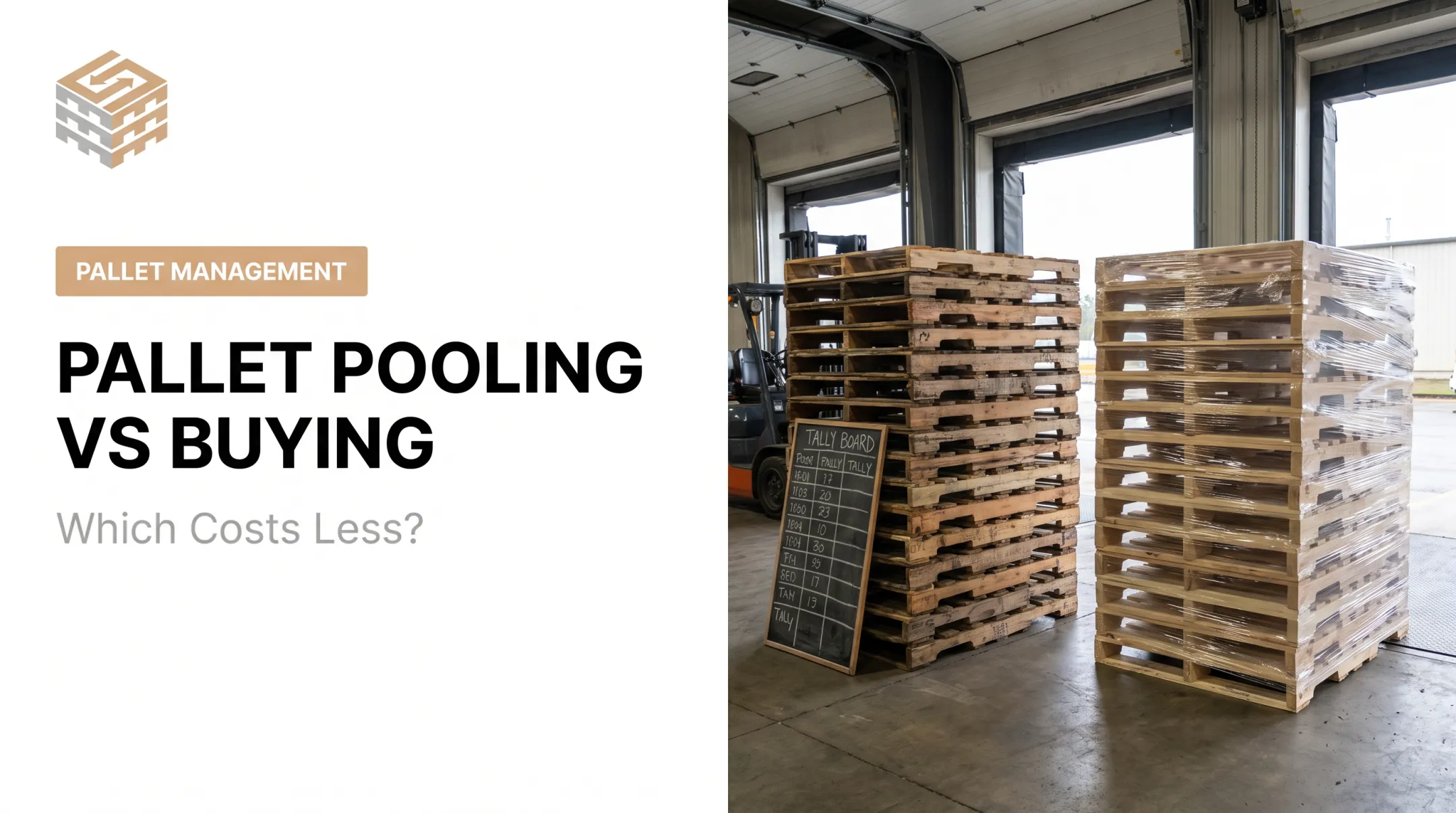
Comparing Costs: Pooling vs. Buying vs. Alternative Suppliers
A fair comparison needs more than the sticker price. Consider four cost layers:
| Cost Factor | Pooling (CHEP/PECO) | Buying New/Recycled | Alternative Supplier Network |
|---|---|---|---|
| Upfront cost | Low (rental model) | Higher (capital outlay) | Moderate (program-based) |
| Per-use fees | Yes, ongoing | None | None |
| Damage/loss liability | Billed by pooler, terms vary | Owned by shipper | Owned by shipper |
| Long-term TCO | Compounds with volume | Lower at scale | Lower with closed-loop credit |
| CHEP's own published fee structure breaks costs into service, rental, and transportation components, with rental time tied to how long the pallet sits at your facility. That's a variable cost that grows with dwell time. A warehouse backlog can inflate it fast. | |||
| Buying carries costs of its own. Market pricing fluctuates by grade and region; one late-2024 assessment put new GMA A-grade softwood pallets delivered to Seattle at $11.00 to $17.00 per pallet, though prices vary by market and season. | |||
| The general rule: shippers with high pallet turnover or multi-site operations tend to see faster ROI from owning or sourcing their own supply, since per-trip pooling costs compound with every cycle. SMS's closed-loop trade-in credits, for example, typically offset 15-40% of new-pallet spend, depending on grade mix and volume. Pooling does not return that value to you directly. |

What to Consider Before Switching Away from CHEP
Leaving CHEP takes planning. Before you switch:
- Review your current contract — check exit fees, notice periods, and how you'll retrieve or reconcile outstanding pooled pallets
- Confirm compatibility — verify pallet dimensions, weight capacity, and retailer mandates (like Walmart's WFS 40x48 four-way-entry requirement) match your new supply source
- Plan a transition window — running both systems in parallel for a period avoids supply gaps while lanes convert
- Validate food-safety controls — any new pallet source should document sanitation, inspection, and grading standards suited to FSMA and GFSI expectations
Programs with roughly 500+ pallets per month moving two-way tend to see the strongest economics from closed-loop models. Lower, more variable volume may still favor a rental arrangement for part of your network.
Frequently Asked Questions
Is it cheaper to buy pallets or use a pooling service like CHEP?
Ownership often reduces long-term costs for high-volume, high-turnover shippers, since per-trip pooling fees compound over time. Pooling can still make sense for lower-volume or highly variable shipping needs.
What are the main alternatives to CHEP pallets?
Options include buying and owning pallets, other pooling providers like PECO, recycled or remanufactured pallet programs, and hybrid models that mix owned and pooled supply.
Which food and beverage sectors rely heavily on pallet logistics?
Beverage, snack and packaged foods, dairy, frozen foods, and produce sectors all depend heavily on consistent, well-specified pallet logistics for distribution and retail delivery.
How do I switch from CHEP to my own pallet supply?
Start by reviewing your current pooling contract for exit fees and retrieval terms, then plan a transition period where both supply sources run in parallel. Sourcing a reliable national supplier helps avoid gaps.
Are recycled or remanufactured pallets safe for food and beverage shipping?
Yes, when sourced from a reputable supplier that inspects and grades pallets for structural integrity, sanitation, and freedom from contamination risks. Reputable programs also align with FDA and GFSI-related sanitation expectations.
Can a smaller pallet supplier match CHEP's national coverage?
Suppliers with an expansive partner network, like Skid Management Services, can match national coverage while offering more pricing flexibility than a single-provider pool. Owned inventory plus that network keeps supply consistent without a single-provider pool.