Introduction
Walk into almost any U.S. warehouse and you'll find pallets stacked floor to ceiling with no heat-treatment stamp in sight. This is standard, code-compliant practice.
Yet plenty of buyers still hesitate, wondering if skipping heat treatment means skipping safety. Others overpay for ISPM-15 treated pallets they never actually needed, simply because nobody explained the rules clearly.
The confusion usually boils down to three tangled issues: sanitation, contamination history, and regulatory compliance. These are related, but they're not the same thing, and mixing them up leads to costly decisions.
This guide breaks down what non-heat-treated pallets actually are, when they're legal and safe to use, and how to source them without gambling on quality.
Key Takeaways
- Non-heat-treated pallets are legal for domestic U.S. shipping; ISPM-15 applies only to international exports
- Contamination risk comes from prior use and dirty sourcing, not from skipping heat treatment
- New pallets from a quality-controlled supplier carry less risk than reclaimed pallets of unknown history
- Companies shipping both domestically and internationally need reliable access to both pallet types
What Are Non-Heat-Treated Pallets?
A non-heat-treated pallet, sometimes called a standard pallet, is a wooden pallet that hasn't gone through the ISPM-15 heat-treatment process. It carries no IPPC stamp, no HT code, none of the international phytosanitary markings you'd find on export-bound wood packaging.
That absence of a stamp doesn't mean the wood is inferior. It just means the pallet hasn't been certified for international movement.
Typical construction includes:
- New-cut softwood (pine, spruce, fir) or hardwood (oak, maple, mixed species)
- Recycled and remanufactured lumber, often graded A, B, or utility
- Standard sizes like GMA 48x40, 48x48, 42x42, and 36x36, plus custom builds
Non-HT pallets tend to run cheaper than their heat-treated counterparts since they skip the kiln-drying cycle, energy costs, and certification overhead. That price gap makes them the default choice for:
- Internal warehouse handling and floor-to-floor moves
- Domestic distribution between regional facilities
- Retail restocking programs
- Short-haul trucking that never crosses a border
For most U.S. businesses, this is the pallet type they're already using without realizing there's an alternative category at all.
Are Non-Heat-Treated Pallets Safe? Understanding the Real Risks
Here's where things get genuinely nuanced. Wood is porous. It absorbs moisture, residue, and whatever else it comes into contact with during its working life. That's true whether a pallet is heat-treated or not.
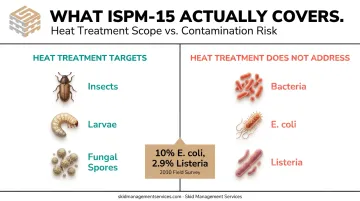
A 2010 field survey covering pallets collected in Houston, Miami, and Tampa found that 10% tested positive for E. coli and 2.9% for Listeria, with half of those Listeria-positive samples containing L. monocytogenes, according to testing reported by Quality Assurance & Food Safety.
That's a real number worth taking seriously. It came from a limited three-city sample, though, so it shouldn't be read as a national contamination rate.
Here's the part that surprises people: heat treatment doesn't fix this.
Heat Treatment Targets Pests, Not Sanitation
ISPM-15 heat treatment exists to kill insects, larvae, and fungal spores that could hitch a ride across international borders. It says nothing about bacteria picked up during normal use.
A heat-treated pallet that hauled raw poultry last month carries the same bacterial risk as an untreated one used the same way. The HT stamp is a pest-control certificate, not a food-safety guarantee.
Prior Use Matters More Than Treatment Status
If treatment status doesn't determine risk, prior use does:
- Pallets that transported raw food or industrial chemicals carry elevated risk regardless of any stamp
- Origin traceability, not treatment history, is the real safety indicator
- Non-HT pallets also skip methyl bromide fumigation, carrying zero chemical-residue risk since EPA restrictions took effect in 2005
That traceability principle points to one practical buying decision: new stock versus reclaimed.
The New vs. Reclaimed Distinction
New, first-use non-HT pallets from a trusted manufacturer carry substantially lower contamination risk than reclaimed pallets pulled from unknown sources. At Skid Management Services, food and beverage clients like Knouse Foods and Campbell Snacks typically specify new kiln-dried stock precisely because it arrives with zero prior-load history.
Reclaimed pallets, by contrast, should be reserved for non-sensitive outdoor storage or general industrial handling. Keep them away from any food-contact zone.
Non-Heat-Treated vs. Heat-Treated Pallets: Key Differences
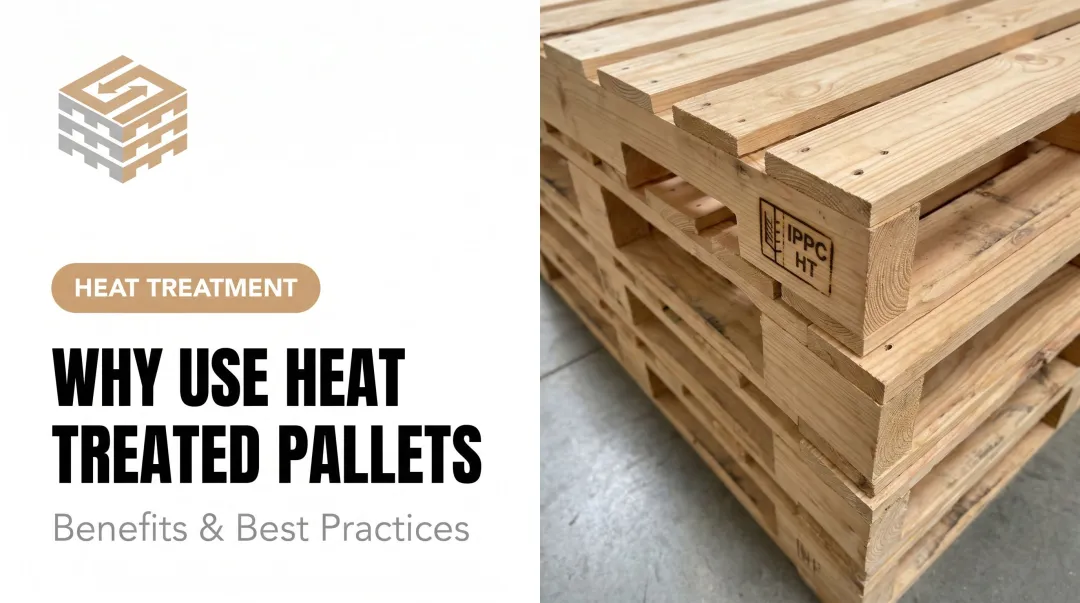
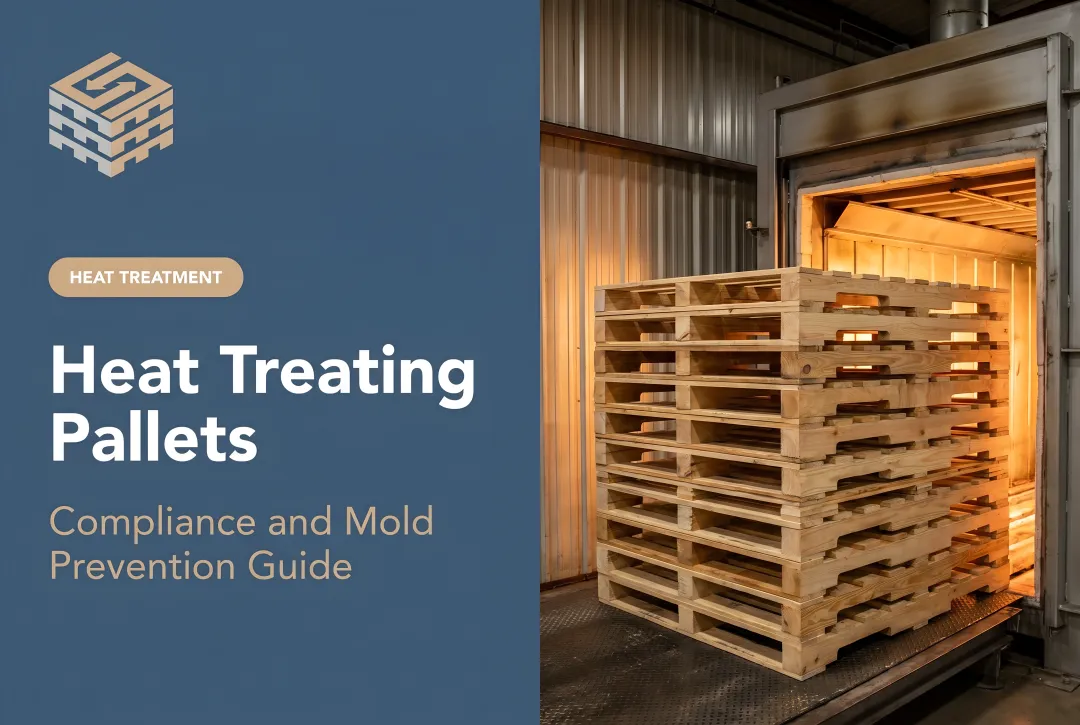
The core difference is straightforward: heat-treated pallets are heated to 56°C (132.8°F) throughout the wood core for at least 30 continuous minutes, then stamped with the IPPC logo, country code, provider number, and HT code. Non-HT pallets skip this entirely.
| Factor | Non-Heat-Treated | Heat-Treated (HT) |
|---|---|---|
| Regulatory status | Not required for domestic use | Required for international trade |
| Pest/mold resistance | Depends on wood quality and storage | Certified pest-free at treatment |
| Structural strength | Based on species and build | Same, treatment doesn't add strength |
| Cost | Lower, no processing overhead | Higher, kiln cycle and certification add cost |
| Best use case | Domestic warehousing, distribution | Export shipments, cross-border freight |
Price Gap and the Strength Myth
Heat treatment isn't free. It requires kiln chambers, energy for sustained heating, temperature-sensor calibration, and third-party certification through USDA APHIS-recognized providers. Add in record-keeping and authorized marking, and that overhead lands on the price tag. Domestic buyers who don't need certification are paying for a process that doesn't apply to them.
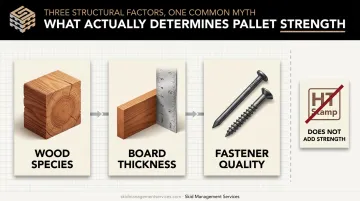
That price difference doesn't translate to strength, though. A common misconception: heat-treated pallets are tougher. They're not.
Treatment kills pests, but it doesn't reinforce fasteners or upgrade lumber grade. A Grade A non-HT pallet built with quality stringers will outperform a poorly constructed HT pallet every time. Strength comes from wood species, board thickness, and fastener quality, not the treatment stamp.
When and Where Can You Legally Use Non-Heat-Treated Pallets?
Short answer: does the U.S. require heat-treated pallets domestically? No. USDA APHIS regulations mandate ISPM-15 treatment only for wood packaging material crossing international borders, as outlined on the APHIS wood packaging material page. Domestic shipments fall outside that mandate entirely.
Only export and import shipments trigger the ISPM-15 requirement.
Non-HT pallets are fully compliant for:
- Intra-U.S. warehousing and regional distribution
- Retail supply chain restocking
- Manufacturing floor and production-line use
- Domestic 3PL and e-commerce fulfillment operations
The Canada and Mexico Caveat
Shipping to Canada gets a partial pass. There's a bilateral exemption for wood packaging manufactured entirely from continental U.S. or Canadian-origin wood, confirmed by the Canadian Food Inspection Agency's export requirements.
Mexico is a different story. NOM-144-SEMARNAT-2017 requires ISPM-15 marking for wood packaging in all international trade, with no exemption.
Need heat treatment for an export shipment? Skid Management Services supplies ISPM-15 pallets, including for Port of Baltimore corridor exporters, with stamp verification and re-stamping coordination.
If your business occasionally re-exports or ships cross-border, verify pallet requirements per shipment. A single non-compliant load can mean rejection at the port, return shipping costs, or destruction of goods.
Best Practices for Safely Sourcing and Using Non-Heat-Treated Pallets
Getting this right isn't complicated, but it does require some discipline.
Inspect Before You Store
Before bringing pallets into food-adjacent or indoor environments, check for:
- Visible mold or unusual staining
- Signs of pest activity (holes, frass, droppings)
- Odd odors that suggest chemical or biological residue
Control Storage Conditions
Keep non-HT pallets in dry, ventilated storage. Moisture buildup invites mold growth over time, even on pallets that started out clean.
Partner With a Quality-Controlled Supplier
This is where sourcing strategy matters most. Reclaimed pallets from unknown origins are a gamble. Working with an established national supplier changes that math.
Skid Management Services maintains its own inventory of new and graded recycled pallets, backed by an expansive supplier network that keeps supply uninterrupted even during demand spikes.
Since many businesses need both non-HT stock for domestic use and ISPM-15 pallets for exports, SMS supplies both, including stamp verification and re-stamping coordination for occasional Canada or Mexico shipments.
Frequently Asked Questions
What is the difference between heat-treated and non-heat-treated pallets?
Heat-treated pallets undergo a 56°C/30-minute core heating process and carry an ISPM-15 stamp for international compliance. Non-heat-treated pallets skip this process and are used for domestic U.S. shipping.
Do all pallets need to be heat treated?
No. ISPM-15 only requires heat treatment for international shipping compliance. Domestic U.S. shipments have no federal heat-treatment mandate.
Does the US require heat treated pallets?
The U.S. requires HT pallets only for imported or exported goods, per USDA APHIS and ISPM-15 rules. Domestic transport within the U.S. has no such requirement.
Are non-heat-treated pallets safe for use in the food industry?
Safety depends more on prior use and sourcing quality than treatment status. New non-HT pallets from a trusted supplier with no prior-load history are the safest option.
How can you tell if a pallet has been heat treated?
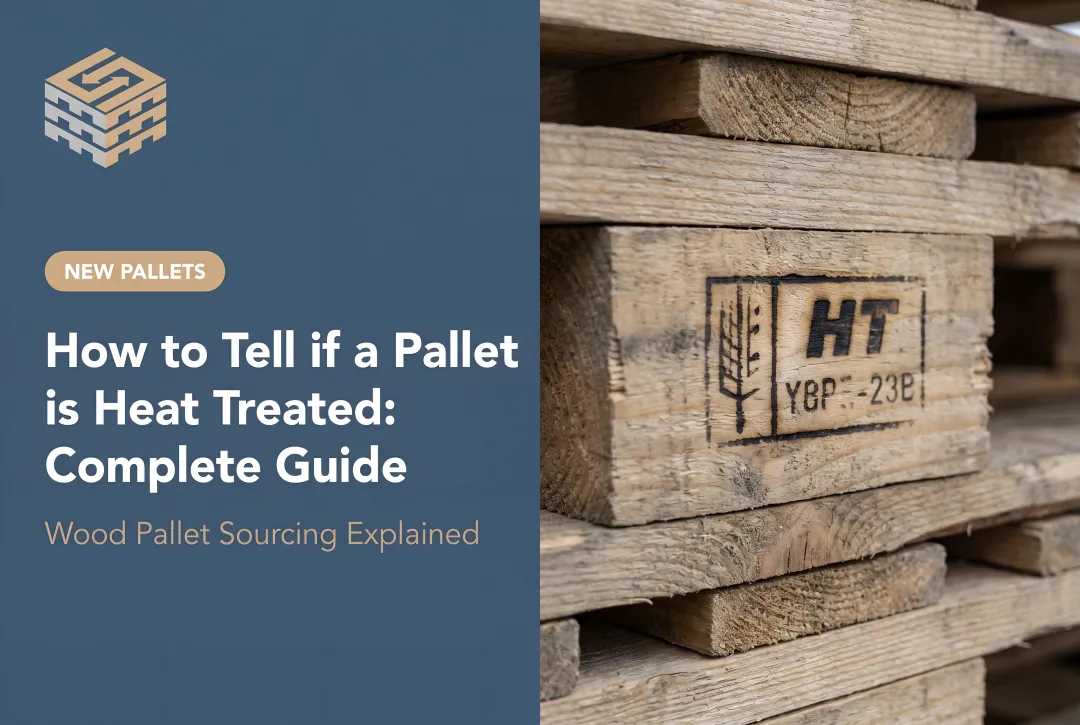
Look for the IPPC symbol alongside an "HT" stamp, a two-letter country code, and a treatment provider number branded directly onto the wood, usually on two opposite sides.
How long do non-heat-treated pallets typically last?
Lifespan depends on wood quality, storage conditions, and handling practices, not treatment status. Well-maintained non-HT pallets used indoors typically last comparably to their heat-treated counterparts.