But heading into 2026, more supply chain teams are asking whether PECO still fits. Rising per-turn fees, non-participating distributor (NPD) penalties, and a network that stops at the US, Canada, and Mexico border are pushing procurement managers to look elsewhere.
This guide breaks down the top PECO competitors, compares rental versus purchase costs, and walks through how to pick the right fit for your operation.
Key Takeaways
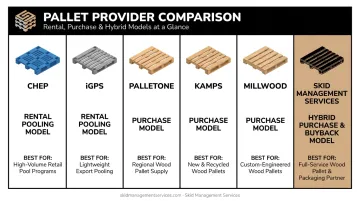
- Six strong alternatives lead 2026: CHEP, iGPS, PalletOne, Kamps, Millwood, and Skid Management Services
- Pool rentals carry recurring costs: issue fees, transfer fees, and NPD penalties that compound over a contract term
- Direct-purchase suppliers eliminate rental fees entirely but shift inventory management in-house
- Total cost depends heavily on shipment volume, turnover rate, and lane consistency
- The right fit hinges on industry compliance, network reach, and pricing transparency, not brand recognition alone
Overview of PECO Pallets and Why Businesses Seek Alternatives
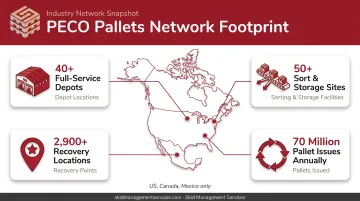
PECO operates a closed-loop pallet pooling system built around kiln-dried Southern Yellow Pine block pallets, easily identified by their red paint. PECO reports 40+ full-service depots, 50+ sort and storage sites, and more than 2,900 recovery locations across the US, Canada, and Mexico, cycling through roughly 70 million pallet issues annually.
That scale comes with tradeoffs. PECO's model works well for grocery, fresh produce, and CPG shippers moving standard loads within North America. It's a poorer fit for:
- Industrial or contaminated freight: PECO restricts pallets to clean, food-adjacent applications
- International shippers: no coverage outside North America means exporters need a separate ISPM-15 pallet source
- Non-participating distributors: receiving a PECO pallet without an active account can trigger non-participant delivery (NPD) fees
Rising rental costs and rigid contract terms are the two biggest drivers pushing supply chain teams toward the alternatives below.
Top PECO Pallet Alternatives for 2026
The strongest alternatives share four traits: transparent pricing, a clear industry fit, real network reach, and dependable supply. Here's how each stacks up.
CHEP (Brambles Limited)
CHEP is the largest pallet pooling operator in the world, instantly recognizable by its blue-painted blocks. Brambles' FY2025 annual report shows the company operating in roughly 60 countries with 750+ service centers globally.
That international footprint makes CHEP the obvious pick for manufacturers and retailers shipping across borders, not just within North America.
| Attribute | Details |
|---|---|
| Pricing Model | Usage-based billing: issue, transfer, transport, and daily-hire fees |
| Coverage | 60+ countries, global pallet pool |
| Best For | Multinational retailers and manufacturers |
iGPS Logistics
iGPS runs a nationwide pool of 100% recyclable plastic pallets, each embedded with RFID tags for real-time tracking. Unlike some pooling providers, iGPS doesn't charge extra for that tracking technology.
Because plastic doesn't absorb moisture or harbor pests, iGPS pallets appeal strongly to food safety-sensitive and pharmaceutical shippers who need consistent, sanitary platforms.
| Attribute | Details |
|---|---|
| Pricing Model | Rental-based, no separate tracking fee |
| Material | 100% recyclable plastic |
| Best For | Food-grade and pharmaceutical shippers needing hygiene and traceability |
PalletOne
PalletOne calls itself the largest new-pallet manufacturer in the United States, running facilities and sawmills across the eastern half of the country. Unlike PECO, it sells pallets outright — no pooling, no rental contract.
That makes PalletOne a fit for manufacturers who'd rather own their pallets and control custom specs than manage a rental relationship.
| Attribute | Details |
|---|---|
| Pricing Model | One-time purchase, no recurring fees |
| Customization | High: non-standard sizes and load specs supported |
| Best For | Manufacturers needing bulk or custom-spec pallets |
Kamps Pallets
Kamps operates 400+ service locations nationally, built around a repair, reuse, and recycle model. Rather than a proprietary pool, Kamps sorts, repairs, and resells pallets, often paying fair market value for usable stock brought in through its programs.
This approach lowers per-pallet costs for budget-conscious buyers willing to use recycled and refurbished units.
| Attribute | Details |
|---|---|
| Pricing Model | Purchase-based, with trade-in/credit options |
| Sustainability | High: built around reused and refurbished stock |
| Best For | Cost-focused buyers open to recycled pallets |
Millwood Inc.
Millwood offers wood, plastic, and steel/aluminum pallets alongside custom packaging systems, including crate design and ISTA-certified testing. That range lets clients bundle pallets with broader packaging needs under a single vendor relationship.
| Attribute | Details |
|---|---|
| Pricing Model | Purchase or custom quote |
| Material Options | Wood, plastic, and metal |
| Best For | Businesses wanting integrated packaging and pallet solutions |
Skid Management Services
Skid Management Services (SMS) is a national pallet and packaging distributor serving food and beverage manufacturers, including Knouse Foods, Campbell Snacks, Stauffer's, Nissin, Hain Celestial Group, and Plainville. Rather than operating a rental pool, SMS sells pallets directly and buys back used ones — no NPD fees, no transfer-fee complexity.
SMS supplies the full range of construction types that mirror PECO's standard offerings, including block, stringer, wing, and double-wing configurations, with the 48x40 GMA stringer pallet serving as the closest structural match to PECO's grocery-standard unit. Lumber options run from softwood and hardwood to kiln-dried heat-treated (HT) and A-grade premium clear, giving food-grade operators direct control over specification instead of inheriting whatever condition a pooled pallet arrives in.
For exporters leaving PECO's North America-only network, SMS also supplies ISPM-15 heat-treated pallets through the Port of Baltimore corridor, stamped by USDA APHIS-recognized providers, meaning one supplier can cover both domestic and international loads.
| Attribute | Details |
|---|---|
| Pricing Model | Direct purchase, no rental or transfer fees |
| Supply Network | Own inventory plus an expansive national supplier network |
| Best For | Food, beverage, and CPG companies wanting predictable costs and consistent supply |
Renting vs. Buying: Comparing the True Cost of PECO Alternatives
PECO's advertised flat rate looks simple on paper. In practice, pool operators layer on issue fees, daily-hire charges, transfer fees, and NPD penalties that rarely show up until the invoice lands. Buying pallets outright removes those recurring charges, but it shifts inventory tracking, repair, and recovery logistics onto your own team.
Here's how the two models compare structurally:
| Cost Category | Rental Pool (PECO, CHEP, iGPS) | Direct Purchase (PalletOne, SMS) |
|---|---|---|
| Upfront Cost | Low, pay per issue | Higher, full purchase price |
| Ongoing Fees | Issue, transfer, daily-hire, NPD | None, or trade-in credit only |
| Flexibility | High for variable volumes | Best for predictable, consistent lanes |
| Ownership | None, pallets remain pool assets | Full ownership |
A supplier-authored 2026 sample from iGPS puts plastic pooling costs at roughly $2.20 to $2.60 per use. Ownership runs about $3.00 per move once procurement, repair, handling, recovery transport, and shrink are all factored in. The gap narrows or reverses depending on turnover rate and how efficiently a shipper manages its own recovery loop.
A hybrid model often lands in the middle. SMS's closed-loop program combines outright pallet purchase with scheduled pickup and trade-in credit. Depending on grade mix and volume, this approach typically delivers:
- Buy-back credit offsetting 15% to 40% of new-pallet spend
- No recurring pool fees tied to issue or transfer counts
- Best fit for operators moving 500+ pallets per month in both directions
That volume threshold is what makes the buy-back math work without locking into pool fees.
How to Choose the Right PECO Alternative for Your Business
The most common mistake is fixating on the sticker price of a single pallet issue instead of calculating the true "trip cost" — what you actually pay once fees, repairs, and lost-pallet exposure are factored in over a full cycle.
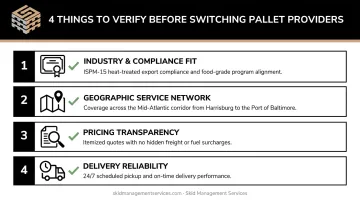
Weigh these factors before switching providers:
- Industry and compliance fit: Does the provider support FDA FSMA, GFSI (SQF, BRCGS, FSSC 22000), or ISPM-15 export requirements relevant to your goods?
- Geographic service network: Can the provider reliably reach your facilities and your customers' receiving docks?
- Pricing transparency: Are fees itemized upfront, or will issue, transfer, and NPD charges appear later?
- Delivery reliability: What's the provider's track record for on-time supply during peak season?
Consistent supply avoids production downtime, and transparent pricing makes budget forecasting easier. Providers like Skid Management Services, which pair owned inventory with a nationwide supplier network to itemize fees upfront, show how these two factors matter more than which brand name is stenciled on the pallet.
Conclusion
Choosing a PECO alternative comes down to operational fit, not brand familiarity. The right provider should align with your cost predictability goals and industry-specific compliance needs, while matching your actual shipping volume.
Before switching, evaluate scalability and pricing transparency, then track how each provider performs over a full contract cycle, not just its opening quote.
Meeting those criteria, Skid Management Services offers a straightforward alternative for food, beverage, and CPG shippers: competitive direct pricing with no rental or NPD fees, backed by uninterrupted supply from an expansive national network.
Frequently Asked Questions
What is a good substitute for pallets?
Plastic pallets, metal pallets, and slip sheets all work as substitutes depending on load weight and industry needs. Plastic suits food and pharma applications, metal handles heavy or fire-sensitive loads, and slip sheets reduce tare weight for high-volume shippers.
What are PECO pallets made of?
PECO pallets use Premium-and-better Southern Yellow Pine, kiln-dried to 19% moisture with no chemical treatment. This keeps them compliant with food-grade handling requirements.
Is it cheaper to rent or buy pallets?
Buying is often cheaper long-term for shippers with stable, high-volume, predictable outbound lanes. Renting fits businesses with fluctuating or seasonal volume that can't justify holding pallet inventory.
What is the difference between CHEP and PECO pallets?
CHEP pallets are blue, priced on usage-based fees, and operate across 60+ countries. PECO pallets are red, priced on a flat-rate model, and focused on North American grocery and food distribution.
Can I buy pallets instead of renting from PECO?
Yes. Suppliers like PalletOne and Skid Management Services sell pallets outright, letting you own them directly and avoid rental fees, non-returned pallet (NPD) penalties, and pool transfer complexity entirely.
What industries rely most on PECO pallets?
Grocery, food and beverage, fresh produce, and consumer packaged goods make up PECO's primary customer base, largely due to its acceptance across major grocery and warehouse-club retailers.