A single untreated pallet can carry bark beetles, emerald ash borers, or other wood-boring pests across an ocean in a matter of days. Once those pests establish themselves in a new country, there's often no going back.
For businesses, the risk is more immediate: noncompliant wood packaging means rejected shipments, fines, port delays, or cargo destroyed at customs. None of that is cheap, and none of it is optional to fix after the fact.
This guide breaks down what ISPM 15 actually requires, how treatment and marking work, what's exempt, and how to source pallets that won't get flagged at the border.
Key Takeaways
- ISPM 15 requires wood packaging over 6mm thick to be heat-treated or fumigated and stamped before export
- Heat treatment (56°C/133°F for 30 minutes) has largely replaced methyl bromide fumigation
- A compliant stamp includes the IPPC logo, country code, provider number, and treatment code
- Plywood, OSB, particleboard, and pallets under 6mm thick are exempt from the standard
- Noncompliant shipments face treatment, re-export, or destruction under an Emergency Action Notification order
What Is ISPM 15 & Why It Matters
ISPM 15 stands for International Standards for Phytosanitary Measures No. 15. It's the global rulebook for wood packaging material, developed by the International Plant Protection Convention (IPPC), a body operating under the Food and Agriculture Organization of the United Nations.
The standard exists because raw, untreated wood is a perfect hiding spot for pests. Bark beetles, emerald ash borers, and the Asian longhorned beetle can survive inside pallets, crates, dunnage, and skids for weeks. They stay undetected until they emerge in a country with no natural predators to keep them in check.
A Pest That Proved the Point
The Asian longhorned beetle is the textbook case. Wood packaging is the pathway researchers point to for most introductions outside its native range.
A USDA Forest Service-hosted study estimated that an unchecked ALB outbreak could destroy 30.3% of urban trees in the United States, with a compensatory value near $669 billion. Between 1998 and 2006 alone, the U.S. spent roughly $249 million on detection, removal, and preventive treatment tied to this single pest.
That's the cost of one species moving through wood packaging, and it's why regulators treat this issue as non-negotiable.
A Brief History
- 2002: ISPM 15 adopted, establishing heat treatment and methyl bromide fumigation as approved methods
- 2009: Standard revised to require debarking before treatment, closing a loophole that let pests survive under bark
- 2018: Consolidated text updated with additional treatment codes and marking clarifications
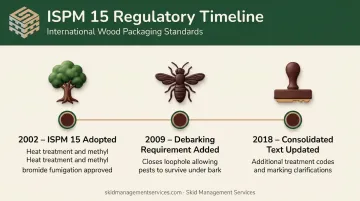
That history explains today's scope. ISPM 15 applies to any solid wood packaging material thicker than 6mm used in international shipping — pallets, crates, skids, and dunnage included.
The IPPC's treaty currently counts 185 contracting parties, and the overwhelming majority of trading nations enforce some version of this standard. In practice, if you're shipping wood packaging internationally, compliance isn't a nice-to-have. It's the price of entry.
ISPM 15 Treatment Methods: Heat Treatment vs. Methyl Bromide Fumigation
Two treatment methods dominate ISPM 15 compliance, though the standard also recognizes dielectric heating and sulfuryl fluoride fumigation for specific applications.
Heat Treatment (HT)
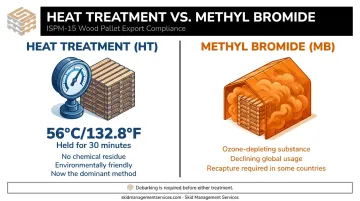
Wood must reach a core temperature of 56°C (132.8°F) for a minimum of 30 continuous minutes, measured at the coldest point of the wood profile. This means the center of the thickest board in the pallet, not the surface temperature.
Common HT delivery methods include:
- Standard kiln heat treatment: large batch chambers typical at high-volume sawmills
- Kiln-drying combined with heat treatment: dries and treats lumber in one pass, common for pallet manufacturers
- Mobile heat treatment units: portable chambers brought to a facility for on-site treatment
- Portable chamber systems: smaller-scale setups for lower-volume producers
Methyl Bromide: A Fading Option
Methyl bromide (MB) fumigation remains an approved treatment, but it's losing ground fast. Global MB consumption for quarantine and pre-shipment use hit 10,465 metric tonnes in 2021, with ISPM 15 wood packaging accounting for roughly 15% of that total, though the report notes that share appears to have decreased recently.
The reasons are straightforward:
- MB is a regulated ozone-depleting substance in many jurisdictions
- New Zealand now requires recapture from all container fumigations
- The IPPC's own Commission on Phytosanitary Measures has recommended reducing or replacing MB use where alternatives exist
Heat treatment avoids these downsides entirely, which is a big reason most new pallet production defaults to HT.
The Debarking Requirement
Since the 2009 revision, treated wood must also be debarked. Small bark fragments are allowed only if each piece is less than 3cm wide (regardless of length) or wider than 3cm but under 50 square centimeters in total surface area. Anything larger has to go.
One important note: treatment alone doesn't equal compliance. Wood that's been properly heated but never stamped is still noncompliant at the border. The mark is the proof. Exporters working through corridors like the Port of Baltimore often rely on providers such as Skid Management Services for stamp verification and re-stamping coordination, catching gaps like this before pallets reach the dock.
Decoding the ISPM 15 Stamp: What Each Mark Means
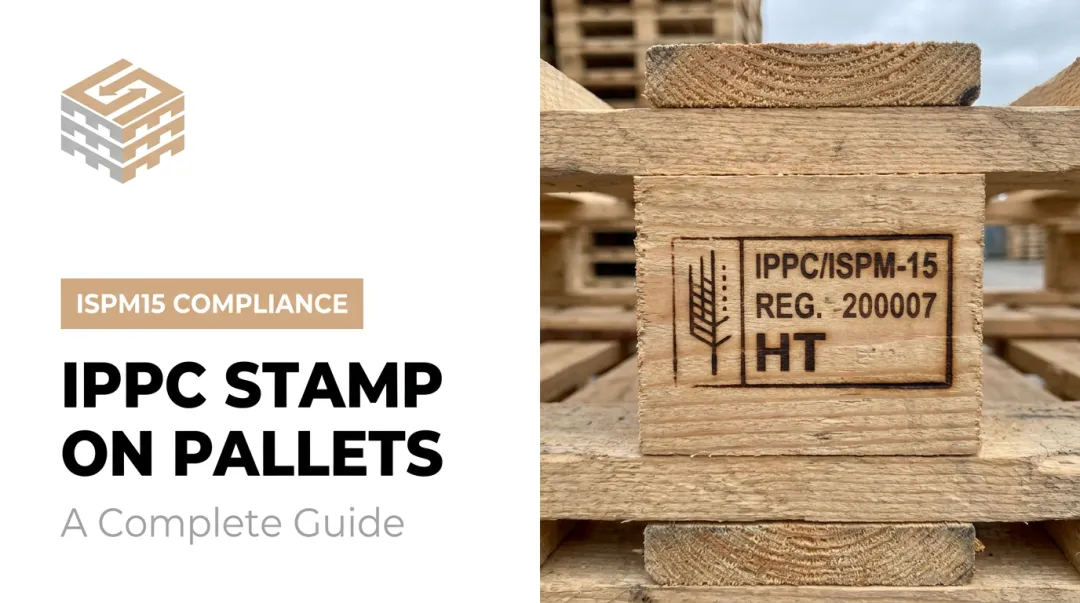
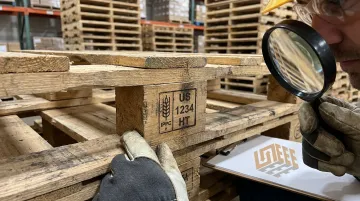
The official IPPC mark, sometimes called the "wheat stamp" for its wheat-sheaf-like border, is the only proof customs officials need. There's no separate certificate to carry, no additional paperwork required. The stamp itself is the compliance document.
A legitimate mark contains four elements:
- The IPPC logo: the internationally recognized symbol, always inside a bordered box
- A two-letter ISO country code: identifying where treatment occurred (US, CA, CN, and so on)
- A unique producer or facility number: assigned by that country's National Plant Protection Organization, separated from the country code by a hyphen
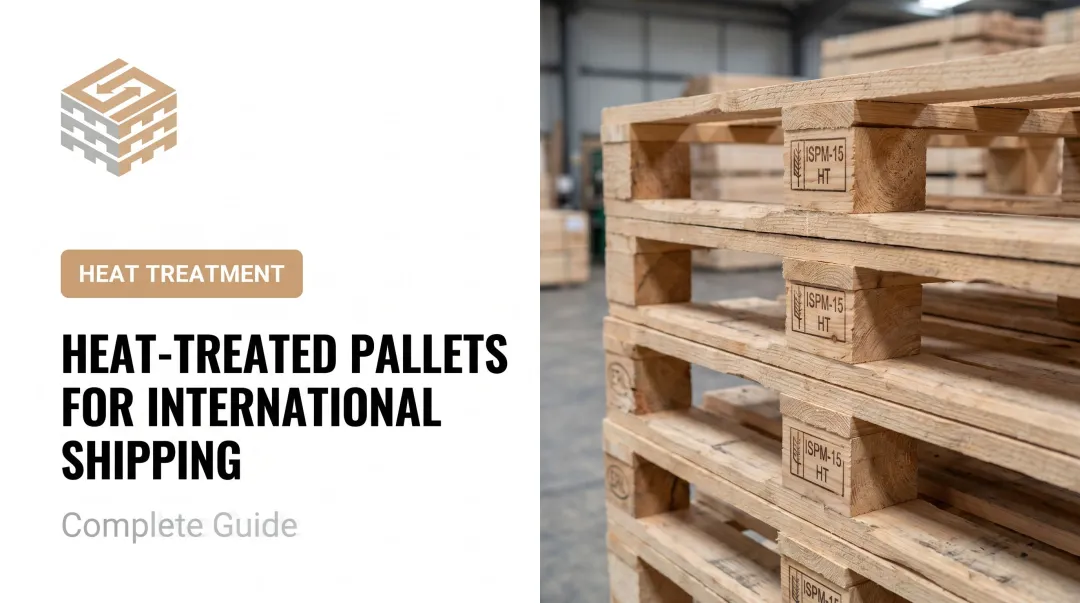
- The treatment code: HT for heat treatment, MB for methyl bromide (DH and SF appear less frequently for dielectric heating and sulfuryl fluoride)
You may hear people mention "DB" for debarked wood or "DUN" for dunnage. Worth clarifying: neither is an official code within the current mark. Debarking became a mandatory prerequisite for treatment back in 2009, not a stamp designation, and dunnage falls under the standard's scope without a separate mark code.
Spotting a Fake or Failed Stamp
Customs agents reject shipments over marking issues more often than actual pest findings. Red flags include:
- Hand-drawn or hand-painted marks (the standard requires a durable, non-transferable application)
- Missing border around the IPPC symbol
- No vertical line separating the logo from the codes
- Smudged or illegible text
- Wood with no mark at all
Legitimacy starts with oversight. In the United States, USDA's Animal and Plant Health Inspection Service (APHIS) authorizes the American Lumber Standards Committee (ALSC) to run the accreditation and inspection program behind every legitimate U.S. stamp. Treatment providers earn ALSC accreditation, and APHIS oversees the entire program, giving each mark a trustworthy chain of custody.
Skid Management Services works only with ALSC-accredited providers and can verify or re-stamp any shipment before it leaves the dock.
Materials Exempt From ISPM 15 Requirements
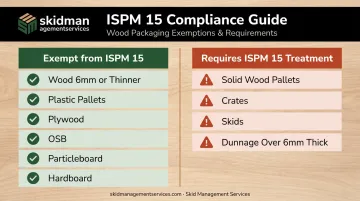
Not every piece of wood in your supply chain needs treatment. The standard carves out specific exemptions based on low pest risk:
- Wood 6mm thick or less: too thin to harbor pests effectively
- Plastic pallets: non-wood, so outside ISPM 15's scope entirely
- Plywood, OSB, particleboard, and hardboard — fully manufactured wood products
Manufactured wood products qualify because the process that creates them already does the pest-elimination work. Glue, heat, and pressure applied during manufacturing destroy any organisms that might otherwise survive inside raw lumber.
That said, don't assume exempt automatically means accepted everywhere. Requirements vary by destination, and some countries impose their own additional rules on packaging types the IPPC standard doesn't cover.
Always confirm exemption status with the destination country's National Plant Protection Organization before shipping, especially for first-time trade lanes. Skid Management Services helps Port of Baltimore corridor exporters verify these requirements before pallets leave the dock.
Compliance & Enforcement: What Happens If Wood Packaging Fails Inspection
In the U.S., enforcement splits between two agencies. APHIS sets the phytosanitary regulation; Customs and Border Protection (CBP) agriculture specialists inspect incoming shipments at the port for compliance.
When inspectors find noncompliant wood packaging, they issue an Emergency Action Notification (EAN). This notice spells out the violation and required corrective action, and the importer is on the hook to coordinate the fix.
Possible outcomes include:
- Supervised destruction of the noncompliant packaging
- Re-export of the entire shipment back to origin
- Treatment at the port, where facilities exist to support it
None of these options are fast or inexpensive, and each one pushes the shipment further behind its original delivery timeline.
This Isn't a Rare Problem
APHIS's own Noncompliant WPM dashboard tracked 1,346 noncompliant wood packaging records in 2024, up from 1,199 in 2023. Early 2025 figures were already tracking higher. This is an ongoing risk, with noncompliant shipments turning up at U.S. ports every week.
Staying Ahead of It
Businesses shipping internationally can reduce their exposure with a few proactive steps:
- Verify supplier accreditation before placing a purchase order, not after a shipment gets flagged
- Build ISPM 15 compliance language into supplier contracts, making noncompliant marking a breach of terms
- Inspect stamped inventory before it goes into production or gets loaded onto a container
Partnering with a supplier that verifies stamps and coordinates re-stamping, such as Skid Management Services, adds another checkpoint before pallets ever leave the yard.
How to Source ISPM 15-Compliant Wood Pallets & Packaging
The simplest way to avoid a rejected shipment is working with a supplier that builds compliance verification into every order.
Before placing an order, ask any pallet supplier directly:
- Is treatment performed by a USDA APHIS-recognized provider?
- Can they confirm the treatment provider's ID number tied to the stamp?
- Will they physically inspect stamped inventory before it ships to you?
Skid Management Services follows this process as standard practice on every order. The company sources heat-treated pallets exclusively through USDA APHIS-recognized treatment providers, which means every mark, from the country code to the provider ID, traces back to an authorized facility.
For customers who already have inventory on hand, SMS runs stamp verification before those pallets go anywhere near an export container. That check confirms the four required stamp elements are present, legible, and properly applied.
If a batch fails, SMS coordinates re-treatment and re-stamping through APHIS-licensed providers, so the fix happens before the container ships, well ahead of any port rejection.
This matters most for exporters shipping through high-volume corridors like the Port of Baltimore, where Central PA and Maryland manufacturers move ocean freight in GMA 48x40, 48x48, and 42x42 configurations regularly. A rejected container at that stage brings fumigation fees, demurrage charges, and a missed delivery window.
SMS backs its own inventory with an expansive network of pallet and packaging suppliers. This gives customers running high-volume or national-account export programs competitively priced, uninterrupted access to properly treated and marked pallets, even when demand spikes beyond what owned stock can cover.
Frequently Asked Questions
What does ISPM 15 stand for?
ISPM 15 stands for International Standards for Phytosanitary Measures No. 15. It was issued by the International Plant Protection Convention (IPPC), which operates under the Food and Agriculture Organization of the United Nations.
What wood is exempt from ISPM 15?
Wood 6mm thick or less, plastic pallets, and fully processed wood products like plywood, OSB, particleboard, and hardboard are all exempt. Manufacturing processes for these products already eliminate pest risk through glue, heat, and pressure.
How long does heat treatment take to make wood ISPM 15 compliant?
The wood must reach a core temperature of 56°C (132.8°F) and hold that temperature for at least 30 continuous minutes. This applies to the coldest point in the wood profile, not just the surface.
Do all countries require ISPM 15 compliance?
The vast majority of trading nations enforce some version of ISPM 15, making it a de facto requirement for global trade. Still, requirements and enforcement intensity vary, so confirm specifics with your destination country's plant protection organization before shipping.
What happens if my shipment has noncompliant wood packaging?
U.S. Customs can issue an Emergency Action Notification, which typically results in supervised destruction of the packaging or re-export of the entire shipment. Some ports offer on-site treatment as an alternative, though it's not guaranteed.
How can I tell if a pallet has been properly ISPM 15 treated?
Check for the official IPPC stamp with a clear border, the two-letter country code, a unique facility number, and a treatment code (HT or MB). Smudged, hand-drawn, or incomplete marks are signs the pallet won't pass inspection.