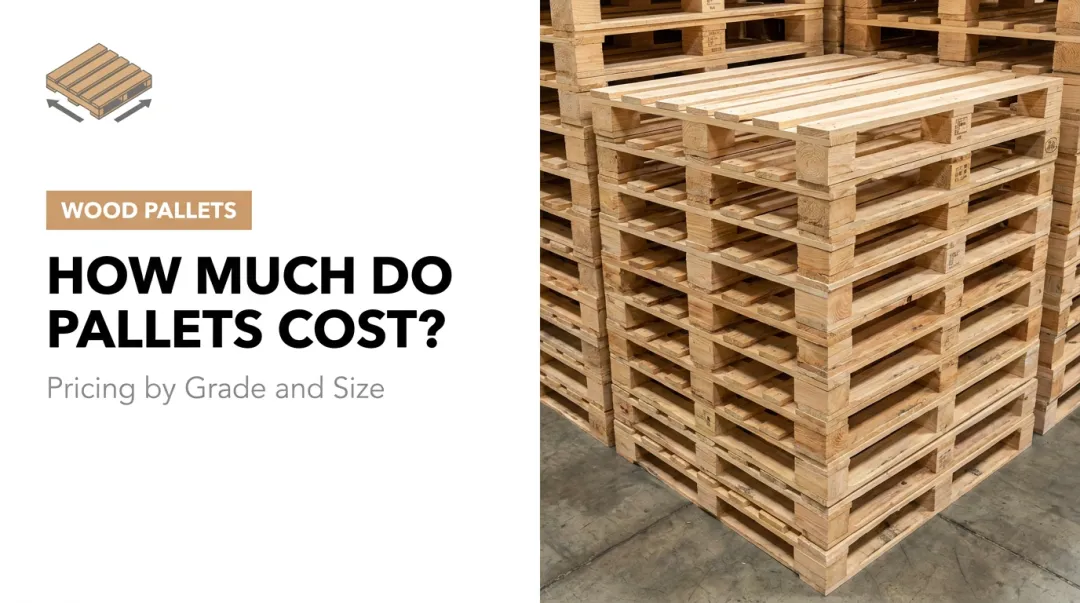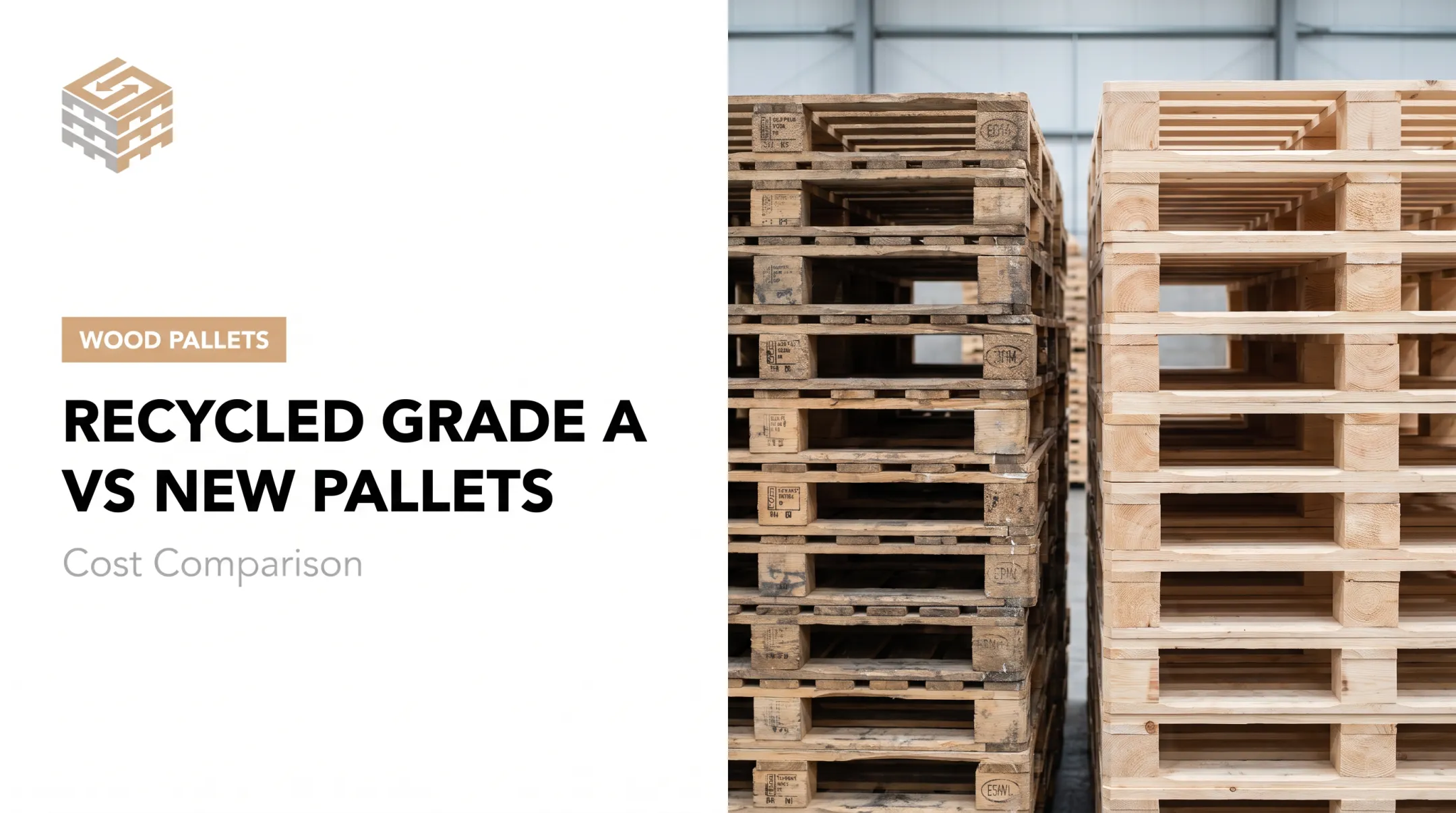

Pallet cost varies widely based on material, size, condition, and how many you order. A recycled 48x40 costs a fraction of a new heat-treated export pallet.
This guide breaks down real pricing ranges, the hidden cost components beyond the sticker price, and how to budget correctly so you're not caught off guard.
Key Takeaways
- New GMA wood pallets typically run $10-$17 delivered, depending on region and market timing
- Recycled/used Grade A and B pallets often land between $4 and $10.50 delivered
- Material, grade, treatment, and order volume are the biggest price drivers
- 40-60% cost savings are typical when switching to recycled or remanufactured versus new
- High-volume shippers benefit most from a national supplier offering consistent, uninterrupted pricing
How Much Does a Pallet Cost? (Pricing Overview)
There's no single price tag for a pallet. Cost depends on material, condition, treatment, and where you're buying.
Common mistakes businesses make:
- Underbudgeting for freight and delivery on top of the unit price
- Choosing a cheaper pallet type that fails compliance or load requirements
- Ignoring ongoing maintenance and replacement costs until they add up
Typical Cost Ranges
2024–2025 Fastmarkets assessments put delivered wood-pallet pricing in these ranges:
| Type | Condition | Market / Date | Price Range |
|---|---|---|---|
| GMA wood (48×40) | New | NY (Nov 2024) | $10.50–$16.50 |
| GMA wood | New | Seattle (Mar 2025) | $12.00–$17.00 |
| GMA wood | New | Dallas–Fort Worth (Apr 2025) | $10–$14 |
| GMA wood | Recycled Grade A | Dallas–Fort Worth | $8.50–$10.50 |
| GMA wood | Recycled Grade B | Dallas–Fort Worth | $4–$8.50 |

According to Fastmarkets' pallet pricing insights, pricing shifts with grade, region, and the lumber species available when you order.
These figures cover the delivered unit. Costs climb when you add:
- Custom dimensions or heavy-duty builds
- ISPM-15 heat treatment for export
- Rush freight or remote delivery lanes
Regional spreads are real — a New York delivered price will not match Dallas or Seattle — so treat the table as a planning band, then get a delivered quote for your lane and volume.
Key Factors That Affect Pallet Cost
Pricing depends on five main factors: material, size and design, new vs. recycled condition, treatment requirements, and order volume.
Material Type
Wood dominates the industry. Recent industry surveys show 92-94% of shippers use wood pallets; many operations also run plastic (28-43%) or metal (3-7%) for specific applications, according to Modern Materials Handling's 2025 pallet survey.
- Softwood — most common, cost-effective, widely available
- Hardwood — denser, more durable, typically pricier
- Plastic — durable and washable, but heavier and pricier upfront
- Metal — highest durability, highest cost, used for heavy or specialty loads
Recycled lumber lowers cost but can introduce variability in board quality and appearance.
Size, Design, and Customization
Standard 48x40 GMA pallets benefit from manufacturing efficiencies that custom sizes don't get. Reinforced decks, custom blocks, or specialty fasteners all add labor and material cost on top of the base price.
New vs. Recycled/Remanufactured
- New — longer life and tighter dimensional consistency; preferred for automated racking and load-rating accuracy
- Recycled — lower cost, with more variation in condition
- Remanufactured — priced between recycled and new, with better consistency than straight recycled stock
Heat Treatment & Compliance
Export shipments generally require ISPM-15 heat treatment: a minimum core temperature of 56°C (132.8°F) for at least 30 minutes, followed by an accredited stamp verifying compliance, per USDA APHIS guidelines. This adds cost, though the exact per-unit premium varies by treatment provider and program volume rather than following a fixed nationwide rate.
Order Volume and Location
Bulk orders typically unlock better per-unit pricing, though the exact discount depends on the supplier and program terms. Sourcing from a supplier with a national network, like Skid Management Services, also helps reduce freight costs compared to relying on a single distant vendor. Regional inventory means shorter shipping distances.

Cost Breakdown: Beyond the Purchase Price
The sticker price is just one line item. Total pallet cost includes several other buckets:
- Initial purchase (one-time) — base unit cost, driven by material, grade, and treatment
- Freight and delivery — often a large share of landed cost, especially with distant single-source vendors
- Storage and handling (recurring) — warehouse space, staging, and inventory tracking tied to your pallet stock
- Repair, replacement, and recovery (periodic) — ongoing costs of maintaining a functional pallet pool
Skid Management Services runs a closed-loop model that pairs new or recycled pallet delivery with used-pallet pickup on the same trip. For qualifying programs (generally 500+ pallets per month, two-way), same-trip routing cuts freight inefficiency.
Trade-in credit (typically 15–40% of new-pallet spend) offsets ongoing replacement cost. Over a full year of shipping, those freight and recovery savings often outweigh small differences in unit price—even when they never appear on a single invoice.

New vs. Recycled Pallets — What's the Difference?
Both have a place. The right choice depends on what you're shipping and where it's going.
| Factor | Recycled | New |
|---|---|---|
| Upfront cost | Lower (40–60% savings possible) | Full market rate |
| Durability & lifespan | Shorter, more variable | Longer, more consistent |
| Sanitation & compliance | Contaminant risk without grading; HT by request | Clean; specify ISPM-15 HT for export |
| Best use case | Local, one-way shipments | Export, food/pharma, heavy loads |
Not all recycled pallets are equal. Grading matters:
- Grade A — all seven deck boards intact, no broken stringers, near-new performance
- Grade B — one or two minor repairs, full structural integrity, fine for general distribution
- Utility/#2 — lowest cost, best for internal warehouse flow only

Food manufacturers often run new kiln-dried pallets on their cleanest, most regulated shipments and keep sanitation-grade recycled pallets for less critical internal moves—especially when the same plant handles FDA-regulated export loads and routine domestic transfers.
How to Budget for Pallet Costs
Budget for the pallet that fits your shipment, not the lowest unit price alone.
Before you request quotes, map out:
- Shipment frequency and volume (does this qualify for bulk or closed-loop pricing?)
- Product weight and fragility (does it need a higher load rating?)
- Compliance or export requirements (do you need ISPM-15 heat treatment?)
- Storage and recovery infrastructure (can you handle a pallet pool internally?)
- Long-term supplier reliability (will a single vendor cause supply gaps?)
When requesting quotes, give suppliers your dimensions, load requirements, treatment needs, and expected volume upfront. Vague requests get vague pricing. Specific requests get accurate numbers you can actually budget around.
Frequently Asked Questions
How much does a pallet cost?
Standard wood pallets generally run $4 to $17 delivered, depending on new versus recycled condition and region. Plastic and metal pallets typically cost much more.
What is the cheapest type of pallet?
Recycled softwood GMA pallets, particularly Grade B or utility grade, are typically the most affordable option. They work well for internal warehouse flow and non-critical shipments.
Why are pallet prices increasing?
Lumber market volatility, rising labor costs (pallet-industry wages grew faster than broader manufacturing in early 2025), tariff announcements, and supply disruptions like port strikes have all driven prices higher.
Are recycled pallets as good as new ones?
Grade A recycled pallets perform similarly to new for most applications. Lower grades work well for local or non-critical shipments but may lack the consistency and compliance needed for export or food-grade use.
Does buying in bulk reduce pallet costs?
Generally yes. Larger volume orders tend to unlock better per-unit pricing, though the exact discount varies by supplier and program. Request a volume-specific quote for accurate numbers.
Do heat-treated pallets cost more?
Yes. ISPM-15 heat treatment adds cost due to the processing and certified stamping required for export compliance, though the exact premium depends on your treatment provider and program volume.