
Many brewers underestimate this side of the business. Miscalculating pallet counts, booking the wrong trailer type, or letting a load shift mid-transit can turn a profitable order into a costly claim. A single damaged pallet of kegs can wipe out the margin on an entire shipment.
This guide breaks down pallet dimensions, case and keg counts, TL versus LTL freight basics, and how to pick the right pallet for your beer shipments — so you stop guessing and start shipping with confidence.
Key Takeaways
- The 48"x40" pallet is the North American benchmark for beer shipments; other sizes suit exports and craft formats
- Case and keg counts per pallet depend on packaging, weight limits, and stack height — not a single universal number
- Proper securement and the right pallet material cut damage claims and freight costs
- A steady pallet supplier prevents last-minute shortages during peak brewing and shipping seasons
Understanding Freight Basics Before You Ship
Full Truckload (TL) vs Less-Than-Truckload (LTL)
Most industry guidance treats **one to six pallets as a typical LTL shipment**, with larger volumes moving into "volume LTL" or full truckload territory. Carrier weight limits vary widely. Some accept as little as 100 lbs; others go up to 20,000 lbs. A common ceiling among major carriers is around 15,000 lbs, with a 4,000-lb cap per pallet, according to NMFTA's LTL packaging guidelines.
- LTL costs less, but your pallets share trailer space with other freight — more handling and higher damage risk
- TL costs more, but your beer rides alone with fewer touchpoints and less load shift The Brewers Association reports a freight classification change effective July 19, 2025, shifting beer toward density-based classification. Exact pallet length, width, height, and weight now drive your rate. Get them wrong and you risk reclassification fees.

Dry Van vs Refrigerated Trailer (Reefer)
Dry vans work fine for short, local runs. Temperature swings during loading and unloading can still cause condensation inside cases, especially with cans stacked tight. Reefers solve that problem on longer hauls by holding a stable temperature. The tradeoff is weight: cooling equipment adds tare and cuts into legal payload. Always confirm actual trailer tare weight with your carrier. Reefer specs vary by manufacturer and unit age.
Standard Pallet Dimensions for Beer Shipping
The 48"x40" (1219mm x 1016mm) pallet is the North American standard, built to GMA specifications and used across grocery and beverage distribution. If you're shipping domestically, this is almost always your default choice.
For export-minded brewers, dimensions shift by region:
| Region | Standard Size |
|---|---|
| North America (GMA) | 48" x 40" (1219 x 1016mm) |
| Europe (Euro pallet) | 1200mm x 800mm |
| Asia/Export | 1100mm x 1100mm |
Exact container-loading counts for 48x40 pallets in a standard 40-foot container vary with stacking height, product weight, and overhang tolerances. Confirm counts with your freight forwarder rather than relying on a fixed number.
A few details brewers often overlook:
- Empty pallet weight: Varies by wood species and moisture content; factor it into legal shipment weight limits
- Non-standard sizes: Used for kegs, barrels, or craft loads when 48x40 doesn't fit your bottling line or tanks
- 36"x36" and custom formats: Skid Management Services stocks 36"x36" craft-brewery pallets plus standard 48x40 and custom tank-to-line sizes
How Many Cases and Kegs Fit on a Pallet
Keg counts per pallet depend heavily on keg diameter, restraint design, and how high you're willing to stack, but general guidelines exist:
- Sixth-barrel kegs: roughly 20 per pallet
- Quarter-barrel kegs: roughly 14 per pallet
- Half-barrel kegs: roughly 8 per pallet
Pallets typically stack only two-high due to weight limits. A full keg pallet often lands in the 1,200–1,400 lb range. Factor empty keg weight into return shipments too. A half-barrel runs roughly 30 lbs empty; sixth- and quarter-barrel kegs run about 12–23 lbs.

For canned beer, a commonly cited industry rule of thumb puts 12-oz 12-pack cases at around 100 per pallet, or roughly 2,200 lbs. Treat that as an upper safe limit, not a target, according to Reusable Transpack's brewer shipping guide.
Wider 30-pack footprints fit fewer cases per pallet than standard 24-packs. Plan conservatively and confirm with your actual case dimensions rather than assuming a fixed number.
| Case Format | Practical Guidance |
|---|---|
| 12-pack (12 oz) | ~100 cases, ~2,200 lbs upper limit |
| 24-pack | Verify count with your Ti-Hi pattern |
| 30-pack | Fewer cases; measure footprint before loading |
One commonly missed cost driver: the pallet's own weight. Add it to your total shipment weight before booking freight, or you risk under-quoting and getting hit with reclassification charges.
Choosing the Right Pallet Material for Beer Shipments
Wood vs Plastic
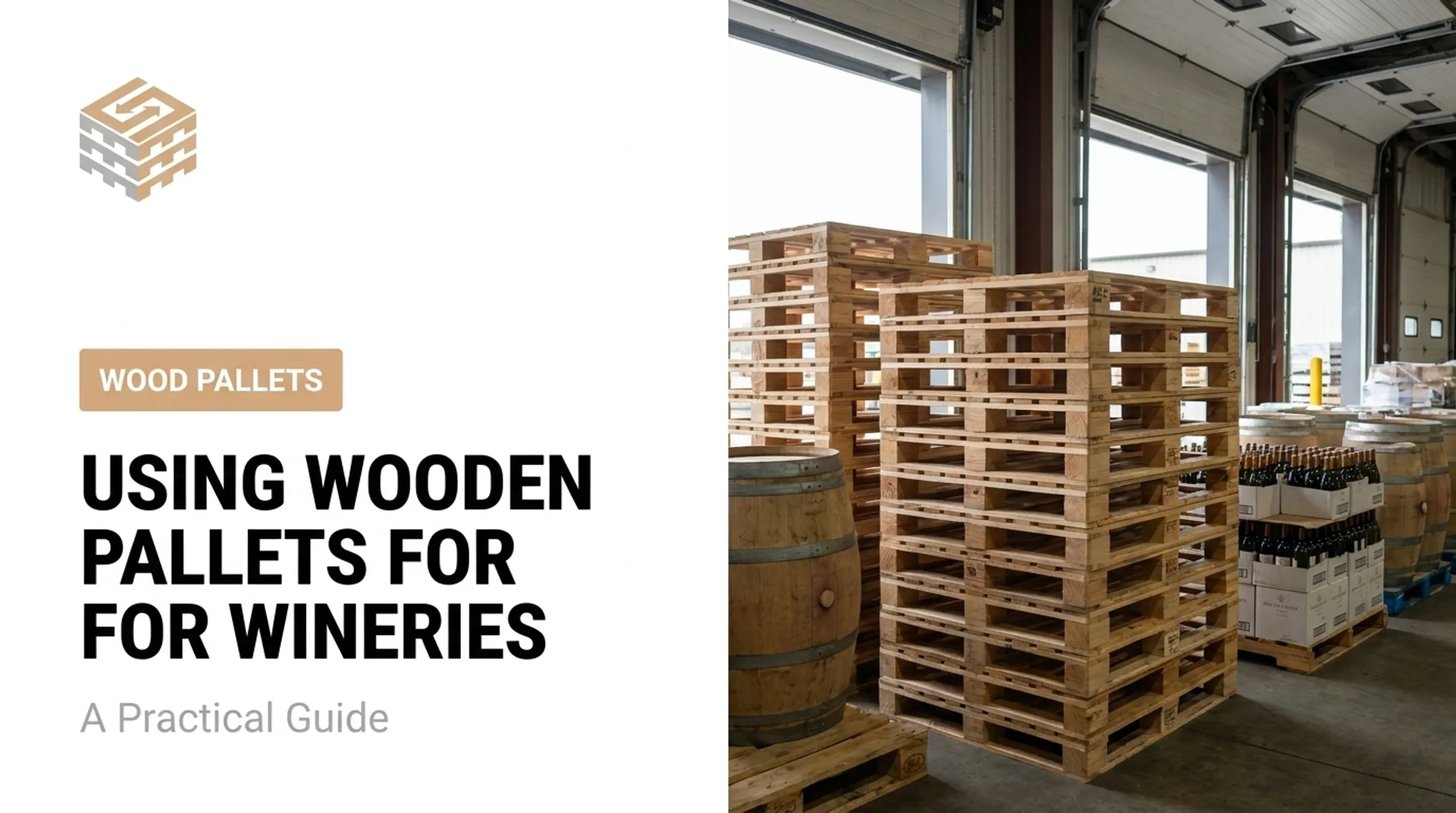
Wood remains the traditional, cost-effective choice for most breweries. It's repairable, widely available, and works well for repeated beer shipments without the upfront investment plastic demands.
Plastic offers durability and moisture resistance, but the cost premium is real. Independent research hasn't established a beer-specific benchmark proving plastic outperforms well-graded wood for typical brewery freight.
When sourced properly, wood pallets deliver strong value:
- Lower upfront cost than plastic alternatives
- Repairable when damaged, extending usable life
- Widely compatible with standard racking and handling equipment at distributors
Deck Design and Load Capacity
Two specs matter most for beer freight:
- Solid-top decks keep smaller cans and cases from shifting through deck-board gaps
- 3,000+ lbs dynamic load capacity on new beverage pallets, enough for a fully loaded 48x40 beer pallet at 2,000 to 2,800 lbs
Skid Management Services builds both into its custom beverage pallet configurations.

Sourcing Ahead of Demand
Skid Management Services supplies new and recycled wood pallets for beverage applications, including:
- 36x36 beer-industry pallets
- Standard 48x40 formats
- ISPM-15 heat-treated export pallets for overseas shipments to Canada, the EU, Mexico, and Australia
Owned inventory plus a broad supplier network keeps supply steady when peak-season volumes climb.
Practical tip: Order pallets well ahead of your shipment schedule. Waiting until a truck is booked is one of the most common (and avoidable) bottlenecks in brewery logistics.
Preventing Load Shift and Stacking Safely
Federal regulations require palletized cargo to be contained, immobilized, or secured against shifting, per FMCSA's cargo securement rules. For beer pallets, that means:
- Strap kegs and stretch-wrap cases to create one unified, secured weight per pallet rather than loose, shifting units
- Balance weight across the trailer bed so you never exceed legal axle limits (20,000 lbs per single axle under federal Interstate rules)
- Run a pre-shipment check before the truck leaves: press the top layer for flex, inspect bottom corners for bulging, and verify total pallet height clears trailer dimensions

Skip these steps and you risk damaged product, fines, rejected shipments, and customers who stop reordering.
Frequently Asked Questions
How many 30-packs of beer can fit on a pallet?
Fewer than standard 24-packs, because 30-pack cases have a wider footprint. Exact counts depend on your case dimensions and stacking pattern, so confirm with your packaging specs before finalizing freight quotes.
What are the dimensions of a 48x40 pallet?
A standard 48x40 pallet measures 48 inches by 40 inches (1219mm x 1016mm). It's the North American benchmark for beverage and grocery shipments, built to GMA specifications.
How many 40x48 pallets fit in a 40-foot container?
Capacity depends on stacking height, product weight, and overhang tolerances. Confirm exact figures with your freight forwarder rather than relying on a fixed industry number.
What's the difference between TL and LTL shipping for breweries?
LTL shares trailer space with other shippers' freight, lowering cost but raising handling risk. TL dedicates the whole truck to your shipment, costing more but reducing damage risk and stops.
Should breweries use wood or plastic pallets for shipping beer?
Wood offers lower upfront cost and remains the standard choice for most breweries. Plastic offers moisture resistance and durability, but at a higher price with no proven beer-specific advantage.
How much weight can a standard beer pallet hold?
Case pallets typically max out around 2,200 lbs as a safe upper limit. Full keg pallets usually run 1,200 to 1,400 lbs, depending on keg size and count.