
This guide breaks down ISPM 15 requirements, EU-specific packaging rules, and the practical steps US shippers need to take before goods leave the dock. We'll also cover the mistakes exporters make most often and how sourcing compliant pallets from an established supplier like Skid Management Services keeps your export program moving.
Key Takeaways
- All wood packaging shipped to the EU from the US must meet ISPM-15 heat-treatment and marking standards
- Non-compliant pallets risk rejection, destruction, or forced re-dispatch at EU ports
- PPWR sets EU reuse and waste targets—it does not replace ISPM-15 import compliance
- Verified ISPM-15 heat-treated pallets lower rejection risk and costly port delays
What Is ISPM 15 and Why It Matters for EU Shipments
ISPM 15 stands for International Standard for Phytosanitary Measures No. 15, titled "Regulation of wood packaging material in international trade." It's maintained by the International Plant Protection Convention (IPPC), an intergovernmental treaty body under the FAO. First adopted in 2002, the version in force today was revised in 2018.
The standard exists for one reason: raw wood packaging can carry pests and pathogens that devastate forests and agriculture when they cross borders.
ISPM 15 applies to:
- Pallets, crates, dunnage, cable drums, and spools
- Any wood packaging thicker than 6mm
- All movement between countries, including every US-to-EU shipment
Wood packaging made from processed materials such as plywood is exempt.
Why the EU Enforces This Strictly
The EU's Regulation (EU) 2016/2031 requires non-EU wood packaging to be treated, officially marked, and debarked. This applies to your shipment from day one, regardless of how careful your intra-EU trading partners might be about their own pallets.
Intra-EU shipments get a pass on ISPM 15 (with a few pest-containment exceptions). Shipments originating outside the EU, including everything from the US, do not. The pests targeted, like wood-boring insects and bark beetles, pose a direct risk to living trees, which is why European authorities treat non-EU wood packaging as a biosecurity issue, not a paperwork formality.
ISPM 15 Treatment and Marking Requirements for Wooden Pallets
ISPM 15 recognizes two treatment methods:
- Heat treatment (HT) — the wood core must reach a minimum of 56°C (132.8°F) for at least 30 continuous minutes
- Methyl bromide (MB) fumigation — still an ISPM 15 code, but the EU banned MB for quarantine and pre-shipment use in 2010 under Regulation (EC) No 1005/2009, except rare emergency authorizations
In practice, that means HT is your only realistic path for EU-bound pallets.
What a Compliant IPPC Stamp Looks Like
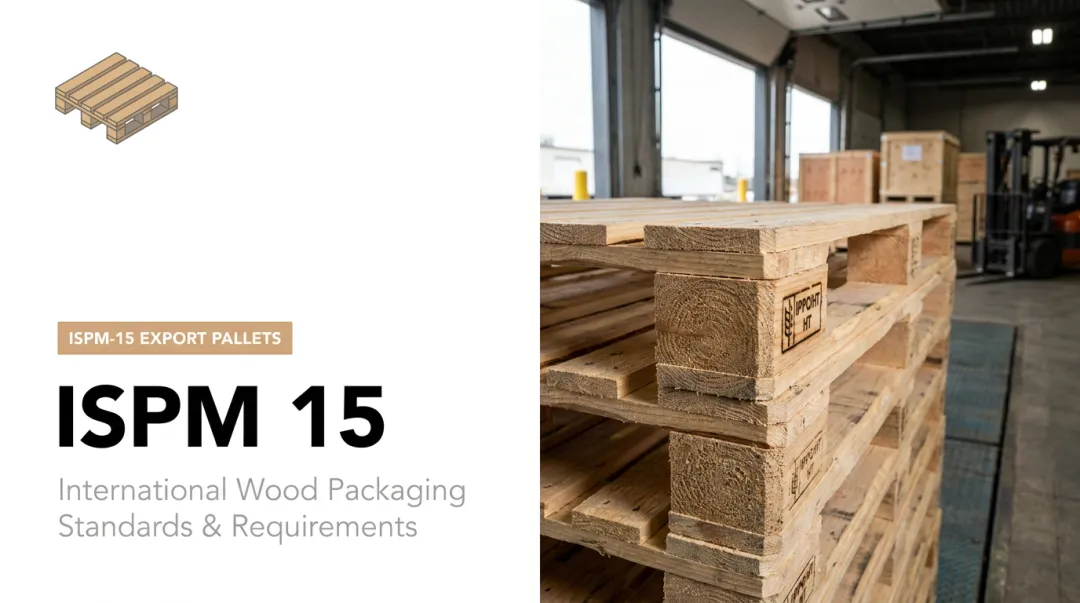
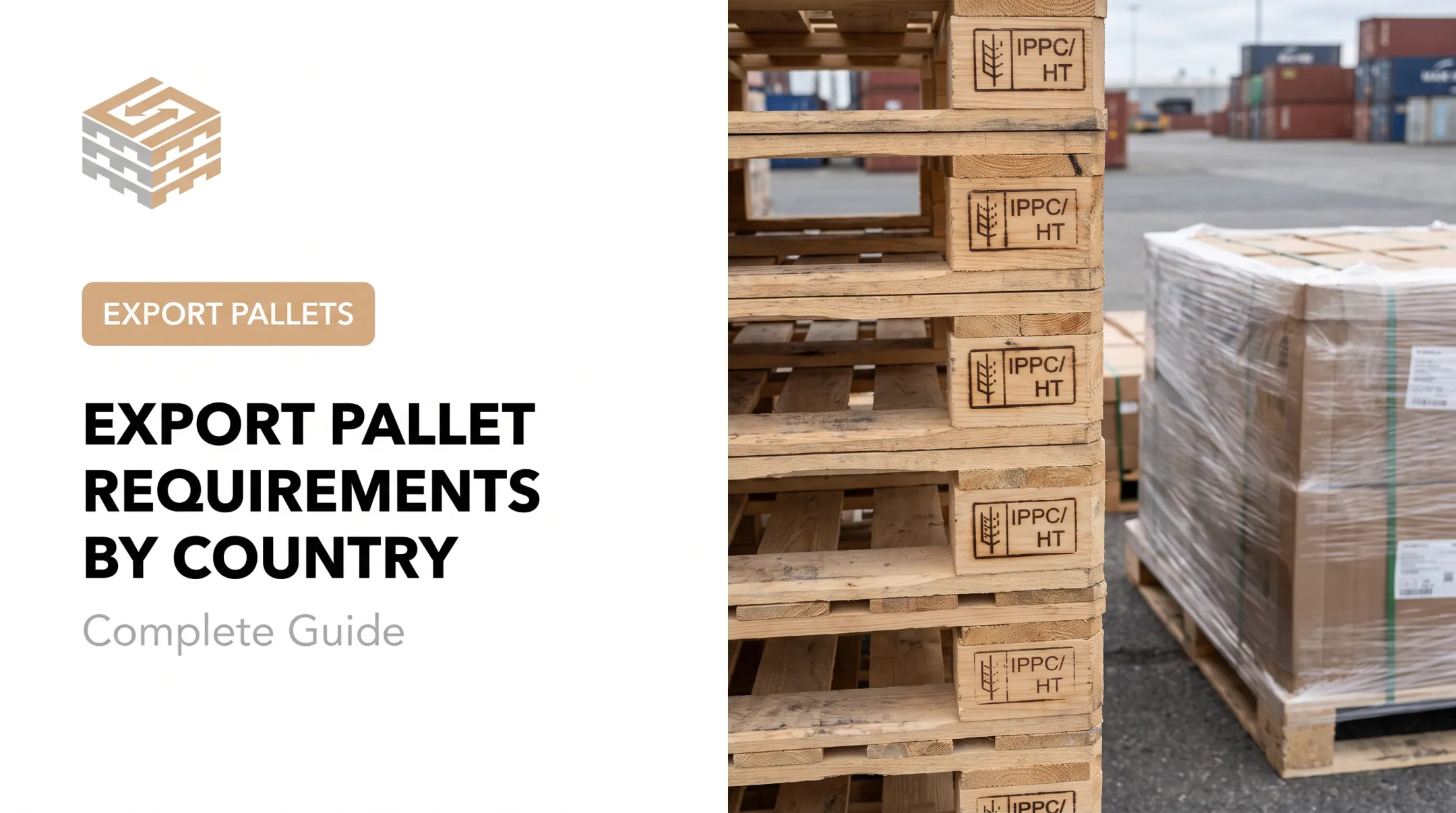
The mark must be enclosed in a border (rectangular or square), with the IPPC logo on the left, separated by a vertical line from the rest of the code. A typical stamp reads something like:
[IPPC symbol] US-1234 HT
That breaks down as:
- IPPC symbol — the wheat-stalk logo
- Country code — "US" for United States
- Producer/treatment-provider code — a unique facility ID
- Treatment method — "HT" for heat treatment
The stamp must appear on at least two opposite sides of the pallet, stay legible through the entire trip, and never be hand-drawn.

EUR/EPAL Pallets and Pre-Certification
EUR/EPAL pallets manufactured to spec are typically pre-treated and stamped, since EPAL has required ISPM 15 compliance at all licensed production and repair operations since 2010. Useful context for Euro-size equivalents—but still verify the stamp on the pallet in front of you.
This is where sourcing matters. Skid Management Services works through USDA APHIS-recognized treatment providers to supply heat-treated, ISPM 15-stamped pallets in GMA 48x40, 48x48, 42x42, 44x44, 36x36, and Euro-size configurations. Inventory plus a supplier network means exporters aren't scrambling for compliant stock at the last minute.

EU-Specific Packaging Regulations Beyond ISPM 15
ISPM 15 isn't the only regulation to know. The EU's Packaging and Packaging Waste Regulation (PPWR), Regulation (EU) 2025/40, took effect in January 2025 and sets reuse targets for transport packaging, including pallets.
Under Article 29, operators using pallets within the EU must hit reuse targets:
- 40% reusable within a reuse system by January 1, 2030
- 70% reusable by January 1, 2040
Where this gets nuanced: these targets apply to packaging placed on the EU market for use within the Union, not necessarily to the transport packaging carrying your goods in from the US.
Recent Commission clarification has focused on pallet wrapping and straps exemptions rather than a blanket carve-out for wooden pallets themselves. Exporters shouldn't assume automatic exemption without checking current guidance.
The EU handled over €5 trillion in combined goods trade in 2024, so this landscape touches a huge volume of pallet traffic. Practical notes for US shippers:
- PPWR compliance is separate from ISPM 15 — meeting one doesn't satisfy the other
- Some EU member states layer on additional documentation requirements
- Belgium, for instance, applies enhanced controls (checking at least 15% of incoming consignments) for wood packaging from certain non-EU origins

Always verify destination-country rules before finalizing your shipping documentation.
Common Compliance Mistakes US Exporters Make
Most compliance failures come down to a handful of repeatable errors:
- Shipping on used or unmarked pallets without a legible IPPC stamp from an authorized treatment provider
- Checking only EU-wide rules while ignoring destination-country-specific documentation requirements
- Losing treatment records that customs officials request during inspection
- Assuming intra-EU leniency applies to shipments originating outside the EU — it doesn't
That last one trips up more exporters than you'd expect. Just because your EU trading partner's domestic pallets skip ISPM-15 doesn't mean your US-origin shipment gets the same treatment.
Consequences of Non-Compliance
Under Commission Delegated Regulation (EU) 2019/2125, competent authorities must act when non-compliant wood packaging is found:
- Destruction: ordered without delay, with pest-spread precautions during handling
- Re-dispatch: the shipment stays under customs supervision until the non-compliant packaging leaves EU territory
- Special treatment: in some cases, on-site correction may be permitted
Beyond the immediate cost of destroyed pallets and reshipment, there's a longer tail:
- Delayed deliveries strain relationships with EU customers
- Repeated compliance failures can flag your company for closer customs scrutiny on future shipments
- Reputational damage with international buyers who remember suppliers that create customs headaches

How to Ensure Your Wooden Pallets Are EU-Ready
A few concrete steps go a long way toward avoiding port delays:
- Source from verified suppliers with documented ISPM-15 heat-treatment certification and consistent capacity
- Keep treatment records organized — batch records, provider IDs, and stamp documentation should be retrievable on demand
- Train warehouse staff to inspect stamps before loading, catching smudged or missing marks before they become a customs problem
- Build in supply redundancy so a single sourcing hiccup doesn't stall an entire shipment
Those steps hold up best when your supplier can help you run them day to day. Skid Management Services supports exporters through the Port of Baltimore corridor and nationwide with HT-stamped pallets in standard sizes or custom export specs.
The company verifies existing stamps, coordinates re-treatment through USDA APHIS-recognized providers when pallets fall short, and draws on a broad supplier network so orders keep moving when demand spikes.
Frequently Asked Questions
Which countries require ISPM 15 for wood packaging?
The vast majority of IPPC member countries have adopted ISPM 15, including all EU member states, for wood packaging used in international trade. Nearly every major trading partner enforces it in some form.
What are the requirements for ISPM 15 wooden pallets?
Wood packaging must be heat-treated to a minimum core temperature of 56°C for 30 continuous minutes. It must then carry an IPPC stamp on at least two opposite sides showing the treatment code, country code, and provider ID.
Is ISPM 15 mandatory for shipments within the EU?
No, intra-EU shipments generally aren't required to carry ISPM 15 treatment, with a few pest-containment exceptions. Shipments originating outside the EU, including from the US, must comply regardless.
What happens if my pallets aren't ISPM 15 compliant when shipping to the EU?
Non-compliant wood packaging can be rejected, held, or destroyed at EU ports. Authorities may also order re-dispatch, keeping your shipment under customs supervision until it leaves EU territory.
Are EUR/EPAL pallets automatically ISPM 15 compliant?
Standard EUR/EPAL pallets built to spec are typically pre-treated and stamped since EPAL requires ISPM 15 compliance at licensed facilities. Used or non-standard pallets should always be verified individually.
How can I find a supplier for ISPM 15 certified pallets in the US?
Work with an established national pallet supplier that sources through USDA APHIS-recognized treatment providers. Skid Management Services offers heat-treated, stamped export pallets with verification support at 717-202-0304.