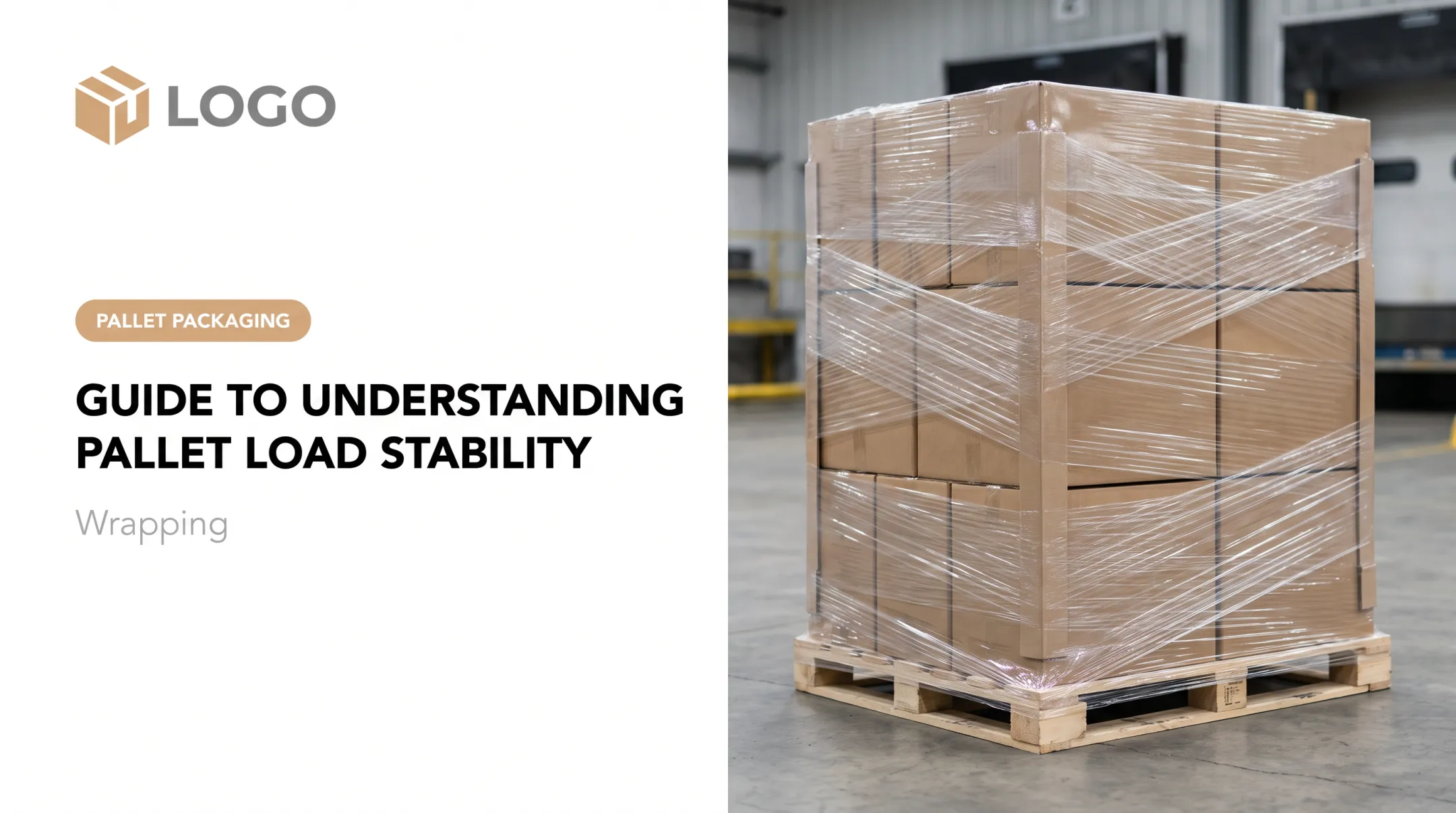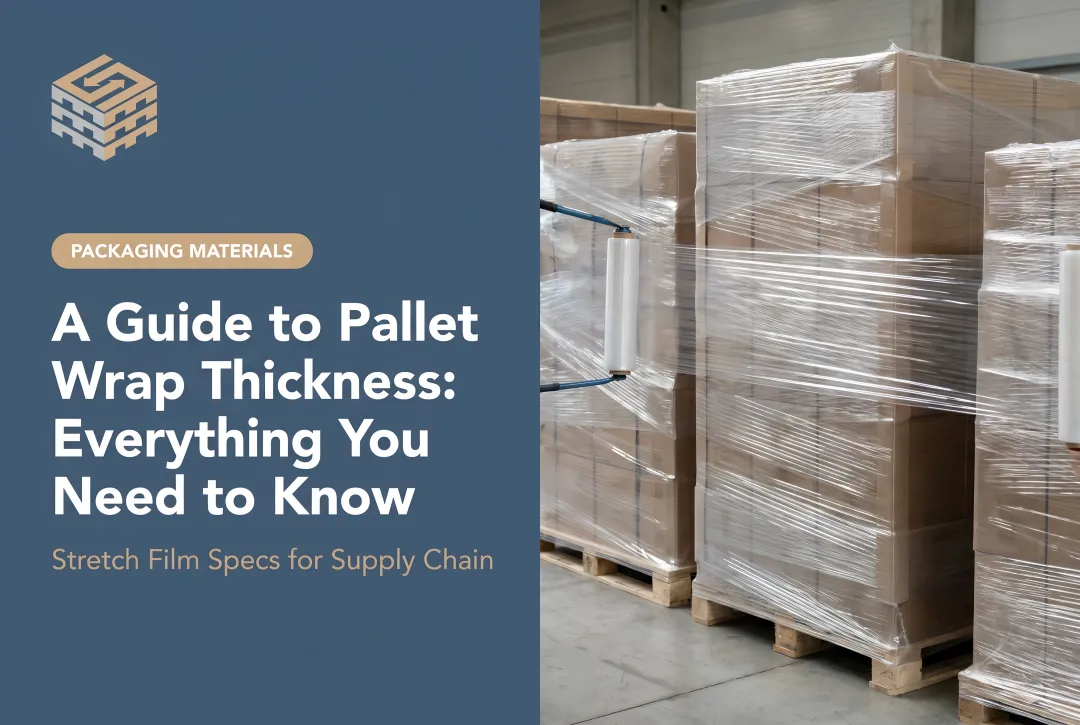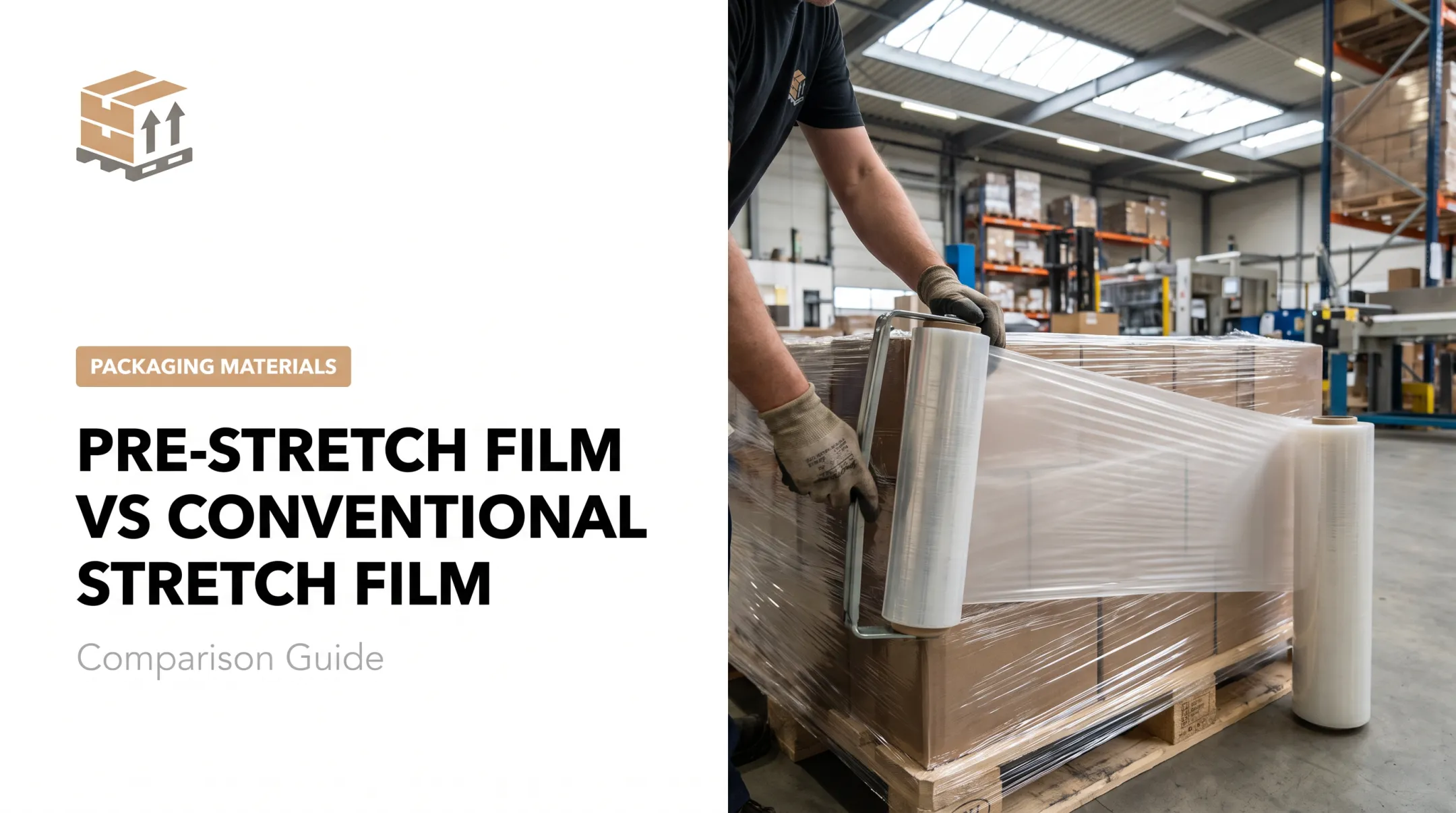

Many operations struggle with over-wrapping, inconsistent tension, or skipping containment checks altogether. This guide covers what stretch wrapping is, why it matters for FMCG, which film and equipment options fit your line, and the best practices that keep loads intact from dock to shelf. We'll also cover something often overlooked: the pallet underneath the wrap.
Key Takeaways
- Stretch wrapping unitizes and protects FMCG pallets, but only when matched to load type
- Containment force — not film volume — determines whether a load survives transit
- Cast vs. blown film and pre-stretch settings both affect cost and damage rates
- A warped or inconsistent pallet undermines even well-applied film
What Is Stretch Wrapping and Why Does FMCG Need It?
Stretch film is an elastic LLDPE (linear low-density polyethylene) plastic, made in cast or blown form and stretched during application. Its elastic recovery keeps constant pressure on the load after wrapping, holding the load together, according to Highlight Industries' technical breakdown.
Most people in the industry use "stretch wrap" and "pallet wrap" interchangeably.
For FMCG shippers, stretch wrap does three jobs:
- Unitizing the load so mixed cartons move as one stable unit
- Preventing shifting during transit, especially on multi-stop routes
- Protecting against dust, moisture, and tampering in warehouses and trucks
FMCG-specific headaches show up fast:
- Mixed-SKU pallets built for retail distribution centers
- Seasonal promo packs with irregular shapes
- Lightweight cartons that crush under too much tension
Stretch film vs. shrink film vs. cling film: These aren't the same thing. Shrink film requires a heat tunnel and physically shrinks around a package. It's a different technology entirely, according to Lantech's material comparison.
Cling film (the kitchen-drawer kind) lacks the gauge and elastic recovery needed to secure a pallet. Don't substitute one for another.
Here's the catch: even premium film performs poorly on a warped or weak pallet. If the foundation flexes, film can't compensate. We'll come back to this.
Types of Stretch Film and Wrapping Equipment for FMCG Operations
Hand Stretch Film
Best suited for low-volume operations or small distribution points where an operator wraps loads manually. It's the entry point most FMCG operations outgrow quickly as pallet volume climbs.
Machine and Automatic Wrappers
- Semi-automatic turntable wrappers — Operator loads the pallet; the machine handles rotation and tension. Lantech rates these up to roughly 40 loads per hour for mid-volume lines with stable cartons.
- Automatic/conveyorized wrappers — PLC-based systems built into the packaging line for continuous high-throughput plants. Rotary-arm models handle unstable or light loads better than a standard turntable.
Cast vs. Blown Film
| Attribute | Cast Film | Blown Film |
|---|---|---|
| Clarity | Higher, glossier | Lower |
| Noise during unwind | Quieter | Louder |
| Puncture resistance | Lower | Higher |
| Tear propagation resistance | Higher | Lower |
| Cling | Moderate | Higher |
According to Lantech's film manufacturing guide, blown film's puncture resistance and cling suit irregular or sharp-edged loads, while cast film's quiet unwind and clarity work well on retail-facing pallets.

Skid Management Services supplies machine-grade pre-stretch film and hand-grade rolls in multiple gauges and clarities, plus vented stretch film for moisture-sensitive FMCG loads like baked goods or produce.
Best Practices for Wrapping FMCG Pallet Loads
Load prep comes first. Square and center cartons before wrapping starts. Lantech notes that overhang beyond about two inches makes it hard to achieve a solid load-to-pallet bond. Don't let cartons hang past the pallet edge.
Containment force matters more than film quantity. Force equals wrap tension multiplied by film revolutions. Lantech's worked examples show a 2,000-lb stable load needing readings of at least 10 lb everywhere, while a taller, less stable load required a 9 lb minimum across all measurement points.
These are illustrative examples, not universal FMCG standards. Every load needs its own validation.
Lock the load without puncturing film. Roping or cable techniques anchor cartons to the pallet base, reducing shift risk without compromising the wrap seal.
Adjust tension by product type:
- Lighter tension for crushable snack, cereal, or chip boxes
- Firmer tension for canned goods or bottled beverages that can tolerate more pressure
- Balanced settings on mixed-SKU pallets so rigid packs don't force crush loads onto lighter cartons
Pre-stretch technology cuts film use. Machine pre-stretch typically runs 100–300%, with most operations landing at 200–250%, according to Lantech's trade-off analysis.

Lantech also claims powered pre-stretch systems can reduce film costs by at least 50%. Treat that figure as a manufacturer claim and confirm it against your own damage and film-break rates before banking on it.
Test containment force every shift. Regular checks catch equipment drift or tampering before it turns into a damaged shipment.
The Overlooked Foundation: Pallet Quality and Wrap Performance
A warped, weak, or inconsistent pallet undermines even correctly applied film. If the deck flexes or a stringer is cracked, the load shifts regardless of how tight the wrap is. Wrap tension can't fix a structural problem underneath it.
For FMCG shippers moving high pallet volumes, reliability comes down to two things:
- Consistent pallet quality — solid boards, intact stringers, no protruding fasteners
- Uninterrupted supply — so packaging lines never stall waiting on inventory
Meeting both needs usually means a dual-source supply model: owned inventory plus a backup supplier network. Skid Management Services supplies wood pallets and packaging products nationally on that model, so FMCG lines stay stocked without gaps.
Grade A recycled pallets (all seven deck boards, no broken stringers) and new kiln-dried, heat-treated options give operations a stable base under the wrap. Food manufacturers including Campbell Snacks, Knouse Foods, Stauffer's, Nissin Foods, Hain Celestial Group, and Plainville Farms use this approach for food-grade pallet programs.

Closed-loop programs—typically for operations moving 500+ pallets monthly on a two-way cycle—combine scheduled delivery with used-pallet pickup and recycling. Packaging lines keep running without waiting on an inconsistent pallet source.
Common Mistakes and How to Avoid Them
These habits show up often on FMCG lines. They burn film, raise cost, and still leave loads unstable.
- Over-wrapping "to be safe" — Extra layers rarely fix weak containment; set force to the load and stop once the target is met
- Inconsistent wrap force across SKUs — Match tension by product family; one global setting leaves light loads loose and heavy ones crushed
- Skipping containment force checks — Spot-check force on a fixed cadence so drift shows up on the floor, not at the customer dock
Frequently Asked Questions
What is a stretch wrapping machine?
A stretch wrapping machine wraps stretch film around a palletized load using controlled tension and rotation. Semi-automatic models use a turntable and an operator; automatic systems integrate directly into the packaging line.
What are stretch wraps used for?
They unitize pallets into single stable loads, protect against dust, moisture, and tampering, and enable safe transport through the FMCG supply chain from plant to distribution center.
Can I use cling film instead of pallet wrap?
No. Cling film lacks the gauge, strength, and elastic recovery that pallet loads require. It's built for food-contact and light packaging applications, not for securing hundreds of pounds on a pallet.
Is stretch wrap the same as pallet wrap?
Yes. The industry uses both terms interchangeably to describe the same LLDPE film used to unitize pallet loads.
How much stretch wrap does a pallet use?
It depends on pallet size, film gauge, pre-stretch percentage, and wrap pattern. There's no single universal figure, so track usage by SKU and load type to set a realistic baseline for your operation.
How much does a stretch wrapper cost?
Semi-automatic entry-level systems start around $7,000. Automatic, conveyorized systems cost significantly more and are typically quoted per project based on line speed and integration needs.