
Understanding pallet grades matters because the wrong choice affects product safety, damages equipment, and drains budget through unnecessary replacements. This guide breaks down what grades A, B, and C actually mean, why they matter for your operation, and how to pick the right one without overspending or underprotecting your product.
TL;DR
- Grade A: Near-new, minimal repairs — best for retail, food, and pharma shipments
- Grade B: Visible wear, still structurally sound — fit for internal warehousing
- Grade C/utility: Reserve for low-demand or one-time internal use only
- Grading isn't federally standardized, so always confirm specs with your supplier
- Choose the grade that matches cost, durability, and your load requirements
What Are Pallet Grades?
Pallet grades are a commercial classification system, not a formal engineering standard. They describe a pallet's condition, repair history, and structural quality, primarily for recycled and refurbished wood pallets re-entering the supply chain.
Here's the catch: there's no single federal body enforcing these definitions. The National Wooden Pallet and Container Association (NWPCA) publishes a Uniform Standard for Wood Pallets covering construction, repair criteria, and materials. It doesn't establish official "Grade A/B/C" labels. Those labels come from individual suppliers and recyclers.
That means grading criteria can vary by supplier or region. Treat it as a practical purchasing tool, not a strict technical spec you can assume applies everywhere.
Why Pallet Grades Matter in Logistics and Warehousing
Choosing the wrong grade doesn't just affect appearance. It can compromise product safety, load stability, and equipment performance, especially in automated systems.
What goes wrong with mismatched grades:
- Product damage from splits, missing wood, or structural breaks
- Forklift and AS/RS malfunctions from warped or dimensionally inconsistent pallets
- Higher replacement costs from premature failure
- Safety hazards for warehouse staff handling unstable loads
Those failure modes show up clearly in field data. A 2023 BioResources study comparing field-used pallets to Virginia Tech's FasTrack simulation found splits were the most common damage type, occurring in 25.7% of field pallets.
Stringer-notch damage showed up in 52% of field-used pallets, far higher than lab simulations predicted. Real-world handling causes more wear than controlled testing captures.
Automation Raises the Stakes
For AS/RS environments, dimensional consistency isn't optional. PalletOne's guidance on AS/RS pallet quality notes that warped boards, protruding nails, and pallet deflection can cause failed induction, sensor errors, and system jams. One bad pallet can halt an automated line and delay an entire shipment.
Types of Pallet Grades
Pallets typically fall into three tiers: A, B, or C. Each reflects repair history, board condition, and appearance. Matching grade to application keeps your budget and your risk in check.
| Grade | Condition | Best for | Watch-outs |
|---|---|---|---|
| A | Minimal repairs, near-new boards | Retail, food/bev, pharma, AS/RS | Highest cost, tighter supply |
| B | Visible wear, moderate repairs | Warehousing, manufacturing, internal moves | Not ideal for retail-facing or hygiene-sensitive use |
| C / Utility | Heavy wear, multiple repairs | Static storage, light internal use, scrap programs | Higher load-failure risk; specs vary by supplier |

Grade A Pallets (Premium/Near-New)
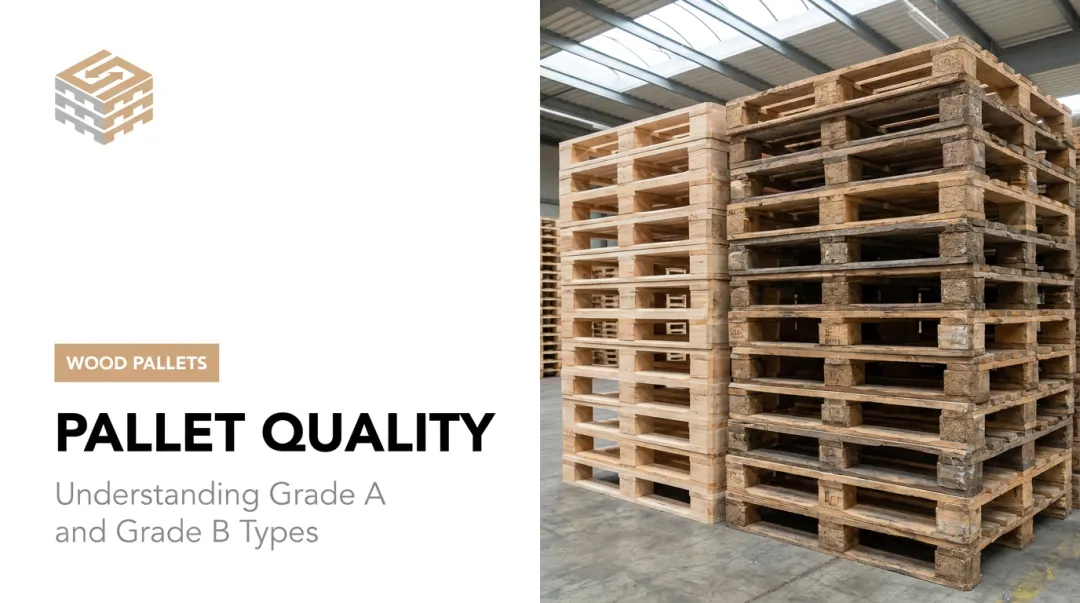
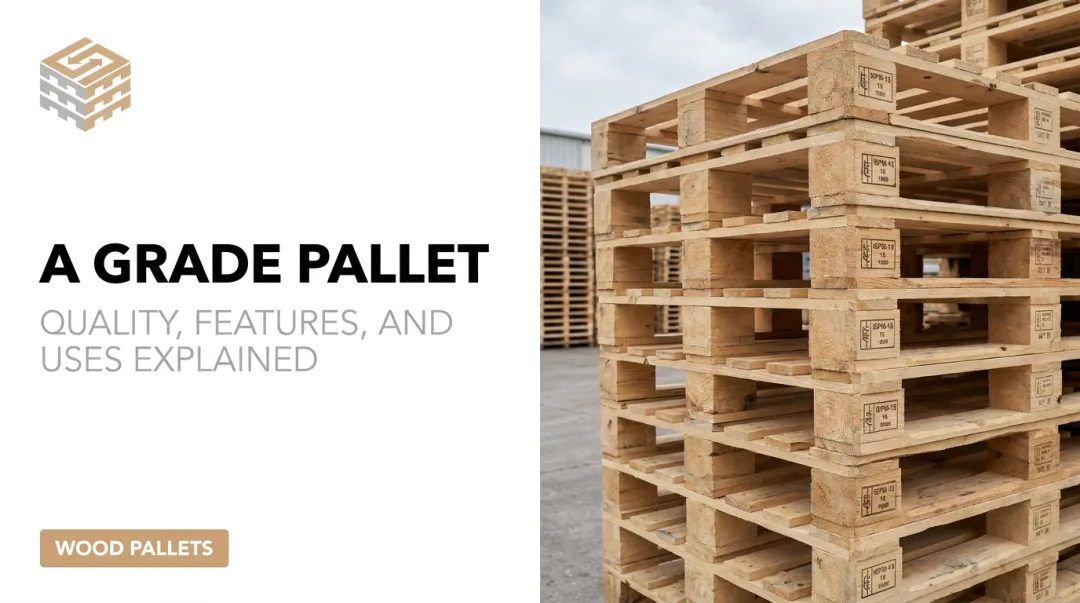
Grade A pallets show minimal to no repairs, with uniform boards and near-new structural condition.
How to spot them:
- Clean deck boards with no visible plugs or plates
- Minimal discoloration
- Highest board count with the least repair history
Skid Management Services defines Grade A as pallets with all seven deck boards present, no broken stringers, and minimal repair history — close enough to new for most applications.

Best suited for:
- Retail-facing shipments
- Food and beverage manufacturing
- Pharmaceutical logistics
- Automated storage/retrieval systems (AS/RS)
Trade-offs: Highest cost among recycled options, and availability is more limited than lower grades since fewer pallets meet this bar.
Grade B Pallets (Functional/Mid-Level)
Grade B pallets are functional but show visible wear and moderate repairs— replaced boards, plates, or plugs.
How to spot them:
- Reinforced stringers
- Mismatched boards from repair patches
- More visible repair marks than Grade A
Internally, this tier is defined as pallets with one to two minor board repairs while retaining full structural integrity. You give up appearance, not structural performance, and pay less for it.
Best suited for:
- Internal transport and material flow
- General warehousing
- Manufacturing operations
- One-way, non-perishable shipments
Trade-offs: Less polished appearance and may not clear retail-facing or hygiene-sensitive requirements.
Grade C Pallets (Utility/Low Quality)
Grade C, sometimes called "utility" or "#2" grade, covers heavily worn pallets with multiple repairs, cracks, or damaged components.
How to spot them:
- Significant visible wear
- Inconsistent board quality across the deck
- Visible structural weak points
Best suited for:
- Low-demand static storage
- Occasional internal handling
- Scrap or recycling programs
Trade-offs: Higher risk of load failure. These aren't built for dynamic loads or repeated cycling through your operation.
Not every supplier offers a formal "Grade C." Some stop at Grade B plus a utility category, so confirm exactly what you're buying.
How to Choose the Right Pallet Grade
The right grade depends on your application, load, and budget, not just the lowest price tag.
Key factors to weigh:
- Product sensitivity — Retail-facing loads need cleaner grades than strictly internal moves
- Load weight — Heavy chemical or IBC loads (often 2,200–3,300 lb) need 48x48 pallets rated 2,500–3,000 lb dynamic
- Automation level — AS/RS systems demand tighter dimensional tolerances than manual handling
- Budget vs. durability — Lower-grade pallets cost less upfront but may need faster replacement under repeated use
- Sustainability goals — Recycled grades typically run 40-60% cheaper than new pallets while supporting waste diversion

Working with an established national supplier with a broad network, like Skid Management Services, helps ensure consistent grade availability and competitive pricing regardless of order size. That matters because a single facility's inventory can run short on a specific grade during peak season; a wider supplier network smooths that out.
What to Check Before Finalizing Your Pallet Grade
A few common missteps trip up otherwise careful buyers:
- Over-buying Grade A for low-risk internal applications where Grade B would perform just fine and save real money
- Assuming grading is universal: one supplier's Grade B might be another's Grade C. Get written criteria before committing
- Ignoring long-term costs: a cheaper Grade C pallet that fails after two uses can cost more than a Grade B pallet that lasts twenty trips
Food and chemical operations should weigh these risks carefully. Export shipments are a separate checkpoint: they require ISPM-15 heat treatment at 56°C (132.8°F) for at least 30 minutes, with proper stamping, regardless of the grade you select. Confirm compliance details alongside grade specs before finalizing an order.
Conclusion
Pallet grades help you match quality to your operational needs:
- Grade A for retail and hygiene-sensitive shipments
- Grade B for everyday warehouse flow
- Grade C or utility grade for low-stakes internal use
Match the grade to the job before you buy. That keeps you from overpaying for appearance you do not need, or under-specifying loads that cannot afford failure.
Frequently Asked Questions
What do the different pallet codes mean?
Pallet codes or grades (A, B, C) indicate a pallet's condition, repair history, and structural quality. They help buyers match pallet quality to specific applications rather than guessing based on price alone.
What is the difference between Grade A and Grade B pallets?
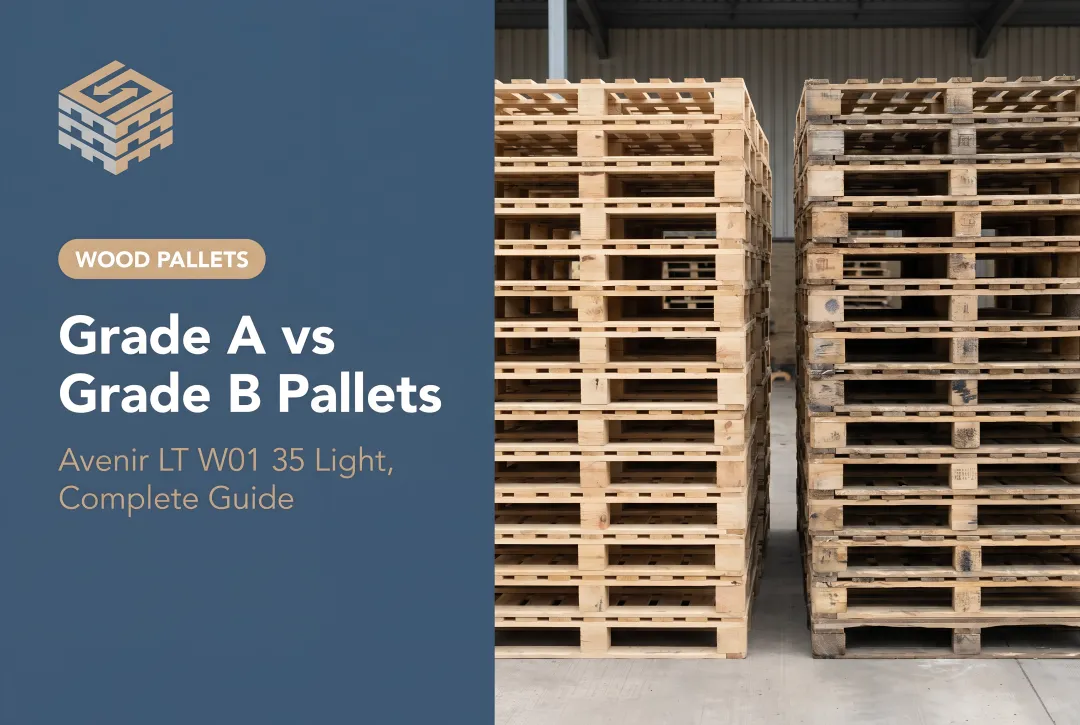
Grade A pallets are near-new with minimal repairs and all deck boards intact. Grade B pallets show more wear and visible repairs, typically one to two board fixes, but remain structurally sound for general use.
Are Grade C pallets safe to use?
Grade C pallets are functional but best limited to low-demand, non-critical, or static applications. Their higher failure risk makes them unsuitable for dynamic loads or repeated handling cycles.
Is there a universal standard for pallet grading in the US?
No single federal standard governs A/B/C labels. GMA-style specifications are widely referenced for pallet dimensions, but exact grading definitions vary by supplier, so always confirm specs directly.
How do I know which pallet grade fits my business?
Match the grade to load demand, customer-facing vs. internal use, and budget. Retail and food-grade shipments generally need Grade A; internal warehousing often works fine with Grade B.
Can I mix pallet grades within the same operation?
Yes, many businesses do exactly this: Grade A for retail-facing shipments and food-grade compliance, Grade B for warehouse transfers, and Grade C for internal storage or one-time use.