
Introduction
Pallets pile up fast. One cracked deck board or a broken stringer, and most operations send that pallet straight to the scrap bin, even when it still has months of useful life left.
That habit gets expensive. Rising lumber costs, disposal fees, and shrinking dock space are pushing warehouses, distributors, and food and beverage plants to rethink what happens to a pallet once it's no longer "new."
A 2025 BioResources study estimates U.S. companies produced roughly 919 million new wood pallets and 280 million repaired or remanufactured pallets in 2021, with about 3.1 billion pallets circulating nationwide.
That's a lot of material moving through supply chains, and a lot of opportunity to recover value instead of discarding it.
This article covers what pallet recycling looks like in practice, where it delivers measurable savings, and where results depend on your facility's volume, pallet condition, and local market. Not every program produces identical results, but tracking the right numbers usually reveals real upside.
Key Takeaways
- Recycling reduces new-timber demand and keeps bulky pallets out of landfills
- Financial results depend on pallet condition, volume, ownership, and local recovery markets
- Reuse and repair preserve more value than breaking pallets down for raw material
- Tracking disposal costs, storage space, and collection reliability shows whether a program is working
- A qualified pallet supplier can help you weigh recycled options against new-pallet requirements
What Is Pallet Recycling?
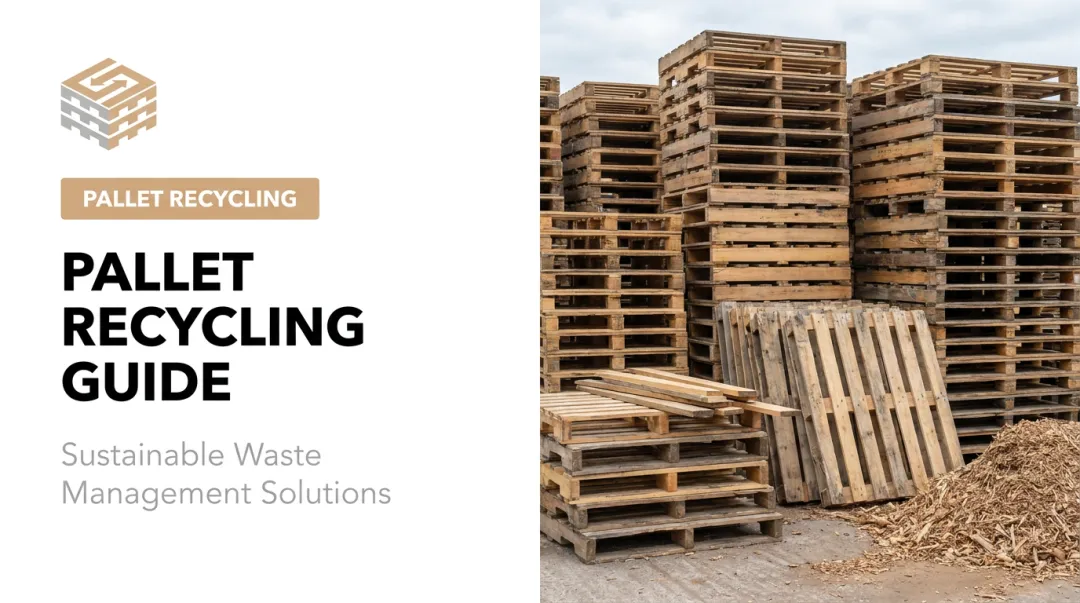
Pallet recycling means collecting used pallets and routing them toward reuse, repair, reconditioning, dismantling, or material recovery, instead of sending every damaged unit to the trash compactor by default.
You'll find it applied across manufacturing plants, food and beverage facilities, warehouses, distribution centers, and e-commerce fulfillment operations. Any site that moves product on wood pallets generates a steady stream of candidates for recovery.
The Recovery Hierarchy
Not every pallet gets treated the same way, and that's the point. A working recovery program sorts pallets into tiers:
- Reuse pallets that remain safe and suitable for their intended load, with no modification needed
- Repair or recondition pallets with manageable damage, such as a broken board or loose fastener
- Dismantle or process pallets no longer fit for service into lumber, mulch, composite material, or biomass
Recycling extends material life and supports better supply-chain outcomes. It isn't an automatic guarantee of payment, environmental savings, or compliance; those depend on how the program is run.
Key Advantages of Pallet Recycling
The most meaningful benefits here are operational, not abstract. They show up in cost reports, waste logs, dock space, and supply reliability: all things you can actually measure.
Lower Pallet Purchasing and Disposal Costs
Repairing usable pallets, buying suitable reconditioned units, and diverting recoverable material all reduce how much you spend on new pallets and landfill disposal.
The catch: don't just look at a potential rebate. Calculate total cost, including:
- New-pallet purchases and repair costs
- Hauling, disposal fees, and sorting labor
- Storage space tied up by accumulated pallets
- Collection charges and rejected-load fees
Internal pricing data from Skid Management Services shows recycled and remanufactured pallets can deliver 40–60% cost savings versus new pallets for many internal warehouse, intra-DC, and manufacturing-flow applications. Direct buyback rates vary by grade, volume, and pickup distance, and closed-loop trade-in credits typically offset 15–40% of new-pallet spend depending on grade mix and volume.

Savings also shift based on pallet dimensions, grade, condition, quantity, and local market demand for recovered pallets — there's no single national number that applies to every business.
KPIs to track:
- Pallet cost per unit and disposal cost per unit
- Repair cost and recovery credits
- Total program cost and net cost over the same measurement period
This advantage matters most for high-volume operations, sites paying heavily for disposal, businesses with frequent pallet damage, and companies dealing with recurring shortages.
Reduced Landfill Waste and Better Resource Conservation
Recycling keeps pallets — and the wood or plastic in them — in productive use longer. That reduces demand for virgin material and limits what ends up in landfills.
Recovered wood from pallets that can't be reused finds its way into:
- Landscape mulch
- Animal bedding
- Composite or packaging products
- Biomass fuel
Treatment type, contamination, and local acceptance rules all affect whether a given batch qualifies for these outlets.
A USDA Forest Service study found that U.S. municipal solid waste facilities received nearly 29 million pallets in 2016, recovering about 54.8% and landfilling roughly 13 million. That recovery rate applies specifically to pallets arriving at those facilities (not to every pallet used in the country), but it shows meaningful diversion is already happening at scale.
Reuse and repair actually beat immediate grinding on efficiency, because they preserve the pallet's original function instead of breaking it down. A separate Forest Service lifecycle study attributes comparatively low raw-material impacts in pallet repair to limited virgin lumber use, since most boards come from dismantled pallets already in the system.
KPIs to track:
- Pallets reused, repaired, recycled for material, rejected, and disposed
- Weight or volume diverted, using a clearly documented measurement method
Several of Skid Management Services' food and beverage clients — including Campbell Snacks, Knouse Foods, Hain Celestial Group, and Stauffer's — fold pallet recycling tonnage and diversion data into their own sustainability scorecards. That's only possible because the numbers are documented, not estimated after the fact.
This advantage carries the most weight for businesses with waste-reduction commitments, customer sustainability requirements, formal environmental reporting, or limited local disposal capacity.
Improved Warehouse Organization, Supply Continuity, and Operational Control
Defined pallet sorting and collection cuts down the piles that build up around docks, staging areas, and receiving zones. Fewer stacks means less repeated handling of pallets nobody actually wants.
There's a supply-side benefit too. Returning suitable pallets to circulation, or sourcing recycled inventory, can reduce how dependent you are on new-pallet availability — though quality and load requirements still need to be verified before any recycled unit goes into service.
A consistent process answers the practical questions that otherwise cause friction:
- Where should pallets be stored while awaiting sorting?
- Who inspects them, and against what standard?
- When is collection requested?
- How are exceptions (damaged loads, disputed ownership) handled?
KPIs to track:
- Occupied pallet-staging space and employee handling time
- Missed pickups and collection turnaround
- Pallet shortages and shipping delays
- Percentage of pallets routed to an approved recovery stream
This matters most for busy distribution centers, seasonal operations, multi-shift facilities, and any site where dock congestion or inconsistent pallet supply disrupts throughput.
One caveat worth stating plainly: pallet recycling supports good housekeeping, but it doesn't replace safe stacking, aisle-clearance rules, fire-protection requirements, or standard inspection procedures.
What Happens When Pallet Recycling Is Missing or Ignored
Sending every pallet into one disposal stream sounds simple. In practice, usable pallets get discarded, unnecessary new purchases follow, and recoverable material value walks out the door.
Common operational consequences include:
- Accumulating pallet stacks that consume staging space and create repeated handling work
- Unclear ownership or acceptance rules, leading to rejected loads, disputes, or improper disposal of rental or customer-owned pallets
- Inconsistent collection that creates dock congestion, emergency hauling requests, and unpredictable waste costs
- Missing records that make it hard to back up diversion, sustainability, or cost-saving claims when stakeholders or auditors ask
These are risks, not guarantees. The severity depends heavily on your facility's volume, your internal process, and the reliability of your provider.
Businesses working with pooled pallet systems like CHEP or PECO sometimes face an added wrinkle: disputed "pallet declarations" when ownership isn't clear. Direct ownership paired with a straightforward buyback arrangement sidesteps that particular headache entirely.
How to Get the Most Value from Pallet Recycling
Recycling works best as a managed operating process, not an occasional cleanup project when the dock gets too crowded.
Audit your current pallet stream. Record pallet type, dimensions, ownership, condition, contamination, average volume, storage location, disposal route, and existing purchase or hauling costs. Separate reusable, repairable, recyclable, questionable, and owner-return pallets so each gets the right treatment.
Set clear acceptance, safety, and collection rules. Confirm who inspects pallets, who owns recovered material, what damage or contamination gets rejected, and what happens after a missed pickup. Base collection triggers on generation rate, available storage, and seasonal peaks — not just the lowest quoted price.
Measure against a baseline. Compare net cost, pallet availability, handling time, staging space, recovery quantities, rejected loads, and service reliability before and after implementation. Request documentation that distinguishes reuse, repair, material recycling, and disposal, and verify whether reported weights are measured or estimated.
Match recovered pallets to actual requirements. Confirm load capacity, dimensions, construction, cleanliness, and any treatment or customer specification before putting recycled or reconditioned pallets into service.
Review the program regularly. Investigate rejected loads, missed collections, unexpected charges, or shortages, then adjust sorting instructions, storage layout, or collection frequency accordingly.

A qualified supplier can make this process easier to manage. Skid Management Services, for example, works from its own pallet inventory alongside a broader supplier network, so businesses can compare Grade A and Grade B recycled stock against new-pallet requirements for a given application — without guessing whether supply will hold up during a busy quarter.
Conclusion
Pallet recycling supports lower waste, better resource use, and tighter warehouse control, and often lower total pallet-related costs, when the program is built around how your facility actually operates, not a generic template.
The real value comes from routing each pallet to its highest practical recovery option: reuse where possible, repair where it makes sense, material recycling when a pallet is truly done, and responsible disposal only as a last resort.
Start with these steps:
- Audit your current pallet stream
- Confirm ownership and quality requirements before committing to recycled inventory
- Track the numbers over a consistent period
- Work with a reliable pallet and packaging supplier to keep the right mix of new and recovered pallets flowing through your operation
Frequently Asked Questions
Is pallet recycling profitable?
It depends on pallet condition, volume, ownership, local demand, and collection or repair costs. Profitability only shows up clearly when you measure total net cost rather than focusing on a potential credit alone.
What are the 5 benefits of recycling?
For pallets, the five main benefits are lower disposal and purchasing costs, reduced landfill waste, conservation of raw materials, improved warehouse organization and supply reliability, and support for sustainability reporting goals.
How do I get rid of unwanted pallets?
Confirm ownership first, then separate reusable or repairable pallets from the rest and remove contamination where needed. Contact a qualified pallet supplier or recycler about accepted materials and collection requirements.
Are old pallets worth anything?
Some have reuse, repair, or material value, but dimensions, condition, quantity, ownership, and local market demand all determine whether a buyer or recycler will actually pay for them.