
But not all pallets are interchangeable. Material, size, and grade affect cost, retailer compliance, and whether your product arrives in one piece. This guide breaks down the main pallet types e-commerce businesses use, where each fits, and how to pick the right one for your operation.
TL;DR
- Pallets handle storage, order fulfillment, and shipping at every stage of e-commerce logistics
- Main types: wood (standard/Grade A/B), plastic, cardboard/presswood, and retailer-specific builds
- The right choice depends on destination, product type, budget, and compliance rules
- Picking wrong means rejected shipments, damaged goods, and higher freight costs
What Is a Pallet (and Why Does Type Matter)?
A pallet is a flat structural platform that supports goods for stacking, storage, and transport by forklift or pallet jack. Simple concept, but pallets touch nearly every part of a fulfillment operation: receiving inbound inventory, warehousing, order picking, and outbound shipping.
"Type" isn't just about size. It covers:
- Material (wood, plastic, cardboard)
- Construction (block vs. stringer, deck configuration)
- Grade (new, Grade A, Grade B, utility)
Two pallets can share the same 48x40 footprint and still perform completely differently based on these factors. In e-commerce fulfillment, the wrong type shows up as crushed cartons, failed rack checks, or freight carriers refuse to handle.
Why Pallet Choice Matters for E-commerce Businesses
The right pallet affects three things directly: whether retailers and carriers accept your shipment, whether your product survives transit, and how efficiently your warehouse runs.
Get it wrong, and the consequences show up fast. Costco's routing and packaging guide is a clear case: US block pallets at 48x40 inches, no overhang, a 2,500 lb load limit, and a 58-inch maximum height. Miss any of those specs and your shipment can be refused at the dock.
Other common failure points:
- International shipments rejected for missing ISPM-15 heat-treatment stamps
- Product damage from protruding nails or broken deck boards
- Wasted warehouse space from inconsistent pallet dimensions
- Higher freight costs from oversized or non-stackable loads
As order volume grows, one-off pallet purchases stop working. Businesses shipping hundreds of loads a month need a steady pallet supply, not a scramble every time stock runs low—so outbound orders never sit waiting on skids.
Types of Pallets Used in E-commerce
Pallets aren't one-size-fits-all. The right type depends on your shipping destination, product fragility, budget, and the handling equipment already in your warehouse.
Standard Wood Pallets
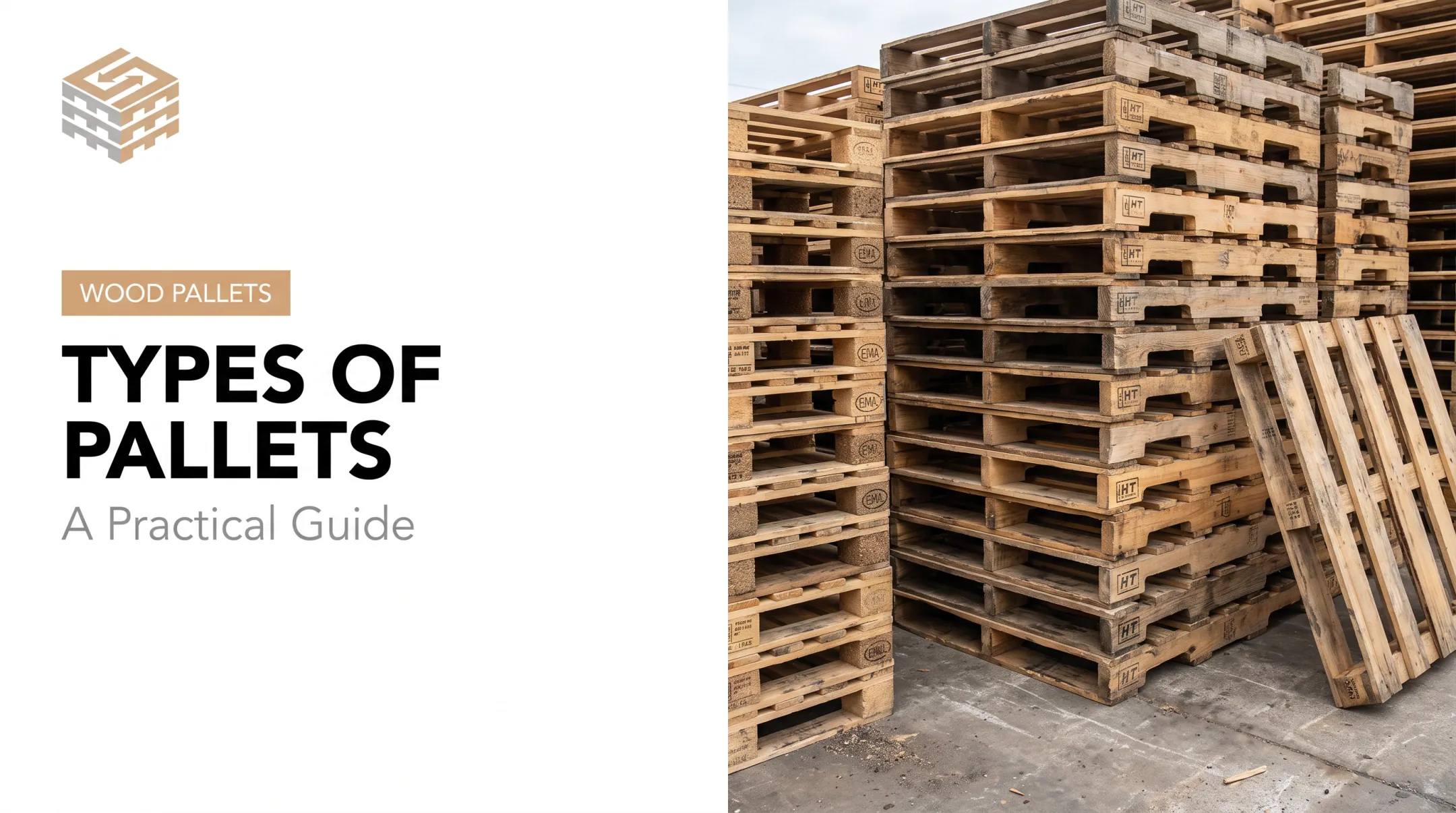
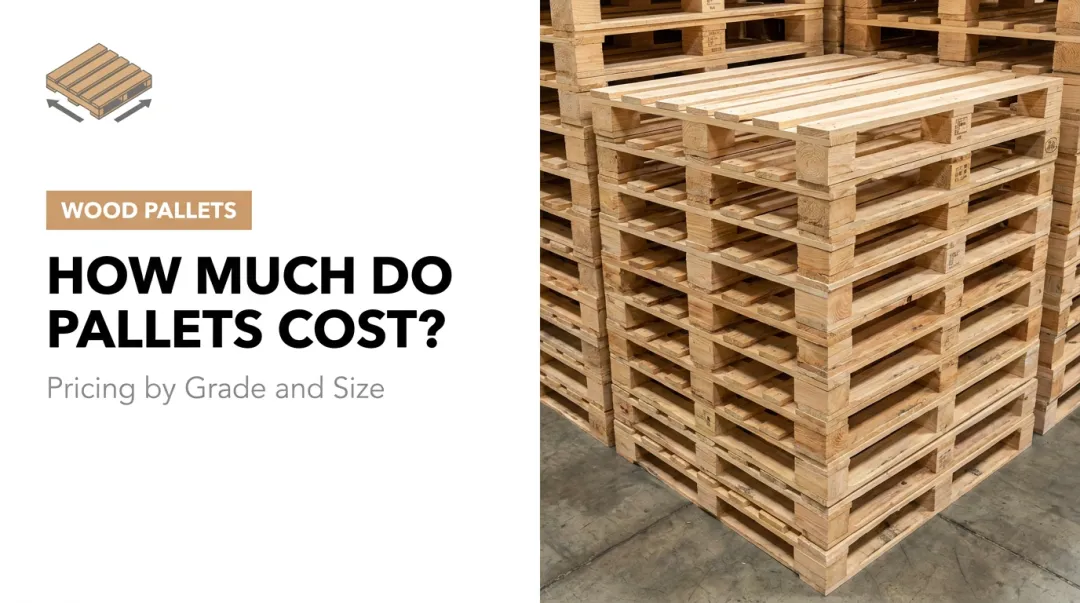
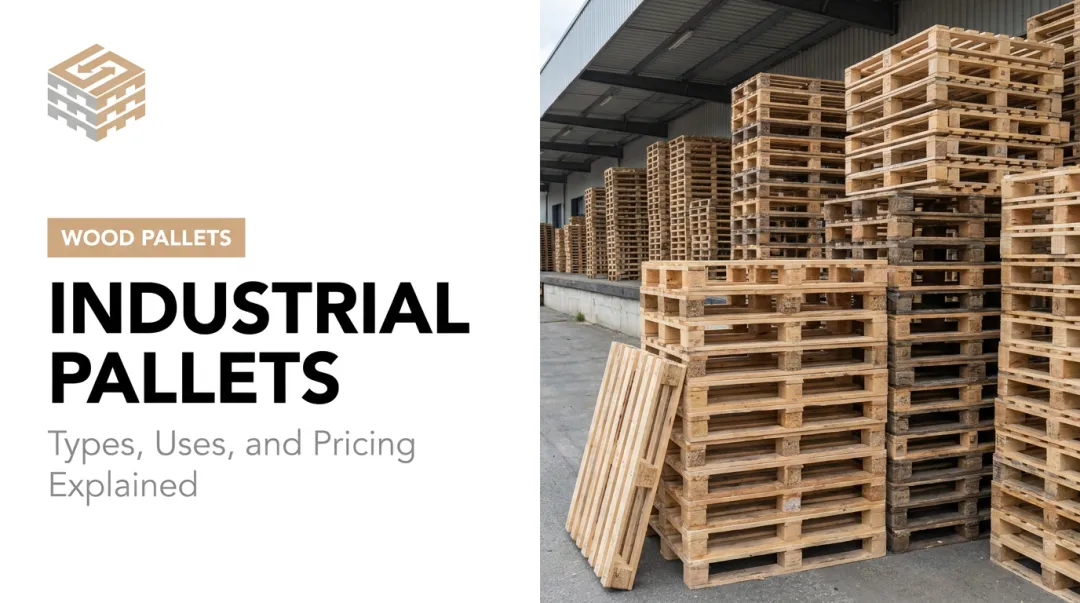
The GMA 48"x40" wood pallet is the most common platform in US domestic warehousing. It's built from stringers or blocks, with deck boards nailed across the top and bottom, and it's compatible with standard forklifts, pallet jacks, and racking systems.
Grade matters here. Skid Management Services supplies:
- New pallets — cleanest, most dimensionally consistent option
- Grade A recycled — all seven deck boards intact, no broken stringers, minimal repair history
- Grade B recycled — one or two minor board repairs, still structurally sound
- Utility/#2 grade — lowest cost, suited for internal-only flows

Recycled pallets typically run 40-60% cheaper than new ones and work fine for internal handling or shipments to receivers without strict specs.
For e-commerce fulfillment (Amazon FBA, for example), receivers usually require:
- GMA 48x40 with four-way entry
- Undamaged stringers
- No protruding nails
- No missing deck boards
Best for: domestic shipping, bulk orders, general warehouse storage.
Limitation: not accepted for certain international shipments or retailers demanding specific treatment or grades.
Plastic Pallets
Molded plastic pallets fall outside APHIS wood-packaging regulations entirely, according to APHIS import guidance, meaning no heat treatment or ISPM-15 stamp is needed for export.
They show up most often in automated warehouses and hygiene-sensitive supply chains. Modern Materials Handling reports growing plastic pallet adoption for food, beverage, and pharmaceutical compliance, plus the dimensional uniformity automated handling systems need.
Trade-offs:
- Higher upfront cost than wood
- Longer lifespan and easier to sanitize
- Recyclable at end of life
- Heavier than cardboard alternatives, which matters for air freight
Best suited for: international shipments (especially into Europe), food/beverage/pharma products, and automated warehouses running conveyor or robotic pick systems.

Specialty & Retailer-Compliant Pallets
Big-box retailers often mandate exact pallet specs, and getting this wrong is one of the fastest ways to get a shipment bounced back at the DC door.
Skid Management Services builds retail-DC-spec pallets to the requirements used by Costco, Walmart, Target, Home Depot, Kroger, Lowe's, Wegmans, ShopRite, BJ's, and Sam's Club, typically on a GMA 48x40 footprint with:
- Deck configurations: 3-, 4-, 5-, or 7-board top decks, including solid-top decks for small products
- Construction: 3-stringer standard, 4-stringer reinforced, or true block construction for four-way entry
- Treatment: kiln-dried heat treatment to 56°C/132.8°F core temperature for at least 30 minutes, for ISPM-15 export compliance
Block pallets allow forklift entry from all four sides, which speeds up handling in high-volume DCs. Solid-deck builds add stability for smaller or irregularly shaped items that might otherwise slip through slatted decks.

Best suited for: sellers shipping directly into big-box retailer distribution centers.
Limitation: higher cost and less flexibility for other uses outside that specific retailer's network.
Eco-Friendly and Lightweight Alternatives
Cardboard and presswood pallets offer a lightweight, single-use option for e-commerce shippers cutting freight weight or running one-way export lanes. Modern Materials Handling notes that export is the biggest market for paper pallets, with growing use in air freight since they weigh less than plastic or wood equivalents.
For businesses that want sustainability without sacrificing durability, recycled and remanufactured wood pallets are a middle ground. Instead of buying virgin lumber, suppliers collect, sort, grade, and repair used pallets:
- Grade A pallets re-enter inventory as near-equivalent to new
- Grade B pallets are repaired and reused
- End-of-life pallets are processed into wood chip or biomass
This closed-loop approach cuts cost by 40-60% versus new pallets while keeping usable material circulating instead of landing in a dumpster. A supplier running closed-loop pallet programs can hold those sustainability gains against steady supply and stable pricing.
How to Choose the Right Pallet Type for Your E-commerce Business
The right pallet depends on your operation, not just the lowest sticker price. Walk through these factors before committing to a supplier or program:
- Shipping destination: domestic loads have far more flexibility than international shipments requiring ISPM-15 compliance
- Product weight, fragility, and packaging format: heavier or irregular loads may need reinforced or block construction
- Retailer or marketplace requirements: check routing guides before you ship, not after a rejection
- Budget and reuse frequency: one-way shipments favor cheaper cardboard or recycled wood; recurring lanes favor closed-loop wood or durable plastic programs
- Compatibility with existing equipment: confirm your forklifts and racking match the entry type you're ordering
- Sustainability goals and supply reliability: recycled programs help ESG reporting, but only if the supplier can keep volume consistent

What to Check Before Finalizing Your Pallet Type
A few practical checks save headaches down the line:
- Don't over-invest in plastic when standard wood handles domestic shipping just fine. Save the premium spend for export or hygiene-sensitive loads.
- Confirm retailer compliance requirements before the shipment leaves your dock, not after it's refused.
- Weigh long-term supply consistency, not just per-unit cost. A slightly higher price from a supplier who never runs out beats a cheaper one that leaves you scrambling.
- Verify surge capacity by asking whether your supplier can scale during seasonal spikes. A hybrid model—owned inventory plus a broader supplier network—handles demand surges better than a single source.
Conclusion
Pallets are a core part of how e-commerce goods move safely and efficiently from warehouse to customer. Wood, plastic, specialty, and eco-friendly options each solve different problems at different price points.
As your business scales, partnering with a national pallet and packaging provider like Skid Management Services keeps pricing competitive and supply uninterrupted. That holds whether you're shipping standard GMA 48x40 loads domestically or building retailer-compliant pallets for a big-box distribution center.
Frequently Asked Questions
How much does a pallet usually cost?
Pricing varies by material, size, and condition. New wood pallets cost more than recycled options, which typically run 40-60% cheaper. Final cost depends on grade, volume, and whether you need single-use or multi-trip builds.
Where can I get pallets for free?
Retailers, online marketplaces, and classifieds sometimes offer free pallets, but quality and availability are inconsistent. A dedicated supplier offers reliable grading, condition guarantees, and steady volume that free sources can't match.
What size pallet is standard for US shipping?
The GMA 48"x40" pallet is the dominant US standard, used across most domestic warehousing and retail distribution. Other sizes (48x48, 42x42, 40x48) show up for specific products, export lanes, or custom retail programs.
Can I reuse pallets for multiple shipments?
Yes—especially with sturdier wood or plastic builds rated for multiple trips. Buy-back and closed-loop programs let businesses recover and recirculate pallets instead of buying new ones every cycle.
Do international shipments require special pallets?
Yes. Regulated wood packaging entering or leaving the US needs ISPM-15 heat treatment and a valid stamp showing the IPPC logo, country code, and treatment code. Plastic pallets are exempt from this specific requirement.
How do I know which pallet type my retailer requires?
Check the retailer's routing and packaging guide directly, since specs like size, weight limits, and construction vary by company. A pallet supplier experienced with retail-DC programs can also confirm current requirements before you ship.