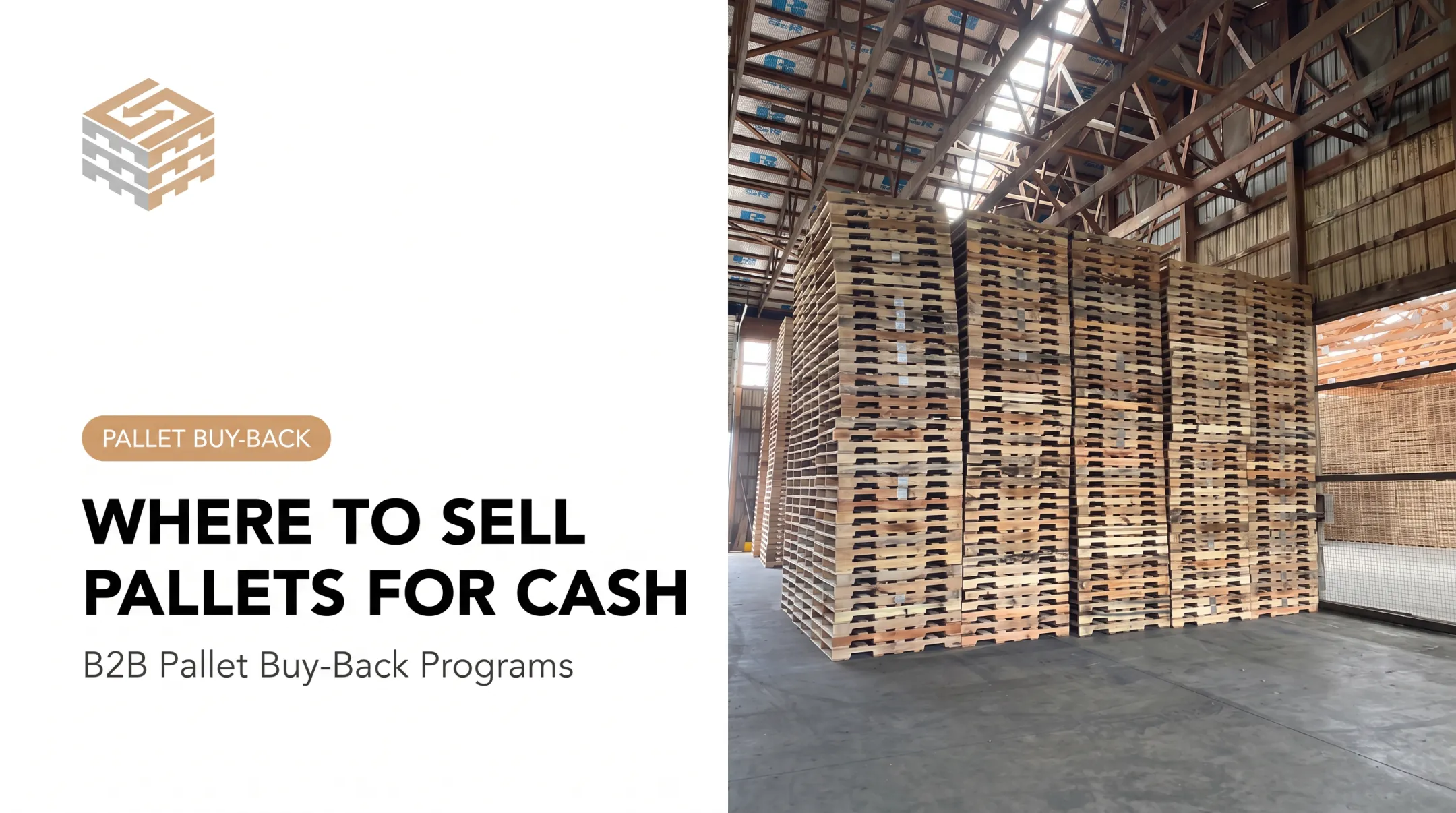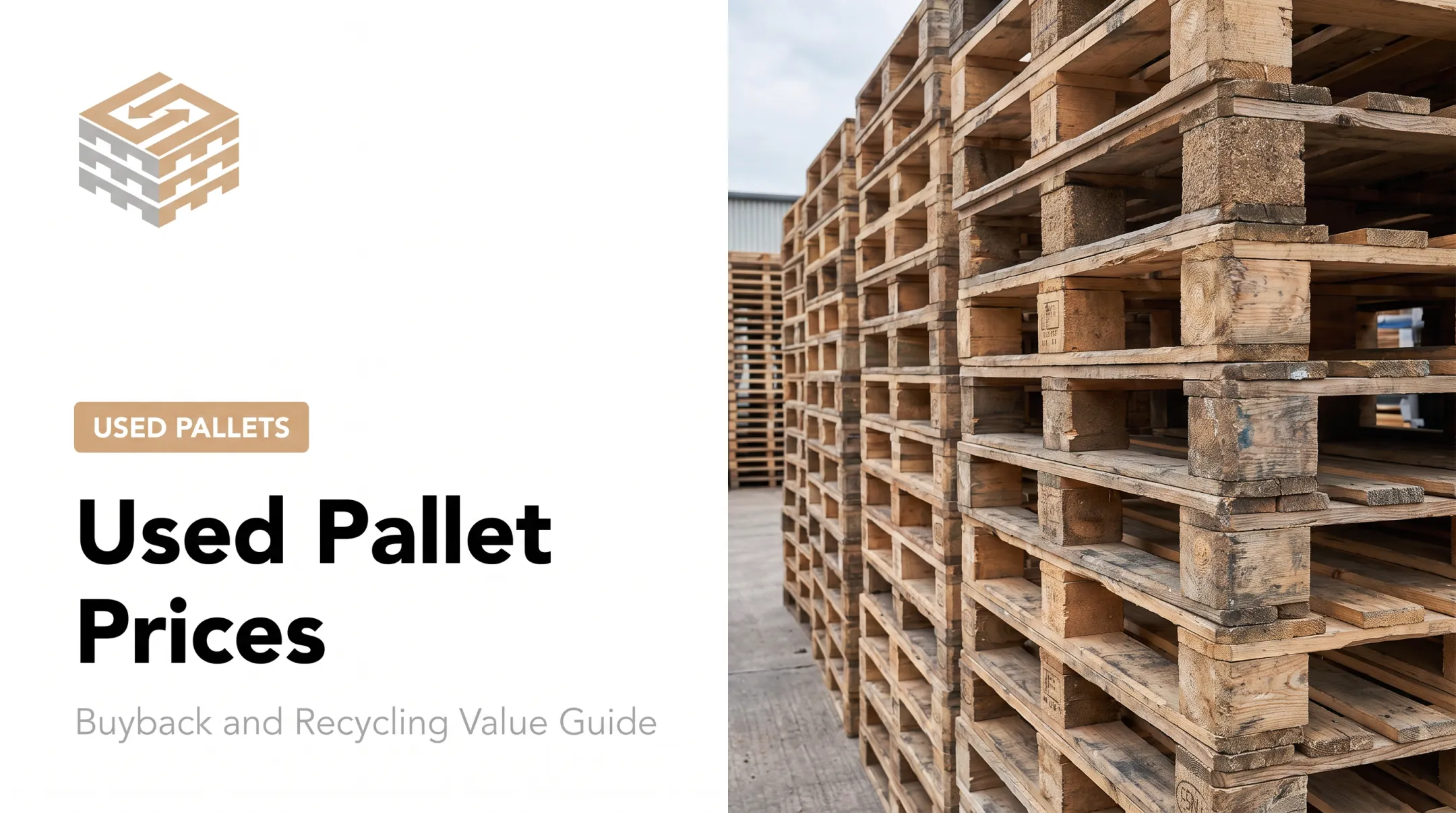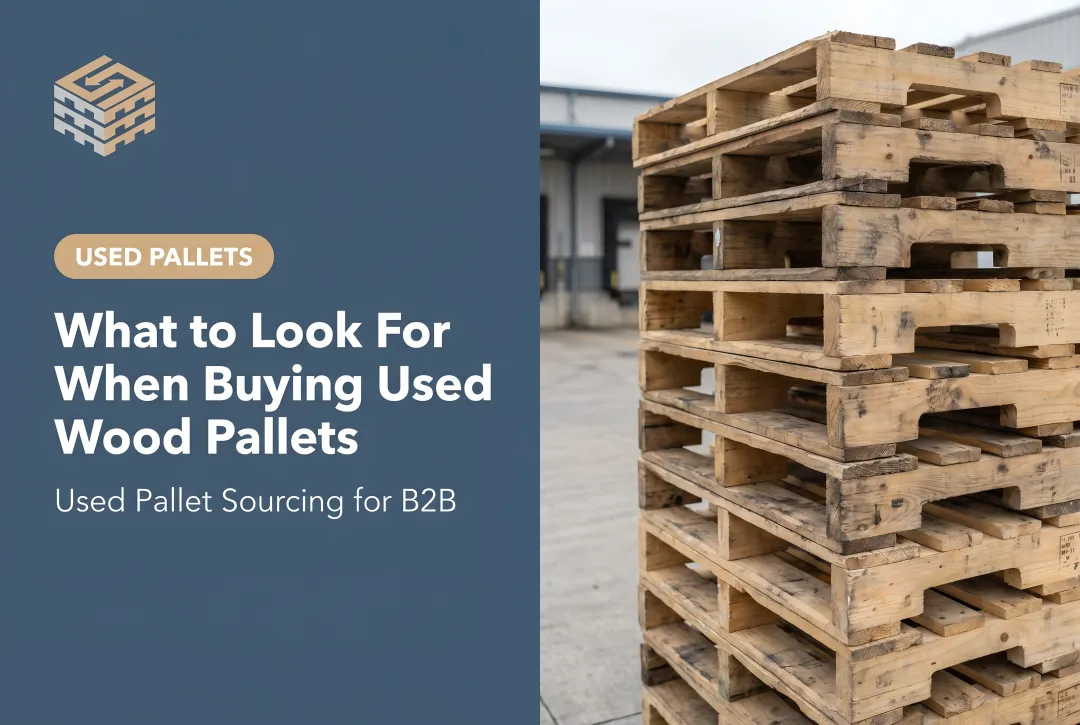

So, who actually buys used pallets? Commercial pallet companies, recyclers, manufacturers, brokers, and some warehouses or retailers purchase used pallets, though the right buyer depends on size, condition, quantity, and current demand. A Modern Materials Handling survey found 73% of respondents rely on used or core wood pallets in their operations — proof that a real secondary market exists for sellers, too.
This guide covers how to identify likely buyers, what affects a pallet's value, how to prep a load for sale, and how to get an evaluation from Skid Management Services.
Key Takeaways
- Used-pallet buyers include commercial pallet suppliers, recyclers, brokers, manufacturers, and distributors
- Standard dimensions, sound construction, and recurring volume make a load more attractive to buyers
- Buyers typically need pallet count, dimensions, condition, photos, and location before quoting
- Separate reusable pallets from damaged or contaminated ones before requesting a price
Who Buys Used Pallets?
Not every buyer wants the same thing, so it helps to know who's actually in the market before you start calling around.
| Buyer Type | Best Fit For |
|---|---|
| Pallet recyclers | High-volume, mixed-condition loads needing sorting and repair |
| Manufacturers & suppliers | Loads matching a specific recycled or remanufactured inventory spec |
| Pallet brokers | Large, unusual, or multi-location loads |
| Warehouses, distributors & retailers | Pallets that fit their internal size and load requirements |
| Small-quantity buyers | A handful of pallets, not recurring commercial volume |
Recyclers Do the Heavy Lifting
Commercial pallet recyclers are usually the most relevant buyer for surplus inventory. They have the equipment and labor to inspect, sort, repair, and resell pallets at scale, something most businesses aren't set up to do themselves.
- Sound pallets typically get cleaned up and resold as-is
- Pallets with minor damage get repaired before resale
- Pallets beyond repair get ground into mulch, chips, or biomass
Manufacturers, Brokers, and Direct Users
Pallet manufacturers and suppliers sometimes buy used pallets to stock a recycled or remanufactured product line. Acceptance depends entirely on their current specs and demand; a load that's a perfect fit for one supplier might be the wrong size or grade for another.
Brokers are worth considering for large, unusual, or geographically scattered loads. A broker can coordinate the sale and find a buyer you might not reach on your own, but that convenience adds another party between you and the final price.
Beyond the pallet industry itself, manufacturers, warehouses, distributors, retailers, and logistics operations frequently buy used pallets for their own shipping and storage needs, especially when the pallets already match their size and load requirements.
Small Buyers, and Who to Skip
Contractors, farms, landscapers, and DIY users will take a handful of pallets off your hands, but they're rarely a practical option for recurring commercial volume. If you're generating pallets weekly or monthly, you need a buyer who can take consistent quantities.
One distinction matters here: legitimate pallet buyers aren't the same as general waste haulers or scrap services. A hauler removes pallets as trash. You lose whatever resale value those pallets had, and you may still be paying a removal fee for the privilege.
What Makes Used Pallets Valuable?
Price isn't a flat number per pallet. Buyers weigh several factors together, and the same stack can be worth very different amounts depending on who's looking at it.
Size and Dimensions
Standard sizes move faster because they fit more warehouse racking, trucks, and automated systems. The 48-by-40-inch GMA pallet is the most common configuration in the US market: a Forest Service study found that 69% of recovered pallets were 48x40 inches, with the rest spread across sizes like 48x48, 40x48, and 48x45.

Specialty sizes also have defined markets. The 48x48 footprint is near-standard in the chemical and drum industry, fitting four 55-gallon drums in a 2x2 layout and handling dynamic loads up to roughly 3,000 lbs. The 42x42 size shows up in telecom equipment cabinets and specialty coatings. A buyer serving those industries may want exactly those dimensions.
Condition and Grade
Buyers typically sort pallets into usable categories:
- Reusable: sound structure, ready for resale with little or no work
- Repairable: fixable issues like a cracked deck board or a loose block
- Non-repairable: broken stringers, missing blocks, protruding nails, excessive warping, or structural instability that makes the pallet unsafe to load
Grading labels like Grade A or Grade B vary by supplier, so confirm what a buyer means rather than assuming your pallets match a label you've seen elsewhere.
Cleanliness and Contamination
Clean, dry pallets are easier to inspect and reuse. Pallets exposed to chemicals, food residue, oil, pest activity, mold, or excessive moisture are often rejected for standard resale and redirected to a different stream, such as grinding for mulch or biomass.
Buyers supplying food manufacturers or e-commerce fulfillment centers apply even stricter screening. Amazon's warehouse-receiving guidelines, for instance, typically call for 48x40 four-way-entry pallets with undamaged stringers and no protruding nails.
Food manufacturers screen for chemical, biological, and physical contamination under FSMA's Preventive Controls rule. A pallet that passes one buyer's inspection might get turned away by another.
Heat-treated (HT) status matters for export-bound pallets, but it isn't a cleanliness guarantee. Treated wood can still develop mold later if it's stored wet.
Volume, Sorting, and Other Factors
Recurring volume and consistent sorting make inspection, transport, and processing more efficient for buyers, which can translate into a better offer. Other factors that affect interest include:
- Construction type (block vs. stringer) and entry configuration (2-way vs. 4-way)
- Markings, stamps, and any existing ISPM-15 certification
- Regional supply and demand
- Transportation distance and cost
Because so many variables interact, exact pricing from size alone isn't realistic. A current inspection or quote based on your actual pallets is the only reliable way to know what a load is worth.
How to Prepare Used Pallets for Sale
A little prep work before you call a buyer can speed up the quote process and often improve the offer.
Sort, Count, and Document
- Count the pallets and separate them by size and grade
- Measure a representative sample from each stack, especially if sizes are mixed
- Remove obvious trash or loose materials sitting on or inside the stack
- Stack safely so a buyer can estimate quantity and inspect condition without digging through a pile
Stable stacking is a safety requirement, not only a presentation choice. OSHA's stacking rule calls for materials to be stacked, blocked, or interlocked and limited in height so they can't slide or collapse.
Photograph and Describe the Load
Take clear photos of the full stack along with close-ups of individual pallets, including any damaged, mixed, or unusually sized units. Don't hide problem pallets in the middle of the stack. Buyers need accurate photos to give an accurate quote.
Note whether your supply is a one-time clear-out or a recurring stream, and estimate how many pallets you generate weekly or monthly. That detail alone can change which buyer makes sense for you.

Keep Access Clear
Keep pallet stacks stable and out of the way of fire exits, loading zones, walkways, and equipment paths. A stack that blocks dock traffic creates a hazard long before any buyer shows up to look at it.
How to Sell Used Pallets to Skid Management Services
Skid Management Services is a national provider of wood pallets and packaging products, built on its own inventory plus an expansive supplier network that supports competitive pricing and consistent supply. Whether the company can purchase or pick up your specific load depends on its current needs and your pallets' details, but getting an evaluation starts with a conversation.
What to Send
When you reach out, have this information ready:
- Pallet count and dimensions
- Approximate grade or condition (sound, repairable, damaged)
- Photos of the stack and any problem pallets
- Whether the load is mixed, one-time, or recurring
- Your general location
What Happens Next
The evaluation is a fact-finding conversation, not an automatic purchase. Skid Management Services reviews what you've sent, asks clarifying questions about specs, and confirms whether your pallets fit its current purchasing or supply needs. For repeat sellers, incoming pallets are typically sorted into categories (sound stock ready for resale, repair candidates, and recycling-only material) so the process stays consistent load after load.

Ready to start? Call 717-202-0304 or email Info@SkidManagementServices.com with your pallet details.
Before You Agree to a Sale
Confirm these points before finalizing anything:
- Which pallet types and grades are accepted
- Inspection requirements and who conducts them
- Who handles transportation or pickup, and any associated cost
- How price is determined and when payment happens
- What happens to pallets deemed unsuitable for resale
If your business has ongoing pallet needs beyond a one-time sale, ask about new, recycled, or custom wood packaging at the same time. Recurring sellers who also restock may qualify for trade-in credit as an offset against new-pallet purchases, rather than a straight cash payout.
Conclusion: Turn Surplus Pallets Into a Clear Next Step
There's no single best buyer for used pallets. The right one depends on your pallets' size, condition, quantity, location, and the outcome you want most : cash recovery, freed-up space, recycling, or ongoing pallet management.
What you can control is how ready your load is when you make that call. Before you reach out:
- Organize pallets by size and grade
- Photograph the stack, including problem spots
- Gather key specs: count, dimensions, condition, and location
From there, contact Skid Management Services to discuss buy-back, free removal, or recycling options for your inventory.
Frequently Asked Questions
How much can I sell a pallet for?
Price depends on dimensions, condition, grade, quantity, location, transportation, and current demand . There's no universal per-pallet rate. Request a current quote based on your actual pallets rather than a generic price range.
How can I sell my used pallets?
Sort your pallets by size and grade, count them, and take clear photos of the stack. Then contact a commercial pallet buyer with your full load details, including whether the supply is recurring or a one-time lot.
What pallets are worth money?
Clean, structurally sound, reusable pallets in commonly used sizes like 48x40 GMA generally have the most resale value. That said, buyer requirements vary, so even non-standard sizes may find a market.
Which companies use pallets?
Manufacturers, food and beverage companies, retailers, warehouses, distributors, logistics providers, agricultural operations, and construction companies all rely on pallets for shipping and storage.
Do pallet buyers take broken or damaged pallets?
Some buyers accept repairable or recyclable pallets, but severely damaged, contaminated, or unsafe pallets may have little or no resale value. Always disclose the actual condition upfront.
What information should I provide when selling used pallets?
Give the buyer your pallet quantity, dimensions, photos, condition, pallet type, markings, and location. Also note whether the supply is a one-time lot or a recurring stream.