
Picking the wrong one isn't just a technicality. It can mean unstable pallets that shift in transit, damaged goods, wasted labor, and shipments that get flagged before they ever leave the dock. This guide breaks down what each material actually does, where it fits best, and how to choose between them with confidence.
TL;DR
- Stretch film secures and unitizes palletized loads with tension for shipping and storage
- Shrink wrap forms a tight seal around individual products or bundles once heat is applied
- Core trade-offs: tension vs. heat, pallet containment vs. single-item packaging, and different equipment
- Choose stretch film for bulk load containment; choose shrink wrap for retail-ready single-item packaging
Stretch Film vs Shrink Wrap: Quick Comparison
| Factor | Stretch Film | Shrink Wrap |
|---|---|---|
| Cost | Roll pricing varies by gauge and footage; no equipment heating costs | Similar roll pricing, plus energy costs for heat guns or tunnels |
| Composition | Polyethylene (LLDPE/LDPE), blown or cast manufacturing process | Polyolefin, PVC, or polyethylene, heat-reactive formulation |
| Application | Hand dispenser or automated stretch wrapper; tension-based | Heat gun or shrink tunnel; contraction-based |
| Durability | Containment strength depends on wrap tension and film selection | Tight seal, clarity, and shelf appeal; heat-sealed edges |
| Primary Purpose | Pallet unitization, load stability during transit | Individual product protection and retail presentation |

The mechanism is the real dividing line here. Stretch film relies on tension — you stretch it around an existing load and it holds by elastic memory. Shrink wrap works the opposite way: it starts loose, then heat causes it to contract tightly around whatever it's covering.
What Is Stretch Film?
Stretch film is a highly elastic polyethylene wrap applied under tension to secure pallets, boxes, or bulk loads. Warehousing and freight teams rely on it for one job: keeping stacked goods from shifting, tipping, or separating during handling and transit.
Core benefits include:
- Load stability during transit and storage
- Protection from dust, moisture, and light contamination
- Reduced product-shifting damage claims and returns
Not all stretch film is built the same. You'll typically choose between:
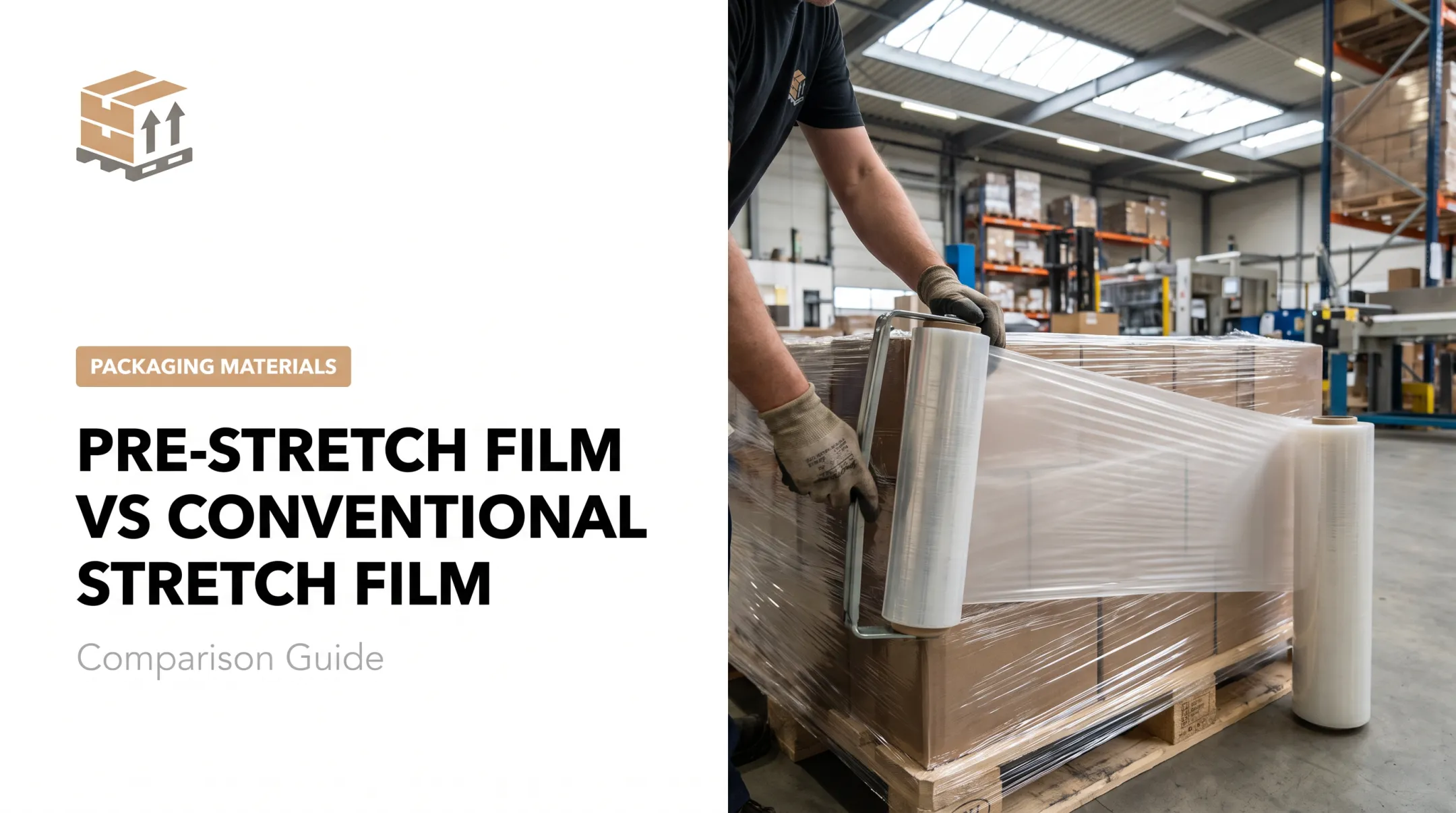
- Hand stretch film: lower upfront cost for variable or lower-volume operations
- Machine stretch film: built for high-throughput, repeatable wrapping cycles
- Blown or cast film: manufacturing method that changes clarity, puncture resistance, and cost
Use Cases of Stretch Film
Stretch film's main job is palletizing goods for freight shipment and warehouse storage. This matters most for businesses moving wood pallets loaded with packaged goods, bulk cartons, or industrial materials.
Common users include:
- Furniture manufacturers unitizing bulky, irregular loads
- Food distributors securing cases for cold-chain shipping
- Industrial suppliers wrapping palletized components for freight
A Lantech case study on a beverage company's operations found up to 110 loads wrapped per hour and a 26% reduction in film used per load, while maintaining containment strength. Results depend on your line and film selection, but they show what a tuned wrapping process can deliver.

If you already order pallets, buying stretch film from the same supplier cuts the hassle of juggling separate vendors for materials that have to work together. Skid Management Services supplies machine-grade pre-stretch and hand-grade roll film with pallet orders through its packaging-materials line.
What Is Shrink Wrap?
Shrink wrap is a heat-activated polymer film (typically polyolefin, PVC, or polyethylene) that contracts tightly around individual products or small bundles once heat is applied. This makes it the go-to material for retail and food packaging where a tight, clean, presentable finish matters.
Core benefits include:
- Tamper-evidence (when the film and seal are specifically designed for it)
- Moisture and dust protection for individual units
- Improved shelf appeal through clarity and a snug fit
Film choice affects performance:
- Polyolefin: general-purpose, common for retail and food display
- PVC: lower cost, though less common in food-contact applications
- Perforated shrink film: allows airflow for breathable packaging
Use Cases of Shrink Wrap
Shrink wrap fits into packaging lines wherever individual products or small bundles need a tight, retail-ready presentation. Think consumer goods, food items, and multipacks headed straight to a shelf.
Typical applications:
- Frozen food packaging, often using anti-fog polyolefin film for refrigerated display
- Books, media, and multipacks bundled for retail
- Small consumer electronics requiring tamper-resistant sealing

Manufacturers like Clysar and Sealed Air position polyolefin shrink films specifically for retail display, specialty food, and e-commerce packaging. One important caveat: generic shrink wrap isn't automatically tamper-evident. That claim only holds if the film and seal are engineered for it, so confirm before you market a product as tamper-proof.
Stretch Film vs Shrink Wrap: Which Should You Choose?
The decision comes down to a few practical questions:
- Load size: Bulk pallets → stretch film; individual items → shrink wrap
- Primary goal: Containment and unitizing → stretch film; display and product finish → shrink wrap
- Equipment budget: Hand dispenser or stretch wrapper vs. heat gun or shrink tunnel
- Tamper or transit needs: Shrink wrap for tamper-evident seals; stretch film (or stretch film plus a pallet cover) for outdoor transit protection
Quick rule of thumb:
- Choose stretch film to unitize pallets for shipping or storage.
- Choose shrink wrap to protect or display individual retail products.
Most operations don't pick just one. A food manufacturer might shrink-wrap individual multipacks on the production line, then stretch-wrap the finished pallets before they leave the warehouse. Both materials play a role at different stages of the same supply chain.

If your operation needs stretch film for pallet unitizing — alongside corner boards, strapping, or pallet covers — Skid Management Services supplies the full packaging line with competitive pricing and uninterrupted stock.
Choosing the Right Packaging Partner
Selecting quality stretch film matters just as much as choosing the right pallet. A weak or poorly applied wrap can undo the stability a good pallet provides, leading to shifted loads, damaged goods, and rejected shipments at the dock.
Skid Management Services supplies hand-grade roll film and machine-grade pre-stretch film in multiple gauges as part of its packaging-materials line. Sourcing pallets and stretch film from one vendor gives businesses a few practical advantages:
- Fewer purchase orders and less vendor coordination
- Packaging sized correctly for the pallets being wrapped
- Competitive pricing when consolidating pallets and packaging materials
Because Skid Management Services pairs its own inventory with an expansive network of pallet and packaging suppliers, customers keep consistent access to stretch film even when supply tightens and standalone packaging buyers scramble. If you're unsure which gauge or format fits your load, a quick conversation with the team can cut out a lot of trial and error.
Conclusion
Stretch film and shrink wrap aren't interchangeable. They solve different problems with different methods. Stretch film uses tension to secure bulk pallet loads for shipping and storage. Shrink wrap uses heat to create a tight, presentable seal around individual products.
The right choice affects shipping damage rates, material waste, and day-to-day operations. Whether you need stretch film, shrink wrap, or both, Skid Management Services supplies packaging materials alongside pallets so load securing and product protection stay coordinated.
Frequently Asked Questions
Is stretch film the same as shrink wrap?
No. Stretch film holds items together using tension; shrink wrap contracts around items using heat. They're commonly confused, but the materials, equipment, and use cases are different.
What is stretch film used for?
Stretch film is used for pallet unitization, load stability during transit, and protecting goods from dust and moisture while shipping or in storage.
Can shrink wrap be used on pallets instead of stretch film?
It's not ideal. Heating film over large pallet loads is impractical and introduces fire and burn risks that stretch film's tension-based application avoids entirely.
Does stretch film require special equipment to apply?
Not necessarily. Manual dispensers work well for lower-volume operations, while automated stretch wrap machines suit higher-throughput warehouses needing consistent results.
Which is more cost-effective, stretch film or shrink wrap?
It depends on the use case. Stretch film generally costs less to apply since it skips heating equipment, while shrink wrap's added equipment and energy costs suit smaller, presentation-focused packaging.
Is stretch film recyclable?
Pure polyethylene stretch film can often be recycled through Store Drop-off programs in the US, where accepted. Recyclability depends on resin purity, so check with your local program before assuming it qualifies.