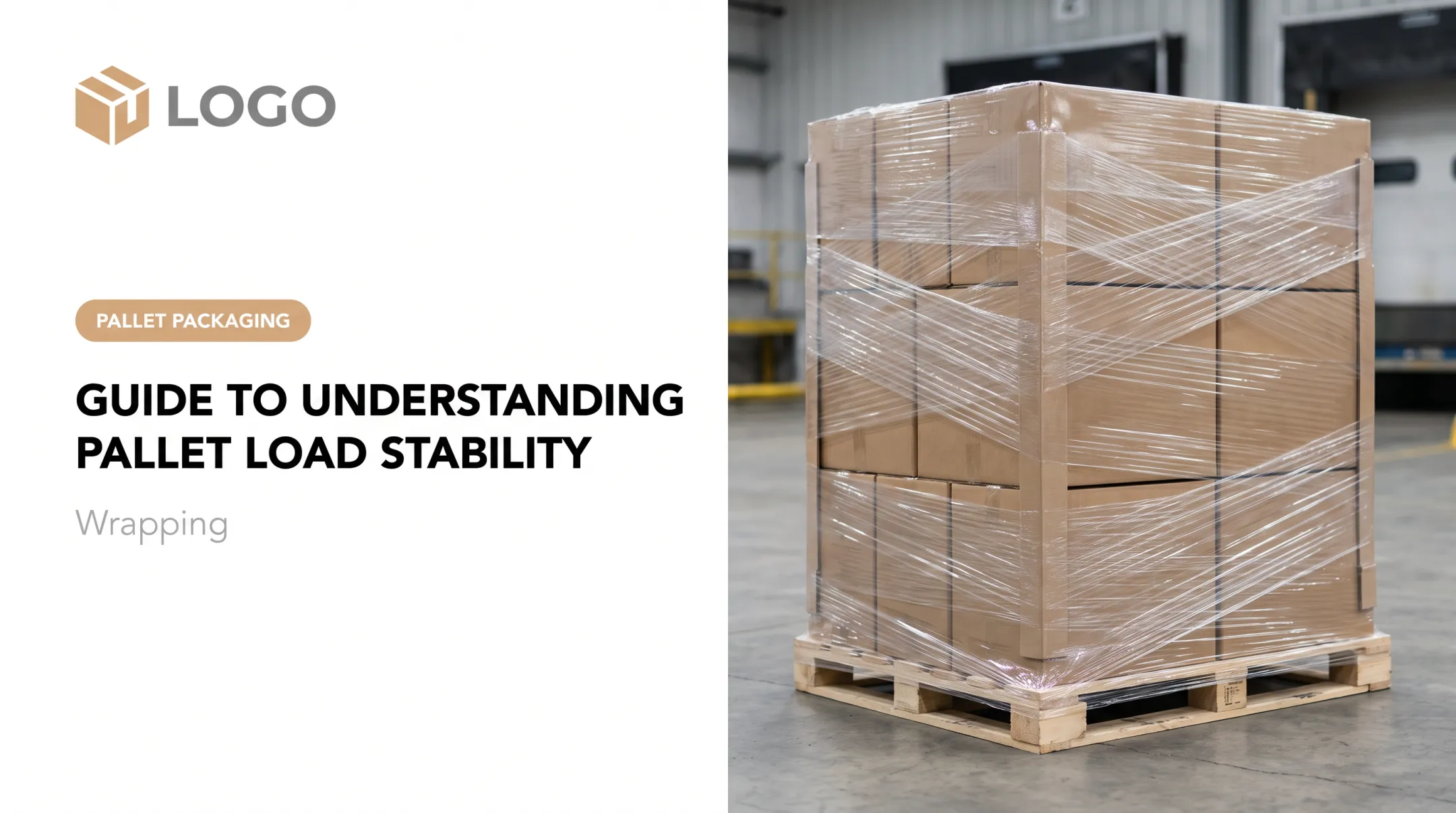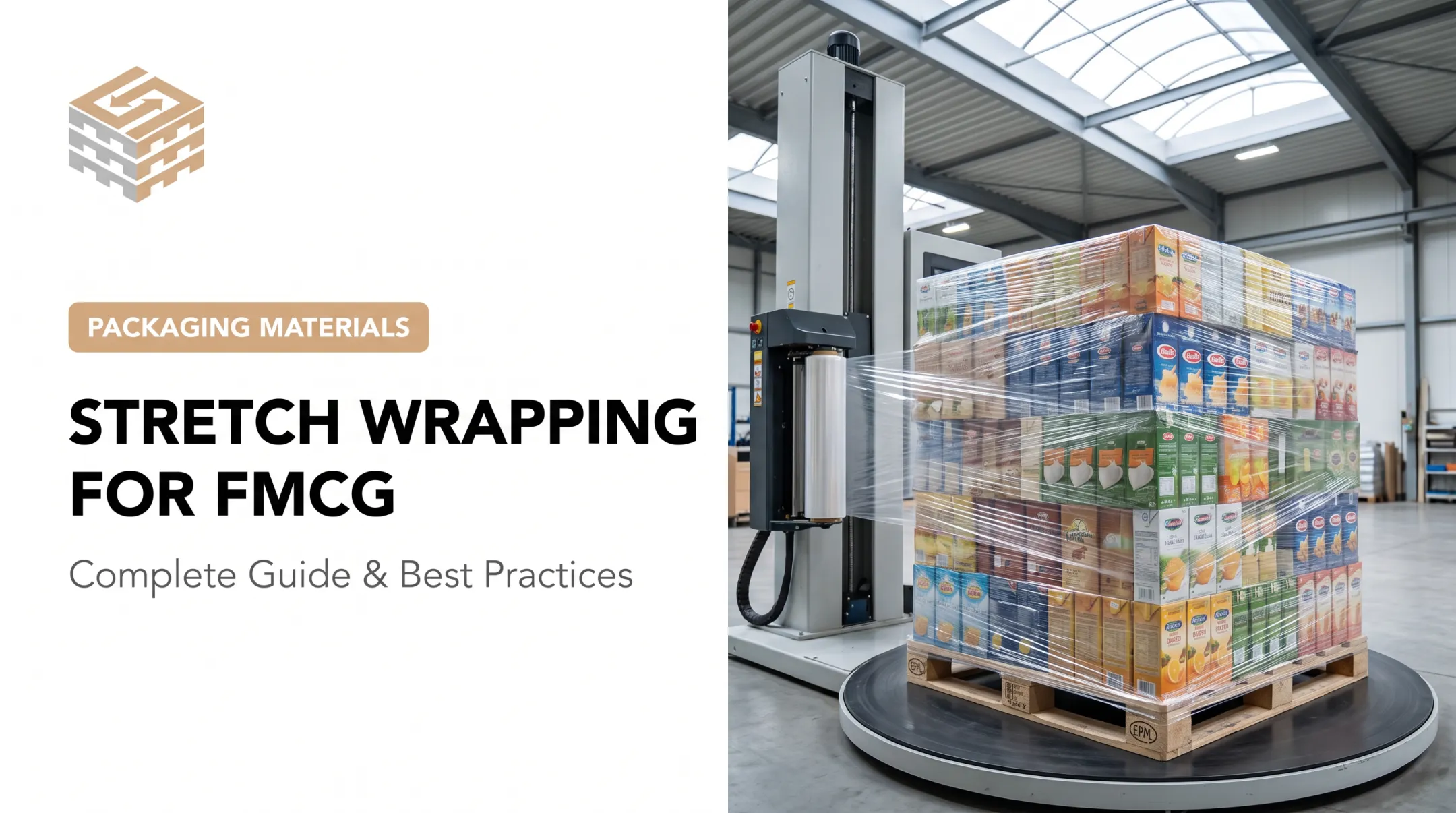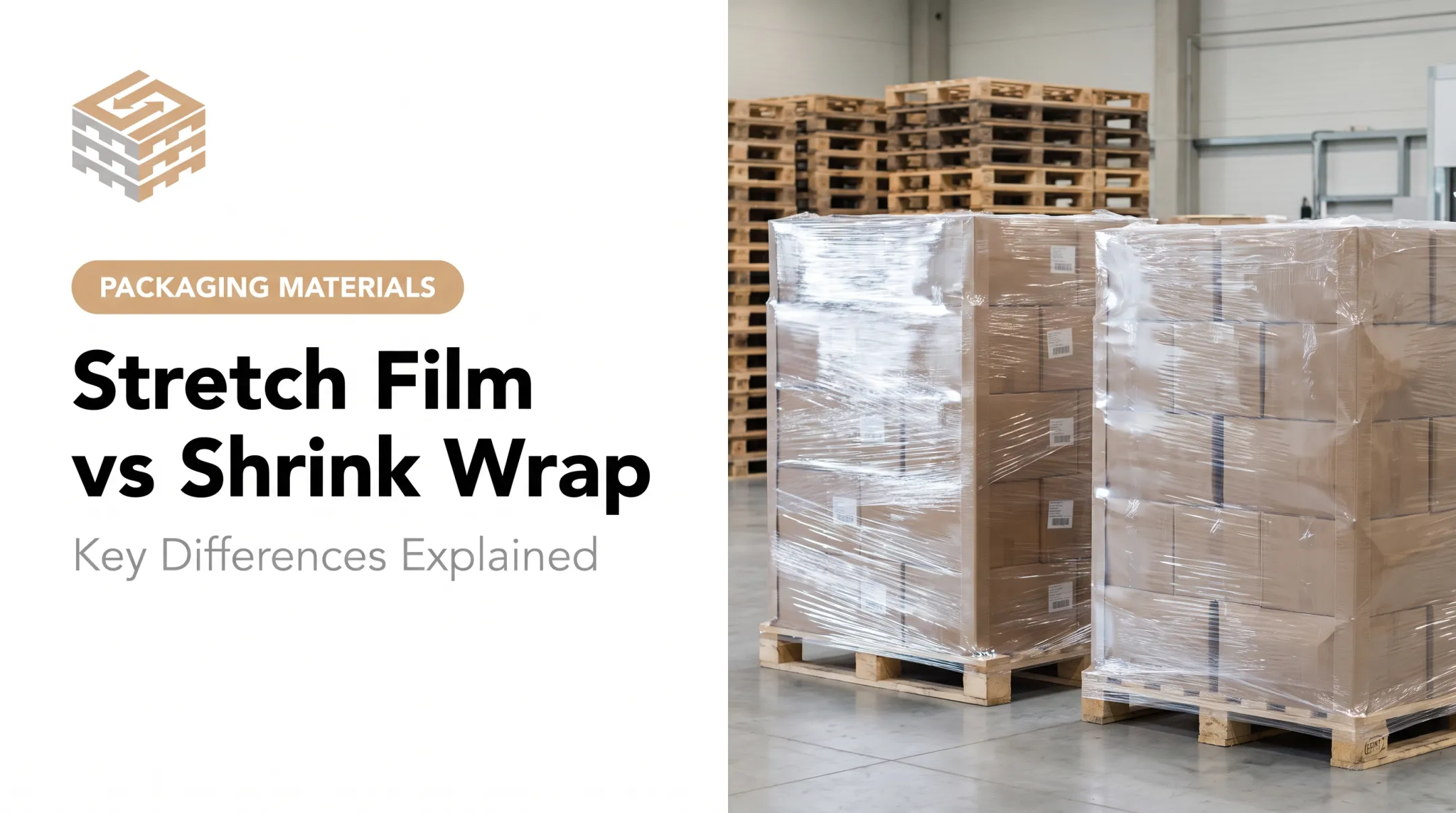

Both hold pallets together. Both stop shifting and moisture damage. But they perform very differently on the dock floor.
Choosing wrong isn't cheap. Too-thick conventional film run without proper machine tension wastes material and tires out your wrapping crew. Too-thin film on a heavy, sharp-edged load can lead to punctures and load failures mid-shipment.
This guide breaks down composition, cost drivers, durability, and the best use case for each film type, so you can make the call with confidence.
TL;DR
- Pre-stretch film arrives factory-stretched and thinner, so its built-in "memory" locks loads tighter with less film
- Conventional film ships unstretched, leaving tension fully up to the operator or machine
- Cut material use and fatigue with pre-stretch; keep hands-on control for heavy or irregular loads with conventional
- Match the film to load type, application method, and budget
- Pair either option with a reliable supply source so film stockouts never stall the dock
Pre-Stretch Film vs Conventional Stretch Film: Quick Comparison
| Factor | Pre-Stretch Film | Conventional Stretch Film |
|---|---|---|
| Cost | Higher per-roll price, lower material usage per pallet | Lower per-roll price, higher consumption and labor cost |
| Manufacturing | Stretched near breaking point during production, wound thinner | Unstretched cast or blown film, thicker gauge as sold |
| Durability | Strong "memory" effect tightens after application | Containment depends on operator technique or machine settings |
| Application | Lighter rolls, less pulling force required | Heavier rolls, more physical effort for hand wrapping |
| Best For | Hand-wrap operations, sustainability goals | Heavy, sharp, or irregular loads |
Yield is where the two films diverge in real cost. Machine pre-stretch does the work on the wrapper: according to Lantech, at a 100% setting 6,000 feet of film effectively becomes 12,000 feet on the load; at 200%, it reaches 18,000 feet. Pre-stretch film builds that thinner, high-yield profile in at the factory, so hand-wrap teams get similar coverage gains without powered equipment.

What Is Pre-Stretch Film?
Pre-stretch film is mechanically elongated during manufacturing, before it's ever wound onto a core. The film has already done most of its stretching in the factory, so less force is required at the point of application.
Core benefits include:
- Reduced "neck-down" (the narrowing that happens when film stretches unevenly)
- Lighter rolls, which cuts down on pulling force and physical strain
- Better material yield per roll compared to unstretched film
- Availability in recyclable formats for facilities tracking sustainability metrics
There are two main subtypes:
- Hand-application pre-stretch film: designed for manual wrapping where lighter rolls reduce operator fatigue
- Power pre-stretch film: built for machines with stretch carriages that apply additional tension during wrapping
Skid Management Services stocks both machine-grade pre-stretch film and hand-grade roll film as part of its packaging materials line, available in multiple gauges and clarities to match different pallet programs.

Use Cases of Pre-Stretch Film
Pre-stretch film fits naturally into operations where manual wrapping still dominates, such as smaller distribution centers, food packaging lines, and shipping departments without full automation.
Industries where pre-stretch film performs well:
- Food and beverage manufacturing (moisture protection, frequent pallet turnover)
- E-commerce fulfillment (high volume, variable load sizes)
- Facilities with sustainability targets tied to material reduction
Independent testing has not found a universal link between higher pre-stretch percentages and better load containment. A Cal Poly thesis testing pre-stretch levels from 100% to 300% under distribution conditions found no consistent relationship between stretch percentage and containment force.
Manufacturer claims about reduced fatigue and lighter rolls are well documented. Injury-rate studies are not.
What Is Conventional Stretch Film?
Conventional stretch film ships unstretched. All the elongation happens on the dock, either by hand or through a wrapping machine's tension settings.
Core benefits include:
- Full operator control over wrap tightness
- Better suited to irregular, heavy, or unpredictable load shapes
- Often a lower upfront roll cost than pre-stretch alternatives
Two subtypes matter here:
- Cast stretch film: clear, quiet to unwind, and generally more cost-effective when barcode clarity matters
- Blown stretch film: higher puncture and tear resistance for loads with sharp edges or uneven surfaces

Use Cases of Conventional Stretch Film
On high-volume automated lines, the wrapper applies that tension with repeatable precision. Hand-wrap crews use the same film when loads are irregular and need on-the-fly adjustment.
Common fits include:
- Construction materials with sharp corners or protruding edges
- Heavy manufacturing with dense, irregularly shaped loads
- Shipments where puncture resistance matters more than film weight savings
Lantech notes an important trade-off here: thinner film doesn't always mean savings. If a load requires extra layers to compensate for reduced thickness, total film consumption can actually increase rather than decrease. Load security comes down to wrap force multiplied by film layers, not gauge alone.
Pre-Stretch Film vs Conventional Stretch Film: What Is Better?
There's no single winner. The right film depends on how you're wrapping and what you're wrapping.
Decision factors to weigh:
- Load weight and shape (regular vs. irregular, sharp vs. smooth)
- Application method (hand-wrapping vs. machine with stretch carriage)
- Sustainability goals and material-reduction targets
- Labor availability and physical demands on your team
- Budget priorities: upfront roll cost vs. total consumption cost
Situational recommendation:
- Choose pre-stretch film for hand-wrap operations where labor savings and waste reduction are the priority
- Choose conventional film for heavy, irregular, or puncture-prone loads where customizable tension matters more than roll weight
- Choose conventional film on a machine with a powered pre-stretch carriage when high stretch ratios and consistent containment at scale matter most

Whichever type fits your operation, consistency of supply matters just as much as the film itself. Running out mid-shift, or getting inconsistent gauge from batch to batch, creates its own downtime problems.
Skid Management Services combines its own packaging inventory with an expansive supplier network. Stretch film ships alongside pallets, so food and beverage manufacturers and distributors avoid downtime from backordered rolls.
Frequently Asked Questions
What are the different types of stretch film?
Stretch film splits into hand and machine formats. Within machine film, you'll find cast, blown, pre-stretch, and specialty options like vented, tinted, UVI, and VCI films for specific moisture or corrosion needs.
Is blown stretch film better than cast stretch film?
Blown film offers better puncture and tear resistance for rough loads. Cast film offers better clarity, a quieter unwind, and typically costs less. "Better" depends entirely on what you're wrapping.
Is stretch film LLDPE?
Yes. Most stretch films are made from linear low-density polyethylene (LLDPE), chosen for its elasticity, tensile strength, and puncture resistance during load containment.
Are stretch film and cling wrap the same?
No. Both rely on elastic recovery, but industrial stretch film is engineered thicker and stronger specifically for pallet loads, unlike household cling wrap.
Is there a difference between shrink wrap and stretch wrap?
Yes. Shrink wrap requires heat to shrink-fit around a load. Stretch wrap relies purely on elastic tension, no heat involved.
How strong is an 80-gauge stretch wrap?
80-gauge measures roughly 20.3 microns and is a common mid-range choice for standard pallet loads. Actual holding strength depends on the film's formulation, pre-stretch level, and how it's wrapped, not gauge alone.
Have questions about which stretch film fits your pallet program? Reach Skid Management Services at 717-202-0304 or Info@SkidManagementServices.com.