Poor pallet condition creates real, measurable risk: injuries, product damage, unstable rack systems, compliance fines, and downtime nobody budgeted for. This guide breaks down why condition matters, the different levels of maintenance available, the warning signs to watch for, what treatment stamps actually mean, and a practical inspection schedule you can put to use this week.
Key Takeaways
- Pallet condition directly shapes worker safety, product integrity, and rack system stability.
- Maintenance ranges from routine checks to full grading programs to replacement, scaled to usage intensity.
- Cracked boards, protruding nails, mold, warping, and missing treatment stamps are the top red flags.
- A documented inspection schedule catches small problems before they become safety incidents.
- Sourcing consistently graded pallets from a dependable supplier cuts condition problems at the source.
Why Pallet Condition Matters
A pallet in poor condition creates real risk across your supply chain, affecting worker safety, product integrity, and how much you'll owe a retailer for non-compliance.
Worker Safety and Rack Stability
OSHA's accident records include a documented 2008 case where fertilizer bags weighing 2,205 pounds each were stacked three pallets high. Investigators found split and broken-loose wood among the pallets involved, and the stack toppled and fatally crushed a worker.
OSHA's materials handling standard requires tiered materials to be "stacked, blocked, interlocked and limited in height so that they are stable and secure against sliding or collapse." A damaged pallet undermines exactly that stability, whether it's sitting on a rack beam or supporting a floor stack.
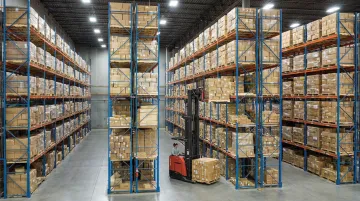
Uneven or broken pallets also create load-distribution problems on rack systems. A pallet that sags or splits mid-span shifts weight unpredictably, adding stress the rack beam wasn't designed to absorb.
Retailer Compliance and Repair Economics
Retail compliance adds another layer of risk. Walmart's August 2023 Supply Chain Packaging Guide sets clear pallet standards:
- Grade A, 4-way, flush, non-reversible construction
- No broken deckboards
- No metal repair plates
- No raised nails over 1/8 inch
Fees or chargebacks may apply for non-compliant pallets, a cost most suppliers would rather avoid altogether.
Proactive repair is consistently cheaper than the alternative. A 2006 pallet-industry cost analysis pegged the average maximum repair input at around $1.25 per standard pallet. That figure is dated, but it makes the point: a board repair costs far less than a rejected shipment, an injury claim, or a chargeback.
Sourcing pallets that are already quality-checked reduces how often these issues surface in the first place. Skid Management Services grades every recycled pallet before it re-enters inventory, so clients aren't the ones discovering a cracked stringer on the receiving dock.
Types of Pallet Maintenance & Inspection Approaches
Maintenance isn't one-size-fits-all. The right approach depends on pallet material, how hard the pallet gets used, and whether it's owned outright, part of a pool, or a one-way shipment.
Routine / Preventive Inspection
This is a scheduled visual check performed before or after each load cycle. It's the baseline every pallet program should have, sufficient for low-risk, short-cycle operations in dry, indoor environments where pallets don't travel far or sit outside for long stretches.
Corrective / Reactive Repair
Reactive repair kicks in after a damage report, a failed load, or a pallet flagged during handling. Historical industry estimates put average repair input around $1.25 per pallet for parts and labor. That's modest compared to the cost of skipping the repair and dealing with a failure downstream.
Condition-Based Grading Programs
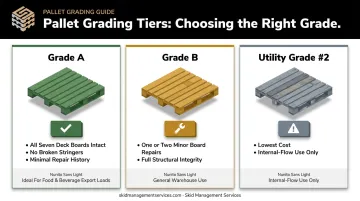
Rather than sorting pallets by age, grading programs sort by structural condition. Skid Management Services applies a three-tier system:
- Grade A: all seven deck boards present, no broken stringers, minimal repair history; functions like new for most applications
- Grade B: one or two minor board repairs, full structural integrity, suited to general warehouse and distribution use
- Utility Grade (#2): lowest cost, reserved for internal-flow applications only
Under these grading programs, repair candidates get restored and re-introduced to inventory rather than scrapped, which keeps usable pallets circulating instead of heading to a landfill.
Overhaul / Replacement
Some damage can't be fixed: structural cracks, rot, chemical contamination, or an MB fumigation stamp on a pallet you can't verify. At that point, replacement is the only responsible move. This is where an expansive supplier network matters. Skid Management Services combines its own inventory with a broad network of pallet suppliers to replace large volumes fast, without leaving a production line waiting.
How to Tell If a Pallet Needs Maintenance or Replacement
Here's the practical, at-a-glance checklist for catching problems before they cause harm.
Structural Damage & Broken Components
Look for cracked, split, or broken deck boards, blocks, or stringers. Loose or missing boards create an uneven surface that's unstable under load and dangerous for forklift entry.
Moisture, Mold, and Contamination
Dark staining, a musty odor, or fuzzy and slimy patches all signal active mold growth. USDA Forest Products Laboratory research puts the minimum moisture content for mold fungi at roughly 16%, with active decay setting in above 30%. A moisture meter takes the guesswork out of the call.
Hardware and Fastener Issues
Protruding, rusted, or missing nails and staples risk both puncture injuries and product damage. Watch for non-standard repairs, too. Metal plates or corrugate patches often fall outside grade standards and can trigger retailer rejections.
Treatment Markings & Unknown Pallets
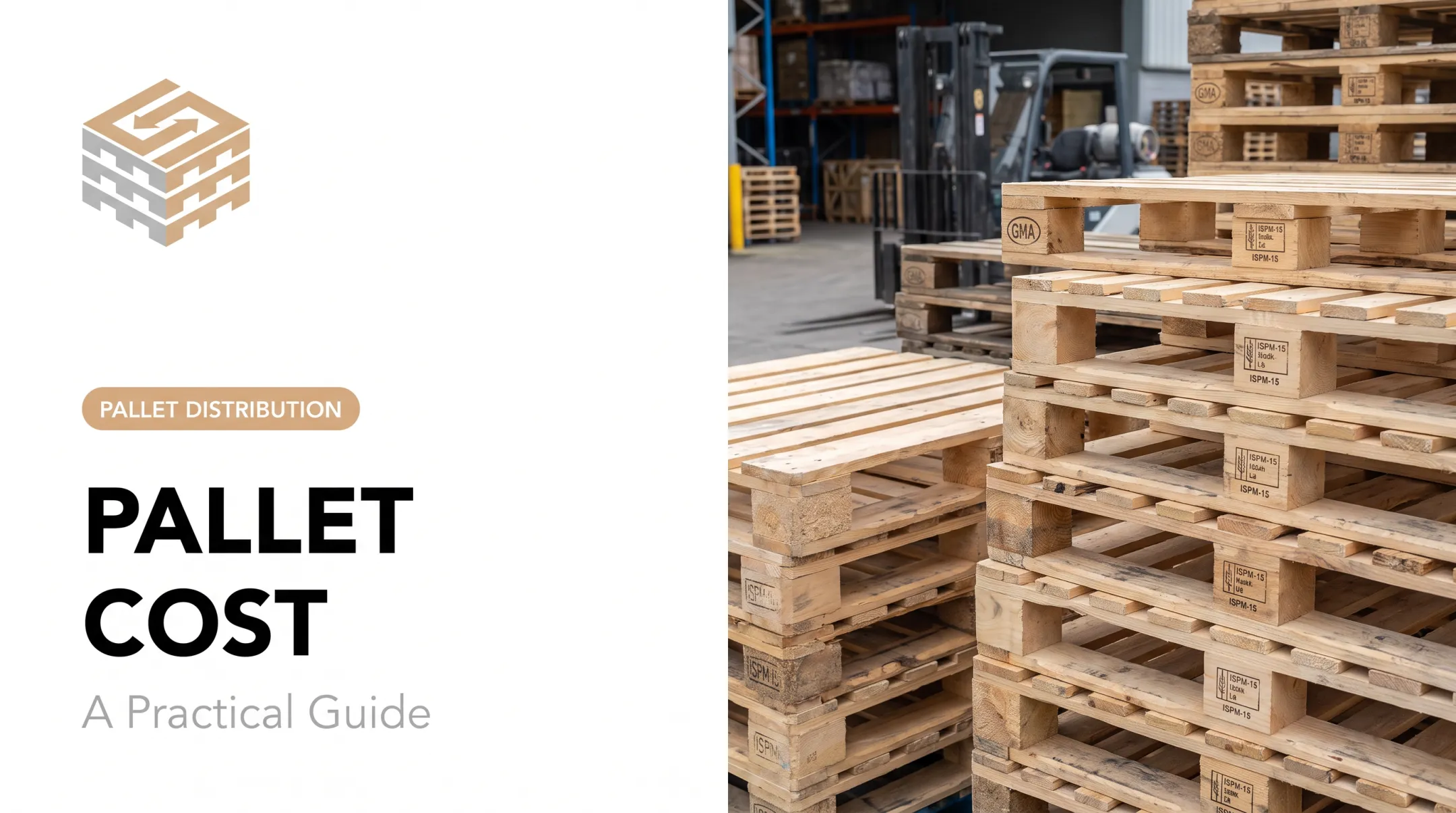
Every legitimately treated pallet carries an ISPM 15 stamp with four elements:
- The IPPC logo
- A country code
- A treatment-provider ID
- A treatment code: HT (heat treatment), DH (dielectric heating), MB (methyl-bromide fumigation), or SF (sulfuryl-fluoride fumigation)
A pallet with no visible stamp should be treated as unverified, especially for international or regulated shipments where customs authorities check compliance at the port of entry. If the stamp is missing or illegible, a supplier that offers stamp verification and re-stamping, such as Skid Management Services, can confirm treatment status before the load ships.
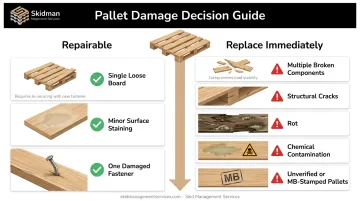
Repair vs. Replace Decision Points
- Repairable: a single loose board, minor surface staining, one damaged fastener
- Replace immediately: multiple broken components, structural cracks, rot, chemical contamination, or an unverified/MB-stamped pallet
Pallet Inspection & Maintenance Schedule
Inspection frequency should scale with how hard your pallets work and where they live — indoor climate-controlled storage doesn't need the same scrutiny as an outdoor yard.
One of the clearest formal requirements comes from the 2025 Uniform Standard for Wood Pallets, which states that "the wood pallet user has the obligation and responsibility to inspect for damage prior to each pallet use." Beyond that per-use baseline, most operations layer in additional checks based on volume and risk:
| Frequency | What to Check |
|---|---|
| Per-use / daily | Visual check before loading or racking |
| Weekly | Spot-checks of stored or staged inventory |
| Quarterly | Deeper inspection of racked, high-turnover pallets |
| Annual | Full fleet audit or re-grading |
Certain conditions call for tighter schedules than this baseline:
- Cross-dock and food-and-beverage operations need more frequent checks than long-term, low-turnover storage.
- Outdoor storage exposed to moisture and temperature swings wears pallets faster than indoor storage.
- High-turnover racked inventory deserves the quarterly deep-dive, even when daily checks look clean.
Conclusion
Pallet condition directly affects safety, uptime, and compliance costs on the floor. Getting the maintenance approach right means weighing inspection cost against the risk of injury, product loss, and compliance fines — and that balance shifts depending on how hard your pallets work.
A documented inspection routine paired with a dependable supply partner closes the gap. Skid Management Services combines grading, recycling, and a broad supplier network so damaged pallets get replaced fast, without disrupting the operations that depend on them.
Frequently Asked Questions
What are the conditions for a damaged pallet?
Common defects include broken or cracked deck boards, excessive missing wood on leading edges, protruding nails, broken or doubled stringers, and visible mold or rot. Major retailers like Walmart use similar criteria in their pallet grading requirements.
How do you know if a pallet is untreated?
Check the block or stringer for an ISPM 15 stamp with the IPPC logo, country code, provider ID, and treatment code (HT, DH, MB, or SF). No stamp means the pallet isn't certified as treated, so verify it before any regulated or international shipment.
How often should pallets be inspected?
At minimum, inspect before every use, per industry standards. High-turnover or outdoor operations should add weekly or quarterly reviews, while lower-risk storage can rely more heavily on per-use checks alone.
Can a damaged pallet be repaired, or does it need to be replaced?
Minor issues like a loose board or a couple of protruding nails are usually repairable. Structural cracks, rot, chemical contamination, or an unverified treatment stamp call for replacement instead.
How long do wooden pallets typically last?
Lifespan varies widely with construction quality, wood type, and handling conditions. Industry life-cycle studies generally model pallets for 5 to 30 uses, and proper maintenance stretches that range further.
What's the difference between a Grade A pallet and a recycled/Grade B pallet?
Grade A pallets have all deck boards present, no broken stringers, and minimal repair history, functioning like new. Grade B pallets carry a repair or two but retain full structural integrity for general warehouse use, typically at 40-60% less than new pallet cost.