
Choosing between them affects more than just how a load looks leaving the warehouse. It affects damage rates, shipping costs, and how fast your dock crews can turn loads around. But here's something both methods share: neither can fix a cracked, warped, or poorly built pallet underneath the load.
This guide compares stretch wrap and strapping side by side, so you can match the right method (or combination) to your load type.
Key Takeaways
- Stretch wrap suits mixed, irregular, or lighter loads that need containment and moisture protection
- Strapping delivers compression and tensile strength for heavy, rigid, uniform loads
- Combine both methods when freight is high-value or traveling long distances
- Pallet condition determines how well either method performs
Stretch Wrapping vs Strapping: Quick Comparison
Cost
- Stretch wrap: Lower upfront equipment costs, especially for hand application
- Strapping: Equipment costs vary by material (polypropylene, polyester, or steel) and by manual tensioners vs. automated systems
- Per-pallet pricing: No universal figure — depends on film gauge, strap width, load volume, and labor
- Ask your packaging supplier for a program-specific quote rather than generic benchmarks
Load Composition/Type Suited
- Stretch wrap: Mixed SKUs, irregular shapes, cartons, lighter consumer goods
- Strapping: Heavy, rigid, uniform bundles like lumber, brick, steel coils, and bagged aggregates
Protection From Dust/Moisture
- Stretch wrap: Forms a continuous barrier around the load, shielding against dust and light moisture
- Strapping: Provides no barrier protection. It's purely mechanical restraint
Application Speed/Automation
- Stretch wrap: Automatic wrappers at 60–80 pallets per hour; high-performance systems up to 200 (Innova vendor specs)
- Strapping: Automatic machines typically around 60 pallets per hour
- Figures are manufacturer ratings, not independent averages — real throughput depends on load type and setup
Sustainability/Material Waste
- Stretch wrap: Pre-stretch film can use roughly half the material of traditional film for the same containment force, though savings vary by gauge and wrap pattern
- Strapping: PET and PP straps are recyclable in principle, though a national recovery rate specific to strap material isn't well documented

What Is Stretch Wrapping?
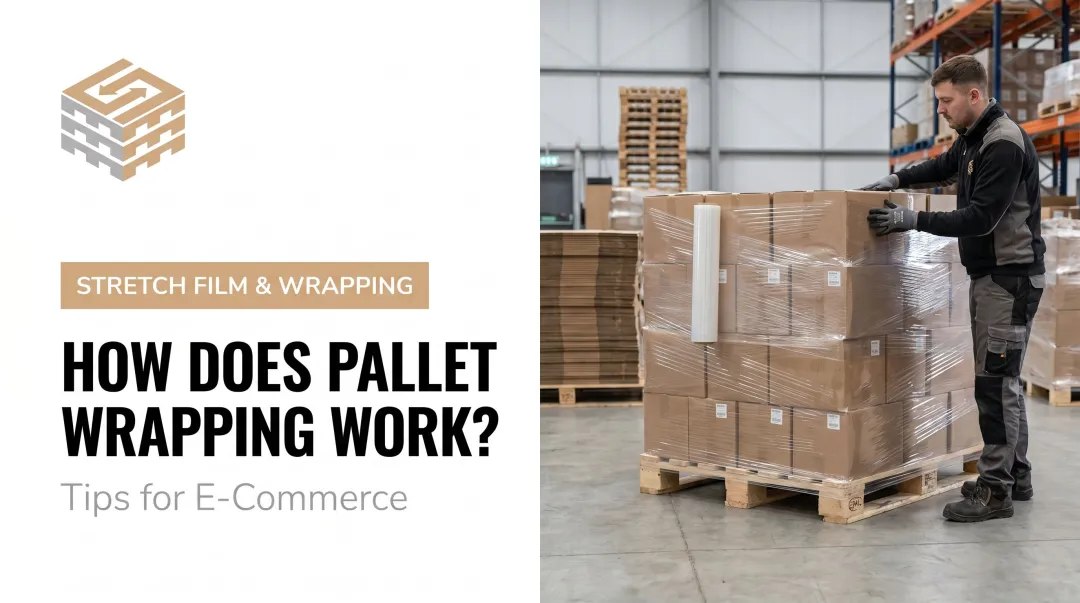
Stretch wrap (or stretch film) is a stretchable plastic film tensioned around a palletized load to hold it together. It's the default method across warehousing, manufacturing, and distribution because it does several jobs at once.
Core benefits:
- Contains mixed or irregular loads without crushing them
- Shields products from dust and light moisture
- Conforms to odd shapes better than rigid bands
- Keeps labels and barcodes visible for scanning
Film Types Worth Knowing
- Cast film: Clearer, quieter to unwind, easier to stretch, generally lower cost, but less tear resistance
- Blown film: Tougher, better tear resistance, more stretch memory, common for sharp-edged loads like lumber or paper reels
- Pre-stretch film: Stretched near its breaking point before it's rolled, requiring less application energy and often stretching farther per roll
Containment force drives load stability more than film gauge alone. IPS Packaging notes that general force recommendations run from 2-6 lbs for loads under 500 lbs, up to 15-22 lbs for very unstable loads near 2,200 lbs. These are starting points, not universal formulas. Every load should be tested against its actual shipping conditions.

Use Cases of Stretch Wrapping
Stretch wrap typically shows up at the end of the line, right before a pallet moves into storage or onto a truck. It's the standard across:
- Food and beverage manufacturing
- Consumer packaged goods
- E-commerce fulfillment
- General warehousing operations
Those operations depend on consistent containment force so loads stay stable in storage and in transit. A Lantech case study on a bottled water producer found that switching to an automatic wrapper cut film use per load by 26% and reduced shipping damage.
SMS supplies hand-grade roll films and machine-grade pre-stretch films in multiple gauges to food and beverage clients, including Knouse Foods and Campbell Snacks, where product protection during transit is critical.
What Is Strapping?
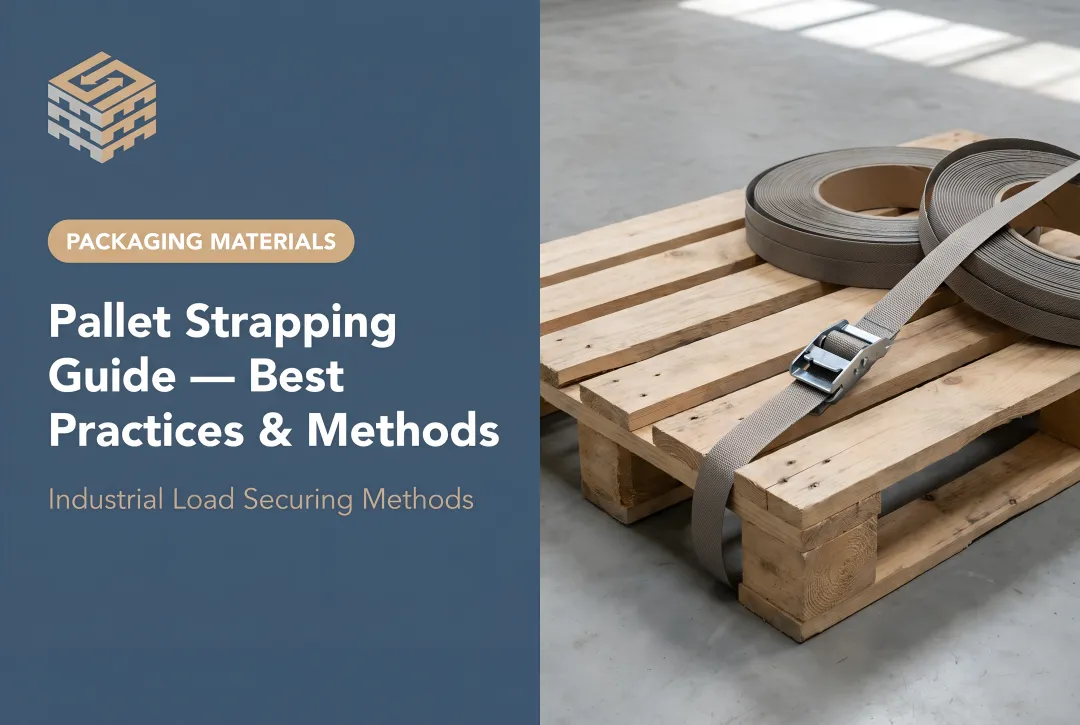
Strapping (or banding) uses tensioned bands, rather than film, to reinforce a load. Where stretch wrap contains, strapping compresses. That distinction matters for heavy or rigid freight that would otherwise shift under its own weight.
Core benefits:
- High tensile restraint for heavy loads
- Compression support for stacked units
- Tamper-evidence — a cut or broken strap is obvious
- Often lower material cost per pallet than film for dense loads
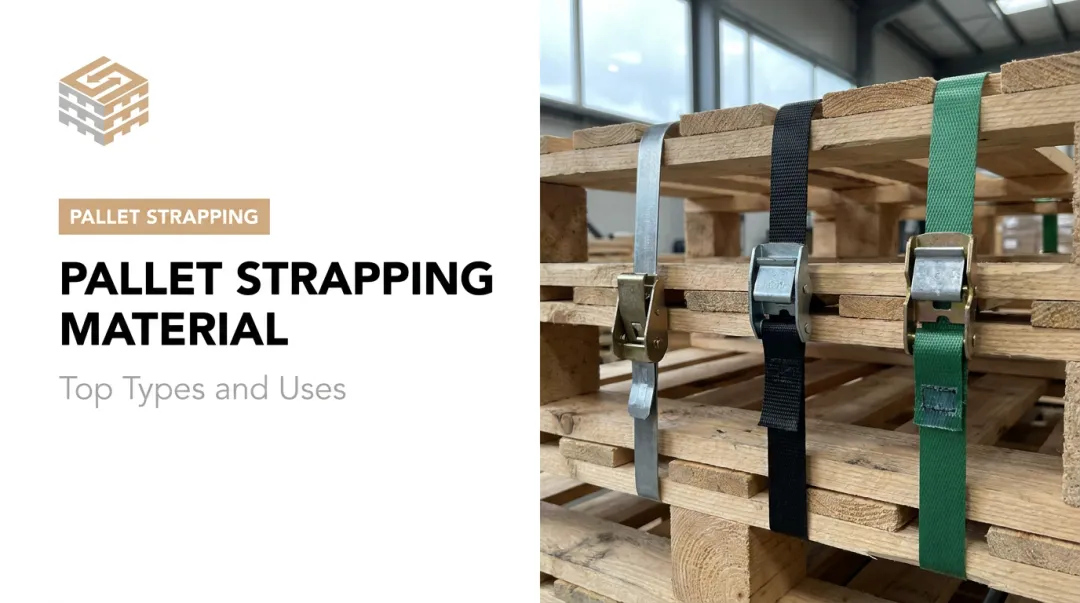
Material Breakdown
| Material | Best for | Strength range |
|---|---|---|
| Polypropylene (PP) | Light-to-medium cartons, indoor use | Light-duty tensile; economical by grade |
| Polyester (PET) | Heavy or rigid loads, outdoor exposure | 360–4,000 lb / 1,601–17,792 N by product grade |
| Steel | Extreme loads, sharp edges, high heat | 650–1,990 lb (Apex), 1,900–13,200 lb (heat-treated) |

Use Cases of Strapping
Strapping fits where products need to be bundled or reinforced before or after they hit a pallet:
- Lumber and treated wood
- Brick and masonry materials
- Steel coils and industrial metals
- Paper reels
- Bagged aggregates
A Signode application story on a wood-treating mill reported that switching to embossed PET strap with a new side-seal system improved retained tension and load stability. The change also delivered 99% equipment uptime and 40% fewer replacement parts.

Skid Management Services (SMS) distributes polypropylene, polyester, and steel strapping in hand- and machine-grade options. That range supports industrial clients who need bundled loads to stay tight through multiple handling points.
Stretch Wrapping vs Strapping: Which Is Better?
Neither method wins outright. The right call depends on:
- Load weight and rigidity — heavier, denser loads favor strapping's compression
- Shape uniformity — irregular or mixed loads favor stretch wrap's conforming coverage
- Transport distance and handling frequency — longer routes or more touchpoints often justify extra reinforcement
- Budget — equipment and material costs vary by volume and material type
- Sustainability goals — film recyclability and strap material both factor in here
General rule of thumb:
- Choose stretch wrap for mixed, irregular, or lighter loads needing protection and visibility
- Choose strapping for heavy, rigid, or bundled loads needing compression and tamper-evidence
- Many operations use both on high-value or long-distance shipments for maximum security
Neither method performs well on a bad pallet. A warped deck board, a cracked stringer, or an inconsistent block pallet can undermine wrap tension and strap compression alike.
Sourcing reliable, well-built pallets is the first step in any load-securing plan, not an afterthought. Skid Management Services supplies new, used, and custom wood pallets built for consistent securing performance.
Real World Example
A CGP Coating case study documents a metal manufacturer that faced high packaging costs securing heavy products with traditional stretch film. The film-wrapping station added labor and material expense without delivering the compression the loads actually needed.
What triggered the switch: The manufacturer replaced stretch film entirely with elastic pallet bands, eliminating the wrapping station altogether.
The result: A reported 60% reduction in packaging costs. The company had been over-relying on film for a job that compression handled better.
The takeaway: match the method to the load, not the habit. A heavy, rigid load needs the right tension, not more film. Either way, that tension only holds if the pallet underneath is sound.
Starting with a durable, properly built pallet gives stretch wrapping or strapping a real chance to work.
Conclusion
Stretch wrap and strapping solve different problems. Wrap contains and protects; strapping compresses and reinforces. The right choice comes down to your load's weight, shape, and how many hands will touch it before it reaches its destination.
But both methods share one dependency: pallet quality. A weak or damaged pallet undercuts even the best-tensioned wrap or the tightest strap. Get that foundation right, and you'll see it in fewer damaged goods, less rework, and more deliveries that arrive exactly as they left the dock.
Frequently Asked Questions
What is the difference between cling wrap and pallet wrap?
Cling wrap is a lightweight household film designed for food coverage. Pallet wrap (stretch film) is a heavier-duty industrial film engineered for containment force and load stability during shipping.
How many pallets can you wrap with a roll of wrap?
This depends on film gauge, roll length, and your wrap pattern. Check with your packaging supplier for exact yield estimates based on your specific film and application method.
Can you use both stretch wrap and strapping on the same pallet?
Yes, this is common for heavy or high-value loads. Combining both methods gives you containment from the wrap and reinforcement from the strap.
Does the type of pallet affect how well wrap or strapping performs?
Yes. Damaged, warped, or inconsistent pallets can compromise both methods regardless of technique. A solid pallet foundation is essential for either method to perform as intended.
Which method is more cost-effective for small businesses?
Stretch wrap is often more accessible for lower-volume or mixed-load operations due to lower equipment costs. Strapping can require more specialized tensioning tools depending on material and volume.
Is strapping safer to remove than stretch wrap?
No. Tensioned straps store energy and can snap or spring back if cut improperly, so they generally carry more removal risk than peeling stretch wrap. Always use eye protection, gloves, and purpose-built cutters when removing straps.