
Many operations managers face this choice without a clear framework, and pallet spend adds up fast when you're buying new units for every application regardless of whether the lane actually needs that level of consistency. Meanwhile, wood pallet reuse already dominates U.S. logistics: a 2024 Virginia Tech thesis estimates that 95% to 97% of wooden pallets produced in the U.S. are repaired for reuse, supply parts for repairs, or become other useful products.
That figure covers the whole reuse ecosystem, not a Grade A purchasing rate specifically. But it makes one thing clear — recycled wood isn't a fringe option in American supply chains.
This guide walks through a lane-by-lane approach. Some shipments belong on Grade A recycled pallets. Others still need new ones. Most operations end up running both.
Key Takeaways
- Grade A recycled pallets fit most domestic shipping, warehouse, and internal handling when specs match the load
- Compare total cost of ownership, not sticker price: damage, rejection, replacement, freight, and availability
- Reserve new pallets for tight automation, strict sanitation, export compliance, or customer-facing loads
- "Grade A" varies by supplier — get the written specification before you buy
- Pilot one lane first, confirm results, then roll out in phases
New Pallets vs. Grade A Recycled Pallets: Quick Comparison
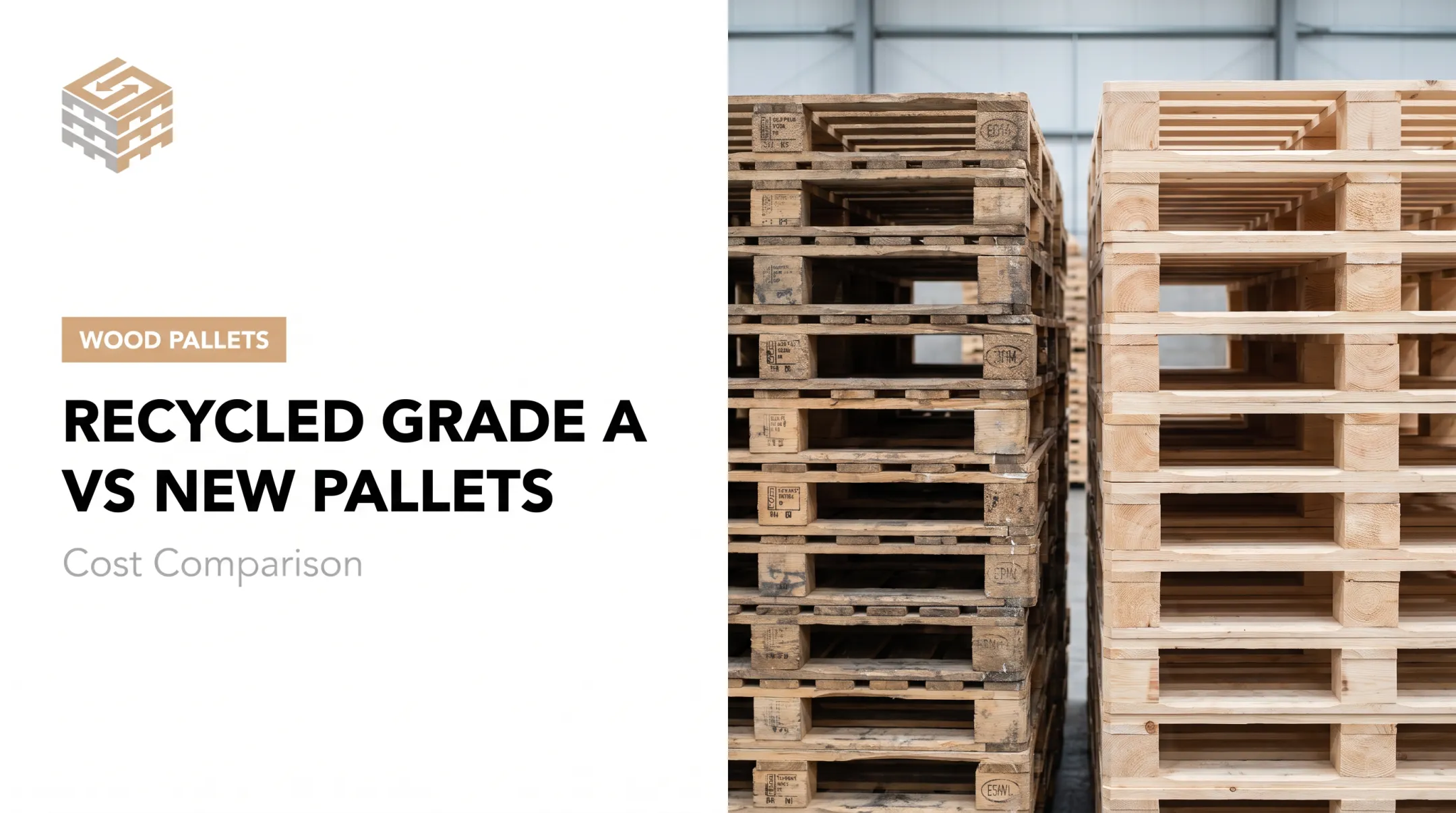
Both pallet types can carry the same freight. The differences show up in price, consistency, and how much verification you need before trusting them on a specific lane.
| Factor | New Pallets | Grade A Recycled Pallets |
|---|---|---|
| Cost | Higher upfront cost from fresh lumber, milling, and construction | Typically 40–60% less than new, though delivered cost varies by supplier and lot |
| Condition | No prior use; built to a defined spec with zero shipping history | Inspected, sorted, and repaired; condition depends on the supplier's Grade A criteria |
| Structural performance | Predictable, engineerable for static, dynamic, or racking loads | Reliable for suitable loads, but repair history varies; request documented capacity data |
| Dimensional consistency | Tight tolerances suit conveyors, AS/RS, and robotics | Minor variation possible; test through your actual equipment first |
| Compliance & appearance | Clean baseline, easy to spec for food, pharma, export, or customer-facing loads | Fine for general freight when properly sourced; verify contamination controls and markings |
The cost gap is real, but it's not the whole story. Skid Management Services prices recycled and remanufactured pallets in that same 40% to 60% range below new, provided the lot meets your written specification.
That's where things get murky. Pallet Enterprise reports that no consistent industry-wide definition exists for recycled-pallet grades, and the pallet recyclers' association itself was reportedly working from 57 internal specifications as of 2026. One supplier's "Grade A" might mean all seven deck boards present with zero broken stringers. Another's might allow two board replacements and light staining.

Before switching, get the actual written spec covering:
- Board replacement limits
- Stringer condition
- Allowable repairs
- Moisture range
- Fastener type
Purchase orders should reference that document, not just the words "Grade A."
What Are New Pallets?
New pallets are built from fresh lumber to a defined construction, size, and nailing spec, with zero prior shipping history. That predictability is the entire value proposition.
Because every board starts from the same stock and build sheet, new pallets typically deliver:
- Tighter dimensional tolerances for conveyors, AS/RS systems, and robotics
- More consistent stacking and racking behavior across a full order
- A clean starting condition for products that touch the pallet directly
- Engineering flexibility for unusual footprints or heavy static and dynamic loads
Skid Management Services supplies new pallets in GMA 48x40, 48x48, 42x42, 44x44, 36x36, 40x40, Euro-equivalent, and fully custom sizes. Options include block, stringer, and double-wing-stringer configurations rated up to 10,000+ lb dynamic capacity for heavy-machinery loads.
Where New Pallets Still Make the Most Sense
Keep a lane on new pallets when it involves:
- Near-capacity or repeated-reuse loads where structural margin matters
- Direct product contact or severe handling conditions
- First-time builds of automated rack or conveyor systems
- Customer-facing shipments where appearance reflects on your brand
Regulated industries deserve a closer look rather than a blanket rule. Federal food-transport regulations require transportation equipment, including pallets, to be suitable, adequately cleanable, and maintained in sanitary condition — but they don't mandate new wood specifically.
The practical reason food and pharma manufacturers often specify new pallets is contamination history, not always a hard legal requirement. Check your customer's certification standards, such as SQF, BRCGS, or FSSC 22000, before assuming recycled wood is off the table.
Export lanes are different. If your destination country requires ISPM 15-compliant wood packaging, USDA APHIS guidance confirms the wood core must reach 56°C for at least 30 minutes, followed by accredited marking.
New, kiln-dried lumber makes it easier to apply a clean IPPC stamp without questions about prior treatment history.
The trade-off: new pallets cost more upfront, and custom builds can carry lead times. If a lane doesn't actually need that level of performance or appearance, you may be paying for capability you never use.

What Are Grade A Recycled Pallets?
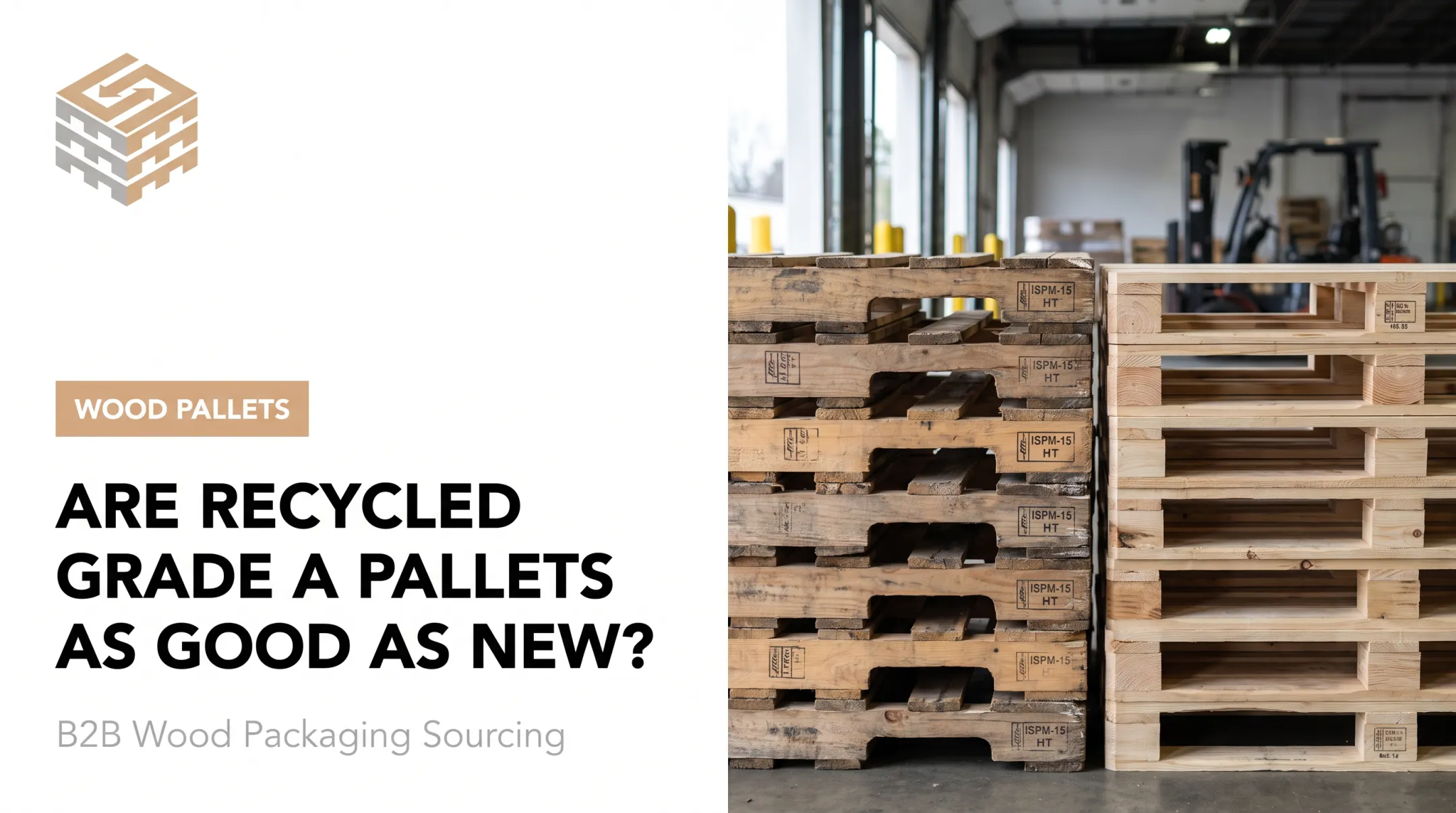
Grade A recycled pallets are previously used pallets recovered, inspected, and repaired as needed, then sorted for resale. They're not the damaged, off-spec units sitting in the reject pile. That's a different category entirely.
In Skid Management Services' inventory, grades break down like this:
- Grade A: All seven deck boards present, no broken stringers, minimal repair history — performance close to new for most applications
- Grade B: One or two minor board repairs while keeping full structural integrity
- Utility-grade: Lowest-cost tier for internal-flow use
Here's the catch: "Grade A" isn't a nationally standardized term. Component-level industry standards define grades like Select, Premium, and Standard, but recycled-pallet grading still varies supplier to supplier. Before you buy, ask about:
- Board replacement limits and stringer condition
- Moisture range and fastener type
- Allowable stains, repairs, and cosmetic variation
- Whether pallets are heat-treated when required
Where Grade A Recycled Pallets Perform Well
Good starting lanes include:
- Standard domestic freight and non-food industrial goods
- Warehouse staging and internal transfers
- One-way shipments that don't return to you
- Loads where minor cosmetic variation doesn't affect handling
Match the grade to your actual load weight, stacking pattern, racking method, forklift handling, and trip frequency, not just the price tag. A 48x48 Grade A recycled pallet, for example, typically handles 2,500 to 3,000 lb dynamic loads, which covers most standard palletized freight.
The limitations are real, too:
- Unit-to-unit variation even within a Grade A lot
- Prior-use history often unknown unless your supplier controls sourcing
- Repaired sections that can hide weak points
- Strict automation or sanitation programs that may reject recycled units outright
Run through a short supplier-verification checklist before switching a lane:
- Ask for the written inspection and repair standard behind their "Grade A" label
- Request sample approval on an actual pallet lot, not a description
- Confirm lot-to-lot consistency and delivery capacity for your volume
- Verify heat treatment if the lane touches export or pest-sensitive product
- Clarify the rejection process for pallets that don't meet spec on arrival
Once the specs check out, the sustainability upside is easier to capture. Several food manufacturers in Skid Management Services' client base track recycled-pallet purchasing as part of ESG reporting, since every recycled unit reduces demand for new lumber.
New vs. Grade A Recycled Pallets: What's Actually Better?
There's no universal winner here. The better question is which option fits each lane, and for most operations, the honest answer is both.
Choose Grade A recycled pallets when the lane:
- Uses standard sizes, such as 48x40, 48x48, or 42x42
- Stays comfortably within verified capacity
- Doesn't require pristine, showroom-clean appearance
- Tolerates minor cosmetic or dimensional variation
- Can source from a supplier with dependable lot consistency
Stick with new pallets when the lane requires:
- Custom engineering or unusual footprints
- Strict dimensional uniformity for automated equipment
- Validated sanitation for food, pharma, or cleanroom products
- ISPM-15 export compliance with a clean treatment history
- Customer-facing presentation that reflects on your brand
Comparing Total Cost, Not Just Purchase Price
Purchase price is the easiest number to compare and the least useful one on its own. A cheaper pallet that gets rejected at the dock, damages product, or triggers an emergency reorder can cost more than the pricier option ever would have.
Weigh these factors before finalizing a switch:
- Pallet life and failure rate under your actual load
- Product damage and claims history
- Labor time lost to rejections or re-palletizing
- Freight costs on returned or replaced units
- Supplier lead time during demand spikes
Document these before changing a spec:
- Load weight, stacking pattern, and racking method
- Equipment tolerances for conveyors, AS/RS, or robotics
- Destination and any compliance requirements
- Product sensitivity to pallet condition
- Return rate — do pallets come back to you?
- Monthly volume and consequences of a failed shipment
Most segmented pallet programs land somewhere in the middle: Grade A recycled pallets covering the bulk of standard lanes, new pallets reserved for the handful of applications that genuinely need them.

If you're weighing this decision for your own operation, share your pallet size, quantities, load requirements, destinations, and timing with Skid Management Services.
The team can compare new, Grade A, or mixed wood pallet options—plus pricing and supply availability—across its national supplier network, based on what each lane actually needs.
Real-World Examples and a Practical Switching Plan
Documented switching case studies in this industry are thinner than you'd expect. One example is not universal proof, so the available data is treated as directional only.
One of the clearer data points comes from a 2023 Kamps Pallets case study involving two unnamed automotive companies. One shifted its purchasing mix from 90% new pallets to 90% used pallets, and Kamps reports over $4 million saved between the two companies through standardization and recycled or remanufactured adoption.
The case does not specify a Grade A designation or a formal rejection rate, so treat it as directional evidence, not a guaranteed outcome.
A separate 2024 industry example notes that GF Building Flow Solutions sent roughly 478,000 pounds of wood pallets for recycling in 2023, with units repaired and refurbished through a partner. That shows reuse volume, not a documented pilot process.
What both examples reinforce: the safest way to switch is small, measured, and reversible.
A Practical Pilot Framework
- Pick one representative lane — ideally standard-size, non-regulated, moderate volume
- Write the Grade A specification, covering board limits, repairs, moisture, and fasteners
- Approve a sample lot before ordering at volume
- Test loads and handling equipment under real conditions, not just visual inspection
- Set pass/fail criteria upfront, including rejection rate, damage rate, and on-time fulfillment
- Convert low-risk lanes first, monitor for 30-60 days, then evaluate borderline lanes
Keep new pallets in place anywhere the pilot data doesn't clearly support a switch. That's not indecision — it's how a segmented pallet program should work.

Ready to test a lane? Skid Management Services can put together a pallet-supply assessment or quote based on your specific volume and requirements. Reach the team at 717-202-0304 or Info@SkidManagementServices.com.
Conclusion
Switching from new to Grade A recycled pallets is not an all-or-nothing decision. It works when the recycled spec matches a lane's load, handling, cleanliness, and compliance needs. It does not work when that lane's risk profile says otherwise.
The strongest approach is segmented: Grade A recycled for standard, verified applications, and new pallets for specialized or risk-sensitive lanes. Written specifications, sample approval, and pilot testing turn that choice into a documented process—not a guess.
Before you commit:
- Put the specification in writing
- Approve samples against that spec
- Run a pilot lane and let your own data decide what scales next
Frequently Asked Questions
What are recycled pallets?
Recycled pallets are previously used wood pallets that have been inspected, repaired or sorted as needed, and returned to service. Grade A recycled pallets sit at the top of that condition scale, distinct from lower-condition Grade B or utility-grade units.
What happens to old pallets?
Usable pallets get inspected, repaired, graded, and resold back into the supply chain. Components too damaged for reuse are typically reclaimed for parts or diverted from landfill, depending on the recycler's process.
Are Grade A recycled pallets as strong as new pallets?
It depends on construction, repair history, and your load requirements, not just the grade label. Verify documented capacity and test the pallet under your actual application rather than assuming equivalence.
Which applications should remain on new pallets?
Keep new pallets for export lanes requiring clean ISPM-15 treatment history, strict sanitation or regulatory environments, automated systems with tight tolerances, and customer-facing or custom-engineered loads.
How do I switch from new to Grade A recycled pallets without disrupting operations?
Start with a lane audit and a written Grade A specification, approve a sample lot, run a controlled pilot with clear pass/fail criteria, then roll out in phases with a dependable supplier behind you.