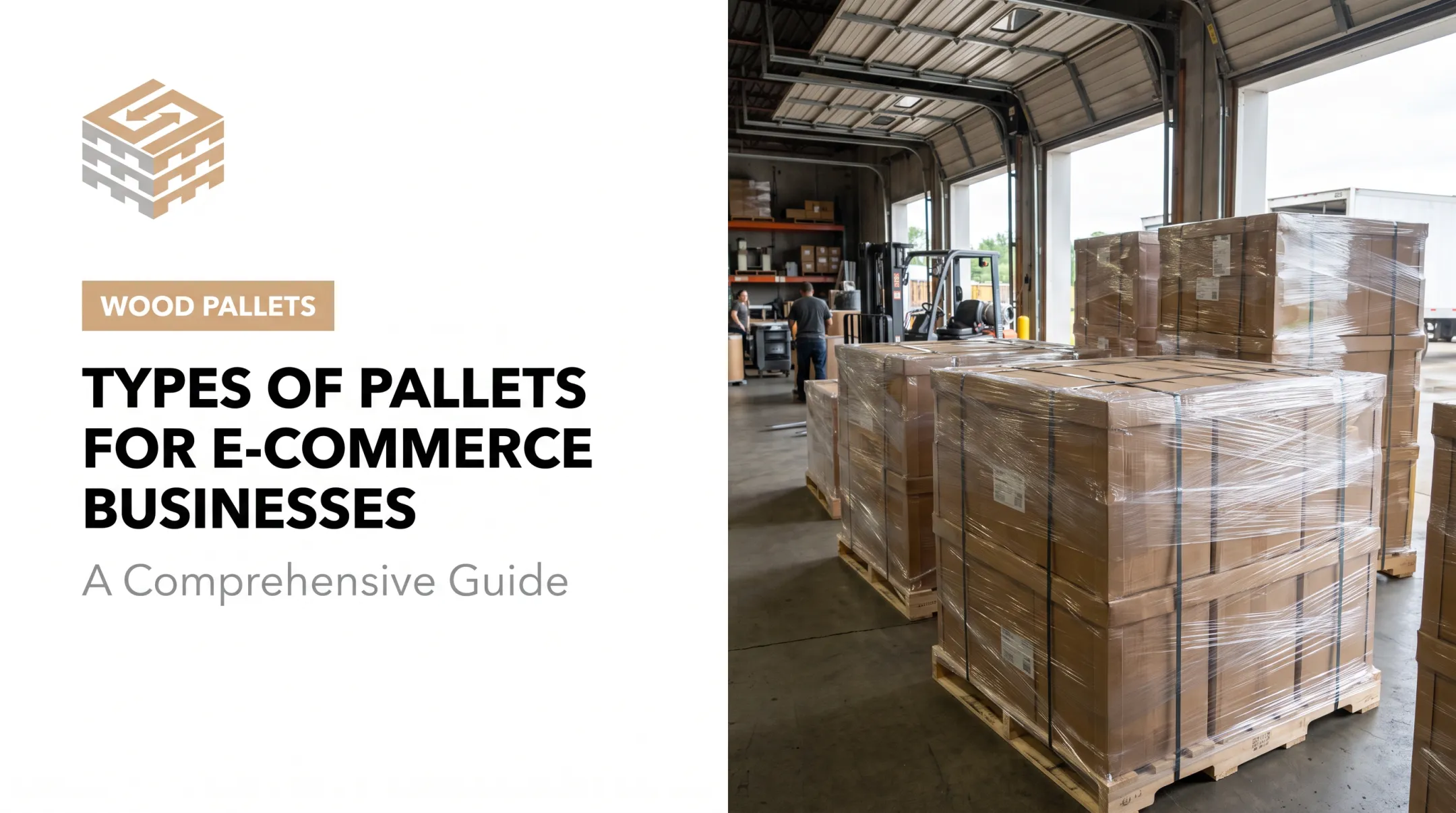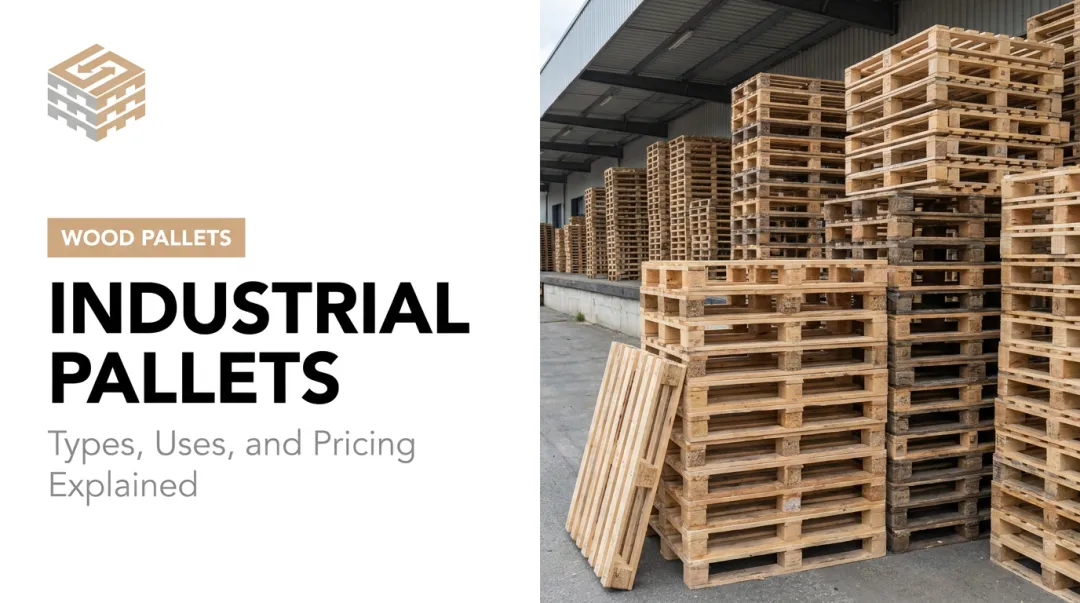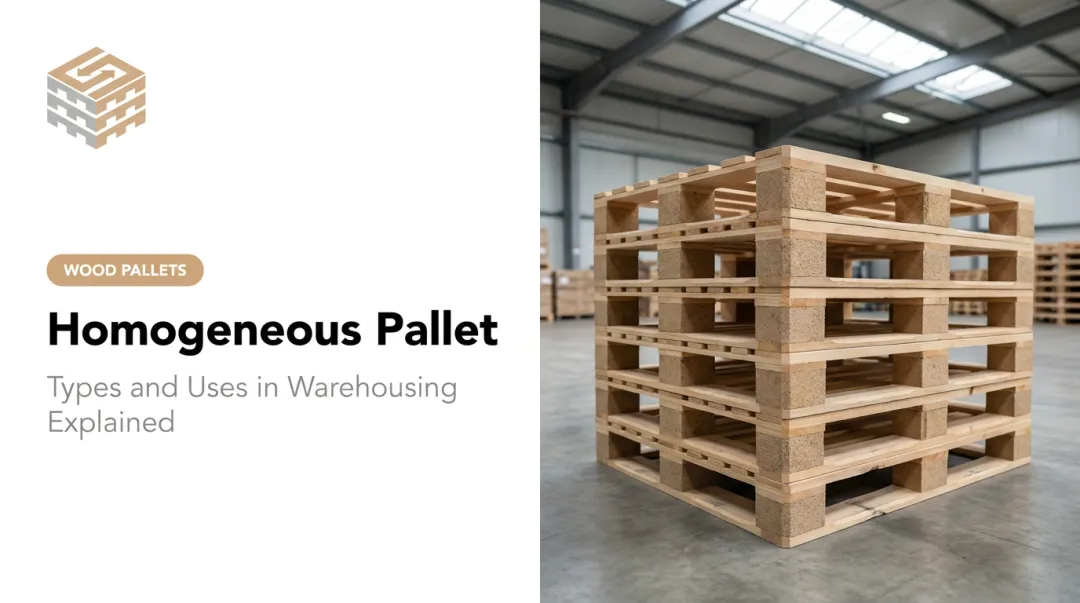

Choosing the wrong pallet type isn't a minor slip. It leads to product damage, wasted trailer space, and rejected shipments at export. This guide breaks down pallet materials, construction styles, sizing standards, and how to pick the right one for your operation.
TL;DR
- Pallets are classified by material (wood, plastic, metal, cardboard), construction (stringer vs. block), and grade (A, B, utility)
- Wood dominates the US market for cost and repairability; plastic and metal fill hygiene and heavy-duty niches
- The right pallet depends on load weight, industry regulations, and shipping distance
- Most US shippers standardize on wood (new, used, or custom) and match construction and grade to the job
What Is a Pallet?
A pallet is a flat, rigid platform used to consolidate, store, and move goods with a forklift or pallet jack. The ISO 445:2013 standard defines it as a rigid horizontal platform compatible with handling by pallet trucks or forklifts.
Pallets create a "unit load"—a standardized base that lets a case of soup move from warehouse rack to truck trailer to store backroom without repacking at every stop.
Pallets aren't a one-size-fits-all commodity. They're everyday logistics infrastructure, and the type you choose shapes everything downstream, from racking compatibility to export clearance.
Why Pallet Type Matters in Warehousing and Shipping
The right pallet protects your goods, maximizes trailer and rack space, and keeps operations moving. Get it wrong, and you'll see:
- Pallet failure under load: boards crack, product shifts, claims pile up
- Racking or forklift incompatibility: mismatched footprints slow down receiving
- Rejected export shipments: untreated wood pallets get flagged at customs
Skid Management Services has built pallet programs for food and beverage manufacturers including Knouse Foods, Campbell Snacks, Stauffer's, Nissin Foods, Hain Celestial Group, and Plainville Farms. These programs address FDA Preventive Controls and GFSI-aligned standards such as SQF and BRCGS.
Pallets are screened for chemical residue, pest contamination, and physical hazards like loose nails.
With a supplier that holds owned inventory and a broad partner network, you can switch pallet types as needs change—without waiting weeks for a new SKU.
Types of Pallets by Material
Material is usually the first decision point, driven by load weight, budget, and industry.
Wood Pallets
Wood pallets are built from hardwood or softwood boards, either new or remanufactured from recovered components. They're the most economical option on the market and the easiest to repair.
- Best for: general warehousing, closed-loop shipping, and high-volume domestic freight
- Strengths: low cost, high availability, easily recycled or repaired
- Limitations: susceptible to moisture damage and splinters; require ISPM-15 treatment for export

For cold storage and frozen food applications, kiln-dried lumber holds up better because it starts with lower moisture content and resists reabsorbing moisture in freezer conditions. Pairing kiln-drying with heat treatment produces a pallet suited for both cold-chain stability and export compliance.
Plastic Pallets
Molded from HDPE using roto-molding or injection-molding, plastic pallets are washable, non-porous, and require no fumigation for export.
- Best for: food, beverage, and pharmaceutical industries with hygiene compliance needs
- Strengths: durability, chemical and moisture resistance, recyclability
- Limitations: higher upfront cost; can deform under extreme heavy loads
Metal Pallets
Steel or aluminum pallets built to standard footprints offer the highest strength and durability of any material on this list.
- Best for: automotive, heavy machinery, and metal processing industries
- Strengths: long service life, extreme load capacity
- Limitations: heaviest option, which drives up freight costs
Cardboard/Paper Pallets
Built from pressed paper or corrugated material, these are the cheapest and lightest option, designed for single-use, light-load shipments.
- Best for: air freight or one-way shipments of lighter goods
- Strengths: very low cost, fully recyclable
- Limitations: short lifespan, poor moisture resistance
Types of Pallets by Construction and Grade
Beyond material, construction style and grade determine strength, forklift compatibility, and cost.
Stringer vs. Block Pallets
Stringer pallets use parallel support boards, offering 2-way entry or notched 4-way entry. Block pallets use corner and center blocks, giving full 4-way access from any side.
Pallet Enterprise's 2008 analysis of block manufacturing notes that most North American manufacturing capacity was built around stringer construction, since block systems are more complex and costly to automate. One archived Pallet Enterprise benchmark put a perimeter-base block pallet at roughly double the cost of a GMA-style stringer pallet.
- Stringer pallets: cheaper, standard for general shipping, less flexible for forklift access
- Block pallets: higher build cost, with better handling for heavy loads, racking, and automated systems

Skid Management Services supplies both configurations. Options include wing pallets, double-wing-stringer builds with notched stringers for partial 4-way entry, and reinforced four-stringer builds for heavier loads.
Grade A, Grade B, and GMA Pallets
- Grade A: new or near-new condition, higher reliability, best for heavy or delicate loads
- Grade B: visible wear but still functional; a cost-conscious choice for general use with reduced capacity
- GMA: the standard 48×40 grocery and retail pallet specification (sold in multiple grades), built with reinforced lead boards
In Skid Management Services' closed-loop program, Grade A pallets pass sorting and grading and re-enter inventory immediately. Grade B pallets get repaired before recirculating. Trade-in credits typically offset 15-40% of new-pallet spend, depending on grade mix and volume.
For heavy industrial loads, non-GMA sizes come into play too. A 48x48 pallet fits four 55-gallon drums (about 1,600-2,400 lbs combined) with a 3,000+ lb dynamic load rating. A 44x44 pallet is sized for 275- or 330-gallon IBC totes, which run 2,200-3,300 lbs filled.
How to Choose the Right Type of Pallet
The right choice depends on load, use case, and regulations, not just sticker price. Walk through these factors:
- Type and weight of goods — a 40 lb carton needs far less capacity than a filled IBC tote
- Frequency of use — one-way shipments favor cheaper materials; returnable loads justify durable builds
- Compliance requirements — food-grade sanitation, ISPM-15 for export, pharma cleanroom standards
- Racking and forklift compatibility — confirm entry style matches your equipment
- Budget vs. long-term durability — cheaper upfront isn't always cheaper over time

Once those factors point you toward a pallet type, the next question is how you source it. Businesses leaving CHEP or PECO pool programs face a particular challenge: switching pallet types without halting supply.
Skid Management Services' closed-loop model combines scheduled deliveries, used-pallet recovery, and multiple supply sources so the changeover happens gradually. Closed-loop economics generally make sense at roughly 500 or more pallets per month, two-way.
What to Check Before Finalizing a Pallet Type
Before locking in your pallet spec, run through this checklist:
- Don't over-specify. A standard stringer pallet often does the job when a metal or block pallet isn't necessary.
- Check export compliance early. ISPM-15 requires 56°C (133°F) at the wood core for 30 minutes, per USDA APHIS export requirements. Missing or illegible stamps mean re-treatment before shipment.
- Calculate total cost of ownership, not just unit price. Recycled or remanufactured pallets can deliver 40-60% savings versus new stock—factor in disposal, trade-in credit, and reverse-logistics pickup when comparing reusable and disposable options.
Conclusion
Pallets sit at the center of safe, efficient warehousing and shipping. Material, construction, and grade each fix a different operational problem—and a mismatch shows up later as damage, rework, or stalled docks.
Match those three factors to your loads, handling environment, and reuse cycle. When requirements shift, work with a supplier that can move across new, used, custom, and export-ready stock without locking you into a single program.
Frequently Asked Questions
How many types of pallets are there?
Pallets are generally classified across four dimensions: material, construction, size/grade, and specialty use. Combined, these produce dozens of specific variations for different industries.
What are Grade A and Grade B pallets?
Grade A pallets are new or near-new condition with higher weight capacity. Grade B pallets show visible wear and have reduced capacity but cost less, making them suitable for general use.
What are 4-way pallets?
4-way pallets allow forklift entry from all four sides, either through block construction or notched stringers. This improves handling flexibility in busy warehouses and automated systems.
What is the most common pallet size in the US?
The 48"x40" GMA pallet is the US standard for retail and grocery distribution. Historical production data shows this size accounts for the largest share of pallets manufactured nationally.
What is the difference between a pallet and a skid?
A skid is built like a pallet but has no bottom deckboards, making it suitable only for static storage. A pallet has both top and bottom decks, allowing it to be moved and stacked safely.
Why do wood pallets need to be treated for international shipping?
Export shipments require ISPM-15 heat treatment to prevent pest contamination from spreading between countries. Wood must reach 56°C at the core for 30 minutes and carry an accredited compliance mark before export.