
Load stability isn't about any single fix. It depends on three things working together: the pallet itself, the securing materials you choose, and the technique used to apply them. Skip one, and the other two can't compensate.
This guide breaks down what actually causes instability, how to choose the right wrapping and strapping for your load type, and the mistakes that quietly undo even well-built pallets.
Key Takeaways
- Stability requires the pallet foundation, securing materials, and application technique to work together
- Center of gravity, weight distribution, and stack height cause most in-transit failures
- Stretch wrap, poly strapping, and steel strapping each fit different load types, not a one-size-fits-all approach
- Insufficient tension and uneven stacking undo even premium wrap and strapping materials
What Is Pallet Load Stability and Why It Matters
Pallet load stability is the ability of a unitized load to stay upright, intact, and secured through handling, storage, and transit. Think of it like jelly on a plate: every acceleration, hard brake, or sharp turn sends forces through the load, and anything not properly secured shifts, slides, or topples.
The financial stakes are real. Case damage affects an average of 2% of arriving unit loads at distribution centers, with some facilities seeing rates as high as 11%. A rejected unit load can cost businesses well over $1,000 each, even when only one or two cartons are damaged, according to Packaging Digest's analysis of supply chain damage.
Beyond cost, there's a regulatory dimension. Federal cargo securement rules under 49 CFR 393.100-393.136 require commercial vehicles to prevent cargo from shifting or falling during transport—a legal obligation, not just a best practice.
This matters most for palletized freight in:
- Food and beverage manufacturing, where product damage means lost inventory and potential contamination risk
- Warehousing and distribution, where every reshipment eats into margins
- Retail supply chains, where big-box compliance programs penalize damaged or unstable deliveries
Core Factors That Affect Pallet Load Stability
Load Distribution and Center of Gravity
Uneven weight across a pallet creates a tipping point. When the center of gravity drifts away from the pallet's center, cornering and braking forces amplify the imbalance.
The fix: Center heavier items and keep weight distributed evenly across the full footprint, not concentrated on one side or corner.
Pallet Condition and Quality
Cracked boards, loose nails, or missing blocks compromise stability before a single layer of wrap goes on. No amount of stretch film fixes a structurally weak pallet.
- Inspect boards for splits, decay, and excessive knots
- Check that blocks and stringers are intact and properly fastened
- Match the pallet's rated capacity to your actual load weight—don't guess
Stacking Pattern and Height
Stacking pattern changes lateral strength significantly. Research from Virginia Tech found that interlocked stacking reduced pallet deflection by up to 53% compared to straight columnar stacking, particularly for lower-stiffness pallets.

Interlocking still isn't an excuse to exceed a pallet's rated load capacity. Taller stacks also raise the center of gravity, so the higher the load sits, the greater the tipping risk during sudden stops or highway curves.
Keep stack height within your pallet rating and trailer clearance, and reserve interlocking for loads that need extra lateral strength—not extra weight.
Case Design and Packaging Quality
Weak cartons or case perforations introduce failure points in the stack. A pallet built and wrapped correctly can still fail if the boxes on it buckle under compression or their seams give way mid-transit.
Spec check: Use cartons rated for the full compression load at your stack height, and keep perforations off primary load-bearing faces.
Choosing the Right Wrapping and Securing Material
Stretch Wrap
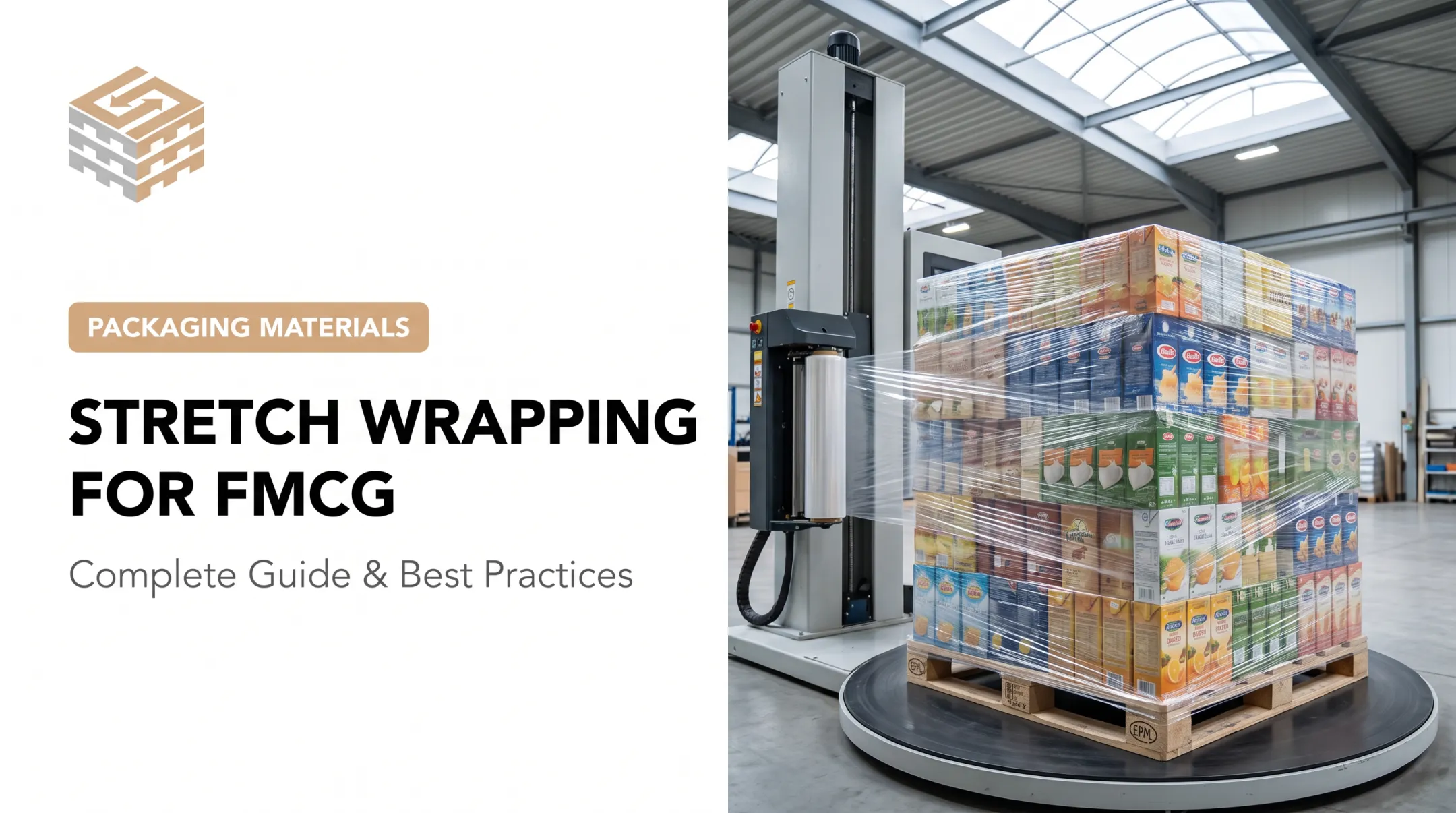
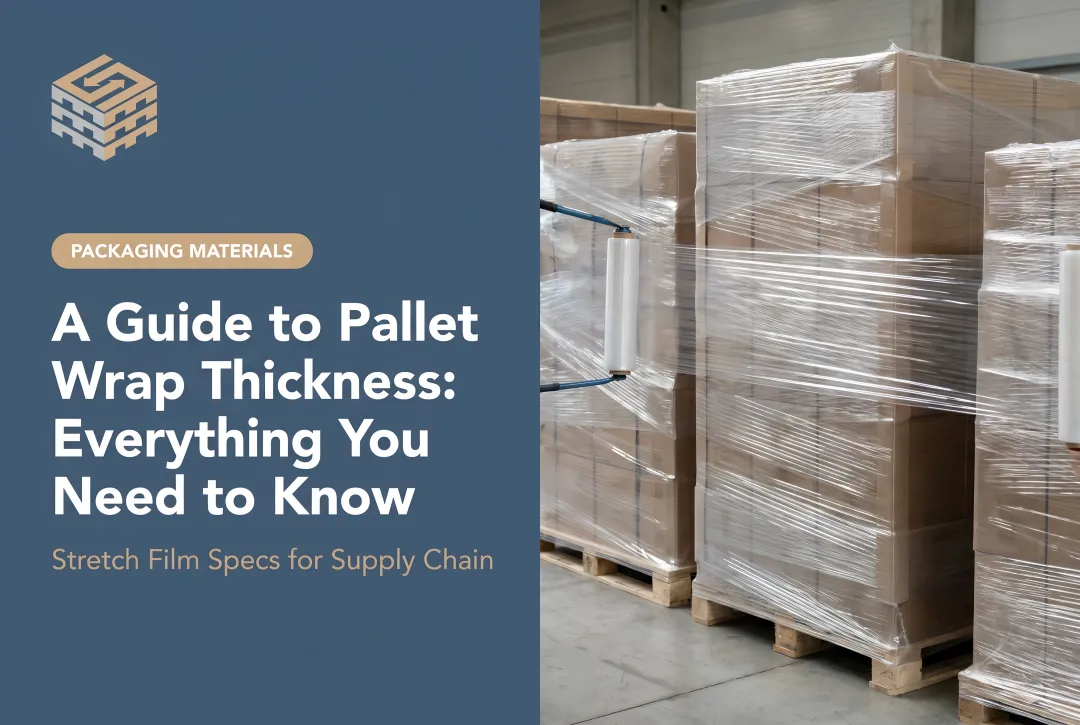
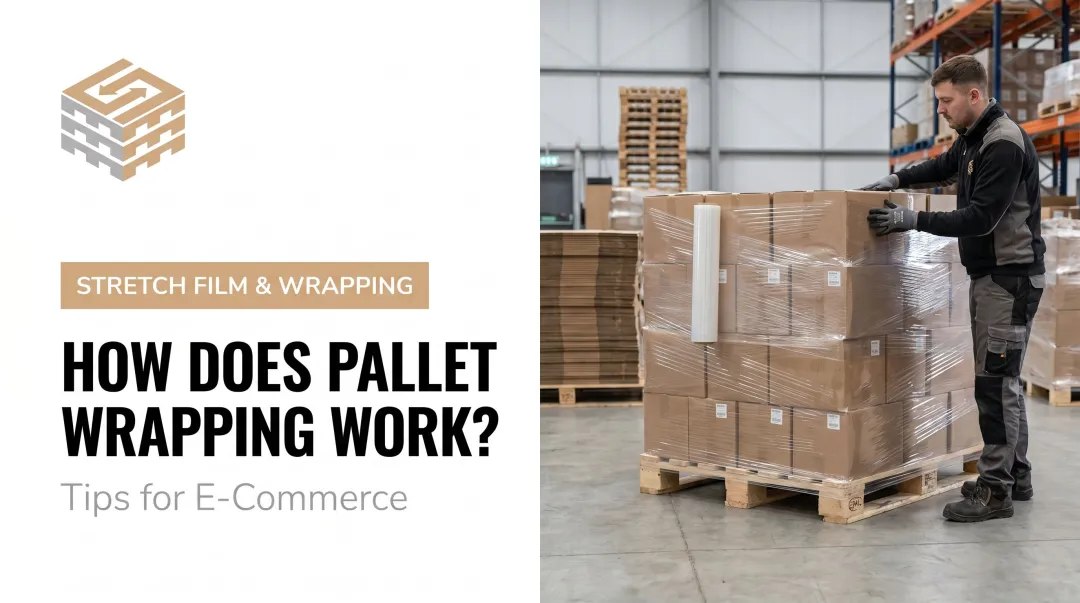
Stretch wrap conforms to the load shape, making it the go-to choice for mixed pallets, irregular product configurations, and loads needing dust or moisture protection. It's versatile but has limits: very heavy loads or sharp-edged products can overwhelm standard film, causing tears or slippage.
Skid Management Services distributes both general stretch film and vented stretch film, the latter suited for produce and food packaging where moisture management matters as much as containment.
Poly and Steel Strapping
Poly strapping (PP or PET) fills the gap for denser loads that stretch wrap alone can't fully secure. It provides positive tension where film would stretch and loosen over time.
Steel strapping is reserved for the heaviest, most rigid freight, such as drums, industrial components, or anything requiring maximum tension and shock resistance. Signode's steel strap products document break strengths ranging from 1,900 to 13,200 lb, a wide enough spread to cover most heavy-duty applications.
Combining Methods
For heavy or mixed loads, a hybrid approach works best:
- Apply strapping first for structural reinforcement, holding the case stack tight.
- Wrap with stretch film over the top for protective coverage against dust, moisture, and tampering.
- Add edge protectors at strap contact points to prevent cutting into product corners.

Skid Management Services supplies corner boards in paper and recycled fiberboard for this purpose. The same lineup covers stretch film and strapping in polypropylene, PET, steel, and hand or machine grades.
Techniques and Mistakes That Compromise Stability
Even quality materials fail when applied incorrectly. The most common errors:
- **Not anchoring wrap to the pallet base** — the entire load can slide off as one unsecured unit, wrap and all
- Insufficient tension during wrapping — leaves enough slack for products to shift internally, even though the wrap looks intact
- Uneven or excessively tall stacking — creates top-heavy loads that tip under braking or cornering forces
- Relying on stretch wrap alone for heavy loads — a leading cause of in-transit collapse when strapping should have reinforced the stack
Fixing those errors still leaves a practical question: how much wrap does a stable load actually need?
How Much Wrap Is Enough?
There's no universal layer count that applies to every load. Industry guidance from 3M offers containment-force ranges as a rough benchmark:
| Load Weight | Recommended Containment Force |
|---|---|
| Under 250 lb | 2-5 lb |
| 250-750 lb | 5-7 lb |
| 750-2,000 lb | 7-12 lb |
| Over 2,000 lb | 12-20 lb |
The right approach measures containment force at the top, middle, and bottom of the load rather than counting layers blindly. As Lantech notes in its packaging trade-off analysis, film thickness, pre-stretch percentage, and delivery speed all interact. A "recipe" that works for one load family will not automatically transfer to another.
Selecting Quality Pallets as the Foundation
Every load-securing plan starts with the pallet itself. A high-quality wood pallet with sound boards, intact blocks or stringers, and no structural defects is the foundation everything else builds on.
Why this matters: Wrap and strapping can only do so much if the pallet underneath is already compromised. A cracked stringer or loose nail undermines stability before the first wrap of film goes on.
Skid Management Services supplies pallets nationally from its own inventory and a broad supplier network, so customers can source consistently strong, damage-free units instead of taking whatever is on hand locally. Its closed-loop program sorts returned pallets by grade:

- Grade A pallets return to inventory for reuse
- Grade B pallets are repaired before recirculating
- End-of-life pallets go to biomass or wood chip
Practical takeaway: Inspect every pallet before loading. Replace or repair damaged units immediately rather than working around them. A five-minute check saves far more in avoided damage claims.
Frequently Asked Questions
What is the strongest pallet wrap?
Steel strapping offers the highest tension for the heaviest, most rigid loads. Among wrap films specifically, heavy-gauge or nano stretch films provide the strongest holding force for standard palletized freight.
How much pallet wrap per pallet?
Amounts vary by load weight, film type, and machine pre-stretch settings; there's no single fixed number. Heavier and less stable loads need higher containment force; a stability audit gives you precise numbers for your specific load.
What is the wrap that goes around pallets called?
It's called stretch wrap or pallet wrap: a stretchable plastic film used to unitize and secure palletized loads against shifting, dust, and moisture during transit.
How do I know if my pallet load is stable enough for shipping?
Start with a visual check for leaning, gaps, or unsupported overhang. Follow with a containment-force measurement, and for higher-risk loads, run static or dynamic load testing before shipping.
Can I use stretch wrap and strapping together?
Yes. This hybrid approach works well for heavy or mixed loads: strapping provides structural reinforcement while stretch wrap adds protective coverage against moisture and dust.
How often should pallets be inspected for load stability issues?
Inspect pallets before every load goes out, and periodically check pallet stock sitting in rotation for developing damage. Catching a cracked board early is far cheaper than a rejected shipment later.