
The good news is you have options. Pallets can be resold, donated, recycled, or repurposed depending on their condition and how many you have. This guide walks through every major route, for individuals and businesses alike, across the US.
Key Takeaways
- Usable pallets can be sold or picked up free instead of landfilled
- Recycling centers, junk removal services, and pallet recyclers all accept pallets—options depend on volume and condition
- High-volume businesses benefit most from a dedicated pallet buy-back or closed-loop program
- Check for CHEP, PECO, or iGPS markings before taking or reselling pallets you don’t own
Why Pallet Recycling Matters
Tossing pallets in a dumpster feels convenient, but it's rarely the smart move.
Wood waste is still piling up in landfills. Of the 18.1 million tons of wood generated in municipal solid waste, only 17.1% gets recycled. Another 12.2 million tons head straight to landfills, according to EPA's wood material-specific data. Pallets make up the bulk of that wood packaging stream.
There's real progress happening, though. A 2021 industry study found the recovery rate among pallets reaching municipal facilities jumped from 13.8% in 1998 to 54.8% by 2016, per research published in BioResources. That's a meaningful shift, but it also means nearly half of recoverable pallets still aren't getting recovered.

Cost Savings for Businesses
Recycling is a cost decision, not only an environmental one.
- Disposal fees add up. Letting pallets accumulate without a plan means paying for dumpster space or hauling.
- Floor space has value. Every square foot occupied by a pallet pile is space you're not using for inventory.
- Resale generates revenue. Usable pallets aren't trash; buy-back programs will pay for them.
Businesses that treat pallet accumulation as a recurring cost center, instead of setting up a recycling plan, lose money one dumpster fee at a time.
Where to Recycle Pallets: Options for Individuals & Small Quantities
If you've got a handful of pallets at home or a small retail operation, you don't need an industrial solution. Here's where they typically go:
- Municipal recycling centers or C&D (construction & demolition) facilities. Many accept wood pallet drop-offs, though fees vary. Fort Collins charges a $5 entry fee plus $11 per cubic yard for untreated wood; Loveland charges $1.50 per pallet for non-residents.
- Online marketplaces. Facebook Marketplace, Craigslist, and OfferUp make it easy to give away or sell small batches.
- Local businesses that want free wood. Garden centers, feed stores, community farms, and hardware stores often take pallets at no cost.
- Junk removal services. When self-hauling isn't realistic, these companies pick up pallets for a fee and route them to recyclers.
Check Before You Take
Before grabbing pallets stacked outside a business, confirm they aren't owned by a pooling company. CHEP pallets are blue and marked as company property — CHEP explicitly states that buying, selling, or discarding them without authorization isn't permitted. PECO pallets are red and carry a similar warning. iGPS pallets use embedded RFID tags and barcodes for tracking.
Check with your local government, too. Some municipalities run dedicated wood-waste diversion programs that aren't widely advertised.
Where to Recycle Pallets: Options for Businesses & Bulk Generators
Once you're generating pallets regularly, individual drop-offs stop making sense. This is where dedicated pallet recycling and management companies come in. Buy-back programs turn surplus into revenue instead of a hauling expense. Rather than paying someone to take pallets away, businesses get paid for usable ones. Skid Management Services, for instance, sorts and grades incoming pallets (Grade A, Grade B, repair candidates, or recycling-only) and then applies either:

- Trade-in credit toward new-pallet purchases (often offsetting 15–40% of new-pallet spending, depending on grade mix and volume), or
- A direct buy-back payment based on grade, volume, and pickup distance For warehouses, manufacturers, and distribution centers with steady pallet volume, recurring pick-up contracts beat one-time haul-offs. Scheduled pickups can run weekly, bi-weekly, monthly, or on-demand, and can even happen during the same trip as a new-pallet delivery, cutting freight costs on both ends. A national supplier with an expansive network, like Skid Management Services, adds more than pickup. SMS pairs its own inventory with a broad supplier network, so it can take surplus pallets and supply replacements at competitive pricing in one relationship—keeping supply uninterrupted without juggling vendors. Closed-loop economics tend to work best at around 500 or more pallets per month on a two-way basis (delivery plus pickup combined). Pallets too damaged to reuse should not go to a landfill. Reputable recyclers handle them by grade:
- Grade A and B pallets return to inventory
- Repairable pallets get fixed and redeployed
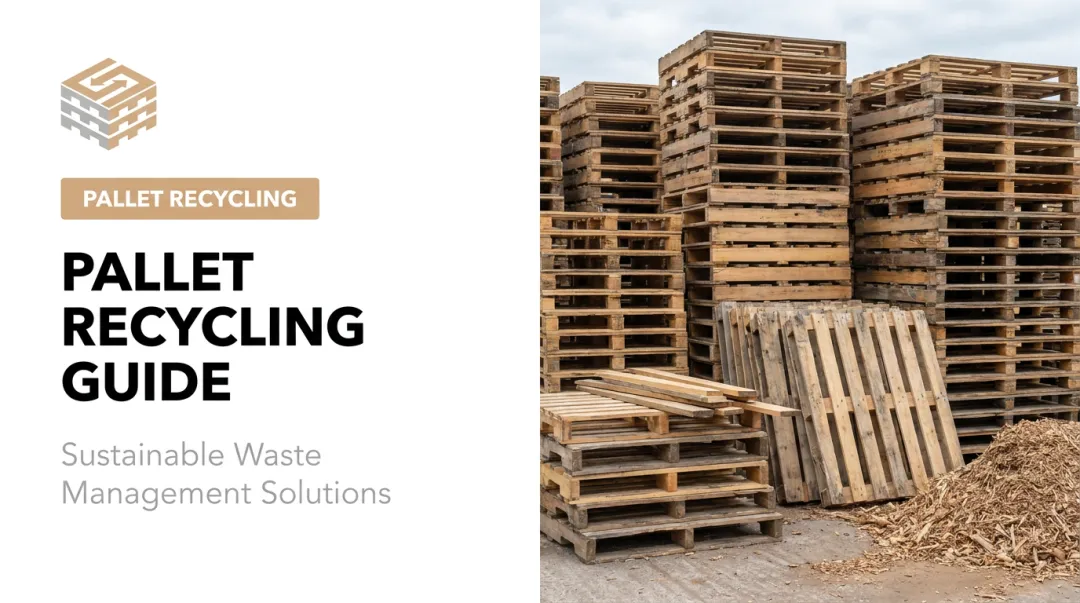
- End-of-life pallets are chipped into mulch, biomass fuel, or board production This supports a zero-landfill approach, and many programs, including SMS's, provide ESG documentation covering diverted-waste tonnage and recycling rate, which food and beverage manufacturers in particular use for sustainability scorecards.
How to Prepare Pallets for Pickup or Drop-Off
A little prep speeds up the process and can improve your payout.
- Sort by condition. Separate repairable pallets from broken ones, and group by size where possible.
- Stack neatly. Clear, accessible stacks are easier (and faster) for a driver to load.
- Remove hazards. Pull loose nails or broken boards if you're transporting them yourself.

Requirements vary by recycler, so it's worth a quick call before pickup day. If you're working with Skid Management Services, call 717-202-0304 to confirm any site-specific staging needs.
Selling, Donating, or Recycling: Which Option Fits Your Situation?
| Pallet Condition | Best Route | Why |
|---|---|---|
| Standard-sized (48x40), structurally sound | Sell via buy-back program or marketplace | Highest resale value |
| Fair condition, non-standard size | Donate to hobbyists, schools, small businesses | Still useful, lower resale demand |
| Broken, chemically treated, or contaminated | Recycle through a recycler or C&D facility | Not safe or practical to resell |
The rule of thumb: if it's sound and standard-sized, sell it through a buy-back or pickup program (including providers like Skid Management Services). If it's usable but non-standard, give it away. If it's falling apart, chemically treated, or contaminated, recycle it instead of trying to resell it.
Frequently Asked Questions
Who buys used pallets?
Pallet buyers vary by region but typically include local pallet recycling companies, brokers, and national suppliers with buy-back programs. Search "pallet buyers near me" or contact a regional recycler for current rates.
Can I just leave pallets on the curb for recycling?
Curbside pickup rules vary by municipality. Some allow bulk wood waste pickup; others require drop-off at a facility. Check your local guidelines first.
Do recycling centers charge a fee for pallet drop-off?
Many municipal or construction and demolition (C&D) centers accept pallets free or for a small wood-waste fee. Junk removal services typically charge based on volume.
What condition do pallets need to be in to sell them?
Standard 48x40 pallets that are structurally sound with minimal damage bring the highest resale value. Heavily broken units are usually bought as scrap wood, not reusable pallets.
Is it legal to take pallets sitting outside a business?
No — pallets outside a business aren't automatically free for the taking. You need the owner's permission, especially if they're marked CHEP, PECO, or another pooling system.
Can broken pallets still be recycled?
Yes. Broken pallets are typically disassembled for scrap wood, mulch, or biofuel rather than reused whole.