That gap matters more than ever. Recycled and refurbished pallets are now mainstream: 70% of surveyed operations acquired used or core wood pallets in 2024, according to Modern Materials Handling's Pallet Report 2024. As that number holds steady year after year, understanding grade has become essential, not optional.
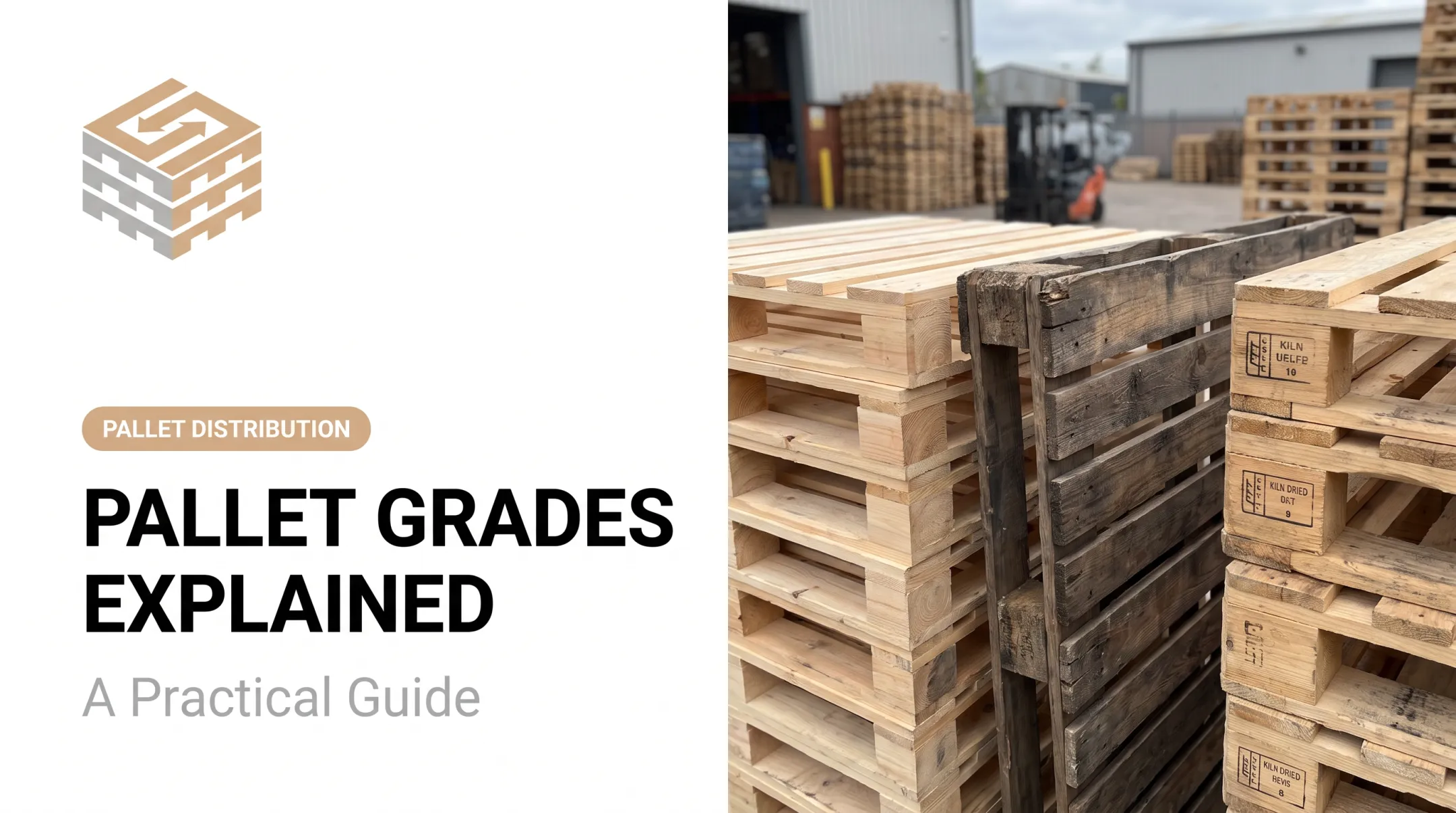
Pallet grading (Grade A, Grade B, and sometimes a third tier) sorts used pallets by condition and repair history. This article breaks down what those grades mean, how Grade A and Grade B differ, and how to pick the right one for your operation without overpaying or under-protecting your product.
Key Takeaways
- Pallet grades reflect condition and repair history, not a fixed engineering standard
- Grade A pallets are near-new, ideal for retail, food, and pharma-adjacent shipments
- Grade B pallets show visible repairs but retain full structural integrity for general use
- Supplier definitions vary, so confirm written grading criteria before you buy
- The right grade depends on visibility, load, budget, and reuse frequency
What Is Pallet Grading?
Pallet grading is commercial shorthand, not an engineering standard. When a supplier calls a pallet "Grade A" or "Grade B," they're describing its condition and repair history, not certifying it against a formal spec like ISO or EPAL.
Grading criteria typically cover three things:
- Wear and tear: surface staining, discoloration, and general use patterns
- Repair history: replaced deck boards, reinforcement plates, or plugged fastener holes
- Structural integrity: whether stringers, blocks, and boards can still bear load safely
Here's the catch: there's no single global grading standard. The NWPCA's 2025 Uniform Standard for Wood Pallets governs new, repaired, and remanufactured pallets.
However, it uses "Class 1, 2, 3" repair terminology, not Grade A/B/C. "Grade A" and "Grade B" remain industry-common terms, but exact thresholds are set supplier by supplier.
That's why definitions shift depending on who you're buying from. Skid Management Services, for example, draws its lines this way:
- Grade A recycled pallets: all seven deck boards present, no broken stringers, minimal repair history
- Grade B recycled pallets: one to two minor board repairs allowed, full structural integrity maintained
A different supplier might draw those lines somewhere else entirely.
The takeaway: always ask for a supplier's written grading criteria before placing a recurring order. A verbal "it's basically new" isn't a specification.
Why Pallet Grades Matter in the Supply Chain
Picking the wrong pallet grade creates problems on both ends of the spectrum. Go too low, and you risk product damage, worker injuries, or shipment rejections. Go too high, and you're paying premium prices for pallets that will spend their life on an internal forklift route.
The safety angle is real. Damaged and non-uniform pallets contribute to workplace incidents involving falls, trips, and handling injuries. Grade won't eliminate that risk on its own, but it gives you a documented way to screen out structurally weak stock before it enters your facility.
Grading also protects automated systems. Conveyors, AS/RS, and robotic palletizers depend on consistent dimensions and predictable structural soundness. A warped deck board or a cracked stringer can jam a line, and that downtime costs far more than the few dollars saved by buying the cheapest available stock.
Three practical benefits of using grades correctly:
- Cost control – match spend to actual performance needs instead of defaulting to premium stock
- Damage prevention – reduce product loss from structural failures mid-transit
- Equipment compatibility – keep automated handling systems running without unplanned jams
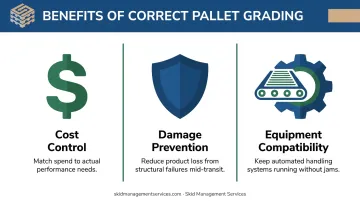
For businesses scaling recycled pallet use across multiple facilities, grade consistency functions as a supply chain lever, cutting variability in cost and performance across every site.
Types of Pallet Grades: Grade A, Grade B, and Grade C
Pallet grades aren't one-size-fits-all. These tiers exist because operations differ in their tolerance for cosmetic wear, repair history, and budget. Most suppliers use three tiers, though naming varies. This section focuses on the two you'll encounter most, Grade A and Grade B, plus a brief note on the lowest utility tier.
| Grade | Repair Level | Best For |
|---|---|---|
| Grade A | Minimal to none | Retail, food, pharma-adjacent, export |
| Grade B | 1–2 minor repairs | Warehouse, internal transport, general shipping |
| Grade C / Utility | Multiple repairs | Static storage, non-load-bearing, scrap recovery |
Grade A Pallets (Premium / Near-New)
Grade A pallets look and perform close to new. Suppliers typically define this tier by:
- Full deck board count with no missing or split boards
- No broken stringers or structural cracks
- Minimal to no visible repair history
- Clean, uniform appearance across the load
Skid Management Services (SMS) grades its premium recycled pallets this way: all seven deck boards present, no broken stringers, minimal repair history, a tier SMS describes internally as "equivalent to new for most applications."
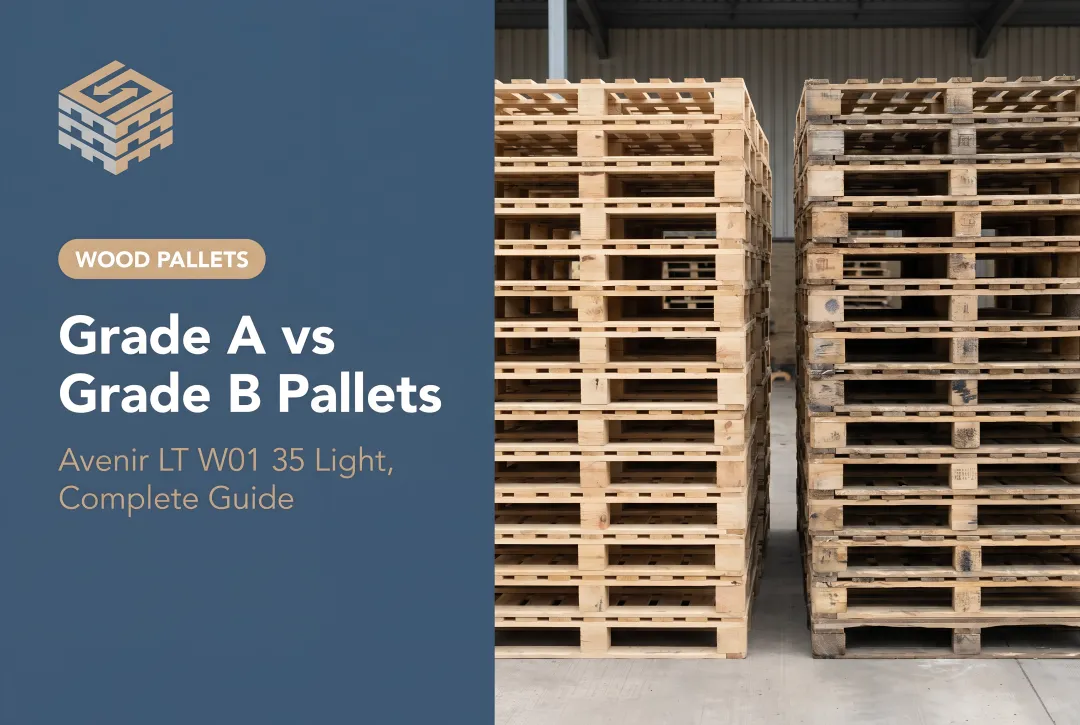
Compared to Grade B, the difference comes down to repair visibility, not raw strength. A Grade B pallet may do the job structurally, but a Grade A pallet won't have patches, plugs, or mismatched boards drawing attention on a retail floor.
Best suited for: retail-facing displays, food and beverage manufacturing, pharmaceutical-adjacent logistics, and export shipments needing dimensional consistency.
Key strengths: longer usable life, dimensional consistency, lower risk of in-transit damage.
Trade-offs: higher upfront cost than Grade B, and often more pallet than you need for low-visibility internal moves.
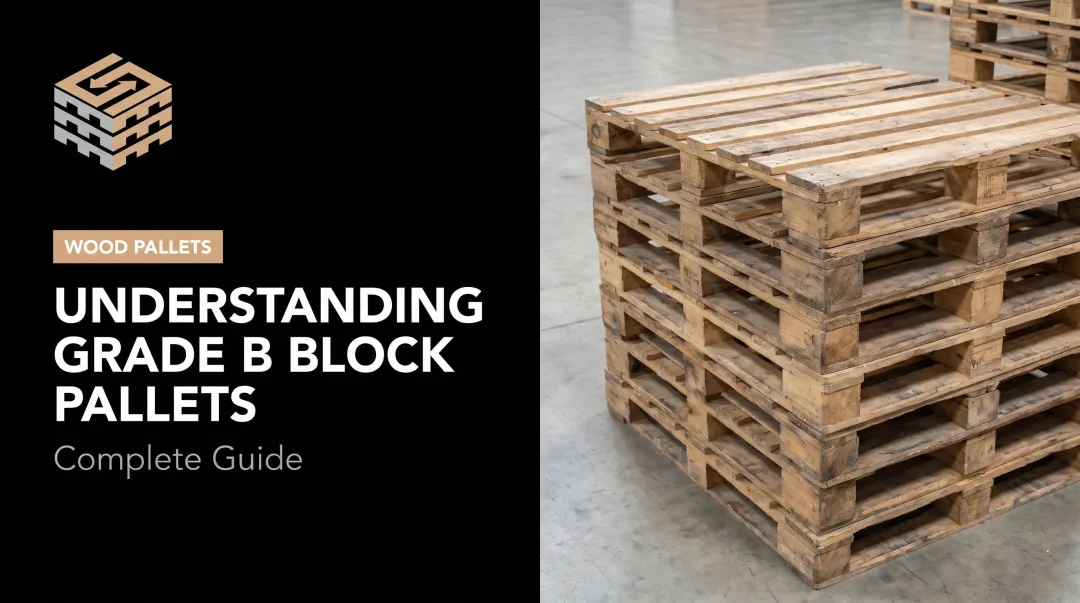
Grade B Pallets (Functional / Mid-Level)
Grade B pallets have visible repair work, but that doesn't mean they're weaker. Common repairs include:
- Replaced deck boards
- Reinforcement plates over stress points
- Plugged fastener holes from prior use
None of these repairs compromise load-bearing capability when done correctly. SMS's Grade B tier permits one to two minor board repairs while maintaining full structural integrity. The pallet just looks like it's been used.
Best suited for: internal transport, manufacturing floor logistics, and general shipping where appearance isn't a factor.
Key strengths: strong cost-to-performance ratio and durability across multiple reuse cycles.
Trade-offs: inconsistent appearance, generally not appropriate for customer-facing or tightly regulated shipments.
Grade C Pallets (Utility / Lowest Tier) — A Brief Note
Grade C, sometimes called Utility or #2, sits at the bottom of the recycled hierarchy. These pallets show significant wear and multiple repairs, reserved for low-demand, non-critical uses like static storage or scrap recovery.
Not every supplier offers this tier, and naming isn't consistent. SMS doesn't use "Grade C" at all; its lowest tier is called Utility Grade (#2), positioned strictly for internal-flow applications where structural demands are minimal. That naming gap illustrates why you can't assume "Grade C" means the same thing everywhere.
Limitation: higher risk of failure under dynamic loads, which is why most suppliers limit or avoid this tier for standard commercial shipping.
How to Choose the Right Pallet Grade for Your Business
The right grade depends on how a pallet will be used and what happens if it fails, not just its price tag or appearance.
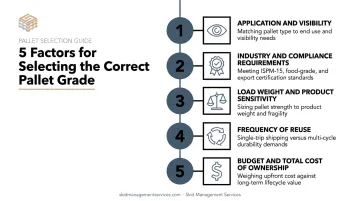
Factors to Consider
- Application and visibility: Will customers or retail buyers see the pallet, or does it stay inside your four walls?
- Industry and compliance requirements: Food, pharma, and export shipments often demand higher-grade or new pallets to meet hygiene and safety standards
- Load weight and product sensitivity: Heavier or fragile goods can justify Grade A's added reliability
- Frequency of reuse: Grade A suits multi-trip circulation; Grade B works well for one-way or lower-frequency shipments
- Budget and total cost of ownership: Weigh Grade B's upfront savings against how often you'll need to replace it
Budget decisions also depend on supply reliability. Skid Management Services combines its own pallet inventory with a broad supplier network, keeping both Grade A and Grade B stock available even when demand spikes or regional supply tightens. Smaller, single-location suppliers often struggle to match that consistency.
Common Mistakes to Avoid
- Defaulting to Grade A everywhere. If pallets never leave the warehouse, Grade B likely performs just as well for less money.
- Assuming grades match across suppliers. One vendor's Grade B might be another's Utility tier. Always check the written spec.
- Chasing the lowest grade to save upfront. Frequent replacement costs can erase any savings within a few cycles.
Conclusion
Pallet grading is a practical way to match condition to need, not a technical standard you'll find in an ISO handbook. Grade A earns its price in appearance- and safety-sensitive settings; Grade B delivers reliable performance for internal and general logistics work at a lower cost.
The grade you choose matters less than the consistency you get from your supplier. Skid Management Services supplies both Grade A and Grade B recycled pallets nationwide. Owned inventory and a broad supplier network keep programs running through demand spikes and disruptions alike.
Whatever grade your operation needs, the goal stays the same: predictable quality, delivered on schedule.
Frequently Asked Questions
Are there different grades of pallets?
Yes. Most suppliers classify used pallets as Grade A, Grade B, and sometimes a third utility tier based on condition, repair history, and structural integrity. This helps buyers match pallets to their specific application.
What is the ISO standard for pallets?
ISO 6780 sets principal dimensions and tolerances for new flat pallets, including the 48"x40" size common in North America. It doesn't define commercial grades like A, B, or C.
How can you tell if a pallet is made from good wood?
Look for solid, unsplit deck boards with no mold, staining, or insect damage, plus sturdy stringers and minimal patched repairs. These signs typically indicate higher-grade, well-maintained wood.
What's the difference between Grade A and Grade B pallets?
Grade A pallets have minimal to no repairs and a clean, near-new look. Grade B pallets show visible repairs, like replaced boards, but remain structurally reliable for most logistics uses.
Can Grade B pallets be used for food and pharmaceutical shipments?
Grade A or new pallets are preferred for food and pharma due to stricter hygiene standards. Grade B may work for internal, non-customer-facing moves if it meets safety requirements.
How long do Grade A pallets typically last compared to Grade B?
Grade A pallets tend to last longer thanks to fewer repairs and less accumulated wear, making them better for multi-trip reuse. Grade B pallets may need more frequent inspection over time.